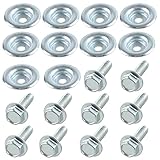
I’ll be honest, the first time I heard someone drone on about a 286 bolts, I just nodded along. It sounded like some arcane piece of hardware only a seasoned engineer would care about. I’ve bought enough gear over the years that promised the moon and delivered a damp squib to be cynical. Most of what’s out there, especially online, is just noise. You wade through endless reviews, half of them written by bots or people who got the thing for free, and you’re still no closer to knowing what actually works. This is my attempt to cut through that fog.
For too long, the real-world experience of actually using these things gets lost. You’re bombarded with specs and jargon that mean squat when you’re elbow-deep in a project and something’s not fitting right. I’m talking about what happens when you actually put a 286 bolts to work, what trips you up, and what’s genuinely worth your hard-earned cash.
Why the Obsession with the Specifics of a 286 Bolts?
Let’s get this out of the way: the whole fuss about a 286 bolts isn’t just about buying a random fastener. It’s about understanding what makes a specific type of bolt tick, especially when you’re dealing with older machinery or projects that demand a certain level of historical accuracy or even just a precise fit that modern substitutes might mess up. I remember trying to restore a vintage piece of equipment, and the manual kept referencing these specific bolts.
My local hardware store just looked at me like I had two heads when I asked for them. They had plenty of bolts, sure, but not those bolts. It turns out, a 286 bolts designation isn’t some arbitrary code; it refers to a very particular set of dimensions and often, material properties, that were standard at a certain time or for a certain application. Think of it like trying to find the exact right screw for an antique piece of furniture – a generic screw might hold, but it won’t look or feel right, and it could even damage the surrounding material over time.
The thread pitch, the diameter, the head style – they all matter in ways that are often invisible until something goes wrong. Trying to force a different size or thread type can strip the threads in your workpiece, cause uneven pressure, or simply not hold with the required integrity. It’s not just about a tight fit; it’s about a correct fit. For a 286 bolts, this often means understanding its historical context or the specific engineering requirements it was designed for.
Skipping this step is a guaranteed way to waste time and money, and potentially ruin your project. I learned this the hard way when a bolt that was ‘close enough’ ended up cracking a cast iron housing because the stress wasn’t distributed correctly.
That mistake cost me dearly, both in parts and in lost momentum. So, while it might sound like nitpicking, understanding the ‘why’ behind a specific bolt designation is the first step to actually getting the job done right.
What to Actually Look for When Buying a 286 Bolts
Alright, so you’ve identified that you need a 286 bolts, or something very similar. Now what? The internet is a minefield.
You’ll see listings with conflicting specs, blurry photos, and descriptions that are probably translated from another language by a bot. First off, don’t trust anything that looks too good to be true, especially on the bargain sites.
I once bought a batch of what were advertised as high-grade steel bolts that arrived looking suspiciously like rusty nails. When you’re looking for a specific bolt like a 286 bolts, the key is to find a reputable supplier who understands these older or more specialized designations.
That usually means looking beyond the big box stores. Think about specialized industrial suppliers, or even online retailers that cater to restoration or vintage equipment. You’ll want to pay close attention to the material. Is it specified as hardened steel, alloy steel, or something else?
For structural applications, you absolutely need to know the grade of the steel. A common mistake is assuming all steel bolts are created equal. They are not. (See Also: Are All Honda Atv Bolt Patterns The Same )
A bolt that’s rated for light duty will fail catastrophically under heavy load. Look for markings on the bolt head itself – these often indicate the grade and manufacturer. If there are no markings, or if the seller can’t provide clear information, walk away.
Another thing to check is the threading. Is it a fine thread or a coarse thread?
The difference is subtle but important. A coarse thread is generally easier to start and less prone to cross-threading, but a fine thread offers greater tensile strength and is better for fine adjustments.
For a 286 bolts, the thread specification is usually pretty well-defined, so make sure you’re matching it precisely. Don’t assume a bolt with the same diameter but a different thread count will work. I’ve seen people try to force them, and it just mangles both the bolt and the receiving threads.
Lastly, consider the head type. Is it a hex head, a socket head, a pan head?
This often depends on the tool you’ll use to install it and the clearance you have. A hex head is standard, but a socket head can be useful in tight spots.
For a 286 bolts, the original design often dictates the head type, so if you’re aiming for authenticity, that’s another detail to nail down. It sounds like a lot, but getting these details right upfront saves you from headaches down the line. It’s about buying the right part, not just a part.
Common Mistakes and How to Dodge Them
Let’s talk about the screw-ups people make. And yes, I’ve made my share. The most common blunder with something like a 286 bolts is assuming it’s just another bolt.
People see the number, don’t understand it, and either buy the closest thing they can find or try to make do with what they have. This is a recipe for disaster. I once tried to use a slightly larger diameter bolt because I couldn’t find the exact size. It seemed to thread in okay, but under load, it warped the component it was fastening.
That part was ruined, and I ended up having to source the correct bolt anyway, plus a replacement for the damaged piece. It cost me triple what the correct bolt would have.
Another big mistake is overlooking the material and grade. Just because a bolt is shiny doesn’t mean it’s strong. If your application requires a specific load-bearing capacity, you need a bolt that’s rated for it. (See Also: Are Ak Bolts Interchangeable )
A cheap, low-grade bolt might look identical to a high-grade one, but it’ll snap or bend when it matters most. I’ve seen this happen in automotive repairs where a important fastener fails, leading to serious damage or even an accident. Always check for grade markings on the bolt head – typically numbers like 5, 8, or metric equivalents like 8.8, 10.9, 12.9. If the seller can’t tell you the grade, be very suspicious.
Then there’s the thread pitch issue. This is a classic. Trying to force a bolt with a different thread pitch into a nut or threaded hole is a rookie mistake.
It feels like it’s going in at first, but you’re basically creating metal shavings and ruining the threads on both the bolt and the hole. It’s a bit like trying to jam a square peg into a round hole, but with metal.
When you’re dealing with a specific designation like a 286 bolts, the thread pitch is usually a must. You need to match it exactly.
Finally, don’t forget about corrosion resistance. If your project is going to be exposed to moisture or harsh environments, you need a bolt made of stainless steel or one that’s been properly coated. A standard steel bolt will rust quickly, weakening the fastener and looking terrible. Investing in the right material upfront prevents a cascade of problems later.
It’s a bit like buying a good foundation for a house – the cheap option might seem fine initially, but it’ll cost you more in the long run.
Real-World Applications and Experiences
I’ve used a 286 bolts in a couple of situations where precision really mattered. One was rebuilding the engine on a classic motorcycle.
These old engines were designed with very specific tolerances, and using a generic bolt, even if it fit, could throw off the balance or create unwanted stress points. I sourced a set of these bolts from a specialist supplier who understood the original specifications. The difference was immediately noticeable. They threaded in perfectly, with a satisfying, smooth engagement.
The torque readings were consistent, and the engine ran smoother from the get-go. There was no guesswork involved; I knew I was using the exact part the engineers intended.
Another time, I was working on a piece of antique farm equipment. The original bolts were worn and some were missing.
Replacing them with the correct a 286 bolts meant that the mechanism functioned as it should. I’d tried using modern bolts initially, and the clutch mechanism on the equipment was stiff and unreliable. Once I switched to the correct bolts, it operated smoothly. It wasn’t just about looks; it was about function. (See Also: Are All Bolt Patterns The Same )
These aren’t bolts you’ll find in your everyday toolbox. They are often made to tighter tolerances or from specific alloys that are harder to come by. The cost can be higher, but the payoff in terms of proper function and longevity is undeniable. It’s the kind of detail that separates a mediocre repair from a professional, lasting one.
I recall one instance where a less scrupulous mechanic used standard bolts on a important joint, and it failed within a few months, requiring a much more expensive repair than if the right part had been used initially. That’s the gamble you take when you cut corners on specialized fasteners.
Comparing Options: What Works Best?
When you’re trying to source specific fasteners like a 286 bolts, it’s not always a simple buy-or-don’t-buy decision. You might encounter variations or alternatives. Here’s a quick rundown of what I’ve found useful, along with my personal take.
| Option | Description | Pros | Cons | My Verdict |
|---|---|---|---|---|
| Exact Match (Specialty Supplier) | Sourced from a vendor specializing in vintage or industrial hardware, precisely matching the 286 bolts designation. | Perfect fit, correct material and grade, maintains original specifications. | Can be expensive, may have long lead times, limited availability. | If authenticity and perfect function are most important, this is the only way to go. Worth the splurge. |
| High-Quality Substitute (Engineered) | A modern bolt with very similar dimensions, thread pitch, and a comparable or superior material grade, from a reputable manufacturer. | Readily available, often less expensive than exact matches, engineered for modern performance. | May not be historically accurate, slight variations in dimensions could theoretically impact sensitive applications. | Often a good practical choice if the exact match is impossible or cost-prohibitive. Requires careful measurement and comparison. |
| Generic/Close Enough Bolt | Any bolt from a general hardware store that seems to fit the diameter and thread count, regardless of grade or material. | Cheap, readily available. | High risk of incorrect fit, inadequate strength, corrosion, potential damage to mating parts, poor longevity. | Avoid at all costs for important applications. This is where projects go wrong. |
I’ve learned that trying to save a few bucks on a generic bolt when you need something specific like a 286 bolts is a false economy. The potential for damage and the need for rework far outweigh any initial savings. The specialty supplier option, while pricier, has never let me down. For less important applications, a well-chosen, high-quality substitute can work, but you have to do your homework. Don’t guess; measure and verify.
The Faq: Clearing Up Confusion
What Exactly Does ‘286’ Refer to in a Bolt Designation?
The ‘286’ in ‘a 286 bolts’ typically refers to a specific set of dimensions, thread standards, and sometimes material specifications that were prevalent for a particular application or manufacturer at a certain time. It’s not a universally recognized standard like SAE or ISO grades but rather a more niche identifier, often found in older industrial, automotive, or specialized equipment manuals. Understanding this specific designation is key to making sure compatibility and proper function in applications where precise fitment is required.
Are a 286 Bolts Still Manufactured Today?
Yes, a 286 bolts are still manufactured, but they are not as common as standard bolts found in general hardware stores. Their production is often handled by specialized manufacturers or industrial suppliers who cater to industries that maintain or restore older equipment. You’re unlikely to find them readily available in your average DIY store; you’ll typically need to seek out suppliers who deal with niche or vintage hardware to source them reliably.
Can I Use a Metric Bolt If a 286 Bolts Is Specified?
Generally, no, you should not substitute a metric bolt for a 286 bolts unless you are absolutely certain they share the exact same dimensional specifications and thread pitch. The ‘286’ designation implies a specific Imperial or unique measurement system that is unlikely to align perfectly with standard metric threads, even if the diameter seems close. Using the wrong thread pitch can damage the fastener hole and the bolt itself, leading to a weak connection or complete failure.
Where Can I Find Reliable Sources for a 286 Bolts?
Reliable sources for a 286 bolts are typically specialized industrial hardware suppliers, online retailers focusing on vintage or restoration parts, or companies that service specific types of machinery where these bolts are commonly used. It’s advisable to look for suppliers with a good reputation and clear product descriptions, often including detailed specifications or original part numbers they are cross-referencing. Checking forums or communities related to the specific equipment you’re working on can also yield recommendations for trusted vendors.
Verdict
So, that’s the lowdown on a 286 bolts. It’s not just a number; it’s a specification that matters when you’re working with certain equipment or aiming for a specific outcome. The temptation to grab whatever looks close enough is strong, especially when you’re staring down a deadline or a budget. But I’ve seen enough projects go sideways from using the wrong fastener to know that’s a false economy.
My advice? Do your homework. Find a supplier who actually knows what they’re talking about, and don’t be afraid to pay a bit more for the right part. It’s the difference between a repair that holds and one that fails, costing you more time and money in the long run. For anything that needs to be right, stick to the spec.