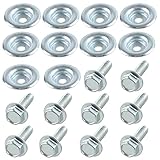
I remember staring at this thing, a simple piece of metal with two holes, thinking, ‘This is supposed to hold fifty pounds of drywall mud?’ I’d already blown through a bunch of those flimsy plastic anchors that promised the moon but delivered dust. This particular 2 bolt looked way too basic, almost insulting, after all the fancy gadgets I’d bought. But I was desperate. My latest DIY disaster needed fixing, and I wasn’t about to spend another dollar on something that wouldn’t work.
So, I screwed it in. It felt… surprisingly solid. Maybe there was something to this low-tech approach after all. After years of tinkering and more than a few frustrating trips back to the hardware store, I’ve got a pretty good handle on what works and what’s just hype, especially when it comes to simple fasteners like this.
The Simple Charm (and Potential Pitfalls) of a 2 Bolt Anchor
Let’s cut to the chase. When we talk about a 2 bolt anchor, we’re usually talking about a specific type of fastener designed for hollow-wall applications.
Think drywall, plaster, or even hollow-core doors. The basic idea is pretty ingenious in its simplicity. Instead of relying on friction or expanding into solid material like a traditional lag bolt, these anchors work by spreading out behind the wall surface.
The ‘2 bolt’ part is a bit of a misnomer in many cases; it’s not about two separate bolts, but rather the two points of contact or the way the anchor’s arms deploy. The most common types you’ll find are toggle bolts and molly bolts, both of which fit the general description of a ‘2 bolt’ system in terms of their mechanical action.
Toggle bolts, for instance, have a spring-loaded wing that folds up to go through a pre-drilled hole. Once it’s through, the wing springs open, and you pull the bolt back to seat it firmly against the inside of the wall. Then, you tighten the bolt, and the toggle (the wing) holds tight against the back.
Molly bolts are similar but often have a metal sleeve that expands as you tighten the screw. They tend to be a bit neater looking on the surface and can sometimes offer a slightly higher weight rating. The beauty here is that they distribute the load over a larger area of the drywall, which is inherently weak. That’s why they can hold surprisingly heavy things, like shelves, mirrors, or even light fixtures, where a simple screw would just rip right through.
However, it’s not all sunshine and rainbows. The weight ratings you see on the packaging are often wildly optimistic. They’re usually based on ideal conditions, like solid drywall, no vibration, and a perfectly perpendicular pull. In the real world, drywall isn’t always perfectly solid, especially older stuff.
You might have brittle plaster or weak spots. Also, if you’re hanging something that experiences any kind of movement or shock – like a towel rack in a bathroom that gets yanked on, or a shelf that gets items slammed onto it – that weight rating goes out the window faster than you can say ‘stripped screw.’
I once tried to hang a fairly heavy antique mirror using what I thought was a solid molly bolt. It held fine for about a week, then with a sickening creak, the whole thing detached from the wall, thankfully landing on my (thankfully empty) bed. The anchor had just pulled through the plaster. Lesson learned: always err on the side of caution and consider what kind of stress the item will actually endure.
Choosing the Right ‘2 Bolt’ for Your Job
So, you need to hang something and a standard screw just won’t cut it. How do you pick the right kind of ‘2 bolt’ anchor? It boils down to a few key things: the material you’re drilling into, the weight of the object, and how it will be used. First, identify your wall material. Is it standard drywall? Old plaster? Or something else? For most standard drywall, both toggle bolts and molly bolts are good options. If you’ve got plaster, toggle bolts often perform better because their wings can grip more effectively on the irregular surface behind.
Next, consider the weight. This is where packaging claims get tricky. A light-duty anchor might be rated for 20-30 pounds, while a heavy-duty toggle bolt can, in theory, hold upwards of 100 pounds. But remember my mirror story. I tend to halve those advertised weight ratings for anything I’m even remotely concerned about. For a medium-sized picture frame or a light shelf, a standard molly bolt or a small toggle bolt is probably fine. For a heavy bookshelf or a TV mount (though I’d strongly advise against any drywall anchor for a TV mount – find a stud!), you need the beefiest toggle bolts you can find, and even then, I’d be nervous.
Installation method is another factor. Toggle bolts require a larger hole to get the toggle through. Some have wings that need to be detached and reattached, while others have a spring mechanism. Molly bolts usually require a specific setting tool, though some can be installed with just a screwdriver and pliers.
If you’re doing a lot of this kind of work, investing in the setting tool for molly bolts is worthwhile; it makes the process much cleaner and more reliable. The visual impact matters too. Molly bolts, once installed, leave a flush metal sleeve that can be painted over.
Toggle bolts often leave the bolt head exposed, which might not be ideal for a piece of decor. Here’s a quick rundown of common types and their general suitability: (See Also: Are All Honda Atv Bolt Patterns The Same )
| Anchor Type | Pros | Cons | Best For | My Verdict |
|---|---|---|---|---|
| Toggle Bolt (Spring Wing) | Good holding power, easy to deploy once through the hole, no special tool needed for installation. | Requires a larger hole, toggle can be fiddly to get through initially, bolt head is exposed. | Heavier items on drywall/plaster where aesthetics are less important. | Reliable if you pick a size appropriate for the load. Don’t skimp on the toggle size. |
| Molly Bolt (Expanding Sleeve) | Neater finish, can sometimes be removed and reused, feels very secure when set properly. | Requires a specific drill bit size (often larger than you think), can be tricky to set without the tool, metal sleeve can be slightly visible. | Medium-weight items, shelves, mirrors, where a cleaner look is desired. | Good for general use, but always check the sleeve is fully expanded and snug. |
| Winged Wall Anchor (e.g., Toggler, Strap Toggles) | Often higher weight ratings than basic toggles, easier to install than traditional toggles, can be removed and reinstalled. | Can be more expensive, some require specific tools, plastic components can feel less solid to some users. | Heavier items on drywall where maximum weight capacity is needed without hitting a stud. | Often a good compromise between ease of use and holding power. Worth considering for tricky loads. |
Ultimately, understanding these differences will save you the frustration of things falling off the wall. It’s not just about drilling a hole; it’s about choosing the right tool for the job, and with these anchors, that means paying attention to the details.
Common Mistakes That Make Your ‘2 Bolt’ Fail
I’ve made them all. The most obvious, and probably the most common mistake when using any kind of ‘2 bolt’ anchor, is simply overloading it. That shiny new shelf is begging to be filled with books, but the anchor you used is only rated for a few picture frames.
You see the 50lb rating and think, ‘Yeah, that’ll hold my paperbacks.’ Nope.
Not for long. Drywall is brittle, and the constant stress, especially from heavy, densely packed items, will eventually cause the anchor to pull through or the drywall to crumble around it.
I learned this the hard way with a pantry shelf. I’d used what I thought were heavy-duty anchors, but the sheer weight of canned goods over time proved them wrong.
The shelf sagged, then gave way with a cascade of tomatoes and beans. It was a mess, and frankly, a bit embarrassing.
Another huge mistake is not drilling the correct size hole. For toggle bolts, the hole needs to be big enough for the toggle to pass through.
If it’s too small, you’ll have a fight on your hands, and you might damage the anchor or the wall trying to force it. If it’s too big, the toggle won’t have anything to grip onto properly on the inside. For molly bolts, using the wrong drill bit size is just as bad.
A hole that’s too small won’t allow the sleeve to expand. A hole that’s too large means the sleeve won’t seat correctly, and the anchor will be loose.
Always, always check the recommended drill bit size on the anchor’s packaging or instructions. Seriously, it’s printed right there.
Then there’s the issue of pilot holes for the screw itself. Some anchors, like toggle bolts, are installed with the bolt already in place or attached to the toggle. But for molly bolts, you need to drill a pilot hole for the screw that goes through the expanding sleeve. If this pilot hole is too small, you’ll strip the screw head or the threads inside the anchor trying to drive it in. Too large, and the screw won’t engage properly, meaning the sleeve won’t expand. It’s a delicate balance, and it’s easy to get wrong if you’re rushing.
Improper installation technique is also a killer. For toggle bolts, you need to make sure the wings are fully deployed behind the wall. Sometimes this means wiggling the bolt or pulling it back firmly before tightening.
For molly bolts, you need to make sure the sleeve is properly expanded. This usually involves tightening the screw until you feel resistance, then sometimes a slight back-and-forth twist. If you stop too early, the anchor will be loose. Over-tightening can strip the threads, making the anchor useless.
And a final, often overlooked mistake: not considering the type of wall material. Using a standard drywall anchor in concrete or masonry will do absolutely nothing but make a hole. These anchors are specifically designed for hollow walls. If you’re dealing with solid material, you need a different type of anchor altogether. (See Also: Are Ak Bolts Interchangeable )
Real-World Use Cases: When a ‘2 Bolt’ Anchor Shines
Despite my earlier anecdotes about failures, I still find myself reaching for a good ‘2 bolt’ anchor more often than I probably should. They’re fantastic for situations where you absolutely cannot find a stud. That’s the holy grail, right? Finding a wall stud for mounting shelves, curtain rods, or coat racks. But sometimes, the layout just doesn’t allow for it, or the stud is in the wrong place. That’s when these hollow-wall anchors become your best friend. I recently had to hang a fairly substantial mix in my living room. The wall was drywall, and the ideal spot was smack-dab between studs. I opted for heavy-duty toggle bolts, the kind with the large metal wings.
The process involved drilling a rather large hole, but once those wings snapped open on the other side of the drywall, the bolt felt incredibly secure. I tightened it down, and now that mix isn’t going anywhere. It’s been up for months, and it feels as solid as if it were screwed directly into a stud. Another common use case where they really shine is for hanging mirrors.
Large, decorative mirrors can be surprisingly heavy, and finding studs that align perfectly with the mirror’s hanging points can be a nightmare. A couple of well-placed, heavy-duty toggle or molly bolts, making sure you distribute the weight across at least two points, can do the job admirably. I’ve used them for everything from small bathroom mirrors to a large, ornate hallway mirror, and they’ve held up perfectly.
Curtain rods are another prime candidate. While some lighter rods might get away with basic screws, anything substantial, especially if you have heavy drapes, benefits from the extra holding power of these anchors. I remember trying to hang blackout curtains in my bedroom with just screws, and after a few months, the rod started to sag noticeably. Swapping them out for molly bolts made a world of difference.
Shelving units, too, can be mounted using them, but with a strong caveat: be realistic about the weight. A shelf for lightweight decorative items or books that aren’t densely packed is usually fine.
A shelf loaded with cast iron cookware? Absolutely not.
Always, always consider the load and the forces involved. The key is to match the anchor’s capacity (and your conservative estimate of it) to the item’s weight and how it will be used. When used correctly, a ‘2 bolt’ anchor is a surprisingly capable fastener for light to medium-duty applications in hollow walls.
The ‘contrarian Take’: When Not to Use a ‘2 Bolt’
Everyone tells you that these ‘2 bolt’ anchors are the go-to solution for drywall. And for many light-duty things, they are. But here’s my contrarian take: I think people rely on them far too much, especially for items that are even moderately heavy or subject to any kind of regular stress. My general rule of thumb has become: if the item weighs more than, say, 15 pounds, or if it’s something that will be frequently handled or bumped, I’m looking for a stud first. Period.
Why? Because even the best toggle bolt has its limits, and those limits are often pushed by the realities of everyday life. Drywall is basically compressed gypsum dust and paper. It’s not designed for sustained heavy loads. Even if the anchor holds initially, the constant slight movement or vibration from things like doors opening and closing nearby, or kids running past, can gradually weaken the surrounding drywall. Over time, the plaster can crumble or the paper can tear, and your anchor will pull out, often without much warning. I’ve seen it happen more times than I can count, from shelves collapsing to light fixtures dangling precariously.
Furthermore, the weight ratings on packaging are often misleading. They rarely account for shear forces (pulling sideways) or dynamic loads (sudden impacts).
A shelf designed to hold 50 pounds vertically might fail if someone leans on it even slightly. And let’s be honest, most people don’t have the patience to meticulously calculate shear forces. We eyeball it, and we often overestimate the anchor’s capability.
This leads to frustration, damaged walls, and potentially broken items. So, while a ‘2 bolt’ anchor is useful for those times when a stud is impossible to find and the load is genuinely light, it’s important to recognize its limitations. Don’t use them for anything truly important or heavy-duty. Always prioritize finding a stud if at all possible for anything that matters.
It’s the only truly reliable method for serious weight-bearing in drywall.
Practical Tips and Tricks for Using ‘2 Bolt’ Anchors
Alright, you’ve decided to go with a ‘2 bolt’ anchor. Good. Now, let’s make sure you do it right. First off, patience is your best friend here. Rushing is how you end up with stripped screws, damaged walls, and anchors that don’t hold. Take your time, read the instructions (yes, really), and double-check everything. (See Also: Are All Bolt Patterns The Same )
When you’re drilling the hole, especially for toggle bolts, use a drill bit that’s the size recommended on the package. If you don’t have the exact size, it’s better to go a tiny bit larger than too small. You can always shimmy a toggle bolt through a slightly larger hole, but forcing a too-tight bolt will likely break it or damage the wall.
For molly bolts, make sure you have the correct drill bit for the metal sleeve. And if you’re using a setting tool for molly bolts, follow the tool’s instructions precisely. They’re designed to expand the sleeve evenly and securely.
If you don’t have the tool, be extra careful with pliers and screwdrivers; you want to expand the sleeve, not just crush it.
When installing toggle bolts, once the toggle is behind the wall and you’re pulling the bolt back to seat it, give it a firm, steady pull. You want the toggle to lie flat against the back of the drywall.
Some toggles have wings that spring open automatically, while others you might need to manipulate slightly. For molly bolts, tighten the screw until you feel significant resistance.
This indicates the sleeve is expanding. You might need to hold the sleeve flange with pliers to prevent it from spinning while you tighten the screw, especially if you’re not using a dedicated setting tool.
A common trick for molly bolts is to tap the sleeve flange gently with a hammer after it’s set. This can help mushroom it slightly, providing a more flush finish and a bit of extra grip.
If you’re using a screw that came with the anchor, but you want to use a different screw (maybe for aesthetic reasons or length), make sure the new screw has the same thread pitch and diameter. If you use a different screw, it might not engage the anchor properly, or it could strip the threads.
Always test the anchor’s hold before committing. Hang the item, then give it a gentle tug or apply some pressure. If it feels loose or wobbly, it’s better to take it down, patch the hole, and try a different anchor or a larger size. Don’t risk it.
Finally, when in doubt, use more than one anchor if the item allows. Spreading the load across two or even three anchors, spaced appropriately, significantly increases the overall weight capacity and stability.
What Is the Difference Between a Toggle Bolt and a Molly Bolt?
A toggle bolt typically uses a spring-loaded wing that flips open behind the wall once inserted through a pre-drilled hole. You then pull the bolt to seat the toggle flat against the drywall. A molly bolt, on the other hand, uses a metal sleeve that expands outward behind the wall as you tighten the screw, effectively gripping the drywall from the inside. Molly bolts often provide a cleaner, more flush finish once installed.
Can I Use a 2 Bolt Anchor in Plaster Walls?
Yes, you can often use ‘2 bolt’ style anchors, particularly toggle bolts, in plaster walls. Toggle bolts are generally effective because their wings can grip the irregular surface behind older plaster. However, older plaster can be brittle, so make sure you’re using an anchor with sufficient weight rating and installing it carefully to avoid crumbling the plaster around the hole.
How Much Weight Can a 2 Bolt Anchor Hold?
The weight a ‘2 bolt’ anchor can hold varies significantly by type and size. Packaging often states ratings from 20 lbs to over 100 lbs. However, these ratings are usually for ideal conditions. For safety and reliability, it’s wise to assume the actual load capacity is about half of the advertised rating, especially if the item will experience any movement or stress. Always choose an anchor rated significantly higher than the item’s estimated weight.
Do I Need a Special Tool to Install a Molly Bolt?
While some molly bolts can be installed with just a screwdriver and pliers, a special setting tool is highly recommended for a secure and proper installation. The tool makes sure the metal sleeve expands evenly and creates a solid anchor point. Without the tool, it’s easier to damage the sleeve or the anchor may not expand fully, leading to a weak connection.
Conclusion
So, there you have it. The humble ‘2 bolt’ anchor. It’s not always the glamorous solution, and it’s definitely not foolproof, but when you’re staring at a wall that won’t cooperate and you need something to hold, it can be a real lifesaver. Just remember to treat those weight ratings with a healthy dose of skepticism and always, always prioritize finding a stud when it makes sense. My own wall-hanging journey has been paved with both successes and a few spectacular failures, all teaching me the same lesson: don’t overestimate your fasteners.
If you’re hanging something light and decorative, a standard molly bolt or small toggle is probably your best bet. For anything heavier, step up to the beefier toggles, but still be realistic about the load. And for anything truly important – like a TV mount or a heavy bookcase – just find a stud. It’s worth the extra effort. Don’t waste your money on anchors that promise the impossible; learn what actually works, and you’ll save yourself a lot of headaches (and falling objects).