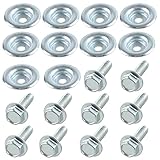
I remember the first time I stared at a massive bin overflowing with what felt like a million identical metal things. My project needed specific fasteners, and I was completely lost. Fast forward a few years and countless wasted hours digging through the wrong stuff, and I’ve learned a thing or two about making sense of the chaos. Especially when it comes to something as seemingly simple, yet deceptively complex, as a 235 bolts.
There’s a lot of noise out there about screw types, thread counts, and tensile strengths. Most of it will make your head spin faster than a stripped bolt head.
Forget the jargon for a minute. Let’s cut to the chase and talk about what actually matters when you’re trying to get a job done right.
Why You’re Probably Buying the Wrong 235 Bolts
It’s easy to fall into the trap of thinking all bolts are created equal. You walk into the hardware store, see a pile that looks about right, grab a handful, and hope for the best.
I’ve done it. We all have. But when you’re dealing with something specific, like a 235 bolts, that casual approach can cost you time, money, and a whole lot of frustration.
The problem isn’t usually the bolt itself, but the lack of understanding about what makes one bolt the right bolt for a given application. People get hung up on basic things like length and diameter, which are obviously important, but they often overlook the subtle details that make or break a project. For instance, I once spent an entire Saturday trying to secure a new shelf bracket because I’d grabbed zinc-plated bolts when I really needed stainless steel. The rust started showing up within weeks, and the whole thing looked janky.
That was a harsh lesson in environmental factors impacting fastener choice.
The common advice is often to just ‘get a bolt that fits’. That’s like saying ‘get a tool that works’.
It’s not helpful. You need to know why it works, or more importantly, why it might fail. The material, the thread pitch, the head type – these aren’t just fancy terms; they dictate how the bolt performs under stress and in different environments.
For important applications, ignoring these can lead to premature failure, damaged equipment, or even safety hazards. Think about attaching a heavy-duty drawer slide or a mounting bracket for a piece of machinery. A bolt that looks okay might be too weak, too prone to corrosion, or simply not designed for the type of load you’re putting on it.
I’ve seen projects fail not because the design was bad, but because the fasteners were chosen based on guesswork rather than actual needs.
The sheer variety can be overwhelming. You’ve got your standard hex bolts, carriage bolts, lag bolts, machine bolts, and then within each of those, you have different grades, materials, and thread types. For someone just trying to fix a wobbly chair or build a simple garden box, it’s overkill. But when you’re looking for a 235 bolts, it implies a certain level of specificity or a particular application where those details do matter. So, the first step is to understand why you need that specific type and what characteristics are a must for your situation. Without that context, you’re just shooting in the dark.
Decoding the Specs: What ‘235’ Actually Means
So, what the heck does ‘235’ even mean when you’re looking at bolts? It’s not a universal standard like a typical SAE or metric designation you see on most hardware. This is where things get a bit fuzzy, and often, it’s more about a manufacturer’s internal numbering or a specific product line than a globally recognized classification. (See Also: Are All Honda Atv Bolt Patterns The Same )
If you’ve encountered ‘a 235 bolts’ in a manual or on a parts list for a piece of equipment, it’s likely a proprietary designation. This means you’re probably not going to find a generic ‘235 bolt’ at your local big-box hardware store. You’ll likely need to source it from the manufacturer of the equipment or a specialized supplier that carries parts for that specific brand or model.
Let’s break down what you might be looking for, even if the ‘235’ is just a code. Most bolts are defined by a few key characteristics: diameter, length, thread pitch, material, and grade. For a ‘235 bolt’, the diameter and length will be the most immediately obvious physical attributes you’ll need to match.
Is it a short, stubby bolt or a longer one? Is it thin like a screw or solid like a structural fastener? Beyond that, the thread pitch (how many threads per inch or millimeter) is important for making sure it mates correctly with its corresponding nut or tapped hole.
A fine thread won’t work with a coarse thread, and vice-versa. This is a common point of confusion and a frequent cause of fasteners not working as expected.
Material is another big one. Are you dealing with plain steel, zinc-plated steel, stainless steel, brass, or something else? This affects its strength, corrosion resistance, and even its aesthetic.
A bolt used outdoors will need different material properties than one used inside a climate-controlled workshop. And then there’s the grade.
This is usually indicated by markings on the bolt head and refers to its tensile strength – basically, how much force it can withstand before breaking. Higher grades mean stronger bolts.
If ‘235’ is tied to a specific piece of machinery, the manufacturer has chosen this bolt for a reason, likely balancing strength requirements with cost and material availability. You absolutely don’t want to substitute a lower-grade bolt if the original was specified for its strength, especially in load-bearing applications. I learned this the hard way with a trailer hitch assembly; using a bolt that looked right but was a lower grade led to a terrifying wobble at highway speeds.
Never again.
Where to Find Your Elusive ‘235 Bolts’
Okay, so you’ve identified that you need a ‘235 bolt’, and you’ve realized it’s not something you’ll find hanging next to the drywall screws. Your best bet, overwhelmingly, is to go back to the source. If this bolt came with a product – say, a piece of furniture, an appliance, or some kind of machinery – check the owner’s manual. Most manuals will have a parts list, and that’s where you’re most likely to find the official part number or a more descriptive specification that will help you track it down. Sometimes, the manufacturer will even sell replacement parts directly.
If the manual is silent or you can’t get info from the manufacturer, your next step is to look for specialized fastener suppliers. These aren’t your typical hardware stores.
These are businesses that deal in industrial hardware, often catering to mechanics, machinists, and engineers. They have vast catalogs and the knowledge to help you decipher obscure part numbers. You might need to provide them with the dimensions (diameter, length) and thread pitch you’ve measured from an existing bolt, along with any identifying marks on the head. (See Also: Are Ak Bolts Interchangeable )
They can often cross-reference part numbers or help you find an equivalent if the exact ‘235’ designation is no longer available or has been superseded. I once needed a very specific type of bolt for an old motorcycle restoration, and the local guys were clueless, but an online industrial fastener supplier had exactly what I needed within their specialized listings.
When you’re talking to these suppliers, be prepared to describe the bolt as accurately as possible. Take clear pictures of the bolt head, showing any markings.
Measure its length from under the head to the tip. Use a thread gauge or a nut of a known size to determine the thread pitch.
If you know the material it’s supposed to be made of (e.g., stainless steel for outdoor use, high-strength alloy for stress), mention that too. It’s also worth checking online marketplaces like Amazon or eBay, but be cautious. You’ll find a lot of generic fasteners there, and while you might get lucky, it’s harder to verify quality and exact specifications.
Stick to reputable sellers who offer detailed product descriptions and clear images, especially for something with a specific identifier like ‘a 235 bolts’.
Common Mistakes When Replacing Speciality Bolts
The biggest mistake people make is assuming ‘close enough’ is good enough. When you’re dealing with a specific designation like ‘a 235 bolts’, it implies a particular need. Maybe it’s a specific thread profile that makes sure a self-locking feature, or a unique head shape that needs to sit flush in a recessed hole. If you substitute a standard bolt with a slightly different thread pitch, it might seem to thread in, but it could compromise the integrity of the joint. Over time, vibration or stress could cause it to loosen or fail, which is a disaster waiting to happen. I’ve seen this happen with furniture assembly where a slightly off-spec bolt led to a wobbly table that eventually collapsed.
Another common pitfall is getting the material or grade wrong. Let’s say the original ‘235 bolt’ was made of a high-strength alloy for a important load-bearing part.
If you replace it with a standard zinc-plated steel bolt, you might be introducing a weak point. The zinc coating might look fine initially, but it offers far less tensile strength than a proper alloy. For outdoor applications, using plain steel when galvanized or stainless is required will lead to rust and eventual failure. I once tried to save a few bucks by using a standard bolt on a bike component that was supposed to be stainless.
Within a few months, it was pitted and seized, making it impossible to remove without cutting. That ‘saving’ cost me more in the long run.
People also tend to overlook the head type. Some bolt heads are designed for specific tools (like Allen heads or Torx), while others are designed to fit flush in a particular countersink or to prevent tampering. If you use a bolt with a different head type, it might not sit properly, it could interfere with other components, or it might require a different tool to install or remove, which can be a major headache down the line.
Finally, there’s the issue of counterfeit or low-quality fasteners. Especially when ordering online, if a deal seems too good to be true for a specialized bolt, it probably is. You might end up with bolts that are undersized, have weak threads, or are made of inferior materials, which defeats the purpose of having a specific bolt in the first place.
What If I Can’t Find the Exact ‘235 Bolt’?
If you’ve exhausted all avenues for finding the exact ‘235 bolt’ and come up empty, don’t panic. The first step is to gather as much information as possible about the original bolt. You’ll need precise measurements for diameter, length, and thread pitch. (See Also: Are All Bolt Patterns The Same )
Look for any markings on the head that might indicate material or grade. If it’s a specific shape, take detailed measurements of the head and any recesses it fits into. With this data, consult with a reputable industrial fastener supplier. They have the expertise to help you find a suitable alternative that meets or exceeds the original specifications.
Sometimes, a slightly different but compatible thread pitch or a bolt made from a more solid material can serve as an excellent substitute. Just make sure that any replacement meets the load-bearing and environmental requirements of the application. For less important applications, you might be able to use a standard bolt of the correct dimensions and thread pitch if the ‘235’ designation was more about a kit or a convenience than a unique engineering requirement.
Practical Tips for Dealing with Specialty Fasteners
When you’re hunting down a specific fastener like a 235 bolts, organization is your best friend. Keep a detailed log of any hardware you remove from a project. Take photos before you disassemble anything. Label bags or containers with the part name, dimensions, material, and where it came from. This sounds anal, I know, but trust me, when you’re weeks or months later trying to reassemble something, this information is gold. I learned this the hard way when I took apart a complex piece of equipment for cleaning and had no idea which bolt went where. It took me days to figure it out, and I ended up using a few wrong ones that I had to replace later.
Invest in some basic measurement tools. A good set of digital calipers is invaluable for accurately measuring bolt diameter and length. A thread gauge is also a lifesaver for determining thread pitch without guesswork. You can find these online for a reasonable price, and they’ll save you from buying the wrong fasteners. For thread pitch, you can also often use a nut of a known size if you have one lying around – if the bolt threads smoothly into the nut, you’ve likely found a match. I keep a collection of common nuts and bolts specifically for this purpose.
Don’t be afraid to ask for help, but ask the right people. Go to a dedicated fastener supply shop, not just a general hardware store. The staff there are usually much more knowledgeable about different types, materials, and standards. Bring the bolt with you if you can, or at least clear photos and your measurements.
If you’re buying online, be meticulous. Read descriptions carefully, check the seller’s reputation, and look at customer reviews. If the listing is vague or lacks detail, move on.
It’s better to pay a little more for a reputable source than to end up with junk. And for any application where failure could be dangerous – like structural components, vehicle parts, or anything under significant load – always err on the side of caution and use a fastener that is clearly rated for the job. When in doubt, consult an engineer or a professional who understands the specific demands of your project.
| Fastener Type | Common Use | Pros | Cons | Verdict (for ‘235’ needs) |
|---|---|---|---|---|
| Hex Bolt | General assembly, machinery | Easy to grip with a wrench, widely available | Can be bulky, requires clearance for wrench | Likely not a ‘235’ unless it’s a specific size/thread |
| Carriage Bolt | Woodworking, securing panels | Smooth, rounded head prevents tampering/snagging, good for wood | Head can’t be turned without access to the nut, limited tensile strength | Unlikely to be a ‘235’ unless for a very specific aesthetic/security |
| Machine Screw | Joining metal parts, electronics | Precise thread engagement, good for precise alignments | Often smaller, requires matching tapped hole or nut | Possible if ‘235’ refers to a very small, specific machine screw |
| Socket Head Cap Screw | Machinery, tight spaces | Recessed head allows for flush mounting, high tensile strength | Requires Allen wrench, can be expensive | A strong contender if ‘235’ implies high strength and low profile |
When Is It Okay to Substitute a Bolt?
It’s okay to substitute a bolt when the original ‘235 bolt’ was part of a generic hardware kit, or if it was specified for a very basic, non-important application where dimensions and thread pitch are the only real factors. For instance, if you’re assembling a simple garden bench and the manual calls for a specific bolt that you can’t find, but you can find a standard bolt of the exact same diameter, length, and thread pitch made from a suitable material (like galvanized steel for outdoor use), then a substitution is usually fine. The key is to make sure the substitute bolt meets or exceeds the original’s mechanical properties – strength, corrosion resistance, and thread engagement. If the original bolt was specified for a particular reason, such as a specific tensile strength grade (like Grade 5 or Grade 8 in SAE terms), special alloy for extreme temperatures, or a unique thread form for vibration resistance, then you absolutely must find an equivalent that matches those important specifications. Substituting in those cases can lead to premature failure and safety issues.
Final Verdict
So, that’s the lowdown on tracking down a 235 bolts. It’s usually not about a standard size you can pick up anywhere, but rather a specific part number tied to a particular product or manufacturer. The best approach is always to go back to the source: check your manuals, contact the manufacturer, or find a specialized fastener supplier. Don’t wing it with generic hardware; the wrong fastener can cause more problems than it solves.
Take the time to measure accurately, identify the material and thread pitch, and don’t hesitate to ask for expert advice. It might seem like a hassle now, but it’ll save you headaches, money, and potential failures down the road. For those times you’re digging through a bin of fasteners, remember that a little bit of knowledge goes a long way.
My advice? If you’re unsure, always get a second opinion from someone who deals with fasteners day in and day out. They’ve seen it all and can usually point you in the right direction, even if the exact ‘235 bolts’ isn’t readily available.