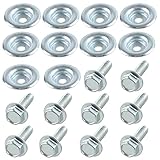
I used to think bolts were just bolts. Throw ’em in a drawer, grab one when you need it, right? Then I learned the hard way that certain fasteners, especially specific ones like a 325 a 140 a 490 a 255 bolt not be reuse under certain conditions.
That time I reused a important bolt on my old bike, thinking I was saving a few bucks, and ended up with a bent wheel and a much bigger repair bill. It’s a lesson many of us learn eventually: not all bolts are created equal, and some definitely shouldn’t be reused.
This isn’t about being cheap; it’s about being smart and safe. Let’s talk about when and why a 325 a 140 a 490 a 255 bolt not be reuse.
Why Some Bolts Are One-and-Done
Look, nobody likes spending money on things that seem disposable. Bolts often fall into that category for folks. But the reality is, a bolt isn’t just a piece of metal holding two things together. It’s engineered. It’s designed to withstand specific stresses, torques, and environmental conditions. When you take a bolt out, especially one that’s been under load, you’re often compromising its integrity, even if you can’t see it.
Think about stretching. When you tighten a bolt, you’re basically stretching it slightly. This stretch creates the clamping force that keeps everything snug. Once it’s been stretched and then relaxed, it might not have the same elasticity or strength when you try to reuse it. This is particularly true for high-strength fasteners or those used in important applications like automotive steering or suspension. Manufacturers often mark these with specific codes, like the ‘a 325 a 140 a 490 a 255 bolt not be reuse’ designation, to signal their single-use nature.
My first real ‘aha!’ moment with this was on a car I was restoring. I’d taken the manifold off, and the bolts looked perfectly fine. Shiny, no obvious damage. I bolted it back on, cranked them down, and thought I was a genius. A week later, I had a pretty significant exhaust leak. Turns out, those manifold bolts had stretched just enough that they couldn’t maintain a perfect seal under heat and vibration. Cost me a new gasket set and a lot of head-scratching to figure out why.
It’s not just about stretching, either. Thread damage is another culprit. Even if you’re careful, unscrewing a bolt can introduce microscopic nicks or burrs to the threads. These might not seem like much, but they can cause the bolt to seat improperly the second time around, leading to uneven stress distribution. This is where a 325 a 140 a 490 a 255 bolt not be reuse becomes a genuine safety concern, not just an annoyance. The structural integrity of whatever you’re fastening is compromised, and that’s never a good thing.
Also, consider the materials. Some bolts are made from alloys that are designed for a specific load cycle. Reusing them can lead to fatigue. It’s like bending a paperclip back and forth; eventually, it breaks. Bolts in high-vibration environments or those subjected to repeated thermal expansion and contraction are prime candidates for fatigue failure if reused. The markings on a bolt aren’t just random numbers; they often denote material strength, grade, and sometimes, intended use, including single-use applications.
What to Look for: The Signs of a Bolt That’s Seen Better Days
So, how do you tell if that bolt you’re holding has earned its retirement? It’s not always as simple as looking for a snapped head. Often, the damage is subtle, but important. First off, obviously, is any visible thread damage. Run your finger along the threads. Feel for any ‘catches,’ rough spots, or bent sections. If you see any deformation, even minor, consider that bolt retired.
Next, check the head. Look for rounded-off edges, especially if you used a wrench that wasn’t quite the right fit. A bolt head that’s slightly mangled makes it harder to apply the correct torque, and it can also indicate that the bolt has been subjected to excessive force. This is where having a good set of metric and SAE wrenches, and always using the correct size, pays off in the long run. I’ve got a set of impact sockets that have saved me countless times when a stubborn bolt head was about to round off. (See Also: Are All Honda Atv Bolt Patterns The Same )
Then there’s the subtle stuff. If you’re dealing with a bolt that’s supposed to be a specific grade or type, like the a 325 a 140 a 490 a 255 bolt not be reuse, and it looks different – maybe it’s a lighter color, or the markings are faint or worn – that’s a red flag. Manufacturers put those markings there for a reason. If they’re gone, you’ve lost important information about the bolt’s capabilities.
One thing that trips people up is corrosion. A little surface rust might seem cosmetic, especially on a non-important fastener. But if that rust has eaten into the metal, even slightly, it has weakened the bolt. You might not see it directly, but it’s there. For anything structural or safety-related, it’s best to err on the side of caution and replace any bolt showing signs of significant corrosion.
Let’s talk about the feel. When you’re putting a bolt in for the second time, does it thread in too easily? Or does it feel gritty and resistant? Too easy can mean the threads are damaged, or the mating surface is compromised. Too resistant can mean cross-threading is happening, which is a fast track to a ruined bolt and hole. A properly torqued bolt should feel smooth and consistent as it seats.
Finally, consider the context. Was this bolt holding something under high stress, like a brake caliper bracket or a suspension component? Was it in an area exposed to extreme heat or chemicals? If the answer is yes to any of these, then even if it looks okay, it’s probably best to swap it out. A few bucks for a new bolt is way cheaper than a tow truck or a hospital bill. I learned this the hard way after reusing a couple of suspension bolts on an old truck; they vibrated loose faster than I thought possible, and the steering felt squirrelly for days before I figured out what was wrong.
Common Mistakes and Why They’re Bad Ideas
The biggest mistake, hands down, is the ‘it looks fine’ mentality. People see a bolt, it’s not broken, it’s not bent, and they figure it’s good to go. This is especially true for bolts that aren’t obviously important. You might be tempted to reuse a bolt from a piece of furniture, a car door panel, or even a kitchen appliance. And for many of those, sure, it’s probably fine. But the line gets blurry, and it’s easy to cross it without realizing it.
Another common blunder is using the wrong tool. I’ve seen people use pliers on bolt heads, hammer them in, or use an impact driver when a torque wrench is called for. This kind of abuse not only damages the bolt but also makes it impossible to achieve the correct clamping force. The manufacturer specified a torque value for a reason. If you can’t get the bolt to seat properly because the head is rounded, or you’re unsure if it’s tight enough, you’re basically gambling with the integrity of your assembly.
Over-tightening is another classic error. You think ‘tighter is better,’ so you keep cranking. This is a surefire way to strip threads, snap the bolt head off, or, you guessed it, stretch the bolt beyond its elastic limit, making it weaker for any subsequent use. It’s a lesson I learned on a differential cover – I wanted it ‘really snug,’ and ended up twisting one of the bolts clean off. The subsequent repair involved drilling and tapping a new thread, which was a messy job.
Then there’s the issue of mismatched bolts. Sometimes, you might have a whole bunch of bolts that look similar, and you grab one that’s ‘close enough.’ Different lengths, different thread pitches, or different material strengths can cause all sorts of problems. A bolt that’s too short won’t engage enough threads to be secure. A bolt with the wrong thread pitch might cross-thread easily or not hold at all. And using a lower-grade bolt in a high-stress application is just asking for trouble.
The ‘it’s just a bolt’ mindset is dangerous. Take, for example, the specific case of a 325 a 140 a 490 a 255 bolt not be reuse. These aren’t just generic fasteners; they often have specific material properties and are designed for a single, precise application where failure is not an option. Ignoring such designations is a recipe for disaster. I once saw a friend’s motorcycle swingarm fail at speed because he’d reused important pivot bolts. Thankfully, he only ended up with a scraped knee and a totaled bike, but it could have been so much worse. (See Also: Are Ak Bolts Interchangeable )
Here’s a contrarian take for you: While everyone says to replace important bolts, I think there’s a place for reusing bolts if and only if they are explicitly designed for multiple uses and show absolutely no signs of wear or deformation. However, the vast majority of hardware store bolts, and certainly any bolt marked for single use, should be treated as disposable. The risk and potential cost of failure far outweigh the minor savings of reusing a questionable fastener.
Real-World Applications and Practical Tips
Where does this apply most often? Automotive is a big one. Many engine components, suspension parts, brake system fasteners, and important chassis bolts are designed for single use. Think about head bolts, connecting rod bolts, wheel lug nuts (though these are often replaced with tires), and manifold bolts. These take a beating from heat cycles, vibration, and extreme loads. The manufacturer often stamps them with torque-to-yield (TTY) or stretch-to-yield (STY) specifications, indicating they are meant to be used until they reach a specific elongation, which is usually only once.
Aerospace and industrial machinery also rely heavily on single-use fasteners. In these fields, the cost of failure is astronomically high, so they adhere strictly to specifications. For the average DIYer or mechanic, this means paying attention to service manuals. If the manual says ‘replace bolt X,’ then you replace bolt X. It’s not a suggestion; it’s a directive based on engineering calculations.
What about less important applications? For many general assembly tasks, furniture, or even some basic home repairs, reusing bolts is generally fine. If you’re putting together an IKEA shelf, or replacing a hinge pin on a shed door, the stakes are much lower. The key is to assess the risk. Is this fastener holding together something that could cause injury or significant damage if it fails?
Here’s a practical tip: Keep a small jar or baggie for the bolts you remove from any disassembly. Label it with the project and date. This way, when you reassemble, you’re less likely to mix them up with spares or grab the wrong size. If you’re unsure about a specific bolt, especially one marked like a 325 a 140 a 490 a 255 bolt not be reuse, just buy a new one. They’re usually inexpensive, and the peace of mind is worth the small cost.
Another tip: Invest in a good torque wrench. Not a click-type for precision work; get a digital or beam-type for important fasteners. And learn how to use it correctly. Applying the specified torque is often as important as using a new bolt. Many modern fasteners require a two-stage tightening process: first to a snug torque, then an additional angle turn.
Finally, when in doubt, consult the manufacturer’s documentation. For vehicles, this is the service manual. For appliances, look for parts diagrams online. They often provide specific instructions regarding fastener reuse. If you can’t find specific guidance, and the fastener is in a load-bearing or safety-important area, assume it’s single-use.
When Are New Bolts Worth the Money?
It boils down to risk versus reward. The reward for reusing a bolt is saving a few cents, maybe a dollar or two. The risk? Catastrophic failure, injury, damage to other components, and significantly higher repair costs. It’s a no-brainer for me. I’ve personally paid the price for being too thrifty with fasteners, and it’s never been worth it.
Consider this table. It’s not exhaustive, but it gives you a general idea of when I’d lean towards replacing a bolt, and when I might reconsider. The ‘Verdict’ is my personal take, based on years of tinkering and fixing things that others have messed up. (See Also: Are All Bolt Patterns The Same )
| Application/Bolt Type | Typical Use Case | My Verdict on Reuse |
|---|---|---|
| Automotive Head Bolts | Securing engine cylinder head to block | NEVER. Always replace. Torque-to-yield. |
| Automotive Suspension Bolts | Control arms, ball joints, tie rods | RARELY. If explicitly stated as reusable and in perfect condition. Otherwise, NO. |
| Exhaust Manifold Bolts | Attaching exhaust manifold to engine block | Depends on material and heat cycles. Often NO, especially after multiple removals. |
| Brake Caliper Bolts | Mounting brake caliper to knuckle | NEVER. Important safety component. Replace. |
| Wheel Lug Nuts/Bolts | Attaching wheel to hub | Typically NO, especially if threads show wear or they’ve been over-torqued. Cheap insurance. |
| Furniture Assembly Bolts | Cabinets, shelves, tables | USUALLY YES. Low stress, non-important. Inspect for damage. |
| Appliance Bolts | Door hinges, access panels | USUALLY YES. Unless there’s visible damage. |
| Specific Marked Bolts (e.g., a 325 a 140 a 490 a 255 bolt not be reuse) | As designated by manufacturer | ABSOLUTELY NOT. Follow manufacturer’s instructions. |
The key takeaway here is that safety-related components and high-stress applications are where you absolutely do not want to cut corners. The cost of a new bolt is measured in dollars. The cost of a failure in these areas can be measured in much, much more.
People Also Ask: Common Questions Answered
Can I Reuse a Bolt If It Looks Perfectly Fine?
While a bolt might look fine, its internal structure could have been compromised through stretching or metal fatigue. Important fasteners, especially those with torque-to-yield specifications, are designed for single use. Reusing them, even if they appear undamaged, can lead to weakened clamping force and potential failure over time. It’s always best to err on the side of caution for safety-important components.
What Does a Torque-to-Yield Bolt Mean?
A torque-to-yield (TTY) bolt is engineered to be tightened to a specific torque and then further tightened by a specified angle. This process intentionally stretches the bolt to its yield point, creating a precise and strong clamping force. Because it’s stretched permanently, it should not be reused, as its elastic properties are altered, and it will not achieve the correct clamping force on a subsequent installation.
How Do I Know If a Bolt Is a Torque-to-Yield Bolt?
Manufacturers typically indicate if a bolt is torque-to-yield in the vehicle’s service manual or on the fastener itself with specific markings. These bolts are often found in important areas like engine components (head bolts, connecting rod bolts) and suspension parts. If the service manual specifies a two-stage tightening process (torque plus angle), it’s a strong indicator that the bolt is TTY and not meant for reuse.
What Is the Difference Between a Bolt and a Screw?
In general usage, ‘bolt’ often refers to a fastener that passes through a hole in two or more parts and is secured by a nut. A ‘screw,’ on the other hand, typically engages with its own threads or threads tapped into one of the parts. While the distinction can be blurry, especially with self-tapping screws, bolts are generally used with a nut to create a strong joint by clamping. The term ‘bolt’ also implies a higher strength application.
Conclusion
So, there you have it. Not all bolts are created equal, and some, like that specific a 325 a 140 a 490 a 255 bolt not be reuse, are definitely a one-and-done deal. It’s about understanding when you’re dealing with a important component versus something more forgiving.
My advice? Unless you’re absolutely certain a bolt is designed for multiple uses and shows zero signs of stress or damage, just buy a new one. The few dollars you save upfront are rarely worth the headache, potential damage, or safety risks down the line.
Next time you’ve got a bolt in your hand, take a good, hard look. Does it look like it’s ready for round two, or has it earned its place in the scrap metal bin? Make the smart choice.