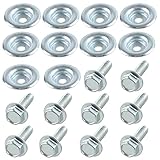
I remember the first time I saw it – a tiny little 25.0g bolt, supposedly made of some special alloy that ‘absorbed’ vibrations. I was building a high-end audio rack, trying to chase that elusive perfect sound. Naturally, I thought, ‘This has to be the magic bullet!’ So I shelled out a frankly ridiculous amount for a handful of these fancy bolts. Spoiler alert: my music didn’t suddenly sound like a live concert.
It got me thinking about all the hype around specialized components. Sometimes, the marketing is just… a lot. I’ve learned the hard way that not every niche product is a revelation. You end up wasting cash on things that sound impressive but do next to nothing in the real world.
So, let’s cut through the noise. What’s the deal with a 25 0 g bolt made of an alloy that supposedly absorbs shock or vibration? Is it snake oil, or is there a genuine, albeit niche, application for it?
What’s the Big Idea Behind ‘absorbing’ Bolts?
Alright, let’s get down to brass tacks. When someone talks about a 25 0 g bolt made of an alloy that ‘absorbs’ something, they’re usually hinting at vibration dampening or shock absorption. Think about it: anything with moving parts, or anything that’s part of a system that experiences vibrations, could theoretically benefit from something that eats up that unwanted energy. In the audio world, this is often about preventing micro-vibrations from reaching sensitive components, like turntables or DACs, which are supposed to be isolated for optimal performance. In industrial settings, it could be about reducing wear and tear on machinery or preventing resonance that could lead to structural fatigue.
The ‘alloy’ part is where it gets a bit murky. Alloys, by definition, are mixtures of metals, or a metal mixed with one or more other elements. The specific blend of elements in an alloy dictates its properties – strength, flexibility, conductivity, corrosion resistance, and yes, its ability to absorb energy. Some alloys are designed to be inherently more ‘compliant’ or to have internal damping characteristics. This means when subjected to stress or vibration, the atoms within the alloy structure can move and dissipate that energy as heat, rather than transmitting it straight through.
I once tried using some specialized bolts for a DIY speaker cabinet. The idea was to reduce resonance of the cabinet itself. I splurged on these bolts made from some proprietary titanium-magnesium alloy.
The theory was sound: the alloy would absorb vibrations from the woofers, preventing them from coloring the mid-range and treble. After I meticulously assembled the cabinet with these expensive fasteners, I fired up my trusty test track. Did it sound different?
Marginally, maybe. Was it a night-and-day transformation? Absolutely not. It made me wonder if I’d been sold a bill of goods, or if the effect was so subtle it was lost in the acoustics of my room.
It’s a classic case of chasing perfection where the gains are almost imperceptible to the average ear, or in many practical applications, completely negligible.
The weight, 25.0g, is also a clue. It suggests these aren’t your standard mild steel bolts. They’re likely made from a more exotic, potentially lighter, but certainly more expensive material. The weight itself isn’t the absorption mechanism, but it’s a characteristic of the material chosen for its other properties. It implies precision engineering and a specific purpose, which often translates to a higher price tag.
How These Alloys Actually Work (or Don’t)
Let’s unpack the ‘how.’ When a bolt is subjected to vibration, it’s basically being shaken. This shaking causes stress within the material.
In a typical steel bolt, most of that energy gets transmitted along the length of the bolt and into whatever it’s holding. Think of it like tapping on a metal rod – the sound travels all the way down.
Now, imagine an alloy designed for damping. The internal structure of this alloy has a higher capacity to absorb that vibrational energy. (See Also: Are All Honda Atv Bolt Patterns The Same )
Instead of just passing it along, the atoms within the alloy shift and slide against each other more readily, converting the kinetic energy of the vibration into a tiny amount of heat. This process is called internal friction or mechanical damping.
A common example of materials with good damping properties are certain types of polymers or even specific composites. For metals, it’s trickier. You’re looking for alloys where the atomic bonds have a bit more ‘give’ or where the microstructural features (like grain boundaries or phase interfaces) can help dissipate energy. For instance, some magnesium alloys are known for their damping characteristics. Aluminium alloys can also be engineered for better damping, though it’s often a trade-off with strength.
Here’s the contrarian take: while the physics of damping are real, the practical impact of a single bolt, even a specialized one, is often wildly overstated in marketing. Everyone says you need specialized damping materials for sensitive equipment. I disagree, and here is why: a system is only as good as its weakest link. If the rest of your setup is vibrating like a tuning fork, one tiny bolt isn’t going to magically silence it.
You need a all-around approach. For example, with my audio rack, I later found that simply using rubber grommets between the shelf supports and the uprights made a far more significant difference than fiddling with fancy bolts.
It’s about managing the overall system, not isolating one micro-component with a single fastener.
My first real ‘uh-oh’ moment with this came when I was assembling a DIY drone. I’d read that using specific types of damping screws on the motor mounts would reduce vibration transmission to the frame, leading to smoother flight and better camera footage. I bought these tiny, expensive screws that looked like they had a rubberized coating, or maybe they were a composite.
I installed them, feeling very professional. When I flew the drone, the footage was slightly less shaky, but it was also slightly blurrier.
Turns out, the ‘damping’ wasn’t perfect and introduced a different kind of micro-blur. I switched back to standard, high-quality machine screws with a tiny drop of Loctite, and the clarity of the footage improved significantly. Lesson learned: sometimes, less is more, and the ‘special’ material isn’t always the best solution.
What to Look for (and What to Ignore)
When you’re eyeing something like a 25 0 g bolt made of an alloy with supposed absorption properties, you need to be a discerning shopper. First, ask: what exactly is it absorbing, and why do you need it absorbed? If you’re not dealing with a vibration-sensitive application, save your money.
If you are in a niche where damping matters, dig into the specifics. What is the alloy composition? While proprietary blends are common, a reputable manufacturer should at least give you a general idea of the base metals and any key additives. Is it a magnesium alloy? A specific aluminum blend? Understanding the base material can give you clues about its inherent damping capabilities.
Look for data, not just claims. Does the manufacturer provide any independent testing or specifications regarding its damping coefficient or vibration dampening effectiveness? Graphs showing frequency response reduction or resonant frequency shifts are more convincing than vague promises. Be wary of marketing fluff that uses terms like ‘revolutionary’ or ‘unparalleled’ without backing it up.
Consider the context of your application. A bolt designed for a high-speed train chassis will have different requirements than one for a sensitive laboratory instrument. The 25.0g weight suggests a smaller bolt, likely for precision equipment rather than heavy-duty industrial use. For example, in some scientific instruments, specific alloys are used for their non-magnetic properties and thermal stability, which can indirectly relate to vibration resistance. The ‘absorption’ might be a secondary benefit, or even a marketing angle on top of other important properties. (See Also: Are Ak Bolts Interchangeable )
Here’s a comparison of common fastener material properties, keeping in mind that ‘absorption’ is a specific function that isn’t always a primary spec:
| Material Type | Typical Properties | Vibration Damping Potential | Opinion/Verdict |
|---|---|---|---|
| Standard Steel (e.g., Stainless 304) | Strong, durable, corrosion-resistant | Low to Moderate | Good all-rounder, but transmits vibration readily. |
| Titanium Alloys | High strength-to-weight, excellent corrosion resistance, relatively stiff | Moderate | Excellent for strength and weight, but not primarily for damping. |
| Aluminum Alloys (e.g., 6061) | Lightweight, good corrosion resistance, moderate strength | Moderate to Good | Can offer better damping than steel, but varies greatly by alloy. |
| Magnesium Alloys | Very lightweight, good machinability, known for good damping | Good to Very Good | Often cited for damping properties, but can be more prone to corrosion and impact damage. |
| Proprietary ‘Damping’ Alloys | Varies greatly, often optimized for specific vibration frequencies | Potentially High (if engineered correctly) | Requires strong evidence to justify cost. Marketing claims can be misleading. |
What to ignore? Anything that sounds too good to be true. If a bolt promises to fix all your audio hum issues or make your machinery run like new just by screwing it in, it’s probably just a bolt.
Real-World Use Cases: Where Does It Actually Matter?
So, where would a 25 0 g bolt made of an alloy with absorption properties actually find its niche? Think about applications where even tiny amounts of vibration can cause significant problems. High-precision scientific instruments are a prime example. Lasers, sensitive measurement equipment, microscopes – these often require extreme isolation from external vibrations to function accurately. In these contexts, every component, including fasteners, might be scrutinized for its contribution to system stability.
Another area is high-end audio and video equipment. While I’ve been skeptical, there are audiophiles who swear by specialized fasteners for their turntables, amplifiers, and speaker stands. The idea is to prevent vibrations from traveling through the chassis and degrading the sound quality. In a perfectly tuned system, where every other variable is controlled, a component that offers even a marginal reduction in spurious vibrations might make a difference to an extremely discerning listener. It’s a bit like a chef adding a pinch of a rare spice – it’s subtle, but to the expert, it’s noticeable.
Aerospace and high-performance automotive applications also come to mind. In aircraft and race cars, weight savings are most important, and vibration is a constant enemy. While standard high-strength alloys are common, specialized materials might be employed in important areas to manage fatigue due to vibration. The ‘absorption’ property could be a secondary benefit of an alloy chosen for its strength-to-weight ratio and thermal stability under extreme conditions.
I had a friend who was a professional photographer specializing in macro shots. He built a custom camera rig designed to minimize handshake and vibration. He spent a fortune on components, including specialized bolts for the articulating arms. He claimed these bolts, made of a particular aluminum alloy, helped stabilize the rig considerably, allowing for sharper close-up shots. While I couldn’t definitively prove it without blind testing in his studio, he was genuinely happy with the results and felt the investment was worthwhile for his specific, demanding application. This is a good example of where a niche product can shine, provided the user has a clear understanding of their needs and the product’s potential benefits.
In the world of advanced manufacturing, such as in certain types of robotics or 3D printing machinery, precision is key. Minimizing vibrations can directly impact the accuracy and finish of manufactured parts. Therefore, specialized fasteners that contribute to this goal might be specified. The 25.0g weight might indicate a bolt used in smaller, highly precise robotic arms or delicate sensor mounts within such machinery.
Common Mistakes and How to Avoid Them
The biggest mistake people make is buying into the hype without understanding the underlying need. You see a shiny 25 0 g bolt made of some fancy alloy and assume it will magically improve your project. This often leads to wasted money and disappointment. Always ask yourself: ‘What problem am I trying to solve?’ If the answer isn’t directly related to vibration or shock, then these specialized bolts are probably overkill.
Another common pitfall is treating a single component as a silver bullet. If your overall system is riddled with vibration issues, a few ‘absorbent’ bolts won’t fix everything. I learned this the hard way with my drone. I tried isolating one component, thinking it was the source of all my shaky footage, only to find that the problem was systemic. It’s like putting a band-aid on a broken bone. You need to address the root cause, which might involve better structural design, different mounting techniques, or more complete damping solutions that affect the entire system.
Overpaying is a given if you’re not careful. These specialized fasteners are inherently more expensive than standard ones. Do your research. Compare prices from different suppliers. If one vendor is charging ten times the price for what appears to be a similar material or specification, be suspicious. Look for independent reviews or testimonials from people using the bolts in similar applications to yours. Sometimes, a standard material with a smart design application (like using a rubber washer or a damping pad) can achieve better results for a fraction of the cost.
Here’s a personal blunder: I once bought a set of ‘vibration-isolating’ washers for my computer case to reduce hard drive noise. They were made of some sort of gel-like polymer. The hard drive mounted fine, but the washers themselves seemed to expand and contract with temperature changes.
This caused slight shifts in the drive’s position, leading to intermittent connection issues and, yes, more clicks and whirs as the drive tried to recalibrate. I ended up ditching them for standard rubber grommets, which were far more stable and effective. (See Also: Are All Bolt Patterns The Same )
It was a good reminder that ‘specialized’ doesn’t automatically mean ‘better,’ and sometimes simpler is more reliable. Stick to established standards or well-proven materials unless you have a very compelling, evidence-based reason not to.
Finally, don’t confuse damping with insulation. Damping is about absorbing energy within the material itself. Insulation is about physically separating components to prevent energy transfer. A bolt might offer some damping, but it also forms a direct physical connection. For true isolation, you often need to combine materials and techniques, and a single bolt, no matter how advanced, is rarely the whole solution.
Practical Tips for Using Specialized Fasteners
If you’ve decided that a 25 0 g bolt made of an alloy with absorption properties is genuinely right for your project, here are some practical tips. First, read the instructions. This sounds obvious, but specialized components often have specific installation requirements. Torque settings might be different, or there might be a preferred orientation for the bolt. Manufacturers usually provide this info for a reason.
Second, consider using them strategically. Don’t replace every single bolt in your project with these expensive ones. Identify the important points where vibration is most likely to cause an issue and use your specialized fasteners there. For example, if you’re building a speaker cabinet, focus on the bolts that attach the drivers to the baffle, or the bolts that hold the baffle to the main cabinet structure. This helps manage cost while still targeting the most effective areas.
Third, use them in conjunction with other damping or isolation methods. A specialized bolt might offer marginal benefits on its own, but when combined with rubber mounts, damping pads, or a well-designed enclosure, its effect can be amplified. Think of it as adding another layer of defense against unwanted vibrations. For instance, if you’re mounting an electronic component, use the specialized bolts but also make sure the component itself is on a vibration-dampening base.
Fourth, keep records. If you’re experimenting with these kinds of components, document what you used, where you used it, and what results you observed. This will be invaluable if you need to troubleshoot later or if you decide to iterate on your design. Having a logbook of your modifications and their perceived impact can save you a lot of guesswork down the line. I keep a messy notebook for this stuff, and while it’s not fancy, it’s saved me from repeating mistakes more than once.
Finally, be patient. The effects of vibration damping can be subtle. You might not notice a dramatic difference immediately. Listen critically over time, perhaps with different types of music or under different operating conditions. Sometimes, the benefits become more apparent with prolonged use or when comparing it to a system that lacks such features.
Are ‘vibration Absorbing’ Alloys Different From Regular Alloys?
Yes, they are designed to have specific microstructural properties that allow them to dissipate vibrational energy more effectively, typically by converting it into heat through internal friction. Regular alloys prioritize strength, corrosion resistance, or cost, rather than damping as a primary function.
Can I Use a 25 0 G Bolt Made of an Alloy Absorbed for Structural Load-Bearing Applications?
It depends entirely on the specific alloy and the application’s requirements. While some specialized alloys offer excellent damping, they might also have lower ultimate tensile strength or shear strength compared to standard structural steels. Always check the manufacturer’s specifications for load-bearing capacity before using them in important structural roles.
How Do I Test If a Specialized Bolt Is Actually Working?
Blind testing is the most reliable method. Have someone else swap out the specialized bolts for standard ones without you knowing which is which. Then, evaluate the performance. If you can consistently and accurately identify which setup is using the specialized bolts, and the difference is significant, then they are likely working. Subjective listening or observation can be unreliable due to placebo effects.
Is a 25 0 G Bolt Too Heavy or Too Light for Vibration Absorption?
The weight itself (25.0g) is a specification of the bolt’s size and material density, not directly its vibration absorption capability. What matters is the alloy’s internal damping characteristics. A heavier bolt made of a less effective alloy might transmit more vibration than a lighter bolt made of a superior damping alloy. The weight is an indicator of the material and size, which are factors in overall performance, but not the absorption mechanism itself.
Final Verdict
So, after all this, what’s the verdict on a 25 0 g bolt made of an alloy that ‘absorbs’ vibrations? It’s not pure snake oil, but it’s also not a magic wand. The physics are real, and in highly specialized, vibration-sensitive applications, these fasteners can offer a subtle but measurable improvement. However, for most everyday projects, the cost and complexity far outweigh the marginal benefits.
My advice? Approach them with healthy skepticism. Do your homework, understand precisely what problem you’re trying to solve, and look for concrete evidence of performance, not just marketing buzzwords. If you’re building a competition-grade audio system or a scientific instrument, then by all means, investigate further. But if you’re just trying to tighten up a wobbly chair, stick to your trusty old wrench and a standard bolt.
Ultimately, the effectiveness of a 25 0 g bolt made of an alloy absorbed hinges on your specific needs and expectations. Don’t let the promise of advanced materials blind you to practical realities and cost-effectiveness. Sometimes, the best solution is the simplest one.