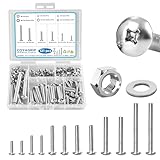
Ever been on a train, minding your own business, and suddenly, thunk? A bolt drops from the ceiling of a train car. My first thought wasn’t about structural integrity, it was more like, ‘Great, now what? Am I going to be late because of a runaway fastener?’ It’s a bizarre scenario, sure, but it’s the kind of unexpected thing that can happen when you’re relying on complex machinery moving at high speeds. This isn’t about grand engineering failures; it’s about the little things that can go wrong and what you, or more likely the train operator, need to know.
It’s easy to dismiss such an event as a minor annoyance, a one-off. But behind that simple ‘thunk’ can be a chain of events that requires immediate attention. Whether you’re a passenger who experienced it or someone curious about how these systems are maintained, understanding the implications is key. Let’s cut through the panic and get to what actually matters when a bolt decides to take a detour.
What Happens When a Bolt Drops From the Ceiling of a Train Car
Look, I’ve spent enough time tinkering with cars and bikes to know that loose bolts are the enemy. So, when a bolt drops from the ceiling of a train car, it’s not just a funny anecdote for your buddies. It’s a sign that something isn’t quite right. Think about it: trains are massive, constantly vibrating, high-speed machines. Every single component, especially those holding up parts of the carriage you’re sitting in, has a job to do. When one fails, even a small one like a bolt, it can have a ripple effect.
First off, safety. That bolt could have landed on someone’s head, causing injury. Even if it misses everyone, it signifies a potential failure point. Is the whole panel it came from now loose? Could more bolts follow? This isn’t just about aesthetics; it’s about the fundamental structural integrity of the vehicle. Train manufacturers and operators have rigorous maintenance schedules for a reason. They’re designed to catch these issues before they become serious problems. However, like anything mechanical, things can wear out, vibrate loose, or be affected by unforeseen stresses. The common advice is to report it immediately, and that’s not wrong, but it’s the why behind it that’s more interesting.
From an operational standpoint, a fallen bolt can trigger immediate inspections. Depending on the location and the type of bolt, it might mean a section of the train is taken out of service. This isn’t about a massive overhaul; it’s about a quick fix.
A mechanic will likely be dispatched, assess the damage, find the missing bolt (or a replacement), and secure the panel. Often, it’s a simple case of a bolt not being tightened enough during a previous maintenance cycle or a washer failing. The key is swift identification and resolution. I remember a time working on a vintage motorcycle where a tiny screw holding a fairing piece vibrated loose.
It wasn’t going to cause a crash, but it rattled like hell and looked terrible. I eventually found it, but it took me hours of riding and listening.
On a train, that kind of ‘rattle’ is a red flag that needs immediate attention from professionals. (See Also: Are Bolt Carrier Groups Interchangeable )
The real issue isn’t usually the single bolt itself, but what it implies about the overall upkeep. Is it an isolated incident, or is it symptomatic of a larger maintenance lapse? This is where the passenger experience meets the operator’s responsibility. Most of the time, it’s a minor, easily fixable issue. But the potential for something more significant is always there, and that’s why the ‘thunk’ isn’t something to be ignored, even if it happens to you on a quiet journey.
Why That Loose Fastener Isn’t Just a ‘minor Glitch’
Let’s be blunt: most of us don’t think about the sheer number of bolts holding a train together. We’re talking thousands, maybe tens of thousands, depending on the size and type of train. Each one is there for a specific reason, contributing to the overall structural integrity. When a bolt drops from the ceiling of a train car, it’s a visceral reminder that these complex systems are made of individual parts, and those parts can, occasionally, fail.
My contrarian take? While safety is most important and reporting is necessary, the immediate panic some people feel is often overblown for a single bolt. Everyone jumps to ‘structural collapse!’ when in reality, it’s usually a localized issue. It’s like a screw coming loose on your car’s interior trim. Annoying, yes. Dangerous? Usually not. The real danger, in my experience, comes from a pattern of these issues, or a bolt in a truly important load-bearing position. A bolt from the interior ceiling panel is far less likely to cause immediate catastrophic failure than, say, a bolt holding a suspension component on a car.
However, the reason train operators take this seriously isn’t just about the individual bolt. It’s about the domino effect. A loose panel can flap in the wind, creating noise and potentially blocking emergency exits or access points. It can also hide further problems. What if that bolt was holding up a wiring harness, and now that harness is dangling, potentially shorting out or getting damaged? Or what if it was part of a larger assembly that now has increased stress on its remaining fasteners? These are the questions maintenance crews have to ask.
I once had a panel inside my car’s door start rattling. Turned out a few clips had broken, and the panel was held on by just one screw. It wasn’t going to fall off, but it was an eyesore and a noise annoyance. The key here is that the train manufacturer’s documentation, and the maintenance protocols derived from it, are designed to account for these potential failure modes. They’re not just guessing; they have detailed procedures for inspecting and tightening these components. The fallen bolt is a trigger for those procedures to be enacted, not necessarily evidence of imminent disaster. It’s a signal, not a death knell.
| Component Location | Potential Issue | Likelihood of Catastrophic Failure | My Verdict |
|---|---|---|---|
| Interior Ceiling Panel | Loose or missing bolt | Low | Annoying, needs fixing, but rarely important on its own. |
| Underneath the Carriage (External) | Loose or missing fastener on important systems (brakes, suspension) | High | Immediate stop and inspection required. Extremely dangerous. |
| Door Mechanism | Loose bolt on hinges or locking mechanism | Medium | Potential for door malfunction, especially during operation. Needs prompt attention. |
| Luggage Rack Mount | Loose bolt | Low to Medium | Risk of rack detaching if heavily loaded. Inspect and tighten. |
What to Actually Do (and Not Do)
So, you’re on the train, and a bolt drops from the ceiling of a train car. What’s the protocol? First, don’t panic. Seriously. The train isn’t going to spontaneously disassemble. Take a deep breath. Then, assess the situation calmly. Where did it land? Is anyone hurt? Is the bolt just sitting there, or did it dislodge a larger piece of trim?
The most important thing you can do as a passenger is to discreetly inform a member of the train staff. Find a conductor or any uniformed employee and explain what happened. Be specific: ‘A bolt fell from the ceiling above seat X,’ or ‘The panel near door Y came loose, and a bolt fell out.’ Don’t make a scene, but be clear and direct. They are trained to handle these situations and will initiate the appropriate procedures. They might mark the area, inspect it, or report it to the maintenance crew at the next stop. (See Also: Are Bcm Bolt Carrier Groups Good )
What not to do is try to fix it yourself. You’re not trained on train mechanics, and you don’t have the right tools. Tampering with train equipment is a serious offense, and you could cause more damage or create a genuine safety hazard. Don’t ignore it either. Even if it seems like a minor issue, it’s a signal that something needs attention. Reporting it is your civic duty as a passenger concerned about safety and proper operation. Think of it as your contribution to keeping the trains running smoothly.
I remember a time, years ago, when a piece of trim in a rental car came loose. It was just a small plastic piece, but it bothered me. I didn’t have tools to fix it, so I just tucked it away. Later, when I returned the car, the rental agent pointed it out. I felt a bit foolish. It wasn’t a big deal to them, but it showed a lack of attention to detail on my part. On a train, that ‘lack of attention’ can have much bigger consequences. So, report it. It’s the right thing to do, and it helps make sure that the train continues its journey safely for everyone else.
The Role of Maintenance and Inspections
This is where the real work happens, long before a bolt decides to take a vacation. Train maintenance isn’t just about fixing things when they break; it’s a proactive, often incredibly detailed, process designed to prevent things from breaking in the first place. When a bolt drops from the ceiling of a train car, it’s a failure of that preventative system, or at least a sign that it needs a tune-up. Train operators adhere to strict schedules mandated by regulatory bodies, like the Federal Railroad Administration (FRA) in the US. These aren’t suggestions; they are requirements based on years of data and safety analysis.
Inspections typically happen at multiple levels: daily checks by train crews, more thorough weekly or monthly inspections by mechanics, and deeper, scheduled overhauls that can occur annually or even more frequently depending on the component’s wear and tear. During these inspections, technicians are looking for a whole range of issues: worn parts, loose connections, cracks, corrosion, and yes, loose fasteners. They use specialized tools, checklists, and their own experience to identify potential problems.
The technology involved is also advancing. Modern trains often have sensors that can monitor vibrations, stress levels, and component performance in real-time. This data can alert operators to anomalies before they become visible problems. However, even with advanced tech, the human element is indispensable. A trained eye can spot things that sensors might miss. They’ll check the torque on bolts, the condition of welds, the integrity of electrical connections, and the overall cleanliness and order of the train’s interior and exterior.
The cost of this maintenance is significant, but it’s far less than the cost of an accident, a major service disruption, or a damaged reputation. For example, a typical heavy maintenance check for a passenger train car can cost anywhere from $50,000 to $150,000, depending on the type of train and the extent of work. This includes labor, parts, and specialized equipment. When you consider that a train can have dozens, if not hundreds, of cars, the annual maintenance budget runs into millions. It’s a huge undertaking, but it’s what keeps these massive machines moving safely day in and day out.
So, while a single bolt falling might seem like a small thing, it’s a reminder of the complex web of maintenance and inspection that’s constantly at work. It’s a signal that maybe, just maybe, a bolt that was supposed to be checked last week got missed, or a vibration over time finally did its job. It’s a data point for the maintenance teams to investigate further. (See Also: Can 556 Bolt Carrier Group Use On 300 Blackout )
People Also Ask
What Is the Average Lifespan of a Train?
The lifespan of a train varies greatly depending on the type of train, its usage, and the maintenance it receives. Passenger trains, particularly those operating on high-speed lines or in demanding urban environments, often have a service life of 20 to 30 years. However, with diligent maintenance, some components can be refurbished or replaced, extending the operational life of the train considerably, potentially up to 40 years or more. Freight trains might have a different economic lifespan based on wear and tear rather than outright obsolescence.
What Happens If a Train Part Falls Off?
If a train part falls off, it’s treated as a serious safety incident. The train is typically stopped immediately, and the affected section is inspected. Depending on the size and criticality of the fallen part, the train might be taken out of service entirely and moved to a maintenance depot. Investigations are launched to determine the cause, which could range from material fatigue and manufacturing defects to improper maintenance or external damage. Passengers would be accommodated on another service, and repairs would be made before the train is returned to service.
Can a Bolt Falling Cause a Train Derailment?
While a single bolt falling from an interior panel is highly unlikely to cause a derailment, a bolt failure in a important structural component could contribute to one. Derailments are usually caused by a combination of factors, such as track defects, excessive speed on curves, wheel or axle failures, or significant structural damage to the train itself. A loose bolt in a load-bearing part of the undercarriage or suspension system, if it leads to the failure of that system, could indeed be a contributing factor, but it’s rarely the sole cause.
Real-World Scenarios and Lessons Learned
It’s easy to talk theory, but let’s look at some actual situations. I’ve heard stories, and even experienced minor versions myself, where small failures cascade. Once, during a very bumpy ride on an older commuter train, a section of the overhead luggage rack started to sag alarmingly. It wasn’t a bolt falling, but the rivets holding it seemed loose. Everyone nervously eyed it, and a few people moved their bags. The train staff were alerted, and thankfully, by the next stop, a maintenance worker was on board to temporarily secure it. That wasn’t a bolt from the ceiling, but the principle is the same: a fastener failure leading to a visible problem.
Another time, working on a car, I replaced a brake caliper bolt that had vibrated loose. It was a important component. If that had failed completely, the brake would have been compromised. I got lucky; I caught it during routine maintenance. The lesson learned was that torque specs are there for a reason, and sometimes you need a bit of thread locker even when the manual doesn’t explicitly say so for certain high-vibration applications. This applies tenfold to trains moving at high speeds.
The common thread in these scenarios is that the failure of a single component, even something as simple as a bolt, is a symptom. It’s a signal. It means that the regular checks might have missed something, or the environmental stresses are greater than anticipated. For train operators, each incident, no matter how small, is a data point. They log it, investigate it, and use it to refine their maintenance procedures. Perhaps a specific type of bolt in a certain location is known to vibrate loose more easily. Perhaps a particular batch of fasteners had a manufacturing defect. These are the kinds of things they try to uncover to prevent future issues.
The goal is always to prevent the catastrophic. A bolt dropping from the ceiling of a train car is usually far from that, but it’s a link in the chain of safety. It’s a reminder that the smooth ride we take for granted is the result of constant vigilance and meticulous attention to detail by countless people working behind the scenes. Ignoring the small stuff, whether as a passenger or a mechanic, is how the big stuff eventually happens.
Verdict
So, the next time you hear that unnerving thunk and a bolt drops from the ceiling of a train car, you’ll know it’s not necessarily the start of a disaster movie. It’s more likely a minor hiccup in a highly complex system that relies on thousands of fasteners to keep everything together. Your best bet is to calmly inform the train staff, let them do their job, and trust in the extensive maintenance protocols that are in place.
It’s a testament to the engineering and maintenance crews that these incidents are relatively rare and usually easily rectified. But they are important reminders that even the smallest component has a role to play. Paying attention to these signals, even the ones that make a noise, is what keeps everything running safely and reliably.