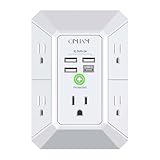
I remember standing in my first tiny studio apartment, surrounded by boxes, and staring at the wall. A single, ancient-looking outlet. Panic set in. I had a laptop, a phone charger, a lamp, and the vague, terrifying thought: am I allowed to use the outlets on my apartment? It felt like there was some secret landlord rulebook I hadn’t been given. The reality, thankfully, is far less dramatic, but it’s a question that pops up more often than you’d think, especially when you’re trying to power up your life.
Most of us just plug things in without a second thought. But what if you’re pushing the limits? What if your landlord has specific rules, or what if you’re just plain curious about how much juice you can actually draw?
The Big Question: Landlord Rules and Common Sense
Let’s get this straight from the jump: in the vast majority of cases, yes, you are absolutely allowed to use the outlets in your apartment. They are there for your basic living needs – powering your fridge, your lights, your TV, your phone. Your lease agreement typically covers the use of utilities, and unless you’re doing something wildly illegal or incredibly power-hungry, you’re in the clear. I’ve lived in a dozen places, from dingy basement studios to slightly-less-dingy suburban apartments, and not once has a landlord tried to dictate which outlet I could use for my toaster. The idea that you’d need permission for standard electrical use is mostly a myth, a leftover anxiety from thinking about communal power sources or something.
However, there are nuances. If your apartment is older, the wiring might be, shall we say, temperamental. My cousin once rented a place built in the 70s, and if she ran the microwave and the toaster at the same time, the lights in the living room would dim. It wasn’t that she wasn’t allowed to use them, it was that the ancient wiring simply couldn’t handle it. This is where common sense comes in. If an outlet seems loose, sparks when you plug something in, or your circuit breaker trips every time you use a particular appliance, that’s a sign to back off and maybe let your landlord know, rather than insisting on plugging in your industrial-grade blender.
I once tried to get fancy and install a dedicated high-wattage outlet for a massive gaming PC setup in a rental. Big mistake. While I technically could have done it if I owned the place, my lease explicitly stated no ‘permanent alterations’ without written consent. So, while you can use the existing ones, be mindful of what you’re plugging into them. Think about the appliance’s power draw. A simple desk lamp? No sweat. A portable welding machine? Probably not a good idea. The common advice to check your lease is sound, but don’t overthink it for everyday use. Most leases are more concerned with you not rewiring the place yourself or running a crypto-mining farm.
Understanding Your Apartment’s Electrical Load
Okay, so you’re allowed to use them, but how much can you actually ask of them? This is where things get a little more technical, but it’s super important if you’re someone who likes to plug in a lot of things, or high-power things. Your apartment’s electrical system is designed with a certain load capacity. Think of it like a highway: it has a certain number of lanes and a speed limit. If too many cars try to jam onto it at once, or if they’re all trying to go 100 mph, you get a traffic jam, or in electrical terms, a tripped circuit breaker or worse.
Each circuit in your apartment is usually protected by a circuit breaker or a fuse. These are safety devices designed to cut off power if too much current is drawn, preventing overheating and potential fires. A standard household circuit is often rated for 15 amps or 20 amps, and typically runs at 120 volts. To figure out the maximum wattage a circuit can handle, you multiply amps by volts. So, a 15-amp circuit at 120 volts can theoretically handle 1800 watts (15A * 120V = 1800W). A 20-amp circuit can handle 2400 watts (20A * 120V = 2400W).
Now, you don’t usually run just one appliance on a circuit. Lights, your router, your fridge – they’re all drawing power.
So, you can’t just look at an outlet and assume it can handle 1800 watts. You need to consider the total load on that circuit. This is why if you plug in a high-wattage appliance like a powerful hairdryer or a space heater into an outlet that’s already powering a few other things, you might blow a fuse. My first apartment had a tiny kitchen, and the circuit for the outlets also powered the overhead light.
If I tried to run my electric kettle (around 1500W) and my toaster oven (another 1000W-1500W) simultaneously, zap, breaker down. It took me a few tripped breakers to learn which appliances had to run solo.
If you’re really curious or concerned, you can often find a panel in your apartment (usually a metal door in a closet or hallway) that lists the circuits and what they control. It might say ‘Kitchen Outlets,’ ‘Bedroom Lights,’ etc. This can help you understand which outlets share a circuit. For most people, this is overkill, but if you’re setting up a home office with multiple monitors, a powerful computer, and a laser printer, it’s worth being aware of your apartment’s electrical limits.
How to Check Your Apartment’s Circuit Breaker Panel
- Locate the breaker panel. This is usually a metal box with a door, often in a hallway, closet, or utility room.
- Open the panel. You’ll see rows of switches. Each switch controls a different circuit.
- Identify the circuits. Many panels have labels indicating what each switch controls (e.g., ‘Kitchen,’ ‘Living Room Outlets,’ ‘Bedroom Lights’).
- If unlabeled, you might need to test them. With an appliance plugged into an outlet (like a lamp), flip one breaker off. If the lamp goes out, you’ve found that circuit.
Common Mistakes and Overrated ‘solutions’
This is where I get a bit heated, because there’s so much garbage advice out there, especially online. People see an old outlet or a tripped breaker and immediately jump to buying a bunch of ‘power surge protectors’ or ‘voltage regulators’ as if they’re magic bullets. Most of the time, these are either completely unnecessary or they’re masking a deeper issue. Let’s talk about some common mistakes and what you should actually do.
Mistake #1: Assuming every outlet can handle anything. As we discussed, circuits have limits. Plugging in a 1500-watt space heater into an outlet that’s already burdened is a recipe for a tripped breaker, not a sign that you need a fancier surge protector.
The surge protector will just get overloaded too, or worse, fail to protect anything. The solution here isn’t a gizmo; it’s managing your load.
Use high-wattage appliances one at a time, or spread them across different circuits if you can figure out which outlets are on which. My friend Sarah bought a fancy, expensive surge protector for her apartment’s single outlet in her tiny kitchen. When she plugged in her high-power immersion blender and her electric kettle, the breaker still tripped. (See Also: Are American Outlets Ac Or Dc )
The surge protector just sat there, glowing impotently. She eventually figured out she just had to run them on different days.
Mistake #2: Over-reliance on ‘smart plugs’ for power management. Smart plugs are great for convenience – turning lights on and off remotely, scheduling things. But they don’t magically increase your circuit’s capacity. If you plug a high-wattage device into a smart plug and then overload the circuit, the smart plug itself might overheat or fail, or the breaker will trip. Don’t think a smart plug can handle more than a regular outlet. It’s still the same wiring behind the wall.
Mistake #3: Ignoring loose outlets or flickering lights. This is not a place to be ‘DIY’ unless you know exactly what you’re doing. If an outlet feels loose, if the prongs of your plug don’t fit snugly, or if lights flicker when you turn on an appliance, this is a sign of faulty wiring.
The ‘solution’ isn’t to jam the plug in harder or get a stronger extension cord. The solution is to tell your landlord immediately. I once had a plug that was so loose, the appliance would barely stay connected. I kept wiggling it, thinking I was just being gentle.
Turns out, the internal connections were frayed, and it was a fire hazard. My landlord had it fixed the next day, and I felt a lot safer.
Mistake #4: Thinking extension cords are a free pass. Extension cords are designed for temporary use and have their own amperage ratings. Using an underrated extension cord for a high-draw appliance is a major fire risk. Always check the rating on the extension cord and make sure it’s appropriate for the appliance you’re plugging into it. For permanent or semi-permanent setups, it’s always better to have a proper outlet installed if possible. They are generally rated for continuous use and have better safety features. My neighbor used a flimsy, thin-gauge extension cord to power a portable air conditioner for an entire summer. It got so hot to the touch, you could barely hold it. That’s a disaster waiting to happen.
Real-World Use: What Can You Power?
So, let’s get practical. What kind of stuff can you actually power from a typical apartment outlet without causing a meltdown? Most standard outlets in apartments are on 15-amp circuits, meaning they can safely handle up to about 1800 watts continuously. Some might be on 20-amp circuits (2400 watts), especially in kitchens or bathrooms where higher-power appliances are common.
Here’s a rough breakdown of common appliances and their typical power consumption (wattage):
| Appliance | Typical Wattage | Verdict |
|---|---|---|
| LED Light Bulb | 5-15W | Barely registers. Power a whole room! |
| Laptop Charger | 50-100W | Negligible. Run multiple. |
| Smartphone Charger | 10-30W | So little, it’s cute. |
| Television (LED/LCD) | 50-200W | Easy. Can run with other small devices. |
| Desktop Computer | 100-400W (more for gaming PCs) | Manageable. Pair with moderate devices. |
| Microwave Oven | 800-1500W | High draw. Best to run solo on its circuit. |
| Toaster Oven | 1000-1500W | High draw. Best to run solo on its circuit. |
| Electric Kettle | 1200-1500W | High draw. Often shares a circuit with lights or other small items. Careful. |
| Hair Dryer (basic) | 1200-1500W | High draw. Best used when other high-draw items aren’t running. |
| Space Heater (small) | 750-1500W | High draw. Can overload circuits quickly, especially older ones. |
| Portable Air Conditioner (small) | 500-1000W | Moderate to high. Check your circuit’s capacity. |
| Coffee Maker | 800-1200W | Moderate to high. Can be an issue if sharing with other heating appliances. |
Notice a pattern? Heating elements (microwaves, toasters, kettles, space heaters, hairdryers) are usually the biggest power hogs. If you’re running one of these, be mindful of what else is on that circuit. I learned this the hard way when trying to make breakfast and watch TV simultaneously. The breaker for the kitchen outlets also powered the living room TV. Every time I popped toast, the news went black. It wasn’t that I wasn’t allowed to use the outlets, it was just that the circuit was overloaded. The solution was simple: make toast after finishing my morning news. It’s about understanding the limitations and planning your appliance usage accordingly.
Many people think that if an outlet looks old, it’s automatically bad. That’s not necessarily true. Old outlets can be perfectly safe and functional if they’ve been maintained and the wiring behind them is sound. The key is to look for signs of damage, looseness, or overheating, not just age. A brand-new outlet on ancient, brittle wiring is still a risk. Conversely, a well-maintained older outlet connected to a solid system is usually fine. It’s the overall health of the electrical system that matters, not just the faceplate you plug into.
When to Call Your Landlord or an Electrician
There are definitely times when you should absolutely not mess around and instead involve your landlord or a professional electrician. Ignoring electrical issues is one of the fastest ways to turn a minor inconvenience into a serious hazard. The phrase ‘am I allowed to use the outlets on my apartment’ should really be accompanied by ‘and are they safe to use?’
Here are the red flags that mean it’s time to stop plugging things in and get help:
- Sparks or Smoke: If you see sparks coming from an outlet when you plug something in, or if you smell burning plastic or smoke, immediately unplug the device and do not use that outlet again. Call your landlord right away.
- Flickering Lights: While minor flickering can sometimes be attributed to a high-draw appliance starting up on the same circuit, persistent or severe flickering lights, especially when you’re not running anything major, can indicate loose connections or overloaded circuits further up the line.
- Warm or Hot Outlets: An outlet that feels warm to the touch, even when nothing is plugged in, is a major warning sign. It means there’s abnormal resistance in the wiring, which can lead to overheating and fire.
- Buzzing Sounds: A faint buzzing sound from an outlet or a light switch can indicate loose wiring or a faulty connection. This is not something to ignore.
- Tripped Breakers (Constantly): While occasional breaker trips are normal when you overload a circuit, if a breaker trips repeatedly, even with minimal appliance use, it might signal a more serious problem with the circuit itself or the breaker.
- Loose Outlets: If an outlet feels loose in the wall or the plug doesn’t fit snugly, it’s a hazard. The internal connections can become damaged, leading to arcing and potential fire.
In these situations, your landlord is usually responsible for arranging for repairs. Most leases stipulate that landlords must maintain the property in a safe and habitable condition, which includes the electrical system.
Don’t try to fix these issues yourself unless you are a qualified electrician. The risk of making it worse or causing an injury is too high. I once had a landlord who was notoriously slow to respond to maintenance requests. I had a buzzing outlet in my bedroom. (See Also: Are All Power Outlets Ac )
I kept putting off calling him because I didn’t want to be ‘that tenant.’ One night, I woke up to a strange smell. The outlet was warm, and a faint wisp of smoke was coming from it. I immediately called the emergency maintenance line, and they sent someone out within an hour.
It was a faulty wire connection that could have easily started a fire. That experience taught me to never hesitate on reporting serious electrical issues.
If you’re in a situation where your landlord is unresponsive or you’re in a building where you suspect systemic electrical issues (e.g., multiple neighbors complaining about the same problems), you may need to look into tenant rights in your area or consider contacting your local building code enforcement agency. But for the average renter, reporting the problem to the landlord is the first and most important step.
How to Find Your Breaker Panel
Locating your apartment’s main electrical panel is straightforward in most cases. It’s typically a grey metal box with a door, designed to house all the circuit breakers that control the electricity in your unit. Common places to find it include:
- A hallway closet
- A utility closet
- Near the main entrance door
- In a laundry area
- Sometimes in a kitchen or bathroom (less common)
Once you find it, open the door. You’ll see rows of switches. Each switch is a circuit breaker. Some panels have labels indicating what each circuit controls, which is incredibly helpful for troubleshooting. If your panel isn’t labeled, you might need to do some testing, as described in the section above, to figure out which breaker controls which outlets or lights.
The ‘am I Allowed?’ Question for Specific Appliances
Beyond the general use of outlets, some people worry about specific types of appliances or activities. Let’s address some of these common concerns. The core principle remains: are you using the outlet for its intended purpose, and are you overloading the circuit?
High-Wattage Appliances: This is the big one. Things like portable heaters, high-power hair dryers, electric kettles, and even some coffee makers can draw a lot of current.
As we’ve seen, if you plug one of these into an outlet already powering several other devices, you risk tripping the breaker. The question isn’t usually “am I allowed to use my space heater?”, but rather, “can this circuit handle my space heater plus my TV and my laptop?” The answer is often no. Many older apartments, especially smaller ones, might only have one or two circuits for a significant portion of the living space.
In such cases, you might have to choose which high-draw appliance to run at any given time. I once lived in a studio where the entire apartment, except the bathroom, was on one circuit.
Trying to run a microwave and a toaster simultaneously was impossible. I had to learn to stagger my cooking.
Gaming PCs and Home Offices: Modern gaming PCs, especially those with powerful graphics cards, can draw a significant amount of power, sometimes 500W or more under heavy load. Add monitors, speakers, charging docks, and other peripherals, and you can easily be looking at 800-1000W or more. This isn’t usually a problem if you have a dedicated circuit for your office or if the outlets in that room are on a solid circuit. However, if your office is in a room that shares a circuit with, say, your kitchen appliances, you’ll need to be very careful.
It’s often a good idea to plug your computer setup into a surge protector (for protection, not capacity) and make sure that other high-draw devices aren’t running on the same circuit. I recommend a power meter (they plug into the outlet and show you the real-time wattage) if you’re setting up a serious home office in a rental.
They’re cheap, maybe $20, and give you peace of mind.
Medical Equipment: If you have key medical equipment that requires constant power, like a CPAP machine, oxygen concentrator, or medical refrigerator, this is a special situation. While you are absolutely allowed to use these, it’s wise to discuss them with your landlord. They might be able to make sure that the circuit powering your medical equipment is reliable and not shared with high-draw appliances. In some jurisdictions, there might be specific tenant rights regarding reliable power for key medical devices. It’s good practice to inform your landlord about such needs to make sure proper functioning and safety. (See Also: Are Arc Trip Outlets Required In Hillsborough County )
DIY Projects and Hobby Equipment: Are you a crafter who uses a powerful sewing machine, a baker with specialized mixers, or a maker with 3D printers? Again, it boils down to power draw. If your hobby equipment draws a lot of watts, you need to be aware of your apartment’s electrical limits.
Some older apartments may not be wired to handle continuous high loads from multiple pieces of hobby equipment. It might be worth investing in a Kill-A-Watt meter (around $20-$30) to measure the actual power consumption of your devices. This way, you can make informed decisions about what can be plugged in together.
I have a friend who runs a small online business selling custom candles. She uses industrial-grade wax melters that draw a ton of power. Her apartment’s wiring simply couldn’t handle it, so she had to rent a small studio space with better electrical capacity for her business.
It’s about matching your needs to the apartment’s capabilities.
Common Appliance Wattage Chart Revisited
For quick reference, here’s a simplified look at typical appliance wattages. Remember, these are approximate, and actual wattage can vary by model and settings.
| Appliance Type | Approx. Wattage Range | Potential Issue |
|---|---|---|
| Small Electronics (chargers, lamps) | < 50W | None |
| Medium Electronics (TVs, computers) | 50-400W | Low risk, but multiple can add up. |
| High-Draw Appliances (heaters, kettles) | 800-1500W+ | Can easily trip breakers if other devices are running. |
The key takeaway is to respect the limits. You’re not going to blow up your apartment by plugging in your phone charger, but trying to run a space heater and a microwave on the same circuit is asking for trouble. It’s about being a responsible user of the electricity provided.
The Final Word: Safety First, Then Convenience
So, to circle back to the initial, nagging question: am I allowed to use the outlets on my apartment? For all intents and purposes, yes. They are provided for your use. However, your right to use them is intrinsically linked to the responsibility of using them safely and within the capacity of your apartment’s electrical system. It’s not about hidden rules, it’s about physics and safety.
I’ve learned over the years that the most common electrical ‘problems’ in rentals aren’t malicious landlord restrictions, but rather older wiring systems that can’t keep up with modern power demands, or users who simply don’t understand load capacity. My contrarian take? People often overspend on ‘smart’ or ‘high-tech’ solutions when the real answer is often just common sense: don’t run your entire entertainment system and a toaster at the same time on the same circuit. If something feels off – a hot outlet, sparks, constant breaker trips – that’s not a DIY fix-it situation, that’s a ‘notify your landlord immediately’ situation.
The goal is to have your appliances running smoothly without incident. This means being aware of what you’re plugging in, how much power it uses, and what else is on that circuit. Investing in a simple power meter can be incredibly revealing and can save you a lot of headaches (and potential hazards). Ultimately, being a good tenant means being a responsible user of the property’s resources, and that absolutely includes the electrical outlets. Don’t be afraid to use them, but be smart about it.
Frequently Asked Questions About Apartment Outlets
Can I Plug in Multiple Devices Into One Outlet Using a Power Strip?
Yes, you can plug multiple devices into one outlet using a power strip, but you must be mindful of the total wattage drawn by all the devices combined. A power strip doesn’t increase the capacity of the outlet or the circuit. If the total power draw exceeds the circuit’s limit, the breaker will trip, or the power strip itself could overheat. Always check the maximum wattage rating of your power strip and make sure it’s not exceeded by the sum of the devices plugged into it.
What If My Landlord Tells Me I Can’t Use Certain Outlets?
Generally, a landlord cannot arbitrarily restrict you from using standard electrical outlets unless there’s a specific safety concern or a condition outlined in your lease. If a landlord instructs you not to use certain outlets, ask for a clear, written explanation of the reason, preferably citing safety or lease clauses. If the reason is a safety issue, it’s likely they should be getting it repaired rather than restricting your use. If you believe the restriction is unreasonable or violates your lease, it might be worth consulting with a tenant’s rights organization.
Are Old Outlets Dangerous?
Old outlets themselves aren’t inherently dangerous if they are in good condition and the wiring behind them is sound. However, age can lead to wear and tear, such as loose connections, brittle insulation, or increased resistance, which can make them less safe over time. Signs of danger include outlets that are warm to the touch, spark, buzz, or don’t hold plugs firmly. If you notice any of these issues, it’s important to report them to your landlord immediately.
How Do I Know If My Apartment Has Enough Power for My Needs?
You can get a general idea by understanding your apartment’s circuit layout and the wattage of your appliances. If your circuit breaker trips frequently, it’s a strong indicator that your apartment’s electrical system is being overloaded by your current usage. For more precise information, you can use a plug-in power meter to measure the real-time wattage of individual appliances and the total load on a circuit. If you consistently trip breakers or notice dimming lights, it suggests your apartment may not have sufficient power capacity for all your devices simultaneously.
Final Thoughts
So, can you use the outlets in your apartment? Absolutely. They’re there for you. The real question, as we’ve explored, is about using them smartly. It’s not about secret landlord rules; it’s about respecting the electrical limits of your living space. Think about your high-wattage appliances, keep an eye on how many things you’re plugging into a single circuit, and for goodness sake, if an outlet looks or acts like a fire hazard, tell your landlord and don’t try to be a hero.
My own apartment adventure involved a circuit that seemingly powered half the unit. Learning to stagger my appliance use was key. Don’t be the person who blows the breaker right before an important Zoom call because you decided to make toast and brew coffee at the exact same moment. It’s about balance and a little bit of common sense.
If you’re setting up a home office, investing in a simple power meter is a genuinely smart move. It costs less than a single fancy surge protector and gives you real data. Understanding the load on your apartment’s electrical system is the best way to make sure everything runs smoothly, safely, and without drama. So go ahead, plug in your lamp, charge your phone, and power your life – just do it with a bit of awareness.