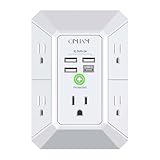
I remember the dark ages of charging. You know, when you’d plug in your phone, check it an hour later, and it had barely nudged from 30%. It was infuriating. Back then, charging bricks were clunky, and the idea of a wall outlet having its own built-in USB ports felt like science fiction. Now, we’ve got these things everywhere. But the real question on everyone’s mind, especially when you’re in a hurry: are 2.4A USB wall outlets quick?
It’s a fair question. We’re all impatient for our gadgets to juice up. So, let’s cut through the marketing hype and talk about what’s actually happening inside those little ports.
What Does 2.4a Even Mean for Charging?
Okay, let’s get down to brass tacks. When you see ‘2.4A’ on a USB port, that ‘A’ stands for Amperes, or amps. Think of amps as the amount of electrical current flowing. The higher the amps, the more electricity can be delivered at any given moment. So, intuitively, more amps should mean faster charging, right? Well, mostly. It’s not quite as simple as just looking at the number.
A standard USB-A port on older computers, for instance, typically delivered around 0.5A (500mA). That’s agonizingly slow for anything more demanding than a simple mouse or keyboard. Then came USB 2.0 standards, bumping it to 0.5A, and USB 3.0 up to 0.9A. Wall outlets, however, are designed to deliver power directly from the mains, bypassing the limitations of a computer’s USB port. A 2.4A USB wall outlet is designed to provide a dedicated 2.4 amps to a single device plugged into one of its USB ports. If an outlet has two USB ports, it might be rated for 2.4A total (meaning 1.2A per port if both are used) or 2.4A per port, which is much better.
When I first started seeing these, I was skeptical. My old charger was rated at 1A, and it felt slow. Would 2.4A really make a difference? I remember buying a cheap dual-port outlet, and one port was labeled 2.1A and the other 1A. I plugged my tablet into the 2.1A port and my phone into the 1A. My tablet, which usually took forever, seemed to be chugging along a bit better, but my phone felt… well, the same. Turns out, the device you’re charging also has to be able to accept that much current. Your phone’s battery management system is the gatekeeper.
The actual speed you experience also depends on the charging cable. A cheap, thin cable can have its own resistance, bottlenecking the power flow even if the outlet and the device are capable of more. It’s like having a wide highway (the outlet) but a narrow, pothole-ridden road leading to your destination (the cable). I once spent a good week troubleshooting a charging issue, convinced the new wall outlet was faulty, only to realize I was using a dodgy old USB cable I’d found in a drawer. Swapping it out for a decent, thicker cable made a night-and-day difference. So, while 2.4A is a good baseline, it’s only one piece of the puzzle.
The Tech Behind the Speed: More Than Just Amps
It’s easy to get hung up on the ‘2.4A’ number, but the reality of charging speed involves a few more players. The most important one, besides the outlet and the cable, is the device you’re charging. Your smartphone, tablet, or smartwatch doesn’t just suck up all the power it can get. It negotiates with the charger. This negotiation is often done through protocols like USB Battery Charging (BC) specifications, or more advanced ones like Qualcomm Quick Charge or USB Power Delivery (USB PD).
A basic 2.4A outlet, in its simplest form, is just providing a steady stream of 2.4 amps at a standard voltage (usually 5 volts). This is significantly faster than the 0.5A or 0.9A from older USB ports. For many devices that aren’t designed for fast charging technologies, 2.4A is the absolute fastest they can go via USB-A. Think of older iPhones or basic Android phones; they’ll happily sip up that 2.4A and charge as quickly as their internal circuitry allows.
However, if you have a newer flagship phone or a modern tablet that supports fast charging, simply plugging it into a 2.4A outlet might not give you the maximum speed it’s capable of. For example, if your phone supports 18W or 30W charging (which is usually achieved by increasing the voltage as well as the amperage), a plain 5V/2.4A outlet is only delivering about 12W (5V * 2.4A = 12W). You’re leaving a lot of potential speed on the table. This is where outlets with support for those faster protocols come in. Some outlets might advertise themselves as ‘smart’ or ‘adaptive,’ meaning they can detect the device and deliver the appropriate voltage and amperage within their capabilities.
I learned this the hard way when I bought what I thought was a top-of-the-line wall charger. It had multiple USB-A ports, and they all said ‘2.4A Max’. I was charging my new phone, which I knew could do 25W, and it felt… okay. Not lightning fast.
Then I looked closer at the fine print. It was a 5V-only charger. It could provide 2.4A, but it couldn’t increase the voltage. My phone needed a higher voltage to hit those higher wattage numbers. (See Also: Are American Outlets Ac Or Dc )
So, while 2.4A is quick compared to older standards, it’s not the peak of what modern devices can handle. For true speed demons, you often need USB PD or Quick Charge support, which usually means a higher wattage rating (like 20W, 30W, 45W, or even 100W for laptops) and often uses USB-C ports.
What to Look for: Beyond the ‘2.4a’ Label
When you’re out shopping for a new wall outlet with USB ports, don’t just grab the first one with ‘2.4A’ printed on it. You need to be a bit more discerning. First off, pay attention to whether the 2.4A rating is per port or total for the outlet. Many cheaper outlets will say ‘2.4A total’, meaning if you plug in two devices, each will only get 1.2A, which is not much faster than an old 1A charger. Look for outlets that explicitly state ‘2.4A per port’ or have a higher total rating if you plan on charging multiple devices simultaneously.
Another thing to watch out for is charging protocols. While a basic 2.4A outlet is fine for older devices, if you have modern smartphones, tablets, or even some laptops, you’ll want something that supports faster charging standards. Look for terms like ‘USB Power Delivery’ (USB PD) or ‘Qualcomm Quick Charge’ (QC). These standards allow the charger and your device to communicate and agree on a higher voltage and/or amperage for much faster charging. A USB PD charger, for instance, can often output 5V, 9V, 12V, 15V, or 20V, dramatically increasing the wattage (Power = Voltage x Amperage).
I’ve had outlets that look identical on the outside, but one would charge my phone in 90 minutes, and the other would take over 3 hours. The difference? One was a simple 5V/2.4A charger, and the other was a USB PD charger capable of 20W (which is roughly 9V x 2.2A). It sounds like a small difference, but it’s significant in real-world charging times. My personal rule of thumb now: if I’m buying a new outlet, I aim for at least one port that supports USB PD or Quick Charge, especially if I’m only going to use one port for my primary device.
Here’s a quick breakdown of what I look for:
| Feature | What to Aim For | My Verdict |
|---|---|---|
| Amperage Rating | 2.4A per port (minimum) | Key for older devices. Modern devices might still be limited. |
| Total Amperage | Higher is better, especially for multi-port outlets. | Avoid ‘Total’ ratings that divide power thinly. |
| Fast Charging Support | USB PD or Quick Charge (QC 3.0 or higher) | This is the real big deal for modern gadgets. Look for wattage (e.g., 20W, 30W+). |
| Port Type | USB-A and USB-C. USB-C often supports the highest PD wattages. | USB-C is the future, but USB-A is still widely compatible. |
| Brand Reputation | Reputable brands with good reviews. | Avoid no-name brands; safety and performance can be questionable. |
It’s also worth noting that some outlets have a combination. You might find an outlet with two USB-A ports, each rated at 2.4A, and then a USB-C PD port that can do 30W or more. That’s ideal for versatility. You can charge older devices at a decent clip on the USB-A ports, and your power-hungry laptop or latest phone at full speed on the USB-C PD port.
Common Mistakes People Make with USB Outlets
The biggest mistake I see people make is assuming all USB ports are created equal. They’ll see a wall outlet with USB ports and just plug in their expensive new smartphone, expecting it to charge at warp speed. Then they get frustrated when it’s slower than they anticipated. This goes back to what we discussed: the device itself, the cable, and the charging protocol all matter. A 2.4A port is a step up from 0.5A or 1A, but it’s not magic. If your phone is capable of 25W charging and you plug it into a 5V/2.4A outlet, you’re only getting about 12W. You’re basically telling your phone, “Here’s the best I can do, take it or leave it.”
Another common blunder is using a poor-quality charging cable. I’ve seen people invest in fancy, high-amperage wall outlets only to use a flimsy, unbranded cable that’s barely rated for 1A. These cables have higher internal resistance, meaning they can’t efficiently transfer the power the outlet is trying to deliver. It’s like trying to drink a milkshake through a straw that’s almost completely blocked. Some of these cheap cables can even be a safety hazard, overheating or failing to regulate power correctly. Always invest in a reputable charging cable that’s rated for the amperage and wattage you intend to use.
I distinctly remember a friend complaining his new gaming laptop wouldn’t charge fast enough from his wall outlet, even though it had a USB-C port. He was using the USB-C port that came with his laptop, which was designed for data transfer and low-power accessories, not for charging a power-hungry laptop. He thought ‘USB-C’ meant ‘fast charging,’ but that’s not always the case.
USB-C is just a connector type; the actual charging capability depends on the power delivery standards (like USB PD) supported by both the port and the charger. He needed to find an outlet with a dedicated USB PD port, ideally rated for at least 45W or 65W for his laptop. (See Also: Are All Power Outlets Ac )
He ended up buying a separate USB-C PD charger and was stunned by the difference. It’s about matching the outlet’s capabilities to the device’s needs.
Here’s a contrarian take for you: Everyone raves about getting the absolute highest wattage charger they can find, but sometimes, for devices that don’t need blistering speed (like a smartwatch or wireless earbuds), a simple 2.4A port is perfectly fine and actually better. Why? Because ultra-fast charging can generate more heat, and excessive heat over time can degrade battery health. For many accessories and older devices, a steady, reliable 2.4A is more than enough and potentially kinder to the battery in the long run. So, while speed is often the goal, don’t dismiss perfectly adequate 2.4A outlets just because they aren’t the latest, highest-wattage models.
Real-World Use: Are They Quick Enough for You?
So, after all this talk about amps and protocols, let’s bring it back to the practical question: are 2.4A USB wall outlets quick? For many people and many devices, the answer is a resounding yes. If you have an older smartphone, a basic tablet, e-readers, Bluetooth speakers, or those little USB-powered LED lights, a 2.4A port will provide a noticeable speed boost over older, slower charging methods. It means you can top off your phone during a quick break and get a decent amount of charge.
For instance, my old Kindle used to take hours to charge from empty. Plugging it into a 2.4A port cut that time down considerably, probably by about 40-50%.
That feels quick enough for my reading habits.
Consider a scenario where you’re at a hotel, an airport, or a friend’s house, and you forgot your main fast charger. You find a wall outlet with USB ports. If those ports are rated at 2.4A, you can usually get your phone to a usable charge level in about an hour or so, depending on how dead it is. That’s often sufficient for a few hours of browsing or making calls. It’s not the ‘zero to hero in 15 minutes’ you might get with a 65W PD charger, but it’s far from the agonizingly slow trickle of a 0.5A port.
I’ve installed several of these outlets in my own home, particularly in the kitchen and living room where people tend to drop their phones to charge. I specifically chose models that offered at least one 2.4A USB-A port and a USB-C port. For my partner’s iPhone 12, the 2.4A USB-A port is perfectly adequate for overnight charging and decent for a midday top-up. It’s not using its full potential fast-charging capabilities, but it gets the job done reliably and without me having to worry about whether she’s using the right cable. On the other hand, my own phone, which supports much faster charging, gets plugged into the USB-C PD port if I need a quick boost before heading out.
The key takeaway is context. Are they ‘quick’ in the context of the absolute fastest charging technologies available today? No. But are they ‘quick’ compared to what we used to have, and are they quick enough for a vast majority of everyday charging needs for non-flagship devices? Absolutely. If you’re not chasing every last minute and your devices don’t demand ultra-high wattage, a 2.4A USB wall outlet is a practical and convenient upgrade that significantly improves the charging experience.
Practical Tips for Maximizing Your USB Outlet Speed
Even if you have a 2.4A USB wall outlet, there are still ways to make sure you’re getting the best possible speed. First and foremost, always use a high-quality charging cable. As I’ve hammered home, a bad cable can cripple even the fastest outlet. Look for cables from reputable brands that are explicitly rated for at least 2.4A, or even higher if your device supports it. Thicker cables with well-made connectors are generally better. If you’re using a cable that came with a device, it’s usually a safe bet, but any cable older than a few years might be showing its age and increased resistance.
When charging multiple devices from a single outlet, check its total amperage rating. If an outlet is rated at 2.4A total, and you plug in two phones, each will likely only get 1.2A. This is still better than 0.5A, but it’s not using the outlet’s full potential. If your outlet has multiple ports and explicitly states ‘2.4A per port’, you can generally expect each device to charge at its maximum rate up to 2.4A, assuming the device can accept that. Some ‘smart’ outlets might even intelligently distribute power, prioritizing one port if it detects a device that needs more. Reading the product specifications carefully is your best friend here. (See Also: Are Arc Trip Outlets Required In Hillsborough County )
Don’t be afraid to experiment with different ports on the outlet, especially if it has both USB-A and USB-C. As mentioned, USB-C ports often support higher power delivery standards like USB PD. If you have a device that can take advantage of faster charging, and your outlet has a USB-C PD port, use it. You might be surprised at how much faster it charges. For example, I have a travel adapter with three USB-A ports (each 2.4A) and one USB-C PD port (30W). For my smartwatch, I’ll use one of the USB-A ports. But if I need to quickly charge my tablet before a flight, the USB-C port makes a huge difference.
Finally, understand your device’s charging capabilities. Check your device’s specifications or look up its charging requirements online. Knowing if your phone supports Quick Charge or USB PD, and what its maximum wattage is, will help you choose the right outlet and cable combination. If your device maxes out at 12W (like a lot of older phones), a 2.4A outlet is perfectly sufficient and you don’t need to spend extra on a 65W PD charger for it. It’s about finding the right tool for the job and not overspending or underspending based on false assumptions about speed.
People Also Ask
Are 2.4a USB Ports Fast?
Yes, 2.4A USB ports are generally considered fast compared to older USB standards like 0.5A or 0.9A. They can significantly reduce charging times for many devices, especially older smartphones, tablets, and accessories. However, they are not the fastest charging technology available today, as modern devices often support higher wattages through protocols like USB Power Delivery or Qualcomm Quick Charge.
What Is the Difference Between 2.4a and Quick Charge?
The main difference is the technology and speed. A 2.4A port provides a steady 2.4 amps at a standard 5-volt output, totaling about 12 watts. Quick Charge (QC) and USB Power Delivery (USB PD) are more advanced protocols that allow for variable voltage and amperage, enabling much higher wattage (e.g., 18W, 30W, 65W, or more). This means QC and PD can charge compatible devices significantly faster than a standard 2.4A port.
Can a 2.4a Charger Charge a Phone Quickly?
A 2.4A charger can charge a phone quickly if that phone’s maximum charging input is around 12 watts (5V x 2.4A). For many older or mid-range smartphones, this is indeed a quick charge. However, newer flagship phones often support higher wattages (20W, 30W, or more) via fast-charging protocols. For these devices, a 2.4A charger will be slower than their maximum capability.
How Many Amps Is Fast Charging?
Fast charging is generally considered anything significantly above the standard 0.5A or 0.9A of older USB ports. While 2.4A (around 12W) is a noticeable improvement, ‘true’ fast charging often starts at 18W and goes up from there, using higher voltages and amperages through protocols like USB Power Delivery or Qualcomm Quick Charge. Higher wattage (W) indicates faster charging, which is a combination of voltage (V) and amperage (A).
Final Thoughts
So, to circle back to the main question: are 2.4A USB wall outlets quick? My honest answer is yes, they are quick enough for a lot of people and a lot of devices. They represent a solid step up from the slow charging days of the past, offering a convenient way to power up your gear without needing a separate brick.
However, if you’re someone who needs the absolute fastest charge for the latest flagship phones or power-hungry laptops, you’ll need to look beyond just the 2.4A rating and seek out outlets that support USB Power Delivery or Qualcomm Quick Charge. It’s all about matching the outlet’s capabilities to your device’s needs. Don’t get caught out by marketing jargon; check those specs!
Ultimately, for most everyday charging tasks, a 2.4A USB wall outlet is a practical, affordable, and noticeably faster solution than older USB ports. Just remember to pair it with a good cable and understand what your device is capable of, and you’ll be golden. Consider upgrading your tired old outlets; the convenience is worth it, and honestly, waiting around for a phone to charge is one of life’s little annoyances we can easily fix.