I remember staring at a drawer front that had decided to go rogue, hanging at a jaunty angle. My first thought, naturally, was ‘how hard can this be?’ Then came the trip to the hardware store, and the dawning horror: are all kitchen cabinet hinges the same size? Spoiler alert: they are not. Not even close. It felt like walking into a candy store, except instead of jellybeans, it was a dizzying array of metal doodads, all promising to fix my sagging cabinet door. It was overwhelming, and frankly, a bit of a rip-off if you didn’t know what you were doing.
This whole ordeal got me thinking. Most folks just want their cabinets to shut properly, right? They don’t need a degree in cabinet hardware engineering. But the industry sure makes it seem that way sometimes. So, let’s cut through the noise and figure out what’s what.
Why Your ‘standard’ Hinges Aren’t So Standard
The simple answer to ‘are all kitchen cabinet hinges the same size?’ is a resounding no. It’s like asking if all screws are the same size.
You’ve got your tiny little eyeglasses screws and then you’ve got your massive lag bolts. Cabinet hinges are no different, and it’s not just about the physical dimensions, though that’s a big part of it.
We’re talking about the type of cabinet construction, the overlay of the door, and even the finish you’re going for. I once bought a pack of what I thought were standard hinges, only to find out they were for inset doors, not the overlay style I had.
Cue another trip back to the store, feeling like a complete idiot. These hinges come in a bewildering array of styles, each designed for a specific purpose and cabinet configuration.
You have butt hinges, surface-mount hinges, concealed (or European) hinges, and specialty hinges like barrel or butterfly hinges. Each category then branches out into sub-types based on opening angles, self-closing features, and adjustability.
The screw hole patterns are often unique to the hinge type and manufacturer, meaning you can’t just swap one out for another and expect it to fit perfectly without drilling new holes, which is a whole other headache you don’t need. The depth of the mortise needed for some hinges, or the projection of others, also means that a ‘standard’ measurement might not be standard at all for your specific cabinets.
When you’re looking at hinges, the term ‘size’ can refer to a few things. There’s the overall length and width of the hinge leaf, the diameter of the barrel (if it’s a barrel hinge), and the spacing of the screw holes.
But even more important is how the hinge interacts with the cabinet door and frame. Overlay refers to how much the door covers the cabinet frame when closed.
Full overlay doors, common in modern kitchens, have doors that nearly cover the entire face frame. Partial overlay doors leave a small gap.
Inset doors sit flush within the cabinet frame. Each of these requires different hinge types and often different mounting methods. A full overlay hinge will have a different arm or cup design than an inset hinge, even if the visible part looks somewhat similar.
The thickness of your cabinet doors and the material they’re made from also play a role. Thicker doors might need longer screws or hinges with a deeper cup for concealed types. It’s a tangled web, and frankly, it’s why so many people end up with mismatched cabinet doors or spend way more time than they should on a seemingly simple repair.
The Devil’s in the Details: What to Actually Look For
So, if they aren’t all the same, what are the actual differences you need to care about? Forget the fancy marketing jargon. You need to get your hands dirty, or at least grab a tape measure and a notepad. First off, identify your cabinet construction.
Are you working with a face frame cabinet, where you can see a solid wood frame around the opening? Or is it a frameless (or European style) cabinet, where the doors attach directly to the sides of the cabinet box? (See Also: A Box Without Hinges Key )
This is the most fundamental difference and dictates the type of hinge you’ll need. For face frame cabinets, you’ll often be looking at American-style hinges, which are typically surface-mounted or mortised into the frame. For frameless cabinets, you’re almost always going to use concealed hinges, which mount into a cutout (a ‘cup’) drilled into the back of the door.
The overlay is your next big consideration. Measure how much your current doors overlap the cabinet frame. This is usually measured in inches or millimeters.
Full overlay doors might have 1/2 inch or more of overlay, while partial overlay might be closer to 1/4 inch. If you’re replacing a hinge, matching the overlay is key to making sure the doors hang correctly and close without binding.
Then there’s the opening angle. Most standard cabinet doors open to about 90 degrees, but some hinges are designed for wider angles, like 110 or even 170 degrees, which can be useful for pantries or corner cabinets where you need maximum access. Don’t forget the material and finish. Hinges come in all sorts of metals – steel, brass, zinc alloy – and finishes like brushed nickel, oil-rubbed bronze, polished chrome, or matte black.
While this is mostly aesthetic, cheaper metals can corrode or weaken over time, especially in humid kitchen environments. I once had a cheap, plated hinge rust within a year. It looked awful and felt gritty to the touch.
For practical purposes, look at the screw hole pattern. If you’re replacing an existing hinge, try to find one with the same screw hole configuration to avoid drilling new holes. If that’s not possible, you’ll need to patch and fill the old holes, which is a pain.
Pay attention to the strength rating, too. Some hinges are rated for heavier doors, which is important if you have solid wood doors or doors with glass inserts. It’s about finding a hinge that not only fits but is also built to last and handle the weight and movement of your specific doors.
Common Mistakes That’ll Make You Scream
Okay, let’s talk about the screw-ups. We’ve all been there.
My personal favorite screw-up involved trying to ‘upgrade’ to soft-close hinges on a set of old, heavy oak doors without checking if the hinges could actually handle the weight. They couldn’t.
The soft-close mechanism basically gave up after a week, and the doors started slamming again, albeit with a slightly sad, defeated thud. The most common mistake, though, is assuming all hinges are interchangeable. People see a hinge that looks the same and just grab it. This leads to doors that don’t align, don’t close properly, or even damage the cabinet frame.
Another big one is not measuring the overlay correctly. If you get an overlay that’s too large, your doors will hit each other.
Too small, and you’ll have unsightly gaps and a frame that’s still exposed. People also often forget about the ‘reveal’ – how much of the cabinet frame is visible when the door is closed. Different hinge types and adjustments create different reveals, and if you don’t know what you’re aiming for, you’ll end up with an uneven look.
I’ve also seen people buy hinges without considering the cabinet type. Trying to put a face-frame hinge on a frameless cabinet, or vice-versa, is a recipe for disaster. The mounting points are entirely different.
And then there’s the whole ‘drill bit size’ fiasco. Concealed hinges require a specific diameter drill bit for the cup, and if you use the wrong size, you’ll either make the hole too big and the hinge won’t seat properly, or too small and you won’t be able to get the hinge in at all. (See Also: Are Integrated Washing Machine Door Hinges Standard )
It’s maddening. Don’t underestimate the power of the screw. Using screws that are too long can go right through your cabinet door or frame, and screws that are too short won’t hold the hinge securely.
It sounds simple, but these little details are where the whole project can go sideways. My advice? Take pictures.
Lots of pictures. Before you even think about buying anything, document exactly what you have. Measure everything twice, or thrice. Don’t be shy about asking for help at the hardware store, but also do your own homework so you know what questions to ask.
A Real-World Look: My Kitchen Cabinet Hinge Saga
My kitchen is a prime example of why the question ‘are all kitchen cabinet hinges the same size?’ is so important.
It’s a mishmash of styles accumulated over years. The main cabinets have those classic overlay doors, and for the most part, the hinges are pretty standard, if a bit dated. I replaced a few of these myself after one rusted out – I took the old one with me to the hardware store, and thankfully, they had an exact match. That was a win.
But then there are the drawers. Oh, the drawers. Some are on slides, which is a whole other can of worms, but two of them are actually pull-out shelves disguised as drawers, and they use a different kind of hinge system entirely. They’re these chunky, almost industrial-looking things that allow the shelf to swing out.
When one broke, finding a replacement was a nightmare. It wasn’t a standard door hinge; it was a specific pull-out shelf hinge, and I spent about three hours online trying to identify it before finally finding a specialty cabinet hardware supplier.
Then there’s the pantry door. It’s a narrow door that opens almost 180 degrees because it’s tucked into a corner. This requires a special ‘pivot’ hinge system, where the hinge pin is at the bottom and top of the door, allowing it to rotate.
It’s completely different from any other hinge in my kitchen. I learned this the hard way when I tried to buy a ‘regular’ door hinge for it. The salesperson looked at me like I had two heads.
The point is, my kitchen isn’t some perfectly hand-picked showroom. It’s lived-in. It’s functional. And it’s a testament to the fact that cabinet hardware evolves and adapts to different needs.
The hinges on a heavy, solid wood door are different from those on a lightweight particleboard door. The hinges for a corner cabinet that needs a wide swing are different from those on a standard cabinet. Even the cabinet style – whether it’s built with a face frame or as a frameless box – dictates a different hinge mechanism. So, while there might be popular sizes and types, ‘universal’ is a fantasy.
The Hinge Hierarchy: Types You’ll Actually Encounter
Let’s break down the common types of cabinet hinges you’ll find, so you know what you’re looking at when you’re staring at that wall of hardware. First up are Surface-Mount Hinges. These are often the simplest.
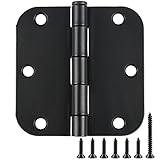
They attach directly to the surface of the cabinet door and frame. You usually see these on older cabinets or for specific applications where you don’t want to cut into the door or frame. They’re straightforward but can sometimes look a bit clunky. Then you have Butt Hinges.
These are more common and require a mortise, or a cutout, in both the door and the frame so they sit flush. They come in various sizes and can be decorative or plain. (See Also: Are Hinges Wheeels )
They’re pretty versatile for face-frame cabinets. For frameless cabinets, the king is the Concealed Hinge, also known as a European hinge. These are slick. They have a cup that’s drilled into the back of the door, and the arm attaches to the inside of the cabinet box.
They’re nearly invisible when the door is closed, which gives cabinets a clean, modern look. They also offer a lot of adjustability, which is a lifesaver for getting doors perfectly aligned. I’ve found these to be the most forgiving when it comes to minor installation errors.
Next are Overlay Hinges. This isn’t a hinge type per se, but a category based on how the door covers the cabinet frame.
Full overlay hinges are designed for doors that cover almost the entire face frame, common in modern kitchens. Partial overlay hinges are for doors that leave a small gap.
The hinge itself will have a specific arm or cup design to achieve the desired overlay. Then there are Specialty Hinges. These include things like Barrel Hinges (which look like a small barrel when closed, often used on furniture or decorative cabinets), Butterfly Hinges (which look like butterfly wings and are often decorative), and Pivot Hinges (which we talked about, often used for doors that need to swing very wide or have a unique mounting point).
When you’re shopping, you’ll often see combinations, like ‘Full Overlay Concealed Hinges’ or ‘Partial Overlay Surface-Mount Hinges.’ Understanding the basic type (butt, concealed, surface) and the application (overlay, specialty) will help you narrow down your search significantly. Don’t get bogged down in every single variation; focus on the core function and how it needs to integrate with your cabinet.
People Also Ask:
What Is the Most Common Type of Cabinet Hinge?
The most common types of cabinet hinges are concealed (European) hinges and surface-mount/butt hinges for face-frame cabinets. Concealed hinges are prevalent in modern kitchens due to their clean, hidden look and adjustability. For traditional face-frame cabinets, various styles of surface-mount and butt hinges are widely used, offering a balance of functionality and ease of installation. The ‘commonality’ often depends on the cabinet construction style.
How Do I Know What Size Hinge to Buy?
You need to know your cabinet’s overlay (how much the door covers the frame), and whether you have face-frame or frameless cabinets. Measure the distance your door overlaps the frame. If you’re replacing an old hinge, taking the old one with you to the hardware store is the best bet. Otherwise, note the screw hole pattern and the hinge’s overall dimensions. For concealed hinges, you’ll also need the correct cup size and depth for the door cutout.
Can You Mix and Match Cabinet Hinges?
Technically, yes, but it’s generally not a good idea for appearance or function unless you’re very deliberate about it. Mixing different types of hinges on the same cabinet door or adjacent doors will likely result in uneven gaps, doors that don’t align, or hardware that looks mismatched and unprofessional. It’s best to use the same type and size of hinge for all doors and drawers within a cabinet run for a cohesive look and consistent operation.
A Practical Comparison: Hinge Features That Matter
When you’re wading through the options, not all features are created equal. Some are genuinely useful, others are just marketing fluff. Here’s a quick rundown of what actually makes a difference in day-to-day use:
| Feature | Description | My Verdict | Worth It? |
|---|---|---|---|
| Soft-Close Mechanism | Dampens the door’s closing motion to prevent slamming. | Lifesaver for noisy households and protecting cabinet doors. | Absolutely, if your budget allows. Makes a huge difference. |
| 3-Way or 4-Way Adjustability | Allows for adjustment in height, depth, and side-to-side. | Key for perfect alignment, especially with concealed hinges. | Yes, especially for new installations or when doors aren’t perfectly plumb. |
| Opening Angle (e.g., 110°, 170°) | Determines how far the door can open. | Useful for specific areas like pantries or corner cabinets for better access. | Depends on cabinet location and usage. Not needed everywhere. |
| Integrated Handles/Pulls | Hinges that double as a handle or have one built-in. | Rarely practical or aesthetically pleasing. Often feel flimsy. | Generally no. Separate hardware is usually better. |
| Heavy-Duty Construction | Made from thicker metal, often with higher weight ratings. | Important for solid wood doors, glass doors, or frequently used cabinets. | Yes, especially if your doors feel heavy or you’re replacing broken hinges. |
| Matching Screw Holes | Pre-drilled holes align with existing ones on your cabinet. | A huge time-saver and prevents unnecessary drilling. | Highly desirable if you’re not doing a full renovation. |
The soft-close feature alone is worth the extra few bucks per hinge. I’ve seen hinges that claim to have ‘easy installation’ by using clips or tool-less attachment. While some are okay, they often sacrifice sturdiness for convenience. My experience is that a good, solid screw-in hinge, properly installed, will always be more reliable long-term. For concealed hinges, the adjustability is key. Being able to tweak the door’s position by a millimeter or two makes all the difference between doors that look perfectly aligned and those that have awkward gaps. It’s like fine-tuning an instrument. You might not think you need it until you’re struggling to get that perfect flush look, and then you’ll wish you had it.
Final Verdict
So, to circle back to the original question: are all kitchen cabinet hinges the same size? No, they are definitively not. The variety is immense, driven by cabinet construction, door overlay, and desired functionality. My advice? Don’t just grab the cheapest pack or the ones that look ‘close enough.’ Take the time to identify what you have, measure carefully, and understand the basic types of hinges out there. Buying the wrong hinge is just a recipe for frustration and wasted money, a lesson I’ve learned more than once.
If you’re just replacing a broken hinge, take the old one with you to the store. If you’re doing a full refit, do your homework on overlay and cabinet type. A little upfront effort saves a whole lot of headaches down the line. And for goodness sake, consider soft-close if your budget allows. Your sanity will thank you.