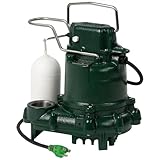
My basement flooded. Not a little bit, but enough to make me question every life choice that led me to that damp, musty abyss. That’s when I started asking: are basement watchdog sump pumps good? I’d seen the ads, the promises of dry basements and peace of mind. But I’d also blown a fortune on ‘miracle’ pet products that turned out to be glorified dust collectors. So, when it came to a sump pump, I decided to cut through the marketing fluff and get real. This isn’t about fancy features; it’s about a pump that actually does its job when the sky opens up and your foundation starts weeping.
I’ve spent years dealing with everything from leaky roofs to malfunctioning washing machines that decided my basement was the perfect place for a spa day. It’s a steep learning curve, and frankly, a costly one. You learn what’s worth the money and what’s just snake oil in a plastic casing. So, let’s talk about sump pumps, specifically the Watchdog brand, and whether they deserve a spot in your basement’s defense system.
Why I Even Cared About Sump Pumps (and Why You Should Too)
Look, nobody wakes up in the morning thinking, ‘Gee, I can’t wait to install a sump pump.’ It’s a ‘when the poo hits the fan’ kind of purchase. My first basement flood happened years ago, during a torrential downpour that felt biblical. I was out of town, and my neighbor called me in a panic.
By the time I got back, about three inches of water had crept across the concrete floor. It was a mess. Smelly, damp, and a breeding ground for all sorts of nasties.
That’s when I learned about sump pumps. I initially went with a cheap, no-name brand from the hardware store because, well, it was cheap. Big mistake.
It worked… until it didn’t. During the next storm, it sputtered, whined, and died. More water.
More expense. More misery. That’s when I realized a sump pump isn’t a luxury; it’s a necessity for anyone with a basement, especially if you live in an area prone to heavy rain or have a high water table.
People often ask about the ‘watchdog’ aspect of these pumps. It’s basically about having a backup.
Most homes have a primary sump pump, a submersible beast that kicks in when water levels rise. But what happens if the power goes out during a storm?
That’s a common scenario, and your primary pump becomes useless. A watchdog sump pump, often referred to as a battery backup sump pump system, is designed to take over when the main one fails or when the power grid decides to take a nap. These systems typically consist of a secondary pump, a battery, and an automatic switch. When the water level reaches a certain point and the primary pump isn’t running, the backup kicks in.
It’s like having a silent guardian, ready to spring into action. I’ve seen too many people get caught out by a simple power outage during a storm, only to find their basement filling up. Don’t be that person.
It’s a lesson learned the hard way, and the hard way usually involves soggy belongings and a hefty bill from the restoration company.
So, when I started looking into Watchdog specifically, I was hoping for something more reliable than my first DIY disaster. The name itself sounds promising, right? Like it’s actively watching out for your home. I’m looking for a pump that’s not going to give me anxiety every time the weather forecast looks grim. I want something that’s a set-it-and-forget-it kind of deal, but also something I can trust when it counts. My goal is to explain if these are indeed a good investment for preventing that dreaded basement flood. It’s about finding a reliable protector for your foundation and your sanity.
How These ‘watchdog’ Pumps Actually Work
Let’s get down to brass tacks. A sump pump’s job is simple: it pumps water out of your basement before it can cause damage. A typical setup involves a pit, called a sump pit, dug into the lowest part of your basement floor. When water seeps in (from rain, groundwater, or foundation cracks), it collects in this pit. A float switch on the pump rises with the water level. Once it reaches a certain height, it triggers the pump to turn on and discharge the water through a pipe that leads away from your house, hopefully to a storm drain or a safe spot on your property.
Now, the ‘watchdog’ part, the battery backup system, is where things get interesting and, frankly, necessary for many homeowners. This isn’t just one pump; it’s usually a system. You have your primary AC-powered pump, and then you have a secondary DC-powered pump that runs off a deep-cycle marine battery. The magic happens with a control unit.
This unit monitors the water level and the status of your primary pump. If the primary pump fails (maybe it overheated, or the float switch got stuck) or if the power goes out (which, let’s be honest, is often when you need the pump the most), this control unit senses it. It then automatically activates the battery-powered backup pump. This backup pump is designed to handle a significant amount of water, often at a reduced flow rate compared to the primary, but enough to keep the water level down and prevent a flood until your main pump is back online or the power is restored.
Some of the more advanced Watchdog systems, and others on the market, offer even more features. You might find models with secondary pumps that are more powerful, capable of handling a higher volume of water.
Others have smart connectivity, allowing you to receive alerts on your phone if the backup pump activates or if the battery level is low. I’ve seen systems that have multiple stages of backup, like a water-powered pump that doesn’t even need electricity or a battery, which is a wild concept but can be a lifesaver in extreme situations. (See Also: Are Blaze Pumpkins Edible )
The battery itself is a big deal; it needs to be a deep-cycle battery, like those used for trolling motors on boats, because it’s designed to be discharged and recharged repeatedly. A regular car battery won’t cut it.
You’re looking at a significant investment in the battery alone, often a few hundred dollars. The entire system, including the pump and the battery, can easily run you $400 to $800, sometimes more, depending on the brand and features. But compared to the cost of water damage remediation—which can run into the tens of thousands—it’s often a no-brainer.
I remember one instance where my main pump’s impeller got clogged with some debris that washed into the pit. The pump kept trying to run, making this awful grinding noise, but it wasn’t moving any water. Thankfully, it was daytime, and I was home. I heard the noise and saw the water level creeping up. The backup kicked in, but it was a stark reminder that the primary pump isn’t invincible, and power outages are a constant threat. The battery backup is the real hero here, the true ‘watchdog’ of your basement’s dryness.
What to Look for: Avoiding the Lemon Sump Pump
When you’re in the market for a sump pump, especially a backup system like Watchdog, you can’t just grab the first one you see. I’ve made that mistake, and let’s just say my basement paid for it.
The biggest pitfall is buying a pump that’s undersized for your needs. You need to consider the volume of water you’re likely to encounter.
This depends on your region’s rainfall, your soil type, and whether you have a high water table. A pump’s horsepower is a common metric, but it’s not the whole story. You also need to look at the Gallons Per Hour (GPH) rating at a specific ‘head height’ (how high the pump has to push the water).
A pump that’s rated for 1,000 GPH at 0 feet of head might only pump 500 GPH at 10 feet. You need to calculate the maximum head your system will require. Many manufacturers provide charts for this, and it’s worth looking them up.
Another important factor is the pump’s construction. For the main pump, cast iron is generally preferred for durability, especially if it’s submersible. Plastic pumps can be cheaper but may not last as long, and some can become brittle over time. For backup pumps, a sturdy thermoplastic or cast iron construction is still ideal.
The float switch is also a common point of failure. Mechanical float switches can get stuck on debris or wiring. Many modern pumps, including some Watchdog models, use vertical or tethered float switches, which can be more reliable.
Some even offer electronic sensors. I personally prefer a vertical float switch that has a good range of motion; I’ve had tethered ones get caught on the pump body or the side of the pit.
The battery backup system itself needs careful consideration. What kind of battery is it compatible with? Can it handle a deep-cycle battery?
How long does it take to recharge? Some systems come with their own battery, while others are designed to be paired with a battery you purchase separately.
If you buy separately, make sure you get a true deep-cycle marine or RV battery. Never, ever use a standard car battery; they are not designed for this kind of sustained discharge and will die quickly. The charger and inverter (if it’s part of the system) need to be solid. A good backup system should be able to run for a decent amount of time on a single charge – think 8-12 hours of continuous pumping, or longer on standby.
I once bought a system that claimed to be ‘backup’ but the battery it came with was tiny, and it died after maybe an hour of intermittent pumping during a storm. Complete waste of money.
Here’s a quick comparison I’ve put together based on my experiences and what I look for:
| Feature | What I Look For (Good) | What to Avoid (Bad) | My Verdict |
|---|---|---|---|
| Pump Material | Cast Iron or High-Quality Thermoplastic | Cheap, thin plastic that feels brittle | Durability is key. Cast iron lasts. |
| Float Switch Type | Vertical Float Switch or Electronic Sensor | Tethered float switch prone to snagging or sticking | Vertical switches give more reliable operation. |
| Backup Power Source | Deep-cycle Marine/RV Battery (purchased separately or included) | Standard car battery or undersized battery | The heart of the system. Don’t skimp. |
| GPH Rating (at 10ft head) | Adequate for your pit size and water volume (e.g., 1,000+ GPH) | Low GPH, especially if the pump looks small | Needs to move water fast enough to keep up. |
| Warranty | 2-3 years for pump, 1 year for battery system | Less than 1 year, or no warranty on battery | Shows manufacturer confidence. |
Don’t just trust the horsepower number. Dig into the specs. And if a deal seems too good to be true, it probably is. A cheap pump that fails when you need it most is far more expensive than a pricier one that does its job reliably.
Common Mistakes and How to Sidestep Them
I’ve made plenty of mistakes when it comes to sump pumps, and I’m happy to share them so you don’t have to repeat them. One of the most common, and frankly, infuriating, mistakes is not understanding your actual water problem. (See Also: Are Cast Iron Sump Pump Vs Plastic )
People see a puddle after a heavy rain and think, ‘I need a pump.’ But why is the water there?
Is it surface runoff getting in through a cracked foundation wall? Is it hydrostatic pressure pushing groundwater up through the floor?
The solution might be more than just a pump. Sometimes, you need to address grading around your house, install exterior drainage, or seal foundation cracks.
A sump pump is a band-aid for a bigger issue if the source of the water isn’t managed. I learned this the hard way when I installed a great pump, but still had moisture seeping in because the grading sloped towards my house.
I had to dig up a section of my yard to fix that, which was way more work than just buying a pump.
Another big mistake is neglecting the discharge line. Where is that water going?
If it’s just dumping into your neighbor’s yard or too close to your own foundation, you’re just moving the problem. You need a properly sloped discharge pipe that carries water well away from your house, ideally to a storm sewer or a dry well designed to handle that volume. And for goodness sake, make sure that discharge line doesn’t freeze in the winter!
Many systems have a way to disconnect or a freeze-guard fitting, but if it freezes solid, your pump will run dry or, worse, your basement will flood because the water has nowhere to go. I had a scare one winter when a section of my above-ground discharge line froze.
Thankfully, I caught it before it caused major issues, but it was a frantic rush to thaw it out.
Then there’s the battery. Oh, the battery. As I mentioned, using the wrong type is a cardinal sin.
But even with the right type, batteries have a lifespan. They don’t last forever. You need to check on your battery periodically. Is it corroded?
Is it holding a charge? Many battery backup systems have indicator lights or alarms that will tell you if the battery is low or if there’s a problem. Don’t ignore these. I had a friend whose Watchdog backup system was installed, and he never looked at it again for five years.
When a storm hit and the power went out, the backup didn’t kick in. The battery was completely dead and had been for ages.
He ended up with a flooded basement and a very expensive lesson about maintenance. A good rule of thumb is to test your backup pump at least twice a year, ideally in the spring and fall, by lifting the float switch manually or pouring a few buckets of water into the pit.
It’s a simple test that can save you a world of trouble.
Finally, don’t overlook the importance of professional installation, especially for the electrical connections. While many Watchdog systems are designed for DIY, if you’re not comfortable with electrical work, it’s worth hiring an electrician. Incorrect wiring can damage the pump, the battery, or worse, create a safety hazard. For the plumbing, you might be able to do it yourself, but making sure the pit is clean and the discharge line is properly connected is important.
When Is a Battery Backup Sump Pump Not Necessary?
While I’m a huge proponent of battery backup sump pumps, there are specific situations where one might be overkill. If you live in a very arid climate with virtually no risk of heavy rain or flooding, and your groundwater levels are consistently very low, a basic AC-powered sump pump might suffice. Also, if your home has a highly effective and redundant primary drainage system, like extensive French drains around the entire perimeter that reliably channel water away, a backup might be less important. However, for most homes with basements, especially in areas with variable weather patterns or older infrastructure, the risk of power outages coinciding with storms makes a battery backup system a wise investment, not a luxury. (See Also: Are Big Mac Pumpkins Hybrids )
Real-World Performance: My Take on Watchdog
I’ve used Watchdog battery backup systems in a couple of different homes over the years. My overall impression? They’re solid. They’re not necessarily the fanciest or the most feature-packed units on the market, but they tend to be reliable, which is, frankly, all I really care about when it comes to keeping my basement dry. The primary selling point for Watchdog, in my opinion, is their straightforward approach. They focus on getting the job done without a lot of bells and whistles that can sometimes add complexity and points of failure.
One of the systems I had was a straightforward AC pump paired with their battery backup. It was a relatively simple setup, and during a particularly nasty storm about three years ago, the power went out for about six hours. The Watchdog backup kicked in smoothly.
I monitored it from my phone (the system I had linked to a basic water sensor, not a full smart system) and the water level in the pit stayed well below the danger zone. The battery lasted the entire time, and when the power came back on, the primary pump took over without a hitch. That was a moment of immense relief. I’d spent about $500 on the system, plus the cost of a good deep-cycle battery ($200), and that felt like a small price to pay for the peace of mind it provided that night.
It wasn’t silent, but the hum was steady and reassuring, a stark contrast to the sound of water sloshing across the floor.
I’ve also had friends who’ve installed Watchdog systems, and their experiences have been largely positive. They appreciate the ease of installation, which many DIYers can handle, and the brand’s reputation for dependability. Where Watchdog sometimes falls short for some users is in the ‘smart’ features.
If you’re looking for advanced app integration, remote diagnostics, and constant notifications about every little thing, you might need to look at higher-end, more expensive brands. Watchdog’s strength is in its core function: reliably pumping water when the primary fails. They do offer some smart features now, with models that connect to Wi-Fi and send alerts to your phone, which is a step up from what I initially used.
I haven’t personally tested these newer smart versions extensively, but the underlying pump technology has a good track record.
I’ve seen some complaints online about battery life, but again, this often comes down to using the wrong type of battery or not performing regular maintenance. A well-maintained system with a proper deep-cycle battery should provide years of reliable service. The pumps themselves are generally solid. I’ve had one main Watchdog pump fail after about five years, but it was in a high-volume situation and frankly, it had earned its retirement.
Replacing it was straightforward, and the battery backup system was still going strong. When people ask me, ‘are basement watchdog sump pumps good?’, my honest answer is yes, they are good at their primary job.
They provide a reliable layer of protection without unnecessary complexity. For the average homeowner looking to protect their basement, they are a very sound investment.
Practical Tips for Your Sump Pump System
Beyond just choosing the right pump, there are a few practical things you can do to make sure your sump pump system, whatever brand you choose, works optimally. First, keep that sump pit clean. Debris like dirt, sand, leaves, and even small rocks can wash into the pit and clog the pump or damage the impeller. Periodically, maybe once or twice a year, you should pull the pump out (if it’s not a sealed unit) and clear out any gunk. A shop vac works wonders for this. You can also install a filter sock around the pump intake to catch larger debris before it gets sucked in. This is a cheap and easy preventative measure.
Second, inspect your discharge line regularly. As I mentioned, freeze-ups are a serious hazard in colder climates. Make sure it’s clear of obstructions, not damaged, and properly sloped away from your house. In winter, some people disconnect the section closest to the house and use a flexible hose that can be easily removed or that drains freely. Whatever you do, make sure water can escape freely. I’ve seen plumbing supply stores sell special ‘discharge line caps’ that have a small hole to let water drain out when the pump isn’t running, preventing ice buildup. They’re inexpensive and can be a lifesaver.
Third, test your system. This is a must. At least twice a year, pour a bucket or two of water into the sump pit to raise the water level. This should trigger the primary pump. Then, disconnect the power to the primary pump (unplug it or flip the breaker) and repeat the process. The backup pump should engage. Listen to it. Does it sound strained? Does it pump water out effectively? This test takes maybe five minutes and can give you immense confidence. If you have a smart system, familiarize yourself with its alerts and what they mean. Don’t wait for an emergency to figure out how to silence a low-battery alarm.
Fourth, maintain the battery. Deep-cycle batteries need attention. Check the terminals for corrosion; clean them with a wire brush if necessary. If it’s a flooded battery (not sealed), check the water levels periodically and top them up with distilled water only. Overcharging or undercharging can significantly shorten its life. If your battery backup system has a charger, make sure it’s functioning correctly. Many systems will have indicator lights to show if the battery is charging, fully charged, or has a problem. Pay attention to these indicators.
Finally, understand your pump’s limits. If you have a very large basement or expect extreme flooding conditions, a single backup pump might not be enough. Some advanced systems offer dual-pump setups or even water-powered backups that don’t rely on electricity at all, though these are less common and can be more complex. For most typical homes, a good quality battery backup system like Watchdog is sufficient, provided it’s properly maintained and the battery is up to snuff. It’s about a proactive approach rather than a reactive one. A little bit of regular attention can prevent a huge amount of heartache and expense down the line.
How Often Should I Test My Sump Pump?
You should test your sump pump system, including the battery backup, at least twice a year. The best times are typically in the spring, after winter, and in the fall, before the heavy rain and potential snowmelt season begins. Pouring a bucket of water into the pit to activate the primary pump and then testing the backup pump with the primary disconnected is a simple yet effective way to make sure both are functioning correctly. This regular testing is important for catching potential issues like a dead battery, a stuck float switch, or a clogged discharge line before they become an emergency during a storm.
Verdict
So, are basement watchdog sump pumps good? In my experience, yes, they are a reliable and sensible choice for protecting your home from water damage. They’re not the flashiest, but they focus on doing their job when it matters most. My own basements have been much drier and less stressful thanks to them.
The key is understanding what you need, not overpaying for features you won’t use, and most importantly, performing regular maintenance. A battery backup system is an investment, but one that pays for itself many times over if it prevents even a single significant flood. Don’t be the person who learns about sump pumps after the water is already knee-deep.
My final advice is to check the specs carefully, consider the size of your basement and your typical weather, and then commit to testing it regularly. It’s the simplest way to make sure your ‘watchdog’ is actually on duty when you need it most.