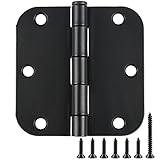
I remember staring at my builder-grade brass hinges, feeling like my entire house was stuck in a 1990s time warp. I’d tried painting them, which was a nightmare of chipped edges and uneven coats. Then, I saw it – a door with sleek black hinges, and it just… worked. It felt modern, intentional, and like a small detail that made a huge difference. It got me thinking, are black interior door hinges in style in 2024, or is this just another fleeting trend?
Honestly, when I first considered black hinges, I was worried they’d look too harsh or industrial, maybe even a bit dated themselves. But the more I saw them in different settings – from minimalist apartments to cozy farmhouse renovations – the more I realized they weren’t just a fad.
They’re a solid design choice that’s sticking around, and for good reason. Let’s break down why.
The Undeniable Allure of Black Hinges
Let’s cut to the chase: are black interior door hinges in style in 2024? The answer is a resounding yes. For years, we’ve been stuck in a cycle of brushed nickel, oil-rubbed bronze, and that ubiquitous polished brass that seems to haunt every older home. But black hardware, in general, has been making a serious comeback, and door hinges are no exception. It’s not just a trend; it’s a design evolution.
Think about it. Black is a neutral, but it’s a strong neutral.
It has a gravitas that other finishes lack. Unlike silver tones that can feel a bit sterile or warm tones that can lean dated, black adds a grounding element. It’s sophisticated without being fussy. I remember renovating my first condo and agonizing over hardware.
I ended up with brushed nickel everywhere because it seemed like the ‘safe’ choice. Fast forward a few years, and it felt… boring. I eventually swapped out the doorknobs for matte black, and it instantly made the space feel more intentional. The hinges were an afterthought, but when I saw how much better the black doorknobs looked, I knew the hinges had to go too.
That was a few years back, and even then, I felt like I was ahead of the curve. Now, it’s mainstream.
The appeal lies in their versatility. Black hinges can smoothly blend into a modern minimalist aesthetic, providing a clean, sharp line. In a more traditional or farmhouse setting, they offer a touch of rustic charm without being overly ornate. For industrial-inspired spaces, they’re practically a given, adding to that raw, urban feel. It’s like the little black dress of hardware – it just works in almost any context. They provide a subtle contrast that draws the eye without being overwhelming. This is especially true when you have lighter-colored doors or walls. The black hinges become a deliberate design accent, a small detail that speaks volumes about your attention to detail.
I’ve seen some people argue that black hardware is too severe, especially in smaller rooms or spaces with a lot of natural light. My take? It depends on the finish and the execution. A high-gloss black might be too much for some, but a matte or satin black has a softness that’s incredibly appealing. It absorbs light rather than reflecting it aggressively, which can actually make a space feel more cohesive and less jarring.
What to Look for: Beyond Just the Color
So, you’re sold on black hinges. Great. But before you rush out and buy the cheapest set you can find, there are a few things you really need to consider. It’s not just about slapping black on everything; quality and style matter. The first thing I always check is the finish. Matte black is king right now. It’s sleek, modern, and doesn’t show fingerprints as easily as a satin or gloss finish might. Satin black is also a strong contender, offering a bit of sheen without being overly reflective.
Then there’s the style of the hinge itself. The most common type you’ll see, especially in new builds or renovations where you’re replacing standard doors, is the plain, square-cornered butt hinge. These are what most people think of when they picture door hinges. They’re functional, they’re everywhere, and they come in black. But there are also decorative options. Rounded corners add a softer look. More elaborate styles, like strap hinges or pintle hinges, are typically for specific aesthetic goals – think rustic barn doors or antique reproductions. For most interior doors, a simple, clean-lined butt hinge in black is going to be your best bet for staying on-trend in 2024 and beyond.
Another important factor is the material. Most interior door hinges are made of steel, sometimes with a brass core. The black finish is typically applied over this base metal. You want a hinge that feels substantial. (See Also: A Box Without Hinges Key )
Cheap hinges can feel flimsy and might not operate as smoothly. They can also wear out faster, leading to sagging doors or squeaks – a pet peeve of mine. I once bought a pack of super cheap black hinges online because they were a fraction of the price of the name brands. Big mistake.
Within six months, the finish started to wear off on the edges where the door rubbed, and the doors started to sag noticeably. I ended up spending more money to replace them with a decent quality set from a reputable brand like Schlage or Baldwin.
Finally, consider the size and screw pattern. Hinges come in standard sizes (like 3.5-inch or 4-inch) and with different numbers of screw holes. You need to make sure the new hinges match the mortise (the cutout in the door frame and door) and the existing screw holes. If you’re replacing existing hinges, bring one with you to the hardware store or take detailed photos and measurements. Mismatched screw holes are a headache you don’t need.
Common Mistakes to Avoid Like the Plague
Okay, let’s talk about where people go wrong with black door hinges. Because, believe me, there are ways to mess this up. The most obvious mistake is going too dark everywhere. Black is great, but if you have black doors, black trim, and black hardware on every single surface, it can start to feel oppressive, like you’re living inside a cave. Contrast is your friend. Black hinges pop beautifully against a white or light-colored door. If you have a dark wood door, maybe consider a different finish for the hinges, or at least make sure there’s enough light in the room to break things up.
Another pitfall is mixing finishes haphazardly. This is something I see way too often. Someone might have black doorknobs but brushed nickel hinges, or oil-rubbed bronze pulls on their cabinets but black hinges on the doors. While a complete match isn’t always necessary, there should be some intentionality. If you’re committing to black hinges, try to commit to black hardware elsewhere in the room or on that door. It creates a cohesive look. I saw a house listing once where the doors had black hinges and black knobs, but the closet door in the same room had shiny chrome hardware. It just looked sloppy and unfinished, even though the individual pieces weren’t bad.
Then there’s the issue of quality. As I mentioned earlier, opting for the cheapest option you can find is a recipe for disaster. Those super inexpensive hinges might look fine for a hot minute, but they’re often made with thinner metal and less durable finishes. They can sag doors, become noisy, and the finish can chip or fade over time. It’s like buying fast fashion for your hardware – it looks okay initially, but it doesn’t hold up. I’d rather pay a bit more for hinges that will last and operate smoothly for years than have to replace them every couple of years.
Lastly, and this is a big one for DIYers: don’t underestimate the importance of proper installation. Hinges are what allow your doors to function. If they aren’t installed correctly, the door might not close properly, it might scrape the floor, or it might feel loose. This includes making sure the hinge pins are fully seated and that the screws are driven in firmly but not so hard that you strip the wood. It sounds basic, but I’ve seen doors installed by friends that were slightly off-kilter because the hinges weren’t set perfectly. It’s a small detail that makes a big difference to the overall feel of a room.
My Table of Black Hinge Verdicts
| Finish Type | Pros | Cons | Verdict for 2024 |
|---|---|---|---|
| Matte Black | Modern, sleek, hides fingerprints well, versatile. | Can sometimes look too flat if not paired with other textures. |
Top Pick. It’s the go-to for a reason. Effortlessly stylish. |
| Satin Black | Subtle sheen, good balance between matte and gloss, hides minor imperfections. | Can show fingerprints more than matte, though less than gloss. |
Solid Choice. A close second to matte, offers a bit more depth. |
| Gloss Black | High-impact, dramatic, can add a modern edge. | Shows every fingerprint, smudge, and scratch; can look dated if not executed perfectly; can be too harsh for some spaces. |
Use with Caution. Best for very specific, bold modern designs. Can feel a bit retro if not careful. |
| Textured Black (e.g., powder-coated) | Adds visual interest and grip, can be very durable. | Can be harder to clean if the texture is deep; might not fit all minimalist aesthetics. |
Considerable Contender. Great for a more tactile, rugged look. |
Real-World Use Cases and Why They Work
Let’s move beyond the theory and talk about where black hinges actually shine. I’ve seen them work wonders in a few different scenarios. First, the classic white door. White doors are popular because they’re neutral and bright, but they can sometimes feel a bit… plain. Adding matte black hinges instantly gives that white door some visual weight and a modern edge. It’s like adding a sharp black frame to a simple painting. It makes the door feel like a deliberate design element, not just something that covers an opening. (See Also: Are Integrated Washing Machine Door Hinges Standard )
Another place they’re a total win is in a modern farmhouse or transitional kitchen. Think white shaker cabinets, wood accents, and maybe some black pendant lights. Black hinges on the pantry door or an adjacent closet door tie the whole look together beautifully. They bridge the gap between the whites, woods, and other black accents you might have. It’s a subtle way to reinforce your color palette without being over the top. I’ve seen this done in several client homes, and it always feels pulled-together and intentional. They’re also fantastic for interior doors leading to a laundry room or powder room, where you might be using black hardware on the vanity or fixtures anyway. It creates a consistent flow.
What about a more eclectic or bohemian vibe? You might think black is too severe, but I’ve seen it work. Pair black hinges with a vintage-style door, maybe painted a deep jewel tone like emerald green or sapphire blue. The black hardware provides a grounding contrast that prevents the whole look from becoming too fussy or overly bright. It adds a touch of sophistication and mystery. It’s about using black not just as a neutral, but as a statement color that can anchor a more vibrant palette.
The ‘People Also Ask’ question about whether black hinges are too dark for small rooms is a valid one. My answer is usually no, if you choose the right finish and balance it with light. A matte or satin black hinge on a white or light-colored door in a small bedroom or bathroom is perfectly fine. It provides that necessary contrast.
The key is not to have everything be black. If your doors are black, then perhaps a different finish for the hinges would be better, or you need to make sure ample natural light and lighter wall colors to prevent the space from feeling claustrophobic. It’s about creating visual interest, not making the room feel smaller. The depth and shadow created by black can actually add a sense of dimension when used thoughtfully.
One specific instance that really sold me was in a client’s guest bathroom. The walls were a soft, muted sage green, the vanity was a natural light oak, and the door was a crisp white. I suggested matte black hinges and a matching matte black doorknob. The result was stunning. It made the simple white door feel lifted and chic, and it tied in perfectly with the subtle black accents in the tiling and a small framed print on the wall. It was a small change, but it made the entire room feel more polished and current. It’s these little details that separate a ‘decorated’ room from a ‘designed’ room.
Are Black Interior Door Hinges in Style in 2024? The Practicalities
So, we’ve established that, yes, black interior door hinges are definitely in style in 2024. But let’s get down to the nitty-gritty. How do you actually do this without making a mess or spending a fortune? The easiest and most straightforward way is to simply replace your existing hinges with new black ones. This is what I did in my own home. I measured my existing hinges to make sure I got the right size (standard 3.5-inch is common for interior doors) and counted the number of screw holes. I then looked for reputable brands that offered matte black finishes.
For a standard interior door, you’ll typically need three hinges. So, you’ll buy a set of three.
The process involves removing the door from its frame (which is usually easier than trying to swap hinges with the door in place), unscrewing the old hinges from both the door and the frame, and then screwing in the new ones. It’s important to do one hinge at a time if you’re trying to swap them with the door still on its frame, but taking the door off is generally recommended for a cleaner job and less risk of damaging the frame. I remember doing this myself for the first time and feeling a bit intimidated, but it honestly took less than an hour for all the doors in my hallway. The hardest part was aligning the new hinges perfectly so the door swung smoothly.
If you’re undertaking a larger renovation, especially if you’re getting new doors, you can often specify the hinge finish you want when you order them. This is the ideal scenario, as the hinges will be pre-installed or at least perfectly matched to the doors.
However, if you’re just looking to update the look of an existing space, replacing the hinges is a very achievable DIY project. You can find good quality black hinges for around $15-$30 for a set of three, depending on the brand and style. This means for a typical home with 10-15 interior doors, you’re looking at an investment of roughly $150-$450 to update all your hinges. That’s a relatively small price to pay for such a significant aesthetic upgrade.
What if you’re on a super tight budget or you love your current hinges but just hate the finish? Painting your existing hinges is an option, but it’s a pain. I’ve tried it, and it’s rarely worth the effort.
You have to remove the hinges, clean them thoroughly, sand them down (often), prime them, and then paint them with a high-quality metal paint. Even then, the finish is often not as durable as a factory-applied powder coating. The corners and edges are the first places to chip, and you’ll inevitably get paint on the door or frame. (See Also: Are Hinges Wheeels )
My advice? Unless you’re going for a very specific, artistic look and are prepared for the upkeep, just buy new ones.
The cost difference isn’t that significant for the durability and finish quality you get with factory-made black hinges. I learned that lesson the hard way, spending hours painting hinges only to have them look worn in less than a year.
For those who want a truly premium feel, some higher-end hardware manufacturers offer black hinges with a lifetime warranty. These might cost upwards of $40-$50 per set of three, but they’re built to last and often have smoother, more satisfying operation. Brands like Rocky Mountain Hardware or Emtek offer beautiful black finishes, but they come with a hefty price tag. For most people, a good quality set from brands like Schlage, Baldwin, or even some of the better-known Amazon brands that have solid reviews, will be more than sufficient to achieve the stylish look you’re after.
Are Black Door Hinges a Passing Fad?
No, black door hinges are not just a passing fad. They represent a broader trend towards black hardware in general, which has been gaining popularity for several years and shows no signs of slowing down. Their versatility across various design styles, from modern to rustic, makes them a enduring choice rather than a temporary trend.
Can I Mix Black Hinges with Other Hardware Finishes?
Yes, you can mix black hinges with other hardware finishes, but it requires intentionality. While it’s best to have a cohesive hardware palette within a room or on a specific door, you can strategically mix if it complements your overall design. For instance, pairing black hinges with brushed nickel or oil-rubbed bronze knobs can work if done thoughtfully, making sure there are other elements in the room that tie these finishes together. Avoid haphazard mixing, which can look uncoordinated.
Are Black Hinges Too Dark for Small Rooms?
Black hinges are generally not too dark for small rooms, especially if they are used on lighter-colored doors and balanced with ample light. A matte or satin black finish on a white or light-colored door can provide a sophisticated contrast without making the space feel cramped. The key is to make sure there are other light elements in the room, such as wall color and natural light, to prevent the space from feeling claustrophobic.
How Do I Clean and Maintain Black Door Hinges?
Cleaning and maintaining black door hinges is typically straightforward. For matte or satin finishes, a soft, damp cloth is usually sufficient for regular cleaning. Avoid abrasive cleaners or harsh chemicals, which can damage the finish. For stubborn marks, a mild soap and water solution can be used, followed by drying with a clean, soft cloth. It’s important to address any squeaks promptly by applying a small amount of lubricant, such as silicone spray or a drop of mineral oil, to the hinge pin.
What Is the Best Type of Black Hinge for Interior Doors?
For most standard interior doors, the best type of black hinge is a plain butt hinge with a matte or satin black finish. These offer a clean, modern look that is versatile and complements various decor styles. Decorative hinges, like strap hinges, are best reserved for specific design applications such as barn doors. Always make sure the hinge size and screw pattern match your existing door and frame for a smooth installation.
Final Thoughts
So, to circle back to the main question: are black interior door hinges in style in 2024? Absolutely. They’ve moved beyond being a fleeting trend to become a staple for anyone looking to add a touch of modern sophistication and intentionality to their home. They’re versatile, they make a statement without being loud, and when you choose a quality matte or satin finish, they hold up beautifully.
My biggest takeaway from my own hardware adventures is that details matter. Swapping out those tired, builder-grade hinges for sleek black ones is one of the most cost-effective and effective updates you can make. It’s a small change that can genuinely lift the look and feel of an entire room.
If you’re on the fence, I’d say go for it. Pick one door, perhaps a high-traffic area like your hallway or a frequently used closet, and try a set of matte black hinges. I have a feeling you’ll be so pleased with the subtle yet significant difference it makes, you’ll want to do the rest.