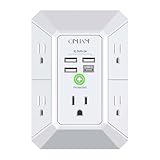
I remember the first time I packed for a trip to the States, genuinely worried about charging my phone. Years of plugging things into Canadian outlets had made me paranoid. The whole ‘are Canada outlets different from us’ question popped into my head, and honestly, I just threw a bunch of adapters in my bag, half of which I never even used. It’s a common thought, especially when you’re dealing with electronics that are pretty specific about their power needs.
But the reality is, for most everyday travelers and gadget users, the difference is practically non-existent. It’s more about the little details you might miss if you’re not paying attention, or if you’re dealing with older equipment. Don’t let a little voltage confusion ruin your trip or make you buy unnecessary gear.
So, What’s the Real Deal with Canadian Plugs?
Alright, let’s cut to the chase. When you’re asking ‘are Canada outlets different from us,’ the short answer for 99% of people is: no, not in any way that matters for your standard electronics. Both Canada and the United States use the same Type A and Type B electrical outlets.
You know, the ones with two flat parallel pins, and sometimes a third round or D-shaped one for grounding. The voltage is also the same, typically 120V. So, if you can plug something into a wall socket in Chicago, you can plug it into one in Calgary without a second thought.
I’ve done this countless times, lugging my laptop, chargers, and all sorts of doodads back and forth. Never had an issue with the plugs themselves.
The voltage thing is a big relief for most folks. In Europe, for instance, it’s often 220-240V, which means you absolutely need a voltage converter for your 120V North American gadgets, or you’ll fry them instantly. But here, between Canada and the US, it’s a match. This standardization is a huge convenience. Think about it: you can buy electronics in either country and use them freely across the border. Your hair dryer, your phone charger, your gaming console – they’re all designed to work within that 120V range. It’s one less thing to stress about when you’re planning a road trip or a move.
However, and this is where some people get tripped up, there are subtle differences that are more historical or regional than anything. Older buildings in Canada might still have some older-style outlets.
Similarly, the US has a vast range of building ages. But even then, the physical shape and the voltage are consistent. The real confusion often comes from people mixing up outlet types with voltage requirements, or thinking that because it’s a different country, everything must be different.
I once met a guy who swore he needed a special adapter for his American toaster in Toronto. Turns out, he was just trying to plug a toaster rated for 240V into a standard outlet, which would have been a problem anywhere, not just in Canada. It’s about understanding your device’s rating, not just the country.
The key takeaway here is that for modern electronics, particularly anything designed for North America, you’re golden. The physical plug shape and the electrical pressure (voltage) are identical. So, if you’re packing for a trip or wondering if you need to replace all your appliances if you move, take a deep breath. You probably don’t.
The Voltage and Frequency Dance: Why It Matters (mostly Doesn’t Here)
Let’s talk voltage and frequency because that’s where the real potential for disaster lies when dealing with international power. As I mentioned, both Canada and the US operate on a nominal voltage of 120V. This is great news. It means your electronics designed for North American power grids will function perfectly fine in either country. The frequency, which is how many cycles per second the electricity alternates, is also the same: 60 Hz. This might sound like technical jargon, but it’s important. Devices are designed to work within specific frequency ranges, and being off can cause issues, from poor performance to outright failure.
So, why do people even ask ‘are Canada outlets different from us’ when the voltage and frequency are the same? It’s often due to a broader awareness of international travel. Many people have traveled to Europe, Asia, or other parts of the world where voltage can be 220-240V and frequency 50 Hz. That’s a huge difference. A hairdryer designed for 120V will literally melt or catch fire if you plug it into a 240V socket without a proper converter. Conversely, a 240V appliance might not even turn on or will run very poorly on 120V. But in North America, this worry is largely unfounded. (See Also: Are American Outlets Ac Or Dc )
I learned this the hard way, not with an outlet difference, but with a voltage misunderstanding. I bought a fancy European coffee grinder for a steal on an online marketplace.
It looked identical to ones sold in Canada, same plug type even. I plugged it in, and… nothing. Then a puff of smoke.
Turns out, it was a 240V model, and my 120V Canadian outlet just couldn’t power it. It wasn’t the country, it was the voltage mismatch. This experience really hammered home for me that the first thing you should always check on any electronic device is the power input label.
It usually says something like ‘INPUT: 100-240V ~ 50/60Hz’. If it covers both ranges, you’re good to go almost anywhere in the world, plug adapter notwithstanding.
If it’s a narrow range, like ‘110-120V’, then you’re restricted to countries with similar power.
For your everyday gadgets – smartphones, laptops, tablets, cameras – they almost universally have power adapters that accept a wide range of voltages (100-240V). This is why you see those little black bricks. They’re designed to be used globally. You just need a plug adapter to fit the physical socket. For higher-power items like hair dryers, straighteners, or older-style kitchen appliances, you must check the label. If it only says 120V, then it’s only safe to use in countries with 120V power, like the US and Canada.
Physical Plug Differences: The Nitty-Gritty Details (or Lack Thereof)
When people ask ‘are Canada outlets different from us,’ sometimes they’re picturing completely alien plug shapes. The good news is, for the most part, you won’t find that. Canada and the United States share the same plug and socket standards: Type A and Type B. Type A has two flat parallel pins, and Type B adds a third, round grounding pin. Most modern North American outlets are Type B, which is safer and allows for polarized plugs (one pin is slightly wider than the other, making sure the device is plugged in the correct orientation for safety).
The vast majority of electronics you buy in Canada will have plugs that fit perfectly into US outlets, and vice versa. This is a massive convenience for anyone who travels or moves between the two countries. I’ve crossed the border dozens of times with bags full of electronics, and I’ve never once had to worry about the physical plug fitting. It’s one of those things that just works, and you appreciate it when you think about the headaches you’d have if it didn’t.
However, there are a few minor points to consider, more for historical or niche cases. You might encounter older outlets in very old buildings that are ungrounded (only the two flat pins). This isn’t a ‘Canada vs. US’ thing, but an age-of-building thing. Also, some devices, particularly older or industrial equipment, might have different pin configurations, but these are exceptions, not the rule. The standard consumer electronics market is highly harmonized between the two countries on this front.
Here’s a small table to illustrate the common plug types you’ll encounter:
| Plug Type | Description | North American Use (Canada & US) | Opinion/Verdict |
|---|---|---|---|
| Type A | Two flat parallel pins (ungrounded) | Common, but often being replaced by Type B | Functional, but less safe than grounded options. |
| Type B | Two flat parallel pins and a round grounding pin (grounded) | Standard for most modern appliances and outlets | The go-to. Safe and reliable for most devices. |
| Type C (Europlug) | Two round pins (ungrounded) | Not standard; requires adapter for most NA devices | Only relevant if you’re using European electronics. |
| Type G (UK Plug) | Three rectangular pins in a triangle (grounded) | Not standard; requires adapter for most NA devices | Only relevant if you’re using UK/Irish electronics. |
As you can see from the table, when asking ‘are Canada outlets different from us’ in terms of physical plug types, the answer is overwhelmingly no for everyday items. The real differences would arise if you were comparing North America to, say, the UK or mainland Europe, where plug types and voltages are significantly different. Stick to Type A and B for Canada and the US, and you’re generally covered. (See Also: Are All Power Outlets Ac )
Common Misconceptions and What to Actually Look For
The biggest misconception I hear when the topic of ‘are Canada outlets different from us’ comes up is that there is a significant, widespread difference that requires special adapters or converters. People see ‘Canada’ and ‘United States’ and assume, because they are distinct countries, that their electrical systems must diverge wildly. It’s like assuming every country has a different currency symbol or a different alphabet. It’s just not true for the most fundamental things.
I once had a friend who, before visiting Toronto, bought a heavy-duty voltage converter. He insisted his hair dryer (a standard North American model) would “burn out” because Canadian electricity was “stronger.” I tried to tell him, but he wouldn’t listen. He arrived in Toronto, plugged his hair dryer into the wall, and it worked perfectly. The converter sat in his suitcase, unused and heavy. He ended up feeling pretty silly, and I got to say, “I told you so.” This is a classic example of overthinking it. The voltage and plug types are the same for practical purposes.
So, what should you look for? The most important thing is to check the label on your electronic device itself. Look for the INPUT section. If it says something like ‘100-240V ~ 50/60Hz’, then your device is dual-voltage and will work fine in both Canada and the US. You will only need a plug adapter if you are bringing electronics from a country with different plug shapes (e.g., Europe, UK, Australia). But if your device is already designed for North American plugs, you won’t need an adapter for use within Canada or the US.
The only time you might encounter a slight inconvenience is if you’re dealing with older, very specific appliances. For instance, some older electric heaters or specific power tools might be rated only for 120V and might have a slightly different prong configuration if they were manufactured before certain standardization efforts. But for the vast majority of consumer electronics – phones, laptops, tablets, cameras, game consoles, chargers – the standard North American plug and 120V voltage are universal between Canada and the US. Don’t get caught up in the hype; a quick glance at your device’s power input is all you need.
What Is the Voltage in Canada vs. The Us?
The voltage in both Canada and the United States is standardized at a nominal 120 volts (V). This means that most common electronic devices designed for use in North America will work interchangeably in either country without any issues related to voltage. The frequency is also the same, 60 Hertz (Hz), which is another important factor for electronic compatibility.
Practical Tips for Travelers and Movers
Alright, let’s get practical. You’ve asked ‘are Canada outlets different from us,’ and we’ve established that for the most part, they’re the same. But there are still a few things to keep in mind, especially if you’re traveling or moving. It’s not about buying a whole new set of gear, but about smart preparation.
First, the universal adapter myth. Many people think they need a ‘universal adapter’ for Canada and the US. You don’t, unless you’re bringing electronics from outside North America. Your standard North American plugs will fit into Canadian and US outlets. What you might need is a plug adapter if you’re coming from, say, the UK, Europe, or Australia, because their plug shapes are different. These adapters simply change the physical shape of the plug, they do not change the voltage. So, if you have a European device that’s 220V, you’ll need both a plug adapter and a voltage converter if you’re using it in North America. But again, for Canada-US travel, this isn’t your concern.
Second, always check your device’s power rating. As I’ve stressed, most modern chargers for phones, laptops, and tablets are dual-voltage (100-240V). You can usually find this information printed on the charger itself. If it covers this range, you are absolutely fine. For higher-power items like hair dryers, curling irons, or kitchen appliances, check the label. If it says ‘120V only,’ then it’s safe to use in both Canada and the US, but not in countries with 220-240V. If you’re moving from Canada to the US (or vice-versa) with such an appliance, it will work without issue.
Third, consider older buildings. While the standards are the same, older homes or buildings might have fewer outlets than modern ones. They might also have older-style, ungrounded outlets. This doesn’t mean they’re incompatible, just less safe or convenient. In such cases, a simple power strip or surge protector can be a lifesaver. I always travel with a small power strip because you never know how many outlets will be available in a hotel room or rental. It’s also a good idea to have a surge protector to safeguard your sensitive electronics against power spikes, regardless of which side of the border you’re on.
My own little mistake: I once bought a really cheap extension cord in the US for a camping trip in Canada. It looked fine, but the insulation felt a bit flimsy. Midway through the trip, under heavy load (running a small fridge and a fan), it got alarmingly warm. It wasn’t that the plug didn’t fit, but the quality was poor, and the gauge of the wire wasn’t adequate for the continuous load. It was a reminder that while plugs and voltage might be the same, product quality can vary. Always opt for reputable brands, whether you’re buying in Canada or the US.
What Do I Need to Plug Us Electronics Into Canadian Outlets?
You do not need any special adapters or converters to plug US electronics into Canadian outlets. Both countries use the same Type A and Type B electrical outlets, and the standard voltage is 120 volts. Your US electronics will work perfectly fine in Canada without any modification. (See Also: Are Arc Trip Outlets Required In Hillsborough County )
The Official Stance (and Why It Doesn’t Change Much)
When you’re digging into the technicalities of ‘are Canada outlets different from us,’ it’s worth mentioning the official standards. In Canada, the relevant safety standards for electrical products are set by organizations like Underwriters Laboratories of Canada (ULC) and the Canadian Standards Association (CSA). In the United States, the equivalent is Underwriters Laboratories (UL) and the American National Standards Institute (ANSI). These bodies make sure that products meet safety and performance requirements.
The important point is that for plug and socket standards, Canada and the US have harmonized their requirements. This means that products certified by CSA or ULC for use in Canada are generally accepted as safe and compliant in the US, and vice-versa for UL-certified products in the US. The electrical codes in both countries specify the same outlet configurations (Type A and Type B) and voltage (120V). This harmonization is a deliberate effort to help trade and make sure consumer safety across North America.
For example, if you buy a toaster in Canada that bears the CSA mark, it has met Canadian safety standards, which are very similar to US standards. You can confidently plug that toaster into a standard US outlet. Similarly, a US-made laptop charger with a UL mark will work perfectly in Canada. The government bodies and standards organizations in both countries have worked to make sure this compatibility. It’s not an accident; it’s by design. It simplifies things immensely for consumers and manufacturers alike.
This official alignment is why you rarely hear about significant electrical compatibility issues between the two countries for standard consumer electronics. The systems are designed to be nearly identical. The only time you might run into trouble is if you have a very old piece of equipment that predates some of the more stringent safety and standardization measures, or if you’re trying to use an appliance that was specifically designed for a different voltage system (like European 240V appliances). But for the vast majority of products, the electrical ‘language’ spoken in Canadian and US homes is the same.
A Contrarian View: When It could Matter
Now, everyone says Canada and US outlets are the same, and for 99% of everyday electronics, they are. I’m here to tell you that while the voltage and plug types are indeed identical, there’s a subtle, almost philosophical difference that can matter, particularly for those of us who are really particular about our gear or who are dealing with older, less standardized equipment. My contrarian take is this: while physically and electrically the same, the quality and longevity of components can sometimes differ due to manufacturing standards and market pressures, and this can subtly impact performance or reliability over time.
Here’s why I disagree with the “it’s exactly the same” crowd. While the standards are the same, the market in both countries is flooded with products from global manufacturers. Some manufacturers might prioritize cost-saving in one market over another. I’ve had experiences where a seemingly identical surge protector bought in the US felt… cheaper, or a power strip bought in Canada seemed more solid, even though both claimed to meet the same CSA/UL standards. It’s not about the outlet itself, but the peripherals you plug into it.
For instance, I remember buying a set of inexpensive charging cables in the US that looked identical to ones I’d bought in Canada. The US ones started fraying at the connector after about three months of daily use, while my Canadian ones lasted over a year. Were the outlets different? Absolutely not. Was the electricity flowing through them different? No. But the quality of the cable and its internal construction was different. This can extend to power adapters and even extension cords. Sometimes, the cheaper end of the market in one country might have slightly less rigorous quality control, or use slightly lower-grade materials, than the equivalent in the other.
So, while you won’t need to swap out your phone charger or worry about your laptop frying when you cross the border, if you’re buying accessories like extension cords, power strips, or even specific types of adapters for more niche equipment, pay attention. Look at the build quality. Read reviews.
Sometimes, the “same” product isn’t truly the same when you look closely at its construction and the reputation of its maker. It’s a minor point
Final Verdict
So, to wrap things up, the question ‘are Canada outlets different from us’ can be answered with a resounding ‘not in any way that matters for your everyday electronics.’ The voltage is the same (120V), and the plug types are the same (Type A and Type B). You can confidently use your US gadgets in Canada and Canadian gadgets in the US without needing converters or adapters, as long as they are designed for North American power.
The main caveat is to always check your device’s power input label, especially for higher-wattage items like hair dryers or older appliances, to make sure they are compatible with 120V power. If you’re traveling from outside North America, you’ll need plug adapters, but not because Canadian outlets are inherently different from US ones. It’s about matching the physical plug shape to the socket.
Ultimately, for most people, the answer is a simple no, they aren’t different enough to worry about. Focus on the quality of the devices themselves rather than the country’s power grid. If you’re moving or traveling, pack your electronics with confidence – they’ll work just fine.