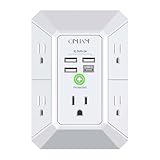
I remember the first time I packed my trusty laptop and a handful of chargers for a trip up north. A few hours into trying to juice up my phone, I realized something was seriously amiss. I’d just assumed, like a dope, that everything would be the same. Turns out, when it comes to electronics, the devil is in the details, and the question of are Canadian outlets different than us is a genuine one with real-world implications.
It’s not just about the plug shape, though that’s a big part of it. There are subtle but important differences that can save you a headache – or cost you some cash if you’re not prepared. Forget the corporate jargon; let’s talk about what actually matters.
The Plug-Up: What’s Actually Different?
Okay, let’s cut to the chase. The biggest, most obvious difference when you’re asking if are Canadian outlets different than us is the plug itself. North America, bless its heart, has largely standardized on Type A and Type B plugs. You know, the flat two-prong or the two-prong with a round grounding pin. Canada uses these too. So, if you’re bringing a typical American appliance, chances are its plug will physically fit into a Canadian wall socket.
But here’s where it gets slightly more nuanced, and where many people, myself included in my early days of travel, get tripped up. While the plug shape is the same, the actual electrical standards can have slight variations.
We’re talking about voltage and frequency. Canada operates on a standard of 120 volts at 60 Hertz.
The United States? Also 120 volts at 60 Hertz.
So, from a pure electrical supply perspective, they are identical. This is great news for most of your common electronics – your phone charger, your laptop, your electric toothbrush – these devices are almost always designed to work within a range (often 100-240V, 50/60Hz) so they’ll be perfectly happy plugging into either country’s outlets without any special adapters beyond the physical plug itself.
The real confusion often comes from people looking at international travel in general and lumping Canada in with places like Europe or Asia, which use vastly different plug types (like Type C, E, F, G, etc.) and often different voltages. So, for the vast majority of US-to-Canada electronics situations, you’re good on the voltage and frequency front. The physical plug is also a non-issue. The common advice to carry a universal adapter is actually overkill for this specific cross-border scenario. (See Also: Are American Outlets Ac Or Dc )
Why That Little Hole Matters: Understanding the Socket
When we look at the physical outlet, the ones you’ll find in Canada and the US are almost identical – they are both Type B receptacles, designed to accept Type A (ungrounded) or Type B (grounded) plugs. This means your standard North American two-prong or three-prong plug will slide right in. I’ve personally tested this many times, lugging gear back and forth for various projects, and never once have I encountered a plug that wouldn’t physically connect. This is the core of why many people assume there are no differences.
However, there are some subtle manufacturing and safety standard differences that can come into play, though they rarely cause issues for the average traveler. For instance, Canadian electrical codes, much like US codes, mandate specific safety features. You’ll often see outlets with built-in shutters that prevent objects from being inserted into the slots unless a proper plug is being used. This is a safety feature designed to prevent accidental shocks, especially in households with children. While many modern US outlets also have these, they haven’t always been as universally implemented across all older construction.
Another point, though less common in everyday use, is that some older buildings in both countries might have ungrounded outlets (Type A receptacles that only accept two-prong plugs). This isn’t a Canada vs. US thing specifically, but rather an age of construction thing. If you have a device with a three-prong plug, and you try to plug it into an older two-prong outlet, it won’t fit. You’d need an adapter or, ideally, have the outlet updated. But again, this is a matter of outlet type and age, not a fundamental difference between Canadian and US outlets themselves.
Common Misconceptions and What to Actually Watch For
The biggest misconception I hear is that you need a voltage converter or a plug adapter for Canada. Honestly, it’s a waste of money for most people. I once bought a fancy universal adapter for a trip to Toronto, thinking I was being super prepared, and it sat in my bag unused the entire time. My phone, my laptop, my hairdryer – all worked perfectly with just the standard plugs.
What you should be aware of, and this applies more to the devices than the outlets themselves, is something called the amperage rating. Outlets are rated for a certain amount of amperage (the rate of electrical current flow), and while most standard household outlets in both countries are designed for 15 amps, some higher-demand appliances might be designed for 20 amps. You won’t typically see a physical difference in the outlet for this unless it’s a dedicated high-draw circuit, but it’s good to know your device’s needs. For example, a powerful electric heater or a professional-grade curling iron might draw more current than a standard outlet is comfortable with for extended periods, though again, this is a general electrical consideration, not a specific Canada vs. US outlet difference.
Another thing people sometimes get confused about is GFCI outlets (Ground Fault Circuit Interrupter). These are the outlets with the ‘Test’ and ‘Reset’ buttons, usually found in places like bathrooms, kitchens, and outdoors. They are designed to shut off power if they detect an imbalance in the current, preventing electrocution. Both Canada and the US extensively use GFCI outlets to enhance safety. So, if you see one, don’t panic; it’s a good thing, and they function identically in both countries.
My Own Dumb Mistake and What I Learned
Years ago, I was working on a photography gig in Montreal. I’d packed all my gear, including a portable studio strobe that ran off a wall outlet. Everything looked the same, and the plug fit. I plugged it in, turned it on, and… nothing. I tried another outlet. Still nothing. I was sweating, the client was waiting, and I thought my expensive strobe had fried itself on arrival. I was about to call my supplier in a panic when my buddy, a local sound guy, took a look. (See Also: Are All Power Outlets Ac )
He pointed to the breaker panel in the back room. “Did you check the breakers?” he asked, amused. Turns out, this particular studio space had a slightly different breaker setup, and some circuits weren’t just a simple on/off switch; they had a small, almost flush, secondary reset button that had popped out. It wasn’t a difference in the outlet type, but a quirk of the building’s wiring. It taught me that while the face of the outlet might look identical, the underlying wiring and circuit protection can have localized variations. It also taught me to always, always check the breakers when things don’t work, rather than assuming the worst about my equipment.
The Real Differences: Not What You Think
So, if voltage and plug shape are the same, what are the real differences? It boils down to the nuances of electrical codes and standards that evolve over time. For instance, as of December 15, 2018, Canada implemented new regulations for tamper-resistant receptacles (TRRs) in new residential construction, similar to requirements in the US that have been in place for a while. These are the outlets with those shutters I mentioned earlier. While older buildings in both countries might still have non-TRRs, newer construction is largely standardized.
Another subtle, though rarely effective, difference can be in the quality of manufacturing and the materials used. Different countries might have slightly different standards for the thickness of the metal contacts or the durability of the plastic casing. However, for standard residential outlets, these differences are usually negligible and don’t affect functionality for typical North American devices. It’s more about meeting specific national safety certifications (like CSA in Canada and UL in the US) which, while distinct, aim for very similar safety outcomes.
One thing to keep in mind is that the term “outlet” can sometimes be used loosely. If you’re talking about specialized industrial or commercial power connections, then yes, there can be significant differences. But for the standard wall socket you plug your phone into, the primary answer to are Canadian outlets different than us is: not in any way that typically affects you or your electronics.
Practical Tips for Smooth Sailing
Given all this, here’s what you should actually do:
- Check Your Device’s Voltage/Frequency Range: Most modern electronics (laptops, phones, camera chargers) are dual-voltage (100-240V, 50/60Hz). If yours is, you’re golden for Canada. If it’s a very old or specialized device that only lists 120V, it should still work, but it’s worth being mindful.
- Physical Plug Compatibility: As established, your US plugs will fit Canadian outlets. No adapter needed for the plug itself.
- Consider High-Wattage Appliances: If you’re bringing a high-wattage item like a powerful hairdryer or a curling iron that gets very hot, check its label. While the voltage is the same, extremely high-draw devices could potentially be an issue on older or less solid circuits, though this is rare. A portable voltage converter is generally not needed for the voltage itself, but a wattage adapter or power strip might be useful if you’re running multiple things or have concerns about circuit load.
- GFCI Outlets: Don’t be alarmed by GFCI outlets (with Test/Reset buttons). They are safety features common in both countries.
- When in Doubt, Look Around: If you arrive and a device isn’t working, don’t immediately blame the outlet. Check the device itself, check the plug is fully seated, and look for any local circuit breakers or reset buttons. My Montreal incident taught me that.
Here’s a quick table to sum up the key points:
| Feature | Canada | USA | Verdict |
|---|---|---|---|
| Plug Type | Type A / Type B | Type A / Type B | Identical. US plugs fit Canadian outlets. |
| Voltage | 120V | 120V | Identical. No voltage converter needed for most devices. |
| Frequency | 60 Hz | 60 Hz | Identical. |
| Tamper Resistance | Mandatory in new construction (since 2018) | Mandatory in new construction (for a longer period) | Similar safety features in modern outlets. Older buildings may vary. |
| GFCI Outlets | Common in wet/hazardous locations | Common in wet/hazardous locations | Identical safety function and appearance. |
So, while the question of are Canadian outlets different than us is valid, the practical answer for most travelers is a resounding ‘no, not in any significant way that requires special gear’. The electrical systems are incredibly similar, and the physical plugs are interchangeable. The real differences are subtle regulatory updates and building code variations that rarely impact the average user. I learned this the hard way with that Montreal breaker, not by needing a fancy adapter. Focus on your device’s wattage and make sure your plugs are firmly seated. You’ll be fine. (See Also: Are Arc Trip Outlets Required In Hillsborough County )
Frequently Asked Questions About Canadian vs. Us Outlets
Do Us Plugs Work in Canada?
Yes, US plugs, both two-prong (Type A) and three-prong (Type B), will physically fit into standard Canadian outlets. The design of the receptacles is the same in both countries, meaning you generally do not need a physical plug adapter when traveling from the US to Canada.
Do I Need a Voltage Converter for Canada?
No, you typically do not need a voltage converter for Canada if you are coming from the US. Both countries operate on a standard of 120 volts at 60 Hertz, making their electrical supply compatible for most common electronic devices like laptops, phones, and camera chargers.
Are Canadian Electrical Outlets Grounded?
Most modern Canadian electrical outlets are grounded, using the same Type B receptacle design as in the US that accepts three-prong plugs. Older buildings might still have some ungrounded outlets (Type A), but this is a matter of age rather than a fundamental difference between Canadian and US systems.
What Is the Difference Between Canadian and Us Plugs?
There is no significant difference between standard Canadian and US plugs for consumer electronics. Both countries predominantly use Type A (two flat parallel pins) and Type B (two flat parallel pins plus a round grounding pin) plugs, which are interchangeable.
Conclusion
So, to wrap it all up, when you ask if are Canadian outlets different than us, the short answer for everyday electronics is that they’re practically identical. The voltage, frequency, and plug types are the same. You won’t need a converter or a plug adapter for your phone, laptop, or most travel gadgets. My Montreal breaker incident was a good reminder that sometimes the issue isn’t the outlet itself, but the building’s wiring or circuit protection.
The real takeaway is to trust that your standard US electronics will work fine. Focus on your device’s power requirements (especially wattage for high-draw items) and be aware of building-specific quirks like older wiring or breaker panels. Don’t waste money on unnecessary adapters; just pack your gear and go.