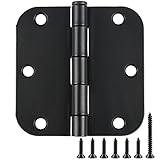
I swear, the last time I remodeled my kitchen, I spent a solid three hours staring at a bewildering array of cupboard door hinges. They all looked vaguely the same, but the sales guy was throwing around terms like ‘overlay,’ ‘inset,’ and ‘European style’ like they were common household words. I just wanted my cabinet doors to close properly, not to become a cabinet hinge expert. It made me wonder, are cupboard door hinges standard? The short answer, as with most things in DIY, is a complicated ‘sort of, but not really.’
This whole hinge situation can feel like a trap. You buy a cabinet, you want to replace a door or just fix a saggy one, and suddenly you’re drowning in a sea of metal. It’s enough to make you want to just nail the doors shut and be done with it.
But fear not, fellow homeowner. After a few costly mistakes and a fair bit of head-scratching, I’ve figured out the basics. Let’s break down what you actually need to know so you don’t end up with a pile of useless hinges and a cabinet door that never quite hangs right.
The Illusion of ‘standard’ Hinges
Let’s get this out of the way: there isn’t one single, universal ‘standard’ hinge that fits every single cupboard door ever made. If you’re thinking of just grabbing any old hinge off the shelf at the hardware store because you believe are cupboard door hinges standard across the board, you’re probably going to have a bad time.
The ‘standard’ is more of a concept that breaks down the moment you look at the specifics of your cabinets. Most modern kitchen cabinets, especially those with frameless designs (often called European or Euro-style cabinets), rely on a system that looks similar but has important variations. These typically involve a ‘cup’ hinge that sinks into a circular recess drilled into the door and a mounting plate that screws onto the cabinet frame.
It’s the overlay (how much the door covers the cabinet face when closed) and the specific arm type that dictate compatibility, not a single ‘standard’ size or shape.
My first kitchen project involved replacing a few warped cupboard doors. I grabbed what I thought were generic hinges, similar to the old ones. They looked right, had the same number of screw holes, but when I installed them, the doors either wouldn’t close flush, or they hit each other. It was infuriating.
The old hinges, though visually similar, had a different degree of opening and a different offset, meaning the door sat slightly differently relative to the cabinet box. This is where the ‘not really standard’ part bites you. The devil is in the details of the hinge arm and the mounting plate, which determine how the door sits in relation to the cabinet face.
For instance, a full overlay hinge is designed to cover the entire face of the cabinet frame, while a half overlay hinge will overlap the frame by half the door width, and an inset hinge sits inside the frame. Each requires a specific hinge type and often a specific mounting plate.
The actual physical dimensions of the cup drilled into the door (typically 35mm) are pretty standard for Euro-style hinges, which is a good starting point. But even then, you have different opening angles (90, 110, 170 degrees), different arm types (standard, blind, angled), and different adjustment capabilities. So, while the cup size might be a common denominator, the rest of the hinge system is anything but a universal fit.
What to Actually Look for: Overlay and Mounting Plates
When you’re trying to figure out what hinges you need, forget the idea of a single ‘standard.’ Instead, focus on two key things: the type of overlay your cabinet doors have and the type of mounting plate attached to your cabinet frame. Overlay refers to how much the door covers the cabinet frame when it’s closed.
This is probably the most important factor in determining which hinge you need. There are three main types: full overlay, half overlay, and inset. Full overlay doors cover almost the entire cabinet face, which is very common in modern kitchens.
Half overlay doors overlap the cabinet frame by about half the thickness of one door – you’ll usually see two doors meeting in the middle of a cabinet frame. Inset doors sit within the cabinet frame itself, creating a very clean, flush look. (See Also: A Box Without Hinges Key )
Your cabinet doors will tell you which one you have. Measure how much the door overlaps the frame. If it covers the entire frame, you’ve got full overlay. If it covers about half, it’s half overlay.
If it sits inside a recessed frame, it’s inset. Once you know your overlay, you can start looking for the corresponding hinge. For example, if you have full overlay doors on a frameless cabinet, you’ll likely need a full overlay Euro-style hinge. These are designed with a specific arm that extends the door further out from the cabinet box.
For half overlay, the hinge arm is different, and for inset, you’ll likely be looking at different types of butt hinges or specialized inset Euro hinges. The other important component is the mounting plate.
This is the part that screws onto the cabinet frame. These plates come in various types (e.g., screw-on, dowel-on, clip-on) and offsets.
The offset of the mounting plate, combined with the hinge arm, determines the final door position. Sometimes, you can get away with just replacing the hinge arm if the mounting plate is still in good condition and compatible. Other times, especially if you’re changing the overlay type, you’ll need to replace both the hinge and the mounting plate, and you might even have to drill new holes or fill old ones.
When I had to replace hinges on a vanity cabinet, I discovered the hard way that not all mounting plates are created equal. The new hinges I bought were supposed to be ‘universal,’ but the mounting plate had a different offset. This meant even with the correct hinge arm, the door sat too far out. I ended up having to buy a separate set of mounting plates that matched the offset of the hinges. It’s a bit of a domino effect; one piece dictates the requirements for another.
Common Mistakes and How to Avoid Them
The biggest mistake people make, myself included early on, is assuming all hinges are interchangeable. You see a hinge that looks similar, it has a cup, and you think, ‘close enough.’ This is a recipe for frustration.
Another common blunder is not accounting for the ‘reveal’ or the gap between doors and between doors and the cabinet frame. This gap is determined by the hinge type and the mounting plate offset.
If you get these wrong, your doors might not align correctly, they might bind against each other, or they might leave an unsightly large gap. I once spent an entire Saturday wrestling with cabinet doors that refused to hang straight. Turns out, I’d mixed two slightly different types of Euro hinges, and while they physically attached, the subtle differences in their arm geometry caused one door to sit lower than the other. It looked ridiculous.
People also often forget to check the hinge opening angle. Most common Euro hinges open to 110 degrees, which is perfectly adequate for most applications. However, if you have a cabinet door that needs to open wider to clear an adjacent appliance or wall, you’ll need a hinge with a greater opening angle (like 170 degrees). Installing a standard 110-degree hinge in such a situation will simply mean the door won’t open fully.
On the flip side, installing a wider opening hinge where it’s not needed is usually fine, but it’s just an unnecessary complexity. Another mistake is not checking the hinge’s ‘overlay capability.’ Hinges are often specified as being for full overlay, half overlay, or inset. Using a full overlay hinge on a half overlay application (or vice versa) will result in incorrect door placement.
Finally, don’t overlook the material and finish. While not strictly a fit issue, a cheap, flimsy hinge will sag over time, causing doors to not align. And a finish that doesn’t match your hardware can just look plain wrong. It’s the small details that make a cabinet look professionally done versus a DIY job gone slightly awry. Always take a picture of your existing hinge before you go shopping. Better yet, take the old hinge with you. This is a must, and honestly, why anyone would try to buy hinges without doing this is beyond me. (See Also: Are Integrated Washing Machine Door Hinges Standard )
How to Identify Your Current Hinge Type
Before you buy anything, you need to know what you have. Here’s a quick rundown:
- Check the Door Overlay: Open your cabinet door. Measure how much the door overlaps the cabinet frame. Full overlay covers the entire frame, half overlay covers about half, and inset sits inside the frame.
- Identify the Hinge Style: Most modern cabinets use Euro-style (or concealed) hinges, which have a cup that recesses into the door. Older cabinets might use traditional butt hinges.
- Look at the Hinge Arm: For Euro-style hinges, the shape of the arm is important. It dictates the overlay. You’ll see terms like ‘standard,’ ‘half-crank,’ or ‘full-crank’ (these refer to how the arm is bent to achieve different overlays).
- Examine the Mounting Plate: This is the part that attaches to the cabinet frame. Note how it’s attached (screws, dowels) and its offset. The offset, along with the hinge arm, determines the final door position.
- Measure the Cup: For Euro-style hinges, the cup drilled into the door is usually 35mm. This is a common size but worth confirming.
The ‘european Style’ Hinge Deep Dive
When people talk about modern cupboard door hinges, they’re almost always referring to what’s commonly called ‘European style’ or ‘concealed’ hinges. These are the ones with the two-part system: the hinge itself that mounts into a pre-drilled cup in the door, and a separate mounting plate that screws onto the cabinet frame. This system is popular because it’s largely hidden when the door is closed, offering a clean, minimalist look. The 35mm cup diameter is pretty standard across most brands for these hinges, making replacement easier if the drilling is already there. However, as we’ve hammered home, ‘standard’ is a relative term.
The hinge arm is where the magic (and confusion) happens. These arms are designed with specific bends or ‘cranks’ to achieve different degrees of overlay.
A ‘standard’ or ‘full overlay’ arm is relatively straight, allowing the door to sit out further and cover the entire cabinet frame. A ‘half-crank’ or ‘half overlay’ arm has a bend that brings the door back slightly, suitable for situations where two doors meet in the middle of a cabinet frame. A ‘double crank’ or ‘inset’ arm has a more aggressive bend, designed for doors that sit flush within the cabinet frame.
The choice of hinge arm directly corresponds to your cabinet door overlay. So, if you have full overlay doors, you need full overlay hinges. Trying to use a half-crank hinge for a full overlay application will result in gaps and poor alignment.
The mounting plate is equally vital. These plates come in various designs and offsets.
The offset is the distance from the edge of the plate to the point where the hinge arm attaches. A zero-offset plate is typically used for inset doors where the hinge attaches directly to the edge of the cabinet frame. Plates with offsets of 0mm, 3mm, 6mm, or more are common for overlay doors.
The combination of the hinge arm and the mounting plate offset dictates precisely how your door will hang and how much it will overlap the cabinet frame. For example, a full overlay hinge might require a zero-offset mounting plate, while a half overlay hinge might need a plate with a 3mm offset to achieve the correct door spacing.
Always check the manufacturer’s specifications for your existing hinges or the new ones you plan to buy to make sure they are designed to work together for your specific overlay needs. It’s a system, and all parts have to be compatible.
Can You Mix Brands? And Other Practical Tips
This is a big one for DIYers: Can you mix and match brands of cupboard door hinges? Generally, yes, but with major caveats. If you’re dealing with the 35mm cup Euro-style hinges, the cups themselves are usually interchangeable. The real compatibility issue arises with the hinge arm and the mounting plate.
If you buy a hinge from Brand X and a mounting plate from Brand Y, you need to make sure the plate’s offset and attachment mechanism are compatible with the hinge arm. Some brands have proprietary mounting systems, while others are more universal.
My general rule of thumb is to try and stick with the same brand if possible, or at least the same series within a brand, to minimize compatibility headaches. If you have to mix, pay very close attention to the specs of both the hinge arm and the mounting plate, and ideally, buy them together from a supplier who can confirm compatibility. (See Also: Are Hinges Wheeels )
Here’s a quick opinion table on common hinge types and their suitability:
| Hinge Type | Best For | My Verdict |
|---|---|---|
| Euro-Style (Concealed) | Frameless cabinets, modern kitchens. Offers clean look, adjustability. | My go-to. Adjustability is a lifesaver for imperfect cabinets. |
| Traditional Butt Hinges | Framed cabinets, older homes, utility cabinets. Simple, but can sag. | Fine for basic stuff, but I avoid them on kitchen cabinets if I can. |
| Surface-Mounted Hinges | Where drilling is impossible or undesirable (e.g., very thin doors, crates). Visible. | Functional for specific needs, but aesthetically lacking for most cabinets. |
| Soft-Close Hinges | Any cabinet where you want to avoid slamming doors. | A bit more expensive but worth every penny for peace and quiet. |
A really practical tip: if you’re replacing just one or two hinges, take the old one to the store. Seriously. Don’t try to describe it. Take it with you.
Even better, take a picture of the cabinet door and frame with the door open, showing how it sits. This helps the salesperson understand your overlay situation.
Also, invest in a good set of cabinet-specific screwdrivers or a power drill with clutch settings. Over-tightening screws can strip the wood or damage the hinge.
And for adjusting the doors once they’re on, familiarise yourself with the adjustment screws on your hinges. Most Euro-style hinges have three screws: one for in-and-out (depth), one for up-and-down (height), and one for left-and-right (side-to-side). A little fiddling can make a world of difference in getting your doors to hang perfectly straight and align perfectly.
People Also Ask:
What Is the Standard Size for Cupboard Hinges?
The most common ‘standard’ size for the cup drilled into the door for European-style hinges is 35mm in diameter. However, the overall hinge dimensions, arm type, and mounting plate specifications vary significantly. So, while the cup size is often consistent, the hinge system itself is not a one-size-fits-all solution.
Are All Cabinet Hinges Interchangeable?
No, not all cabinet hinges are interchangeable. While some basic butt hinges might have similar screw hole patterns, European-style hinges, which are common in modern kitchens, have specific requirements for overlay, arm type, and mounting plate compatibility. Mixing brands or types without understanding these specifics can lead to doors that don’t align or close properly.
How Do I Know What Kind of Hinges My Cabinets Have?
To identify your current hinges, examine how your cabinet doors overlap the cabinet frame (this is the overlay). Also, look at the hinge itself: if it has a cup recessed into the door, it’s likely a European-style or concealed hinge. Note the shape of the hinge arm and the mounting plate attached to the cabinet frame, as these components are important for compatibility.
What Is the Most Common Overlay for Cupboard Doors?
Full overlay is the most common overlay for modern cabinet doors, especially in frameless (European-style) cabinets. This design maximizes the visible door surface and minimizes the appearance of the cabinet frame, creating a sleek, contemporary look.
Do I Need to Replace the Mounting Plate When Changing Hinges?
Often, yes. While the hinge arm is what you typically see attached to the door, the mounting plate on the cabinet frame is equally important for alignment and overlay. If you are changing the hinge type, overlay, or even just the brand, it’s usually best to replace both the hinge and the mounting plate to make sure proper fit and function, unless you are absolutely certain the new hinge is designed to work with your existing plates.
Can I Buy Hinges Online?
Yes, you can buy cupboard door hinges online from many retailers. However, it’s important to be absolutely sure about the specifications of the hinges you need before ordering. Having detailed measurements, photos of your existing hinges and cabinet construction, and an understanding of your overlay type will help prevent costly mistakes. Reputable online hardware stores often have detailed guides and compatibility charts to assist you.
Final Verdict
So, are cupboard door hinges standard? The short, blunt truth is no, not in a way that lets you grab any old hinge and expect it to work perfectly. The ‘standard’ is more of a framework – the 35mm cup for Euro hinges is a common starting point, but the devil is in the overlay, the arm type, and the mounting plate. My biggest takeaway from years of fiddling with cabinets is this: don’t guess. Measure, photograph, and if possible, take the old hinge with you to the store. It’s the difference between a weekend project and a week-long headache.
If you’re not sure about your cabinet’s construction or the exact type of hinge you need, a quick chat with a knowledgeable hardware store employee or a quick search of your cabinet manufacturer’s website (if you know it) can save you a lot of grief. It’s always better to spend an extra ten minutes identifying the right part than to spend hours trying to make the wrong part fit.
Ultimately, getting the right hinges is about more than just doors closing. It’s about the finished look of your kitchen or room, and the satisfaction of a job done right. Don’t let the confusing world of cabinet hardware defeat you; a little bit of attention to detail goes a long way.