I remember the first time I stared at a car door that wouldn’t quite shut right. It swung open like a drunken sailor, then slammed shut with a bang that rattled my teeth. The shop manual was no help, the internet was a confusing mess of generic advice, and I was starting to think the whole door assembly was possessed. It got me thinking, though, about the guts of that door. What actually makes it move? And specifically, are door hinges considered wheels? It sounds like a stupid question, but sometimes the simplest ones hide the most interesting answers, especially when you’re knee-deep in grease and frustration.
Look, I’ve been tinkering with cars and bikes for more years than I care to admit. I’ve bought the fancy WD-40 knock-offs that promised miracles and delivered nothing but sticky residue. I’ve learned the hard way what’s worth your time and what’s just marketing fluff. So, let’s cut to the chase about these door hinges.
What Makes a Door Swing Anyway?
Alright, let’s get down to brass tacks. When you pull on a car door handle, you’re not just yanking on metal. There’s a whole system working together. The handle itself connects to some rods and cables inside the door panel, which then pull on the latch mechanism. That latch is what grips the striker pin on the car’s body, holding the door shut. When the latch releases, the door is free to swing open. But what guides that swing? That’s where the hinges come in.
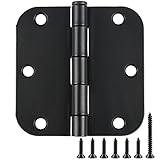
Door hinges are basically pivot points. They’re bolted securely to the car’s body on one side and the door on the other. Most car doors have two or three hinges, depending on the size and weight of the door. They’re designed to allow smooth, controlled rotation.
Think of them like the axle of a very specialized, very heavy wheel that only moves in one plane. They need to be strong enough to hold the door’s weight, precise enough to allow it to align perfectly with the body, and durable enough to withstand thousands of openings and closings over the car’s lifetime.
The construction usually involves a couple of metal plates that overlap and are joined by a pin. This pin is the actual pivot. Sometimes it’s fixed, and the plates are shaped to allow movement. Other times, the pin itself can be removed or replaced, which is a common fix for squeaky or stiff hinges.
The metal used is typically steel, often with a coating to prevent rust. High-quality hinges might have bushings or bearings around the pin to further reduce friction and wear. I once had a ’98 Toyota Camry where the driver’s side hinge pin was so worn, the door sagged a good inch when open, making it a pain to get in and out of without hitting the pillar. Replacing that pin was a surprisingly fiddly job, but it brought the door back to life.
It’s not just about the swing; it’s about maintaining that perfect seal and alignment with the rest of the car.
Are Door Hinges Considered Wheels? The Technical (and Not-So-Technical) Answer
So, are door hinges considered wheels? From a purely mechanical standpoint, no, not really. A wheel is designed to rotate around an axle and, typically, to help movement or transport across a surface. Think of your car tires, or even the casters on a office chair. Their primary function is rolling. Door hinges, on the other hand, are designed for pivoting. They allow rotation, yes, but it’s a controlled arc, not continuous rolling motion. They don’t move the vehicle; they allow access to it. I’ve heard people throw around the term “rolling hinge” because of the smooth action, but that’s more descriptive than technical.
The confusion might stem from the fact that both involve rotation and reducing friction. A good wheel needs a smooth-rolling bearing, and a good hinge needs a smooth-turning pin.
But their purpose and design are fundamentally different. Wheels are about motion; hinges are about access and controlled movement. If you’re talking about a heavy industrial gate, you might see a hinge system that incorporates actual rollers or wheels to help bear the load and allow easier movement, but that’s an augmentation, not the hinge itself being a wheel. For a car door, it’s all about the pivot. (See Also: A Box Without Hinges Key )
I once spent a solid afternoon arguing with a buddy about this very topic. He insisted that because the door moves, and the hinge allows that movement through rotation, it’s basically a wheel.
I countered that my elbow joint allows movement through rotation, but I’m not a wheel. He didn’t buy it, but I stand by my logic.
It’s like saying a door knob is a wheel because you twist it. It’s a component that helps a specific action, but it doesn’t fit the definition of a wheel as the primary means of locomotion.
When Hinges Go Bad: The Annoying Symptoms and Fixes
You know your door hinges are going south when you start hearing that god-awful squeak every single time you open or close the door. It’s a high-pitched, grating sound that makes you want to duct tape the door shut. That squeak is usually a sign of friction – the metal pin grinding against the metal plates.
It means the lubrication has dried up or worn away, or worse, the pin and the hinge itself are starting to wear down. Another symptom is the door not lining up perfectly. It might sag, making it hard to close or lock, or it might rub against the car body, leaving unsightly marks. I’ve had doors that required a good shove to get them to latch properly, all thanks to tired hinges.
Sometimes, you can get away with just lubricating them. A good spray of white lithium grease or a dedicated hinge lubricant can work wonders. You usually need to open the door wide and spray directly onto the pin and the contact points. Work the door back and forth a few times to let the lubricant penetrate.
This is my go-to first step, and it’s often enough to silence the squeaks and make the door feel smoother.
If lubrication doesn’t cut it, the next step is usually to address the pin. Many hinges have pins that can be tapped out. You can then clean the pin and the hinge barrels, re-grease them thoroughly, and reinsert the pin.
Sometimes, replacing a worn pin with a new one, or even using a slightly thicker pin if the holes are a bit wallowed out, can restore the door’s alignment. For really bad cases, where the hinge itself is warped or significantly worn, you might need to replace the entire hinge assembly. This is a more involved job, often requiring you to unbolt the old hinges and bolt on the new ones, carefully aligning the door as you go.
This can be tricky, as you need to make sure the door hangs straight and closes flush. Getting the alignment perfect is key, and it’s often easier with a helper to hold the door steady while you work. I learned this the hard way on my old pickup truck; I replaced one hinge, but didn’t get the alignment quite right, and the door would catch on the frame when closing. Took another hour to get it perfect. (See Also: Are Integrated Washing Machine Door Hinges Standard )
Always aim for that perfect, effortless swing and a satisfying thud when it closes.
Common Door Hinge Problems & Solutions Table
| Problem | Symptom | Likely Cause | Recommended Fix | Opinion/Verdict |
|---|---|---|---|---|
| Squeaking | Grating noise when opening/closing | Lack of lubrication, dirt/debris | Lubricate hinge pin and barrels. | Often a quick and easy fix. Worth trying first. |
| Sagging Door | Door drops when open, difficult to close | Worn hinge pin or barrels, loose bolts | Replace worn pin, lubricate, tighten bolts. May need full hinge replacement. | Can be a pain to get alignment right. Patience is key. |
| Stiff Operation | Door is hard to open or close smoothly | Dirt, rust, lack of lubrication, bent hinge | Clean and lubricate thoroughly. Check for damage. | Usually resolved with good cleaning and greasing. |
| Door Misalignment | Rubbing on body, uneven gaps, difficult to latch | Bent hinge, sagged door, worn components | Adjust hinge alignment, replace worn parts. | Important for sealing and appearance. Takes precision. |
Choosing the Right Hinges: What to Look For
When you’re looking for replacement door hinges, whether for a car, a shed, or even a piece of furniture, you’re not just grabbing the first shiny metal thing you see. For vehicles, it’s usually best to stick with OEM (Original Equipment Manufacturer) parts or high-quality aftermarket equivalents.
These are designed to fit your specific make and model perfectly, making sure correct alignment and function. Don’t cheap out on this. I once bought a set of “universal” hinges for a project car, and they were a nightmare. The mounting holes didn’t quite line up, the pin was a bit loose, and the door ended up with an awkward sag.
It cost me more time and aggravation than the few bucks I saved.
When you’re examining hinges, look at the material. Steel is standard, but some might have different coatings like zinc or powder coating for corrosion resistance. Check the pin – is it solid? Does it look like it has a smooth surface?
If it’s a bolt-on type, are the bolt holes clean and well-drilled? For something like a shed door or a heavy cabinet, you might want to look at heavier-duty hinges, possibly with ball bearings or roller bearings, which will support more weight and swing more smoothly.
These are often called “heavy-duty” or “gate” hinges. The finish is also important, not just for aesthetics but for durability. A good coating will prevent rust and keep them looking good for longer. If you’re buying online, read reviews carefully.
See what other people’s experiences have been, especially regarding fitment and longevity. I’ve learned that a “good deal” on a hinge that doesn’t fit right or breaks quickly isn’t a deal at all. It’s just a headache waiting to happen. Think about the environment too – if it’s a coastal area or somewhere with a lot of salt on the roads, you’ll want something with excellent corrosion resistance.
The Real-World Impact of Good (and Bad) Hinges
It sounds small, doesn’t it? Just a couple of pieces of metal connecting a door to a frame. But man, when those hinges are shot, the whole experience of using that vehicle or even just that room goes downhill fast.
For cars, it’s not just about annoying squeaks. Bad hinges can lead to doors that don’t seal properly, allowing water and wind to get into the cabin. This can cause drafts, increase road noise, and even lead to water damage inside the car if not addressed. Worse, a poorly aligned door can put stress on the door frame and the latch mechanism, potentially leading to more expensive repairs down the line. (See Also: Are Hinges Wheeels )
I’ve seen cars where the door was so misaligned it was hard to even get the keys in the lock because the keyhole wasn’t lining up right. It becomes a constant, low-level annoyance that chips away at your enjoyment of the vehicle. You start dreading opening and closing the door, which is something you do dozens of times a day.
On the flip side, a well-functioning hinge is almost invisible. The door opens and closes smoothly, with a satisfying weight and a solid thud. It seals perfectly, keeping the elements out and the cabin quiet.
It contributes to the overall feeling of quality and solidity in the vehicle. I remember getting into a friend’s brand-new luxury sedan, and the doors just felt…right.
They swung with a smooth, controlled action, and closed with a deep, resonant thud. It’s a small detail, but it’s part of the overall premium experience. It’s the same principle with things like cabinet doors or shed doors. Hinges that stick or sag make the whole thing feel cheap and poorly made.
Good hinges contribute to usability, longevity, and even security. A well-fitted door is harder to force open. So, while they might not be glamorous, the humble door hinge is a vital component, and getting it right makes a massive difference in everyday use. It’s one of those things you don’t appreciate until it’s gone, or broken.
People Also Ask: Door Hinge Edition
Can You Grease Door Hinges with Wd-40?
While WD-40 can temporarily stop a squeak, it’s not a long-term lubricant for hinges. It’s more of a water displacer and a light degreaser. It evaporates relatively quickly and can actually attract dust and dirt, which can make the problem worse over time. For best results, use a dedicated hinge lubricant, like white lithium grease or silicone spray. These provide a more durable lubrication that lasts longer and resists dirt.
How Often Should You Lubricate Car Door Hinges?
It depends on your climate and how much you use the doors. A good rule of thumb is to lubricate them once or twice a year, perhaps in the spring and fall. If you live in a very dusty or wet environment, or if you start hearing squeaks, do it more often. Check them whenever you’re doing other maintenance, like washing the car or changing the oil. A quick spray can prevent bigger problems down the road.
Can Door Hinges Be Adjusted?
Yes, to a certain extent. Most car door hinges have some adjustability, usually through the bolts that attach them to the car body or the door. By loosening these bolts slightly, you can often shift the door’s position to correct minor alignment issues, like sagging or rubbing. It requires patience and careful adjustment to get the gaps even and the door to close properly. For significant issues, replacement of worn hinges might be necessary.
What Is the Best Lubricant for Squeaky Door Hinges?
For automotive door hinges, white lithium grease is a very popular and effective choice. It’s a heavy-duty lubricant that sticks well and provides long-lasting protection against friction and corrosion. Silicone spray is another good option, especially if you want something that dries cleaner and doesn’t attract as much dust. For less important applications like interior house doors, a simple spray lubricant or even a bit of cooking oil in a pinch can work, but they won’t last as long.
Conclusion
So, the long and short of it is this: while door hinges allow rotation and movement, they are not, by definition, wheels. They are pivot mechanisms designed for controlled arcs, not for rolling locomotion. It’s a distinction that matters when you’re trying to diagnose a problem or understand how your car, or anything else, actually works.
If your car doors are driving you nuts with squeaks or sag, don’t just ignore them. A little bit of maintenance with the right lubricant can save you a lot of headaches and potential repair costs later on. And when it comes time to replace them, do your homework and get parts that are designed for the job.
Next time you open a car door, take a second to appreciate those humble hinges. They’re doing a lot of heavy lifting, and often, they’re doing it silently. But when they’re not, you’ll definitely know about it. Are door hinges considered wheels? Not in my garage, but they are absolutely important to function.