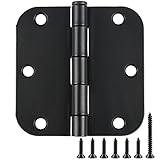
I remember staring at the mangled door of my old Sentra, the driver’s side hanging at an impossible angle. A parking lot mishap, stupidly my fault. My first thought wasn’t about the dent, but about that hinge. It looked… fine? But was it the same as the passenger side? This whole question of whether are door hinges on a 1997 Sentra the same is one of those things that gnaws at you when you’re trying to fix something yourself, on a budget.
You see a lot of shiny new cars with fancy features, but for us old-school mechanics, it’s about the nuts and bolts. And hinges are definitely nuts and bolts. So, let’s cut to the chase: are they interchangeable? It’s not a simple yes or no, and that’s what we’re going to get into.
Are Door Hinges on a 1997 Sentra the Same? The Nitty-Gritty
Okay, let’s get this straight. When you ask if are door hinges on a 1997 Sentra the same, you’re really asking two things: 1) Are the driver’s side and passenger side hinges identical?
And 2) Are the hinges from a ’97 model the same as, say, a ’98 or a ’96? For that specific generation of Sentra, the B14 chassis (which covers roughly 1995-1999), Nissan was pretty consistent.
Generally, the driver’s side and passenger side front door hinges are not identical. They are mirror images. Think about it: the way a door swings open, the pivot points are on opposite sides.
So, while they might look similar and share a lot of the same components, they’re not going to be a direct swap without some modification, and even then, it’s not ideal.
However, what about the hinges within the driver’s door? Typically, a car door has at least two hinges: an upper and a lower one.
These are usually designed to work together as a pair. In many cars, including this era of Sentra, the upper hinge is often the one that bears more of the structural load and might have slightly different mounting points or a beefier design than the lower hinge. This is because the door’s weight is concentrated higher up.
Swapping an upper for a lower, or vice-versa, can lead to sagging or uneven wear, which is exactly what you’re trying to avoid. I learned this the hard way trying to replace a seized lower hinge on my old Honda Civic.
I figured I’d just use the upper hinge from a donor door I had lying around. Big mistake. The door sagged like a drunkard’s jawline within a week, and the alignment was a mess.
It was a $20 hinge that ended up costing me hours of frustration and a nearly ruined door alignment.
When you’re looking for replacements, especially if you’re buying used parts from a junkyard or online, it’s always best to get the exact part number or at least specify ‘driver side upper,’ ‘driver side lower,’ ‘passenger side upper,’ or ‘passenger side lower.’ The difference might seem minor, but it’s there. The mounting holes, the curvature of the knuckle, even the thickness of the metal can vary subtly. These small differences matter when you’re trying to get that door to close flush and operate smoothly. Trust me, chasing down that perfect fit is way less painful than dealing with a door that scrapes the fender every time you open it.
What to Look for: Beyond Just ‘hinge’
So, you’ve confirmed you need new hinges, or at least you suspect it. What should you be scrutinizing when you’re hunting for them? First off, condition.
This is not the time to be shy. Get your hands on them if possible. Feel for any rust that’s eaten through the metal, especially around the mounting points where they bolt to the car body and the door itself. (See Also: Are The 62 Nova Hood Hinges Different For The 63 )
Any pitting or deep corrosion is a red flag. You want to see smooth, solid metal. Next, check the pivot point, the part that actually allows the door to swing.
Wiggle it. Is there excessive play? A little bit of give is normal on older vehicles, but if it feels loose, sloppy, or like it’s grinding, that hinge has seen better days and likely needs replacement too. This play is what leads to that dreaded door sag that makes your door hard to close or causes it to rub against the fender.
When you’re looking at hinges, whether new aftermarket or used, pay close attention to the little details. Are the hinge pins present and in good shape? Sometimes, these can seize up or break. If you’re buying a set, make sure they come with the pins, or at least that the pins you have are salvageable.
Speaking of pins, some are designed to be pressed in, while others might be held in place with a clip or a cotter pin. Knowing this can save you a headache when it’s time for installation. For a 1997 Sentra, you’ll typically find them bolted directly to the chassis and the door. The bolts themselves can be a nightmare if they’re rusted in place, but that’s a different battle.
The hinge itself should look relatively clean, with no obvious bends or damage from impacts.
A good rule of thumb, especially with used parts, is to compare the part you’re looking at with the one you’re removing, or at least a good photo of it. Look at the shape, the number of mounting holes, and the orientation of the knuckle where the pin goes.
If it’s a brand-new aftermarket part, look up reviews. Are people complaining about fitment issues?
Does it feel flimsy compared to the original? I once bought a set of ‘universal’ door hinges for an old pickup, and while they technically bolted on, the door hung so poorly I had to undo it all and buy the specific OEM-style ones. It cost me double in the long run.
For the Sentra, stick to parts specifically listed for your year and model, or the B14 chassis if you can’t find exact matches. It’s safer.
| Hinge Type | Likely Compatibility (1997 Sentra) | Verdict |
|---|---|---|
| Driver Front Upper | Specific to Driver Front | Generally NOT interchangeable with Passenger or Lower |
| Driver Front Lower | Specific to Driver Front | Generally NOT interchangeable with Passenger or Upper |
| Passenger Front Upper | Specific to Passenger Front | Generally NOT interchangeable with Driver or Lower |
| Passenger Front Lower | Specific to Passenger Front | Generally NOT interchangeable with Driver or Upper |
| Rear Door Hinges (if applicable) | Specific to Rear Doors | NOT interchangeable with Front Doors |
| Hinges from other Nissan models (e.g., Altima, Maxima) | Unlikely without modification | High risk of poor fit, potential damage. Avoid unless confirmed. |
| Hinges from different model years (e.g., 1995, 1999) | Possible, but check thoroughly | Generally similar within B14 chassis, but minor variations can exist. Always verify. |
Common Mistakes and Why They Happen
One of the biggest blunders people make is assuming all hinges are created equal. You see a hinge, it looks like a hinge, so it must be a hinge. This is a trap.
As we’ve touched on, the left and right sides are almost always mirror images. You might get lucky if you’re just replacing a severely damaged hinge and don’t care about perfect alignment, but that’s rarely the case. The real issue is that using the wrong hinge can throw off the entire door’s geometry.
It’s not just about how the door opens; it’s about how it seals with the weatherstripping, how it lines up with the fender and the rear quarter panel, and how the latch mechanism engages. A millimeter off can mean a door that rattles, leaks water, or won’t close properly.
Another mistake is trying to save a few bucks by buying the cheapest aftermarket option available without doing any research. I’ve fallen into this hole more times than I care to admit. The ‘bargain’ hinges might fit the bolt holes, but the metal might be thinner, the pivot point less precise, or the tolerances just a bit looser. (See Also: Are Spring Hinges Self Closing )
This leads to a door that feels ‘loose’ or starts to sag much sooner than it should. You end up buying a second set of hinges, costing you more time and money. For something as fundamental as door hinges on a 1997 Sentra, it’s often worth spending a little extra for a reputable brand or a good quality used OEM part. OEM parts, even used, were designed by the manufacturer to fit perfectly.
Aftermarket parts are a gamble; some are great, many are… less so.
People also underestimate the importance of the hinge pins and bushings. Sometimes the hinge itself looks okay, but the pin is worn or corroded, or the bushings (if present) are shot.
This causes excessive play and contributes to door sag. Instead of replacing the whole hinge assembly, you might be able to get away with replacing just the pins and bushings if they’re available separately.
However, for a car of this age, often the easiest and most reliable route is to replace the entire hinge unit, or at least the primary load-bearing ones. Trying to salvage worn-out components is a false economy. You’ll spend more time diagnosing and fiddling than if you’d just replaced the faulty part correctly the first time. It’s like putting a band-aid on a broken bone; it doesn’t solve the underlying problem.
Real-World Use and Installation Tips
When I tackled the hinges on my old ’98 Sentra, the driver’s side was starting to feel vague. The door didn’t just sag; it felt like it was floating on its mounts. I managed to find a decent set of used hinges from a low-mileage car at a local salvage yard. The key was taking my time and comparing them to my old ones before I even paid. I checked the pivot play, the condition of the metal, and importantly, the mounting hole alignment. Installation wasn’t a breeze, but it was manageable.
My biggest tip here is to work with the door still attached initially. Loosen the old hinges but don’t remove them completely. This allows you to support the door and work on one hinge at a time, or at least maintain its position. If you remove the door entirely, you’ll need a good jack or helper to position it perfectly when you install the new hinges. It’s a delicate balancing act. Start by bolting the new hinges loosely to the door first, then to the body. You’ll need to adjust the position slightly to get everything aligned. Small adjustments can make a big difference. Think of it like trying to thread a needle; you need patience and a steady hand.
I always recommend applying a good quality lubricant to the hinge pins and pivot points after installation and before reattaching the door fully. A bit of white lithium grease or even a good spray lubricant can go a long way in preventing future corrosion and making sure smooth operation. It also helps when you’re trying to maneuver the door into its final position.
Once the hinges are bolted on, close the door gently and check the gaps all around. Are they even?
If not, loosen the bolts slightly and make tiny adjustments. It might take a few tries to get it perfect. This is where having a helper is invaluable; one person can hold the door while the other tightens the bolts. Don’t overtighten initially; snug them up so you can still make adjustments, then tighten them down fully once you’re happy with the alignment.
This is also a good time to check your door striker plate alignment and adjust it if necessary, as hinge issues can sometimes throw that off too.
Contrarian Take: When to Not Replace Hinges
Here’s something you won’t hear from every mechanic: sometimes, the problem isn’t the hinges themselves, but the mounting points. Everyone jumps to replacing the hinges, but what if the metal where the hinges bolt on is rusted or bent? I’ve seen it plenty of times. You put on brand-new hinges, and the door still sags or won’t align because the chassis or the door itself has weakened mounting tabs.
I had a friend with an old Acura Integra where the driver’s door was sagging badly. He replaced the hinges twice, buying progressively more expensive ones, and it never got better. (See Also: Are Soft Close Hinges Adjustable )
Turned out the metal around the upper hinge mounting point on the door frame had rusted through. He ended up having to get a metal fabricator to weld in a patch before the new hinges could even be properly secured. So, before you order those new hinges, get a flashlight and a mirror and really inspect the metal where they attach. Poke around with a screwdriver; if it feels soft or crumbles, that’s your real problem, and new hinges won’t fix it.
You’ll need metal repair, which is a whole other ballgame and often more expensive than just hinges.
Another situation where you might be able to avoid full hinge replacement is if the issue is primarily with the hinge pin itself. If the hinge body is solid, but the pin is stiff, rusted, or worn, you might be able to drive out the old pin (if it’s designed to be removed) and replace just that. Sometimes, a good penetrating oil and some elbow grease can free up a stiff pin. This is a gamble, and it might only be a temporary fix, but it’s worth considering if you’re on an extremely tight budget and the rest of the hinge looks good.
However, for the 1997 Sentra, which is getting on in years, the hinge pins are often integrated or very difficult to remove and replace without damaging the hinge itself. So, while it’s a valid thought process for some vehicles, it’s less practical here. My experience is that by the time the hinge pin is the only problem, the rest of the hinge is usually not far behind in terms of wear and tear.
It’s usually better to go for the full replacement if you can.
Faq Section
Can I Swap Hinges From a 2-Door Sentra to a 4-Door Sentra?
Generally, no. While they are both B14 chassis Sentras, the door sizes and weights can differ between 2-door and 4-door models. The front doors on a 2-door might be larger and heavier, requiring different hinge strength or mounting points compared to the front doors on a 4-door. Always confirm compatibility based on the specific door and model year. It’s best to stick with hinges meant for the exact configuration of your car.
How Do I Know If My Sentra’s Door Hinges Are Bad?
Look for signs of door sag, meaning the door hangs lower than it should, often causing it to rub on the fender or the body when opening or closing. You might also hear creaking or grinding noises from the hinge area. If the door feels excessively heavy or difficult to open and close smoothly, it’s a strong indicator that your hinges (or their pins/bushings) are worn out and need attention.
Are All 1997 Nissan Sentra Door Hinges the Same?
No, not all of them are the same. The driver’s side and passenger’s side front door hinges are typically mirror images and not interchangeable. Additionally, upper and lower hinges on the same door might have different designs or load-bearing capacities. You must make sure you get the correct hinge for the specific position (e.g., driver’s side upper front door) and model year of your 1997 Sentra.
Can I Use Hinges From a Different Year Sentra?
It’s possible, especially within the same generation (B14 chassis, roughly 1995-1999), as Nissan often maintains part compatibility across a few model years. However, there can be minor design tweaks or updates. It’s always best to verify part numbers or visually compare the hinges to make sure they are identical. Don’t assume they are the same without confirmation; a slight difference can lead to fitment issues.
Final Thoughts
So, to circle back to the original question: are door hinges on a 1997 Sentra the same? The short answer is, it’s complicated, but generally no, not entirely. Driver and passenger sides are different, and upper and lower hinges might have subtle variations. Trying to swap them haphazardly is a recipe for headaches and misaligned doors.
My advice? If you’re facing sagging or sticking doors on your ’97 Sentra, inspect them thoroughly. Check the hinge pins, the mounting points, and the hinges themselves for rust and play. When in doubt, try to source OEM or high-quality aftermarket parts specifically listed for your exact model year and side. Don’t be afraid to get your hands dirty, but also know when a job might require a professional, especially if rust has eaten away at the mounting points.
It’s a small part of the car, but the doors are something you interact with every single time you get in or out. Getting those hinges right makes a surprisingly big difference in how the whole car feels and operates. So, do your homework, get the right parts, and you’ll be much happier with the result.