I remember the first time I hung a door. Everything looked perfect, until I closed it. A sickening, drawn-out screech, followed by a visible sag. The gap on one side was wider than my fist. I spent hours fiddling, tightening screws, banging it with my shoulder, convinced I’d bought the cheapest, most useless piece of metal known to man. It turns out, my frustration was largely unnecessary. The real question wasn’t ‘are door hinges adjustable,’ but rather ‘do I know how to adjust them?’
Most people assume hinges are just… hinges. They get installed, and that’s that. But the truth is, the humble door hinge has a secret life, a hidden superpower of adjustability that can save you from warped doors, sticking jams, and that soul-crushing squeak. It’s not magic, it’s just a bit of engineering most of us overlook.
The Astonishing Truth: How Hinges Actually Work
Let’s cut to the chase: yes, most modern interior door hinges are absolutely adjustable. This isn’t some high-tech, fancy gadget; it’s a clever bit of design that’s been around for ages, often built right into the hinge itself. The most common type you’ll encounter is the ‘three-knuckle’ or ‘full-mortise’ hinge, and it’s these that offer the real magic.
Think about how a door hangs. It’s basically balanced on two or three pivot points – the hinges. If the door frame shifts slightly (which happens all the time due to humidity, house settling, or just the sheer weight of the door), or if the door itself warps a bit, the alignment goes haywire. This is where adjustability comes in. Instead of ripping everything out and starting over, you can often make fine-tuned adjustments to bring the door back into plumb.
The key components are the hinge pin and the knuckles. The pin is the rod that goes down the center, holding the two halves of the hinge together. The knuckles are the sections that overlap. Some hinges have a ‘non-removable’ pin, often secured with a set screw or a cap, and these are generally not designed for easy adjustment. But the vast majority of standard interior door hinges? They have a pin you can actually manipulate. When you tighten or loosen certain screws on the hinge barrel, you’re basically nudging the door in or out, up or down, within a tiny but effective range. It’s this subtle movement that can correct a multitude of sins.
I learned this the hard way. My first door-hanging project involved a slightly warped slab door. I installed it, and it rubbed on the top corner like a drunkard on a barstool. I was ready to use my belt sander on the door edge, a move that would have looked about as professional as a kindergartener finger-painting a masterpiece. Then, a seasoned carpenter (who, thankfully, was visiting for Sunday dinner) took one look, grabbed a screwdriver, and with a few twists, the door swung shut like it was born that way. He explained that the screws on the hinge barrel weren’t just decorative; they controlled the gap. Mind. Blown.
Identifying Your Hinge Type: The First Step to Freedom
Before you can adjust your hinges, you need to know what you’re dealing with. Not all hinges are created equal, and trying to adjust a non-adjustable one is like trying to teach a cat to bark – a lot of effort for zero results.
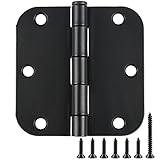
The most common type, as I mentioned, is the standard full-mortise hinge. You’ll see these on pretty much any interior door in a modern house. They have three distinct knuckles that overlap. When you look at the barrel of the hinge (the part where the pin goes through), you’ll often see screws along the edge. These are your adjustment screws. Sometimes they’re flush, sometimes they’re slightly recessed. If you see these screws, there’s a very high chance your hinge is adjustable.
Then you have specialized hinges. Some security doors use heavy-duty, non-adjustable hinges designed for maximum strength. Cabinet hinges are a whole different ballgame, often featuring micro-adjustments for precise alignment in tight spaces, but that’s a topic for another day. For standard doors, the key is the visible adjustment screws on the barrel.
Another clue is the pin itself. Can you see a small cap or a visible screw at the bottom of the pin? If so, it might be a removable pin. You can often gently tap the bottom of the pin with a hammer and a nail set (or another sturdy metal object) to get it to slide out. Once the pin is out, you can often see even more clearly if there are adjustment screws on the barrel. However, be cautious: some pins are indeed non-removable and are designed to stay put for security or structural reasons. If you’re struggling to remove a pin, don’t force it – you might break something.
Here’s a little table to help you distinguish:
| Hinge Type | Appearance | Adjustability | Verdict |
|---|---|---|---|
| Standard Full-Mortise | 3 knuckles, visible screws on barrel edge | Yes (via barrel screws) | Your best bet for common door issues. |
| Security Hinges | Often thicker, fewer visible seams, sometimes welded pins | Generally No | Built for strength, not finesse. |
| Specialty/Decorative | Varies widely (strap hinges, barrel hinges, etc.) | Depends on design | Check manufacturer specs carefully. |
If you have the standard type with adjustment screws, you’re in luck. The power to fix that sticky door is literally in your hands.
The Nitty-Gritty: How to Actually Make Adjustments
Alright, you’ve identified your adjustable hinges. Now, how do you actually make them do their thing? It’s a process that requires a little patience and a screwdriver, but it’s surprisingly straightforward. The goal is to subtly shift the door within its frame to correct binding, sagging, or uneven gaps. (See Also: A Box Without Hinges Key )
First things first: you need the right tools. A Phillips head screwdriver is usually all you need. Sometimes a flathead works, depending on the screw type. You might also want a small block of wood or a shim, just in case. And a helper can be useful, especially if you’re adjusting a heavy door or need to hold it steady.
Here’s the general process:
- Identify the Problem Area: Where is the door binding or rubbing? Is it the top corner, the bottom, the latch side, or the hinge side? Knowing this helps you target your adjustments.
- Locate Adjustment Screws: On the barrel of the hinge, look for screws along the edge. There are usually two or three on each hinge.
- Make Small Adjustments: This is the most important part. Do NOT crank on screws like you’re trying to win a strength contest. Turn each screw just a quarter or half turn at a time.
- Test and Repeat: After each small adjustment, close the door gently and see if the problem has improved. If it’s still rubbing, open the door, make another small adjustment, and test again.
Now, what do these screws actually do? Generally, tightening a screw on one side of the hinge barrel will push the door away from that side, while loosening it will allow it to move closer. For example, if your door is rubbing on the latch side, you might need to slightly push the hinge side away from the door. This often involves tightening screws on the hinge barrel on the side where the door is binding.
Conversely, if the door is sagging, you might need to adjust the top hinge to lift it slightly. This can be trickier and might involve loosening screws on one hinge and tightening on another to create a very subtle shift. Sometimes, you’ll need to loosen a screw slightly on one hinge and tighten one on another to effectively “rack” the door back into position. It’s a bit like playing a very slow, very delicate game of Jenga.
My first real success with this was on a bathroom door that had started to stick badly on the hinge side. It was so bad I had to slam it shut. I found the screws on the barrel of the middle hinge. I gave them a half-turn clockwise. No change. Another half-turn. Still nothing. I was getting frustrated again, ready to blame the manufacturer. Then I remembered the carpenter’s advice: small adjustments. I went back to the middle hinge, loosened a screw a quarter turn, and then tightened the other screw on that same hinge a quarter turn. The door swung open and closed smoothly. It was that one small, counter-intuitive move that did the trick.
Common Pitfalls and Why Your Door Still Sticks
So, if hinges are adjustable, why do so many people still struggle with doors that bind, stick, or sag? It usually boils down to a few common mistakes, or simply not understanding the limits of what hinges can do.
One of the biggest mistakes is trying to make too big an adjustment at once. People see a problem, grab their screwdriver, and go to town. Hinges offer very fine-tuning, not a complete overhaul. You’re talking about millimeters of movement, not inches. Over-tightening can strip the screw threads, damage the hinge, or even warp the door frame. Patience is key. Think of it as acupuncture for your door, not a sledgehammer.
Another issue is assuming all hinges are adjustable. As we discussed, some are designed to be fixed. If you have a solid steel security door or a very old, decorative hinge, it’s likely not going to have adjustment screws. Trying to force an adjustment on these will just cause damage. Always identify your hinge type first.
People also forget about the door itself. If the door slab has warped significantly due to moisture or age, the hinges might be adjustable, but the door is still physically out of shape. In such cases, hinge adjustment can only do so much. You might need to plane the edge of the door, or even replace it. The hinges are for alignment correction, not for fixing a fundamentally misshapen object.
What about the frame? If the door frame itself is loose, damaged, or has shifted significantly within the wall, hinge adjustments will be a temporary fix at best. The frame is the foundation for the door. If the foundation is cracked, the house will still lean. You might need to reinforce the frame, re-shim it, or even repair the wall structure before your hinge adjustments will hold.
Finally, there’s the issue of the hinge pin. If the pin is rusted, bent, or difficult to remove (if it’s even meant to be removed), you can’t perform many common adjustments. Sometimes, simply removing the pin (carefully!), cleaning it, lubricating it, and reinserting it can help. But if it’s damaged, it needs replacement. I once spent an entire afternoon fighting a stiff pin, only to realize it was slightly bent from a previous, forceful attempt at removal. I ended up having to carefully pry it out and then gently tap it straight with a hammer on a hard surface before it would slide back in and allow for proper hinge function.
When to Call in the Pros (or Just Buy New Hinges)
Sometimes, despite your best efforts, the door is just beyond simple hinge adjustment. Knowing when to throw in the towel and either call a carpenter or just buy new hardware is a sign of wisdom, not failure. (See Also: Are Integrated Washing Machine Door Hinges Standard )
If you’ve tried adjusting the screws on your hinges and nothing seems to be happening, it’s time to take a step back. First, double-check that you have indeed identified adjustable hinges. Are there visible screws on the barrel? If so, are they stripped? Can you turn them easily, or do they just spin freely? If the screws themselves are damaged, they won’t be able to make the necessary adjustments.
Consider the age and condition of the hinges. If they’re old, rusty, or visibly bent, they might not be capable of holding an adjustment, even if they have the screws. In these cases, replacement is often the most straightforward and effective solution. A new set of quality hinges costs anywhere from $10 to $30 for a standard interior door, which is a small price to pay for a door that operates smoothly. When replacing hinges, make sure you get the same size and screw pattern, or be prepared to do some chiseling to mortise new ones into the frame and door.
If the door itself is significantly warped or damaged, hinge adjustments won’t fix the underlying problem. You might be able to get a warped door to almost work with extreme hinge adjustments, but it will likely still bind in certain conditions or look unsightly. For a warped door, you might need to plane its edges, or more likely, replace the door slab itself.
Finally, if the door frame is the issue – if it’s loose, rotten, or has shifted in the wall – then hinge adjustments are like putting a Band-Aid on a broken leg. You need to address the structural problem. This might involve reinforcing the frame, re-shimming it, or even more extensive carpentry work. This is definitely a situation where calling a professional carpenter is the best course of action. They have the experience and tools to diagnose and fix frame issues properly.
For most minor binding or sticking issues on standard doors, though, you should be able to get things right with a bit of careful hinge adjustment. Don’t be afraid to experiment a little, but always remember to make small, incremental changes and test frequently.
Practical Tips for Smoother Swings
Beyond the basic adjustment screws, there are a few other tricks and tips that can help keep your doors swinging smoothly and prevent future headaches. Think of these as preventative maintenance for your door hardware.
Lubrication is Your Friend: Even if your hinges are adjustable, sometimes they just need a bit of lubrication to move freely. A spray lubricant like WD-40 or a silicone-based lubricant can work wonders. Spray it directly into the hinge barrel, working the door back and forth to help the lubricant penetrate. Do this periodically, especially on doors that get a lot of use or are in humid environments. I keep a can of spray lubricant in my toolbox, and a quick squirt can often fix a squeaky hinge before it becomes a major annoyance. It’s also good to apply it to the hinge pin if you’ve removed it for any reason.
Clean Those Hinges: Over time, dust, grime, and old lubricant can build up inside the hinge barrel. If you’ve removed the pin, take the opportunity to wipe down the pin and the inside of the barrel with a clean cloth. This can help restore smooth operation. If they’re particularly dirty, a bit of mineral spirits can help clean them before you re-lubricate.
Check Screw Tightness (Regularly): While you don’t want to overtighten, you also don’t want hinge screws to be loose. Loose screws in the door frame or the door itself can cause sagging and misalignment. Give them a check every so often, especially on exterior doors that are exposed to more environmental stress. A loose hinge plate on the door jamb can cause a door to sag significantly.
Consider the Gap: When adjusting, always keep an eye on the overall gap around the door. You want consistent spacing between the door and the frame. If you’re adjusting one hinge to fix a rub, make sure you’re not creating a new problem elsewhere. Sometimes, a slight adjustment on one hinge might require a corresponding adjustment on another to maintain balance. The ideal gap is usually around 1/16th of an inch on the latch side and top, and a bit more at the bottom. Too tight, and the door binds; too loose, and it looks sloppy and can let in drafts.
Hinge Pin Styles Matter: As mentioned, some pins are removable, some aren’t. For removable pins, you can often buy replacement pins if yours is damaged. Some pins have decorative caps, while others are simple metal rods. If you’re replacing a hinge, try to get one with the same pin style and a similar appearance unless you plan on replacing all hinges on the door for a uniform look.
The ‘Shim Trick’: If you’re making adjustments and find you need to slightly shim a hinge to get the perfect alignment, you can use small pieces of cardboard or thin wood shims. Place these behind the hinge leaf (between the hinge and the door or frame) to subtly change the hinge’s position. This is a more advanced technique, but it can be effective when micro-adjustments with screws aren’t quite enough. (See Also: Are Hinges Wheeels )
By understanding how your hinges work and performing these simple maintenance tasks, you can keep your doors functioning perfectly for years to come, avoiding the frustration I initially experienced.
Faq – Your Door Hinge Questions Answered
Can You Adjust Door Hinges That Are Painted Shut?
If hinges are painted shut, the paint is acting as an adhesive, preventing movement. You’ll need to carefully score the paint line around the hinge knuckles and along the edge of the door with a utility knife. Once the paint is scored, you can try gently tapping the door or using a putty knife to break the paint seal. If the hinges are genuinely stuck due to paint, and not just tight, you may need to remove the hinge pin (if possible) and clean off any paint residue before attempting any adjustment.
Are All Door Hinges Adjustable?
No, not all door hinges are adjustable. While most standard interior door hinges have screws on the barrel that allow for fine-tuning, many specialty hinges (like security hinges on exterior doors, heavy-duty industrial hinges, or some decorative strap hinges) are not designed for adjustment. Always inspect your hinges to see if they have visible adjustment screws on the barrel.
How Do I Fix a Door That Rubs on the Top?
If a door rubs on the top, it usually indicates a sagging issue. You’ll want to adjust the hinges. The most common fix involves slightly tightening the adjustment screws on the bottom hinge knuckles (the ones closer to the floor) on the side that the door is rubbing. Alternatively, you might need to loosen screws on the top hinge knuckles to lift the door. Make small, incremental turns and test frequently to avoid over-correction.
What Happens If I Overtighten Hinge Adjustment Screws?
Overtightening hinge adjustment screws can strip the threads in the hinge barrel, rendering them ineffective. In severe cases, it could also damage the door frame or the door itself if the force is transmitted through the hinge. If you strip a screw, the hinge may no longer be able to hold its adjustment, and you might need to replace the hinge or use a more permanent method to secure it.
Can Hinge Adjustments Fix a Door That’s Hard to Close?
Yes, hinge adjustments can often fix a door that’s hard to close, especially if the difficulty is caused by the door binding on the frame. By slightly shifting the door’s position using the adjustment screws, you can create more clearance where it’s sticking. This is particularly effective for doors that rub on the latch side or the top and bottom edges.
Do I Need to Remove the Door to Adjust Hinges?
Generally, you do not need to remove the door to adjust standard interior door hinges. The adjustment screws are accessible while the door is hanging. Removing the door is usually only necessary if you are replacing the hinges entirely, or if the door is severely warped or damaged and requires extensive work that can’t be done in situ.
How Much Can You Adjust a Door Hinge?
The amount you can adjust a door hinge is quite limited, typically only a few millimeters. These adjustments are designed for fine-tuning the alignment of the door, correcting minor issues like sticking or slight sagging. You won’t be able to make drastic changes; the goal is precise calibration rather than major repositioning.
Can I Adjust Security Door Hinges?
Most security door hinges are not designed to be adjustable. They are typically solid, fixed-pin hinges built for maximum strength and security. If a security door is sticking or not closing properly, the issue is usually with the door itself, the frame, or the hinges are damaged and require replacement rather than adjustment.
How Do I Know If My Hinge Is Adjustable?
You can usually tell if your hinge is adjustable by looking at the barrel of the hinge (the part the pin goes through). If you see small screws along the edge of the barrel, your hinge is likely adjustable. Standard interior door hinges (often called full-mortise hinges) are the most common type that feature these adjustment screws.
What Is the Best Lubricant for Door Hinges?
For most household doors, a spray lubricant like WD-40 or a silicone-based lubricant is effective. Silicone lubricants are often preferred as they don’t attract as much dust and grime as oil-based lubricants. For very heavy or external doors, a heavier grease might be more appropriate, but for typical interior doors, a spray is usually sufficient and easy to apply.
Final Thoughts
So, to circle back to the original question: are door hinges adjustable? Absolutely, and it’s a skill worth having. Don’t let a sticking or sagging door be the bane of your existence. Understanding those little screws on the hinge barrel is like having a secret superpower against minor door-related annoyances. It’s saved me from some truly embarrassing DIY moments and probably a few hundred bucks in repair calls.
Next time you have a door that’s being stubborn, take a good look at its hinges. Identify them, grab your screwdriver, and make those small, deliberate turns. You might be surprised at how much power you have to correct even a seemingly stubborn door. If all else fails, or if the problem is clearly structural, then it’s time to consider replacement or a professional. But for most common issues, the solution is already built into the hardware.
Give it a shot. What’s the worst that can happen? You might have to buy a new hinge or two, which is still better than living with a door that drives you nuts every single day.