I remember staring at a door I was trying to hang, sweat dripping into my eyes, convinced the universe had a twisted sense of humor. The hinge just wouldn’t let the door swing open all the way.
“What’s the deal?” I grumbled, wrestling with it.
“Are door hinges only 90 degrees?” It felt like a trick question, and frankly, a really annoying one when you’ve got a deadline and a whole lot of sawdust in your beard. The truth is, most people don’t think about hinges until one breaks or a door won’t open properly.
And when they do, they often assume a fixed, simple angle. Let me tell you, it’s a lot more complex, and a lot more forgiving, than that.
This whole hinge angle thing is one of those seemingly simple home improvement topics that can trip you up if you don’t know what you’re looking at. It’s not just about what opens and closes; it’s about how smoothly, how far, and how reliably. So, let’s cut through the confusion and get down to brass tacks, or in this case, steel and pins.
The Actual Range of Motion: Beyond the Right Angle
So, are door hinges only 90 degrees? Absolutely not. That’s the first myth we need to bust. If they were, doors would only swing open to the width of the wall they’re attached to. Imagine trying to get a couch through a doorway that only opens halfway. It’d be chaos. The whole point of a hinge is to allow continuous, smooth rotation. For a standard interior door, you’re typically looking at a swing of around 90 degrees inwards towards the room, and maybe another 90 degrees outwards if there’s nothing in the way like a wall or furniture. So, that’s a potential 180 degrees of movement, not a locked 90.
The key thing is that the hinge itself doesn’t dictate a fixed 90-degree stop. The physical limitations are usually the door frame, the wall, or any obstructions. The hinge mechanism itself is designed for a full range of motion, allowing the door to pivot freely.
Think about cabinet doors – they often swing much further, sometimes nearly flat against the cabinet face, and those use similar types of hinges. The angle you see a door settle at when it’s ‘open’ is almost always determined by an external factor, not an inherent hinge limitation.
I once installed a door where the hinge felt like it was stopping at 90, only to realize the thick baseboard trim on the other side was the culprit. Pulled that off, and the door swung a full 170 degrees before I had to stop it. (See Also: A Box Without Hinges Key )
Now, there are specific types of hinges designed for particular applications that might have built-in stops or limited ranges. For instance, some display case hinges or specialized furniture hinges might be engineered to open only to a certain degree for aesthetic reasons or to prevent damage. But for the vast majority of residential and commercial doors, the hinge’s job is to provide an axis of rotation, not to enforce a specific angle. The common perception of 90 degrees likely comes from the fact that 90 degrees is often the maximum practical swing before the door hits a wall or becomes awkward to manage.
Understanding Hinge Types and Their Swing Capabilities
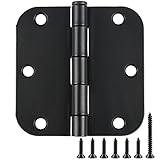
The type of hinge you’re dealing with makes a huge difference. You’ve got your standard butt hinges, which are probably what most people picture. These are the workhorses. They consist of two leaves that are joined by a pin. Each leaf attaches to one of the surfaces (door and frame), and as the pin rotates, the door swings. These have a full range of motion limited only by whatever they bump into. Then you have strap hinges, often seen on gates or barn doors, which are much longer and offer a different kind of use and visual style, but again, no inherent 90-degree limit.
For cabinets, you’ll encounter overlay hinges, concealed hinges (like the European style), and European-style hinges. The concealed ones are particularly interesting because they allow for a much wider swing, often 110 to 170 degrees, and can even fold the door almost flat against the cabinet side. They achieve this through a more complex multi-jointed arm design. These definitely shatter the 90-degree myth. I spent an afternoon trying to get a set of cheap, no-name European hinges to align properly on a kitchen cabinet, and the sheer amount of movement they offered was both impressive and a little intimidating. Once I figured out the adjustment screws, the doors opened wider than I expected and sat perfectly flush when closed.
Then there are specialized hinges. Think about continuous hinges, often called piano hinges. These run the entire length of the door and frame, providing exceptional stability and distributing stress evenly. They offer a full, unimpeded swing. Mortise hinges, which are set into the door and frame, are basically just a type of butt hinge but emphasize a cleaner look. The key takeaway is that the standard hinges you’ll find at any hardware store are designed for maximum practical swing, not a fixed 90 degrees.
Here’s a quick rundown of some common hinge types and their typical swing:
| Hinge Type | Typical Swing Range | Notes | My Verdict |
|---|---|---|---|
| Standard Butt Hinge | ~180 degrees (limited by obstructions) | Most common for interior/exterior doors. | Reliable, no-nonsense. Does the job. |
| Strap Hinge | ~180 degrees (limited by obstructions) | Often decorative, for gates, sheds, heavy doors. | Great for a rustic look, but can sag over time if not solid. |
| Concealed (European) Hinge | 110 – 170 degrees (some up to 270) | Common in modern cabinetry, offers clean look and wide opening. | A bit fiddly to install and adjust, but worth it for cabinets. |
| Continuous (Piano) Hinge | ~180 degrees (limited by obstructions) | Runs full length of door, very strong. | Excellent for cabinets or anything needing serious stability. Not pretty. |
Installation Pitfalls and Why Doors Don’t Always Swing Properly
So, if hinges aren’t designed to stop at 90 degrees, why does it sometimes feel like they do, or why does a door just not swing right? Installation is usually the culprit, and I’ve made my share of boneheaded mistakes here. One common issue is the door being too heavy for the hinges chosen. You might have a solid wood door on flimsy little hinges. Over time, those hinges will bend, the door will sag, and it’ll start to bind or only open to a specific point because it’s hitting the frame awkwardly.
Another classic screw-up is not mortising deep enough, or too deep. If the hinge leaf isn’t set flush with the door and frame surface, it creates an interference. The hinge leaves won’t sit flat against each other when the door is closed, and this can restrict the swing. Conversely, if you mortise too deep, the door will sit too far into the frame, and again, you’ll have binding or an incomplete swing.
I once spent two hours trying to figure out why a new door was scraping the floor, only to find I’d mortised one hinge leaf about 1/8 inch too high. Took it all apart and fixed it. Lesson learned: measure twice, cut once, and check your mortise depth religiously. (See Also: Are Integrated Washing Machine Door Hinges Standard )
Misaligned hinges are another big one. If the hinges on the door aren’t perfectly aligned with their corresponding mortises on the frame, the door will bind. This is especially true with multi-point hinges or heavier doors. The door might swing freely for the first few inches, then suddenly get stiff. It feels like a hinge problem, but it’s really an alignment issue caused by sloppy measurements or installation. The pin might not be seating correctly, or the leaves are being forced to twist as they open.
Finally, warped doors or frames can also create the illusion of a hinge limitation. If the door itself isn’t straight, or the frame isn’t plumb and square, the door will naturally bind at certain points of its swing. It’s easy to blame the hardware, but sometimes the structure itself is the problem. I’ve seen doors where one corner would hit the frame about 45 degrees into the swing, making you think the hinge was stuck, but the door was actually bowed like a banana.
Beyond the Swing: What to Look for in Door Hinges
When you’re actually buying hinges, you’re not just grabbing the first shiny ones you see. You need to consider a few things beyond just the swing. First off, material and finish. Most hinges are steel, brass, or stainless steel.
Steel is strong and affordable, but it can rust if not protected. Brass looks classic and resists corrosion. Stainless steel is the king of durability and corrosion resistance, making it great for exterior doors or high-moisture areas. The finish matters too – satin nickel, oil-rubbed bronze, polished chrome – pick something that matches your hardware and the overall aesthetic of your space.
I once used cheap, plated hinges on an exterior gate, and within a year, the plating flaked off, revealing rusty steel underneath. Looked awful and they started squeaking.
Size and strength are important. Hinges come in various widths and thicknesses, and they’re rated for weight. You need hinges that can support the weight of your door. A heavy solid wood door needs beefier hinges than a lightweight hollow-core interior door. A good rule of thumb is to check the manufacturer’s recommendations, but generally, for a standard interior door, three 3.5-inch, 1/4-inch radius hinges are pretty standard. For heavier doors, you might need 4-inch hinges or thicker ones, or even four hinges instead of three. Ignoring this can lead to sagging doors and premature hinge failure.
The radius of the corners is another detail. Most doors have rounded corners, and the hinges are designed to match. You’ll see terms like ‘1/4 inch radius’ or ‘5/8 inch radius’. You need to match the hinge radius to the mortise in your door and frame. Mismatched radii mean the hinge won’t sit flush, causing the issues we talked about with installation. It’s a small detail, but it makes a big difference in how the door looks and functions. Also, consider the pin type. Some pins are fixed, while others are removable, which can be helpful for maintenance or if you need to take the door off easily.
Here’s a quick guide to what I look for: (See Also: Are Hinges Wheeels )
- Material: Stainless steel for exterior or high-moisture; brass or good quality steel for interior. Avoid cheap plated options unless it’s a very light-duty application.
- Strength/Size: Match hinge capacity to door weight. Don’t skimp here. Three hinges for most interior doors, consider four for heavier ones.
- Corner Radius: Match your door and frame. It’s usually 1/4 inch or 5/8 inch. Get it wrong, and it won’t sit right.
- Finish: Coordinate with your existing hardware. Satin nickel is popular for a reason – it hides fingerprints.
- Bearing Type (for heavy doors): Some higher-end hinges have ball bearings or oil-impregnated bearings to reduce friction and improve longevity. Worth it if you have heavy, frequently used doors.
Contrarian View: When a 90-Degree Stop Is Actually a Good Thing
Now, everyone talks about hinges allowing a full swing, and for the most part, that’s true and desirable. But here’s a thought that goes against the grain: sometimes, a controlled stop is exactly what you want, and you can achieve it with the right hardware or modifications, even if standard hinges don’t inherently do it. People often assume a full swing is always best, but consider a door that opens into a narrow hallway. If it swings a full 180 degrees, it could end up banging into the opposite wall, damaging both the door and the wall, or just becoming a hazard. In cases like that, a controlled stop at 90 degrees or even 120 degrees is actually a feature, not a flaw.
How do you get this? Well, you can get specialized door closers that have a hold-open feature that can be set to release at a certain angle, or even hydraulic closers that allow you to adjust the final closing speed and stop. But if you’re looking for a simpler, mechanical solution directly related to the hinge, you can sometimes install a ‘door stop’. These are small devices that attach to the bottom of the door or the frame and physically prevent the door from swinging past a certain point. They’re simple, cheap, and effective.
Another option is to use hinges that have a built-in detent or positive stop. While less common in standard residential hardware, they exist, particularly in commercial applications or furniture. These are hinges specifically engineered to resist movement past a certain angle or to hold the door open at specific points. So, while it’s true that the basic function of a door hinge is to allow continuous rotation, it is absolutely possible, and sometimes preferable, to limit that swing. It’s not a limitation of the hinge itself, but rather a modification or selection of hardware to achieve a desired outcome. Don’t just assume a full swing is always the goal; sometimes, a controlled stop is smarter.
Real-World Use Cases and Practical Tips
Let’s talk about where this matters in the real world. Think about your closet doors. If you have bi-fold closet doors, they use specialized hinges that allow them to fold back against the wall, giving you full access to the closet. That’s way beyond 90 degrees. Or consider a door leading out to a deck that has a screen door on the inside. The screen door might have a spring closer and a stop to prevent it from hitting the main door, and the main door needs to swing far enough to clear the screen door when open. You need that extra swing.
Exterior doors often have more solid hinges. They need to handle weather, potential wind gusts, and the weight of security features like deadbolts. The hinges must allow the door to swing freely enough to not snag on the threshold or the frame, even with temperature fluctuations causing materials to expand and contract. I once had an exterior door that was a pain in the neck. It would stick halfway open. Turned out the bottom of the door was just barely catching the concrete stoop. Replacing the hinges with slightly longer ones, and shimming the frame slightly, corrected the problem without any modification to the stoop itself. It’s all about the interplay between the door, the frame, and the hinges.
For kitchens and bathrooms, cabinet hinges are key. Those European-style hinges that allow doors to open wide are fantastic for accessing pots and pans or toiletries. Imagine trying to get a big stockpot out of a cabinet where the door only opens 90 degrees – you’d be wrestling with it. The ability for those cabinet doors to swing past 90 degrees, sometimes almost 180, is a huge usability improvement.
Here are a few practical tips:
- Lubricate Regularly: Squeaky hinges are annoying. A quick spray of WD-40 or a bit of grease on the pin can work wonders. For heavier doors or high-use hinges, a more specialized lubricant might be better.
- Check for Sag: If a door is dragging on the floor or not closing properly, check the hinges. Look for bent leaves or loose screws. Often, tightening screws or replacing worn hinges fixes the issue.
- Match New to Old (if replacing): When replacing hinges, try to match the size, screw hole pattern, and corner radius of the old ones. This minimizes mortising work.
- Don’t Overtighten Screws: Especially in softer wood, overtightening can strip the screw hole, making it hard to secure the hinge. Use wood glue and toothpicks to repair stripped holes if needed.
- Consider the Environment: For exterior doors or humid areas, always opt for corrosion-resistant materials like stainless steel or solid brass.
Final Thoughts
So, to set the record straight: are door hinges only 90 degrees? No, not by a long shot. The hinge is designed to allow a full, continuous range of motion, and any limitation you perceive is usually due to the surrounding environment – the walls, furniture, or even the trim. Understanding the different types of hinges and paying attention to installation details are key to making sure your doors swing smoothly and as far as they need to.
Don’t just assume the hinge is the problem when a door isn’t working right. It’s often the installation, the alignment, or even the door or frame itself that’s the real culprit. But if you do need to limit a door’s swing for safety or convenience, remember there are ways to achieve that with door stops or specialized hardware. It’s about choosing the right tool for the job and installing it correctly.
Next time you’re wrestling with a door, take a moment to examine the hinges, the frame, and the door itself. You might be surprised at what you find, and you’ll definitely be one step closer to a properly functioning door.