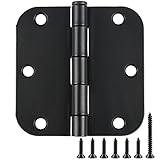
I remember the first time I saw one – a chunky, industrial-looking door on a shed, hinges proudly displayed on the outside. My immediate thought was, ‘That looks like an invitation for trouble.’ Years of wrestling with dodgy hardware and products that promised the moon but delivered dust have made me a skeptic. So, when the question of whether are doors with the hinges outside safe comes up, I don’t just rely on specs; I rely on what I’ve seen, installed, and, frankly, cursed at.
Let’s cut to the chase: it’s not as simple as a yes or no. The common wisdom might lean one way, but my experience has shown me there are nuances. We’re not talking about your fancy mahogany front door here, but specific applications where external hinges are a thing.
Why Hinges Might Be Stuck on the Outside
Look, nobody puts hinges on the outside of a main house door for kicks and giggles. It’s usually a practical decision driven by specific needs or design constraints. The most common culprit? Doors that need to swing outwards. Think about a fire escape door – you absolutely want that to push open easily and quickly from the inside in an emergency. If the hinges were on the inside, they could become a bottleneck, getting jammed or obstructed by people trying to flee. Same goes for certain types of utility sheds or industrial buildings where quick egress is most important. In these scenarios, the hinge is a functional component, and its placement is dictated by safety protocols or operational requirements.
Then there’s the world of security, which sounds counterintuitive but actually makes sense in some niche cases. For a standard interior door, visible external hinges are a big fat security no-no. But on a heavy-duty shed or an outbuilding where the primary concern is brute force entry, some might argue that external, solid, and perhaps even tamper-proof hinges can be part of a layered security approach. It’s not about hiding the hinge; it’s about making it so strong and integrated that it’s almost impossible to mess with from the outside. I’ve seen some seriously beefy strap hinges on old barns that looked like they could withstand a rhino charge. These aren’t your typical residential door hinges; they’re built for purpose.
Another reason you might see this setup is on doors that need to be removed easily for maintenance or access. Imagine a workshop where you might need to take a door off its frame regularly to move large equipment. External hinges, especially those with readily accessible pins or quick-release mechanisms, make this a breeze. It’s about functionality and convenience. I had a garage workbench area where the door to the small storage room behind it had these very hinges. It meant I could pop the door off in about 30 seconds if I needed to haul out a big tool cabinet, then just clip it back on. Super handy, if a bit unorthodox for a typical home.
Finally, aesthetics play a role, albeit a smaller one in the ‘safety’ discussion. Some architectural styles, particularly rustic, industrial, or minimalist designs, might feature external hinges as a deliberate design choice. They become a visual element, a statement piece. This is less about the ‘are doors with the hinges outside safe’ question from a security standpoint and more about visual integration. However, even in these design-forward applications, the underlying functionality and security considerations still need to be addressed.
The Security Conundrum: Can They Be Kicked in?
This is where the rubber meets the road for most people asking about external hinges: security. The immediate thought is that if you can see the hinges, you can mess with them. And on a standard hollow-core interior door? Absolutely. A quick whack with a boot, a pry bar strategically placed, and poof, you’re inside. But this is where we need to separate the wheat from the chaff, the flimsy interior doors from the purpose-built exterior ones. For a typical residential exterior door, having hinges on the outside is a massive security flaw. Most exterior doors are designed with the hinges concealed on the inside for a reason – to prevent easy prying and removal.
However, let’s talk about the kind of doors where external hinges are actually considered. We’re talking about heavy-duty gates, shed doors, or perhaps even reinforced entry points on commercial properties. These doors are often made of solid wood, steel, or thick composite materials. The hinges themselves are also likely to be substantial, forged steel affairs, not the flimsy stamped metal you find on interior closet doors. In these instances, the hinge isn’t the weak link; it’s the door and the frame that provide the primary security. The hinge is just the pivot point.
The real security concern with external hinges, even on solid doors, is the pin. On many standard hinges, the pin can be easily removed if the hinge is exposed. This would allow the door to be lifted off its frame. However, many heavy-duty external hinges come with security features to combat this.
You might find security studs or non-removable pins that prevent the door from being lifted even if the hinge is compromised. I once installed a set of gate hinges that had a small, almost unnoticeable stud that would seat into a corresponding hole on the frame. Without a specific tool or knowledge, you couldn’t just lift the pin out.
It was a small detail, but it made a huge difference. (See Also: A Box Without Hinges Key )
Another aspect to consider is the strength of the door and frame itself. If a door is made of solid steel and set into a reinforced concrete frame, the hinges are almost secondary. The effort required to breach that kind of barrier would likely involve much more than just fiddling with hinges. Conversely, if you have a lightweight door with visible external hinges, then yes, you’ve created an obvious vulnerability. It’s like leaving your car keys in the ignition while you pop into the shop – it’s just asking for trouble.
Ultimately, the safety of a door with external hinges hinges (pun intended) on the quality of the door, the quality and type of the hinges, and the overall construction of the entryway. For typical residential exterior doors, it’s a hard pass. For specialized applications, it can be secure if done right. My own experience with a rustic garden gate that had exposed, heavy-duty strap hinges was that it was never the hinges that worried me; it was the flimsy latch. Once I upgraded that, the gate felt rock solid.
Real-World Applications and My Own Blunders
I’ve encountered external hinges in places you wouldn’t expect, and, frankly, I’ve made mistakes with them. My first real encounter was with a shed I inherited with the house. It had these old, massive black iron hinges, completely exposed. The door itself was warped, thin plywood. I figured, ‘Easy fix, just tighten the hinges.’ Wrong. The problem wasn’t the hinges; it was the entire door assembly. The hinges, while visually imposing, were attached with tiny screws into wood that was practically composting. So, the hinges looked secure, but the whole thing could be kicked in with a stiff breeze. Lesson learned: the hinge is only as good as what it’s attached to.
Then there was the time I decided to build a custom garden gate. I wanted that old-world, rustic look. I bought these beautiful, hand-forged iron strap hinges online. They looked fantastic, really beefy.
I mounted them on the outside, feeling quite pleased with myself. A few months later, during a particularly heavy storm, a tree branch came down and slammed against the gate. The hinges held, but the wood of the gate around the hinge plates started to splinter and crack.
The sheer use and force applied to the exposed hinge, combined with the natural expansion and contraction of the wood, put immense stress on the mounting points. It wasn’t a security issue, but it was a structural one that I hadn’t fully anticipated.
I ended up reinforcing the mounting points with metal plates – a bit of a kludge, but it worked.
Where external hinges do shine, in my experience, is on utility buildings or specific types of workshops. I helped a buddy set up a woodworking shop in an old barn. The main access door had these incredibly solid, almost industrial-looking hinges on the outside. They were designed so that you could easily remove the hinge pin with a simple tool.
This meant if he ever needed to move a massive piece of machinery, he could literally lift the entire door off its frame in under a minute. No wrestling, no complicated disassemblies. For his specific needs, it was a stroke of genius.
It wasn’t about preventing theft; it was about rapid access and flexibility. This is a scenario where the ‘unsafe’ aspect is completely overshadowed by practical function. (See Also: Are Integrated Washing Machine Door Hinges Standard )
I’ve also seen external hinges on some very old, very solid wooden doors in historic buildings. These hinges often have a decorative element, but they are also incredibly sturdy and integrated into the door and frame in a way that makes them very difficult to tamper with. They were built differently back then, with materials and craftsmanship that we don’t always see today. They weren’t designed to be hidden; they were designed to last and to function reliably.
So, while the common advice might be ‘never have hinges on the outside,’ my experience tells me it’s more nuanced. It depends heavily on the application, the quality of the hardware, and the construction of the door itself.
My shed door incident taught me that visible doesn’t always mean vulnerable, but it certainly highlights the importance of the entire system, not just the hinge.
What to Look for: Beyond the Obvious
When you’re eyeing a door with hinges on the outside, or considering one, the first thing to scrutinize isn’t just the hinge itself, but its attachment. Are those beefy hinges screwed into solid timber, or are they sinking into particle board that looks like it’s weeping? I’ve seen hinges that look like they could stop a tank, but they were held on by screws that were barely longer than a dime.
That’s not a security feature; that’s a joke. Look for deep, solid screws or bolts that go well into the frame and the door’s edge. For exterior doors, especially, you want to see hardware that’s designed to withstand the elements too – rust-resistant coatings like galvanized steel or stainless steel are a must.
Nothing saps security and longevity faster than corrosion.
Beyond the mounting, examine the hinge pin. As I mentioned, standard pins can often be removed from the outside.
If security is a concern, you need hinges with security features. This could be a non-removable pin, a security stud that drops into a hole in the frame when the door is closed, or even a barrel hinge design. These features make it incredibly difficult, if not impossible, to lift the door off its frame even if someone manages to tamper with the hinge itself.
I spent an extra $40 on a set of gate hinges that had these little security studs, and honestly, it was worth every penny for the peace of mind. It’s a small detail that adds a significant layer of protection.
Consider the hinge’s construction and weight. Are they solid, heavy metal (brass, steel), or are they thin, stamped pieces of aluminum that feel like they’d bend if you sneezed too hard? For any exterior application where security or durability is a factor, you want heavy-duty hinges. Think forged steel. These are less likely to bend, break, or be forced open. I learned this the hard way when a cheap set of hinges on a garden gate snapped after a strong windstorm. The gate itself was fine, but the flimsy hinges failed spectacularly. It was a lesson in not skimping on hardware, especially when it’s exposed to the elements and potential stress. (See Also: Are Hinges Wheeels )
Finally, think about the overall design and purpose of the door. Is this a decorative garden gate, a functional shed door, or an attempt at a main entry door? If it’s the latter, and the hinges are on the outside, run. Run fast. For specialized applications like emergency exits, heavy-duty workshop doors, or secure outbuildings, external hinges can be safe and even advantageous, provided they are high-quality, properly installed, and incorporate security features. It’s about matching the hardware to the job. A door meant to keep people out will have different hinge requirements than a door meant to let people escape quickly.
My Contrarian Take: When Obvious Is Better
Everyone, and I mean everyone, will tell you that hinges on the outside are a security risk. And for 95% of doors, they are absolutely right. You do not, under any circumstances, want the hinges visible on the outside of your main house entrance. It’s like painting a giant bullseye on your property. But here’s my contrarian take: for certain utilitarian applications, making the hinges obvious and solid can actually be more secure, or at least more functional, than trying to hide them poorly.
Think about a heavy-duty steel security gate for a driveway or a solid shed door. If the hinges are on the inside, they are often smaller, less visible, and potentially more susceptible to being cut or ground off by a determined intruder if they can get access to the inside of the frame. However, if you have massive, externally mounted, forged steel hinges, possibly with security studs or non-removable pins, that are visibly built like a tank, it presents a much more formidable obstacle. The sheer strength of the hinge might deter an attack that would easily overcome a hidden, weaker hinge.
My reasoning is this: if you can’t hide it, make it so damn strong and obvious that tampering with it becomes impractical or impossible. It’s a psychological deterrent as much as a physical one. A thief looking for an easy target will see those beefy external hinges and likely move on to a less fortified entry point. It’s about broadcasting strength. Trying to hide hinges on a door that’s already a weak point is pointless. Making them obvious and making them incredibly difficult to defeat is a different strategy altogether.
Of course, this only applies to specific situations. You’re not putting these on your interior bedroom doors. This is for outbuildings, workshops, heavy gates, or industrial settings. It requires quality hardware, proper installation into a strong frame, and an understanding that you’re not trying to be stealthy; you’re trying to be formidable. So, while the general rule of thumb is ‘hide your hinges,’ I believe there are specific, practical scenarios where the opposite – making them obvious and incredibly strong – is the smarter, and dare I say, safer approach.
People Also Ask – Faq
Can You Remove a Door with External Hinges From the Outside?
Generally, yes, if they are standard hinges with removable pins. Many external hinges designed for security or specific functions, however, come with features like security studs or non-removable pins that prevent the door from being lifted off the frame from the outside, even if the hinge itself is accessible.
Are External Hinges Bad for Security?
For typical residential exterior doors, yes, they are a significant security risk as they allow for easy prying or removal. However, for heavy-duty applications like gates or industrial doors, externally mounted, high-security hinges can be as secure, or even more secure, than poorly installed internal hinges if they are solid and designed to prevent tampering.
What Is the Main Disadvantage of Exterior Door Hinges?
The primary disadvantage is their vulnerability to attack. They can be more easily accessed for prying, grinding, or pin removal, potentially allowing unauthorized entry. Aesthetics can also be a concern for some, as they are visibly exposed.
What Type of Hinges Are Used on Exterior Doors?
Exterior doors typically use concealed, non-removable hinges mounted on the inside of the door frame for security. When external hinges are used on exterior applications, they are usually heavy-duty, rust-resistant strap or barrel hinges with added security features.
Final Verdict
So, are doors with the hinges outside safe? The answer, as you’ve probably gathered, is a resounding ‘it depends.’ For your everyday front door, a setup with exposed hinges is a definite no-go. You’re inviting trouble. Stick to the standard, concealed hinges that are designed for residential security.
However, for specific, utilitarian purposes – think sturdy garden gates, workshop doors, or secure sheds – external hinges can be a perfectly viable, and sometimes even advantageous, solution. The key is quality. You need solid, purpose-built hardware, installed correctly into a solid frame. Don’t skimp on the screws, and look for those security features if you’re remotely concerned about unauthorized access.
My own blunders taught me that a visible hinge isn’t automatically a weak point, but it absolutely demands a higher standard of construction and hardware. If you’re contemplating this for a project, do your homework on the specific hinges and installation requirements. And remember, sometimes obvious strength is better than a flimsy attempt at concealment.