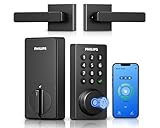
Look, I get it. The idea of ditching your clunky old deadbolt for a sleek, electronic gizmo that talks to your phone sounds like the future. But then the paranoia kicks in. Are electric door locks safe? I’ve spent way too much time and money wrestling with these things, and let me tell you, the hype doesn’t always match the reality.
I’ve had my fair share of tech headaches, from flimsy apps that crash when you need them most to battery drains that leave you stranded. So, when we talk about something as fundamental as home security, you bet I’m going to be blunt about whether these smart locks are actually worth the investment and if they deliver on their promise of safety.
The ‘works How?’ Breakdown for Smart Locks
So, how do these fancy electric door locks actually work, and is that mechanism inherently safe? Forget the magic wand; it’s mostly a combination of electronics and mechanics, just like your old lock, but with a brain. Most smart locks replace your existing deadbolt. Inside, there’s a motor that physically turns the bolt – the part that sticks into the door frame – when it gets a signal. This signal comes from your smartphone, a keypad, a key fob, or sometimes even a voice command.
The communication happens over different channels. Bluetooth is common for short-range stuff – think opening your door as you walk up. Wi-Fi connects to your home network, allowing you to control the lock from anywhere in the world via an app. Some use Z-Wave or Zigbee, which are lower-power radio frequencies often used in smart home ecosystems. The real brain is the electronics board, which processes the commands and tells the motor what to do.
Security hinges on a few things: how the lock authenticates your command (is the app secure? Is the keypad easy to guess?), how it transmits that command (is the Bluetooth or Wi-Fi signal encrypted?), and how solid the physical mechanism is. I once spent a solid 20 minutes jiggling my phone at the door, convinced the app was frozen, only to realize my Bluetooth had just decided to take a nap. That’s not exactly confidence-inspiring when someone’s waiting on your porch in the rain.
One big area people worry about is hacking. Can someone remotely open your door? It’s a valid concern. If the Wi-Fi connection isn’t properly secured, or if the app itself has vulnerabilities, theoretically, yes. However, most reputable brands put a lot of effort into encryption. They use protocols similar to what banks use to protect your data. It’s not foolproof, but it’s a far cry from someone just walking up and picking it like a movie villain.
The physical security is also key. Even if the electronics are bombproof, if the lock’s casing is flimsy or the deadbolt itself can be easily forced, you’re back to square one. That’s why you see a lot of smart locks that are basically just the electronic guts controlling a beefy, standard deadbolt. They’re not reinventing the wheel; they’re just automating it.
My Own Lockup Nightmare
I learned this the hard way with an early model I bought. It was supposed to be the bee’s knees, opening automatically when my phone was within range. Great in theory. In practice? I’d be juggling groceries, phone in my pocket, and the door would refuse to budge. Or worse, it would open itself when I was just sitting on the couch, and the app’s Bluetooth would glitch and reconnect randomly. I ended up having to manually disengage the motor like a dozen times in the first month. It felt less like a smart home and more like a poorly programmed robot butler.
What to Actually Look for (and What to Ignore)
Okay, so not all smart locks are created equal. When you’re wading through the sea of options, here’s what I’ve learned to zero in on. First off, the app. This is your primary interface, and if it’s clunky, slow, or drains your phone battery like a sieve, you’re going to hate it. Look for apps with a clean interface, quick response times, and decent battery management. I’ve ditched perfectly good hardware because the app felt like it was designed by someone who’d never actually used a smartphone.
Encryption is a must. The lock needs to use strong encryption (like AES 128-bit or 256-bit) for its wireless communication – whether it’s Bluetooth or Wi-Fi. Most decent brands will tell you this upfront. If they’re vague about it, run. Seriously. I saw one model that boasted ‘secure pairing’ but when I dug into the specs, it was using a handshake that felt about as secure as a paper bag. (See Also: Are There Different Size Holes For Installing Door Locks )
Battery life is another huge one. Some locks chew through AA batteries like a toddler at a candy store, requiring a swap every 2-3 months. Others can last a year or more. Check the manufacturer’s claims, but also look at user reviews. People are brutally honest about how often they’re replacing batteries. I prefer locks that use standard, readily available batteries and give you a clear low-battery warning well in advance. My current setup has a battery that’s lasted me about 10 months so far, and the app still shows it’s over 40% full.
Keyway access. This is where my contrarian streak comes out a bit. Everyone raves about going keyless. I get it, it’s cool. But what happens when the battery dies, the app glitches, or you lose your phone? You’re locked out. Most good smart locks still have a physical keyhole as a backup. I won’t even consider one that doesn’t. It’s my ‘get out of jail free’ card. Some brands try to hide it or make it look less appealing, but for me, that physical key is a must-have safety net. I’ve seen people stranded outside their homes because their fancy smart lock decided to go on strike. Not me.
Installation is also a factor. Are you comfortable swapping out a deadbolt? Most smart locks are designed to be pretty straightforward, fitting standard door preps. But if you’re not handy, factor in the cost of hiring someone. It’s not rocket science, but some of the designs can be fiddly.
Lastly, consider the ecosystem. Do you have other smart home devices? Some locks integrate better with Alexa, Google Home, or Apple HomeKit, allowing for voice control or integration into routines. If you’re just after a lock and don’t care about the smart home fluff, this is less important. But if you want it all to play nicely, check compatibility.
Common Mistakes That Lead to Trouble
Here’s where I tell you about the dumb stuff I’ve seen people do, and, ahem, maybe done myself. The most common mistake? Assuming ‘smart’ automatically means ‘impenetrable.’ Just because it has an app and Wi-Fi doesn’t mean it’s hack-proof. People get lazy with their passwords. They use ‘1234’ on the keypad or the same weak password for their Wi-Fi network and their smart lock app. This is like leaving your front door wide open and just hoping no one notices.
Another big one is neglecting software updates. Manufacturers release updates to patch security vulnerabilities. If your lock’s firmware is outdated, it’s like driving a car with known steering defects. You wouldn’t do that, right? So, make sure your lock is set to auto-update, or at least check for updates regularly. I’ve seen forum posts where people complain about security flaws, only to find out they haven’t updated their lock’s software in over a year.
Over-reliance on just one access method is also a rookie error. Think you’ll only ever use your phone? Great, until your battery dies. Think you’ll only use the keypad? What if you forget the code or someone peeks over your shoulder? Having multiple ways to get in – phone, keypad, and a physical key – is important. I remember a friend whose phone died during a heatwave, and he was locked out of his apartment for three hours because he’d tossed his physical key in a drawer somewhere and forgotten about it. He was not a happy camper.
Installation errors are also rampant. Not tightening screws enough, not aligning the bolt properly with the strike plate on the door frame, or forcing the mechanism can all lead to the lock malfunctioning or, worse, being easier to tamper with. I’ve seen installations where the deadbolt was sticking out just a millimeter too far, making it incredibly easy to jimmy open with a credit card. It’s the little things that matter.
Finally, people underestimate the physical security of the lock itself. They focus all their attention on the electronics and forget that the bolt needs to be strong, the housing needs to be durable, and it needs to be properly secured to the door. A weak physical lock can be defeated even if the electronic part is perfect. Think of it as a chain: the weakest link breaks first, and sometimes, that link isn’t the app or the Wi-Fi signal; it’s the metal itself.
Is It Easy to Pick an Electric Door Lock?
Generally, no, not in the way you might think of traditional pin-tumbler locks. You can’t typically ‘pick’ the electronic mechanism itself. The vulnerability comes from trying to bypass the electronic authentication (hacking the signal, guessing codes) or physically forcing the lock. If a smart lock has a physical key backup, that traditional keyway can still be picked, but it’s usually a high-security cylinder designed to resist picking. (See Also: Are Sesame Seeds Kosher For Passoveris Pollock Kosher )
Real-World Use: My Daily Grind
Let’s talk about what it’s actually like to live with these things day-to-day. My current smart lock has been on my front door for about 18 months. It has a keypad, a fingerprint scanner, and a physical key backup. The primary way I use it is via the fingerprint scanner, which is usually pretty zippy. I walk up, place my thumb, and click, I’m in. Most of the time, it’s faster and more convenient than fumbling for keys, especially when my hands are full of shopping bags.
The keypad is my secondary option. I use it if my hands are dirty or if the fingerprint scanner is being finicky (which happens, maybe 1 in 20 times). I’ve programmed a unique code for my parents and a temporary one for a pet sitter. Giving out single-use or timed codes is a massive convenience. No more worrying about getting keys back or changing locks when someone moves out. My sister once lost her key, and I just revoked her code instantly. Saved me a locksmith bill.
The app is where things get a bit mixed. I use it to check the lock status (did I actually lock the door?), grant temporary access, and get notifications. I’ve set it up so I get an alert if the door is opened manually or if the battery is low. This is genuinely useful. I once got a notification that the door was opened at 2 AM – turned out my dog had bumped the handle. Better to know than not, right?
However, I’ve also experienced the occasional app hiccup. Sometimes it takes a few seconds longer to connect, or I get a false ‘offline’ notification. Nothing that’s ever left me locked out, but it’s enough to remind me that it’s still technology, and technology can be annoying. The battery life has been surprisingly good, averaging about 9-10 months per set of four AA batteries. I get a low-battery warning on the app when it’s around 20%, and I’ve learned to replace them proactively. I’d rather spend $10 on batteries than deal with being locked out.
One thing I’ve come to appreciate is the solid build quality of decent models. My lock has a solid metal exterior that feels substantial. It doesn’t creak or feel flimsy when you operate it manually. It’s the kind of thing that makes you feel a bit more secure, even before you consider the electronic smarts. The actual deadbolt mechanism is also a heavy-duty piece of hardware, not some cheap pot metal that’s going to bend.
I’ve also found that integration with my smart home system is more of a novelty than a necessity. Saying “Hey Google, lock the front door” is cool for about a week. Then you just do it yourself. But being able to integrate it into a ‘goodnight’ routine where all the doors lock and the lights turn off? That’s actually pretty neat and something I use more often than I thought I would.
| Feature | Verdict | My Experience |
|---|---|---|
| Keypad Entry | Key Backup | Used daily when hands are full or dirty. Reliable. |
| Fingerprint Scanner | Primary Convenience | Fast most of the time, but occasional glitches. Worth it. |
| Smartphone App | Useful for Monitoring/Access | Great for remote checks and temporary codes. Can be slow. |
| Physical Key Backup | Absolute A must | My safety net. Never rely solely on electronics. |
| Battery Life | Good, but monitor | ~9-10 months per set. Get warnings. |
| Smart Home Integration | Nice-to-Have | Works well, but not a primary reason to buy. |
Tips for Fortifying Your Electric Lock Setup
So, you’ve decided to take the plunge, or maybe you already have one of these things and want to make sure it’s as secure as possible. Here are some practical tips that go beyond just ‘buy a good brand.’ First off, if your lock has a keypad, use a complex code. Don’t make it your birthday or your anniversary. Mix numbers, make it long enough that it’s not easily brute-forced. And for goodness sake, don’t use the same code for your lock that you use for your social media. I’ve seen people do that. It’s baffling.
Second, secure your Wi-Fi network. If your smart lock connects via Wi-Fi, your home network is the first line of defense. Use a strong, unique password for your Wi-Fi, and make sure you’re using WPA2 or WPA3 encryption. If your router has an option for a guest network, consider connecting your smart home devices to that. It isolates them from your main network, so if one device gets compromised, it doesn’t give hackers a direct line to your computers and phones.
Third, enable two-factor authentication (2FA) on your smart lock app. This means that even if someone steals your password, they still need a second piece of information – usually a code sent to your phone – to log in. Most reputable smart lock apps offer this, and it’s a huge security boost. I always enable 2FA on anything that handles sensitive access, period.
Fourth, regularly check your lock’s activity log. Most apps will show you who opened the door, when, and how (keypad, app, etc.). This is your audit trail. If you see an open event you don’t recognize, it’s an immediate red flag. It might be a glitch, or it might be something more serious. Better to be aware than to be surprised. (See Also: Are Sliding Door Locks Common )
Fifth, don’t forget the physical installation. Make sure the strike plate on your door frame is reinforced. A flimsy strike plate can be kicked in, rendering your fancy electronic lock useless. Consider getting a heavy-duty strike plate with longer screws that go deep into the wall studs. This significantly increases the force required to breach the door.
Finally, be mindful of your surroundings. If you live in a high-crime area, a smart lock is just one piece of the puzzle. Make sure your doors and windows are otherwise secured, consider motion-sensing lights, and don’t advertise that you have expensive smart home tech. The goal is to make your home as inconvenient a target as possible.
What About Power Outages?
Most smart locks are battery-powered, so they will continue to function during a power outage. The only exception would be if your smart lock relies on a Wi-Fi connection to your home’s router, and your router is also offline due to the outage. In such cases, you might lose remote access functionality, but the lock itself should still operate via its internal battery. Always make sure you have the physical key backup in case of unexpected failures.
What If the App Is Hacked?
If the app controlling your smart lock is hacked, and you haven’t enabled two-factor authentication (2FA), an attacker could potentially gain control of your lock. This is why using strong, unique passwords for your app and enabling 2FA is most important. Reputable smart lock manufacturers also implement encryption for communications between the app and the lock, which adds another layer of security. If a vulnerability is found, they should issue software updates promptly.
How Do You Reset a Smart Lock?
Resetting a smart lock typically involves a physical button hidden on the lock mechanism itself, often requiring a small tool like a paperclip to press. The exact procedure varies by manufacturer and model, but it usually involves holding the button down for a specific period while the lock is powered or while inserting batteries. A factory reset will erase all user codes, fingerprints, and network settings, returning the lock to its default state, requiring you to set it up again from scratch.
Can Electric Door Locks Be Hacked?
Yes, like any connected device, electric door locks can be vulnerable to hacking. This can happen through exploiting weaknesses in the Wi-Fi or Bluetooth communication, hacking the associated smartphone app, or if the lock’s firmware has security flaws. However, reputable brands use strong encryption and regularly release security updates to mitigate these risks. Proper setup, strong passwords, and two-factor authentication significantly reduce the likelihood of a successful hack.
Are Smart Locks More Secure Than Traditional Deadbolts?
It’s not a simple yes or no. A high-quality, properly installed smart lock with strong encryption and regular updates can offer more convenience and features (like remote access and audit logs) than a traditional deadbolt. However, a basic, solid mechanical deadbolt installed correctly is extremely difficult to bypass without brute force or picking. The security of a smart lock depends heavily on the manufacturer’s security practices, the user’s own security habits, and the physical strength of the lock mechanism itself.
Do Smart Locks Drain Phone Battery?
The smartphone app for a smart lock will consume some battery, especially if it’s constantly maintaining a Bluetooth connection or refreshing data. However, most modern smart lock apps are designed to be relatively power-efficient. They typically only actively communicate when you’re within range for Bluetooth or when you open the app for Wi-Fi control. It’s generally not a major drain compared to other apps like GPS navigation or video streaming, but it can contribute over time.
Final Thoughts
So, are electric door locks safe? The short answer is: they can be, but it’s not a given. They offer convenience and modern features, but they also introduce new potential vulnerabilities that traditional locks don’t have. My experience has taught me that the brand, the specific model’s security features, and how you set it up and maintain it all play a massive role. Don’t just slap any smart lock on your door and assume you’re covered.
If you’re considering one, focus on solid encryption, a user-friendly app with 2FA, and always make sure there’s a reliable physical key backup. I’ve found them to be a valuable addition to my home security, but only after I did my homework and treated them with the respect any security device deserves. It’s not about the ‘wow’ factor; it’s about making sure your front door is actually more secure, not less.