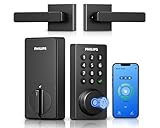
I remember the first time I saw one of those fancy fingerprint door locks. Looked like something out of a spy movie, right? Wave your hand, boom, door opens. My immediate thought was, ‘Sign me up!’ Fast forward a few years and a couple of different models later, and my opinion is… well, it’s complicated. Are fingerprint door locks secure? It’s not a simple yes or no. They
can
be, but they also come with their own set of headaches and potential vulnerabilities that the slick marketing videos conveniently gloss over. Forget the sci-fi magic; let’s talk about what actually happens when you rely on your fingerprint to get into your own house.
When a Smudged Fingerprint Becomes Your Nemesis
Look, the idea of never fumbling for keys in the dark, wrestling with a grocery bag in one hand and a toddler in the other, is pure bliss. For years, I chased that dream. My first foray was a budget model, something I snagged for about $80 online.
It promised instant access, military-grade security, all the jazz. In reality? It was more like ‘occasional access, maybe.’ Half the time, it wouldn’t recognize my print.
Sun glare on the sensor? Forget it. A bit of sweat from a brisk walk?
Forget it. It got to the point where I’d have my regular key ready, just in case. It was embarrassing, honestly.
My neighbor’s kid, who was like, ten, could open it on the first try, but I’d be standing there, smearing my thumb across the sensor like I was trying to buff out a scratch. This wasn’t just an inconvenience; it felt like a security risk in itself. If a ten-year-old could defeat it, what about someone with actual malicious intent? The technology has improved since then, for sure.
Newer models are way better at handling variations in print quality, but that initial experience left a bad taste in my mouth. It hammered home that ‘smart’ doesn’t always mean ‘smart for your actual life.’
How the Heck Do These Things Actually Work?
It’s not magic, it’s science. Most fingerprint door locks use optical or capacitive sensors to scan your fingerprint. Optical sensors are like tiny cameras, taking a picture of your print. They’re older tech and can be fooled by high-resolution images or molds.
Capacitive sensors, which are more common now, measure the electrical current between the ridges and valleys of your fingerprint. Think of it like tiny capacitors that interact with your skin.
They’re generally more accurate and harder to trick. When you register your fingerprint, the lock creates a digital map, a template, of your print. It doesn’t store the actual image of your fingerprint (at least, good ones don’t). (See Also: Are Sesame Seeds Kosher For Passoveris Pollock Kosher )
Instead, it stores a mathematical representation of the unique patterns – the minutiae points like ridges, bifurcations, and endings. When you try to open the door, it scans your print and compares it to the stored templates.
If there’s a sufficient match, it sends a signal to the lock mechanism to open. The quality of the sensor, the algorithm used for matching, and how the template data is stored are the big factors in how well it works and how secure it is. You’ll often see specs about resolution (measured in DPI) and the number of minutiae points it can detect. Higher is generally better, but don’t just go by the numbers on the box.
Real-world performance is what matters, and that’s where things get murky.
Contrarian Take: Why I’m Still Wary of Smart Locks
Everyone and their dog seems to be raving about smart home tech, and door locks are right at the forefront. People talk about convenience, remote access, the sheer cool factor.
And yeah, I get it. But here’s my contrarian take: For a lot of people, the added complexity and potential for digital failure outweigh the convenience.
My biggest fear isn’t someone breaking in physically; it’s the electronic failure. What happens when the Wi-Fi goes down? Or the battery dies unexpectedly?
Or there’s a software glitch? I’ve seen friends locked out of their houses because their smart lock decided it didn’t like their internet provider anymore. Or worse, a firmware update bricked the whole unit. My old-school deadbolt?
It just works. Always. It doesn’t need a password, it doesn’t need Wi-Fi, and it doesn’t get hacked by a rogue TikTok video demonstrating how to bypass it with a paperclip. While fingerprint locks offer a layer of convenience, they introduce a whole new attack surface.
And let’s be honest, are you really going to keep up with every single security patch and firmware update for your door lock? Most people won’t, and that’s where the real risk lies. The common advice is to get the latest and greatest, but I say, sometimes the simplest solution is the most secure.
You’re trading mechanical reliability for digital convenience, and that’s a trade-off that deserves a lot more scrutiny than it gets.
What to Actually Look for (beyond the Fancy Lights)
When I’m looking at these things now, I’m not just checking the fingerprint sensor reviews. I’m looking at the underlying tech and the manufacturer’s track record. First off, what kind of encryption are they using for the fingerprint data and any wireless communication? (See Also: Are Sliding Door Locks Common )
Good locks will use AES-256, the same stuff banks use. If they’re vague about it, run. Second, how are the batteries handled?
Most require AA or AAA batteries, and they’ll usually give you a warning when they’re low. But what’s the backup? A hidden physical key override is a must for me. Even if it’s a bit clunky, it’s your lifeline.
I once had a smart lock die on me during a camping trip, miles from anywhere, and it took me hours to get a spare key to a neighbor who could let me in. Never again. Battery life is another thing. Manufacturers often give you an estimate like ‘one year,’ but in my experience, that’s usually under ideal conditions.
If you have heavy use (like a busy family with kids constantly in and out), expect less. Look for models that can take external power sources as a last resort, like a 9V battery terminal on the outside.
This is a lifesaver if you forget to change the AAs. Lastly, consider the ‘fail-safe’ and ‘fail-secure’ modes. Fail-safe means if power is lost, it opens (good for fire escape, bad for security).
Fail-secure means it locks (good for security, bad for fire escape). Most good locks are fail-secure and rely on their internal battery for operation.
Pay attention to the physical build quality, too. A flimsy plastic housing isn’t going to stop a determined burglar, regardless of how good the fingerprint sensor is. Think solid metal construction.
| Feature | What to Look For | My Verdict |
|---|---|---|
| Fingerprint Sensor | Capacitive, high resolution (500 DPI+), good track record in reviews for accuracy. | Key, but don’t let it be the only selling point. |
| Encryption | AES-256 for data and communications. | A must. If they don’t state it, assume it’s weak. |
| Physical Key Override | Always included, easily accessible. | Your ultimate safety net. Don’t skip this. |
| Battery Backup | Standard batteries (AA/AAA) + external 9V terminal. | A lifesaver for unexpected power loss. |
| Build Quality | Solid metal construction, tamper-resistant design. | A cheap feel usually means cheap protection. |
| Connectivity (Wi-Fi/Bluetooth) | Optional for many, but if present, look for secure protocols. | Can be useful for remote access, but adds complexity and risk. |
The Real-World Use Case: Who Are These for?
So, who actually benefits the most from these, and are fingerprint door locks secure enough for them? Honestly, I think they’re best suited for people who are tech-savvy, diligent about maintenance, and prioritize convenience over absolute, old-school mechanical simplicity. Think busy families where key management is a nightmare, or people who frequently have guests or service providers coming and going and want to grant temporary access.
If you’re the type of person who remembers to change your smoke detector batteries every six months and keeps your antivirus software updated, you’re probably a good candidate. I have a friend who’s an Airbnb host, and for him, being able to remotely grant and revoke access codes and fingerprint access for guests is a huge time-saver.
He’s also got a solid Wi-Fi network and is on top of any updates. For him, the security risks are managed because he’s actively managing the system. For someone like my elderly aunt who can barely work her TV remote?
Absolutely not. It would be a constant source of frustration and potential security issues. The common advice is to upgrade to smart technology, but I’d say the common advice often forgets the less tech-inclined user. It’s not just about the tech itself, but about your comfort level and willingness to maintain it. (See Also: Are The Rams Locked Into The 6th Seed )
My First-Hand Frustration with a Dead Battery
I bought one of the top-tier models about two years ago, thinking I was finally getting the smooth experience I’d always wanted. It worked great for months. Then, one chilly Tuesday morning, I was rushing out to grab coffee before a client meeting.
I placed my thumb on the sensor, and… nothing. The little light just blinked red. No beep, no open.
I tried again, and again. My heart started to pound.
I checked my phone – no app connection. The battery was completely dead. And the worst part? The emergency 9V battery terminal was on the outside of the door, under a little cover that required a small screwdriver to open, which I, of course, didn’t have.
I had to call my neighbor, wake them up, explain the ridiculous situation, and wait for them to rummage through their toolbox for a screwdriver so I could get into my own house. I missed my meeting. That whole experience cost me about three hours of my morning and a good dose of humiliation.
It taught me that while battery warnings are helpful, they’re useless if you can’t easily act on them in an emergency. That’s why that external 9V terminal is so important, and why I’ll never buy another lock without one that’s easily accessible without tools.
People Also Ask: Common Questions Answered
Are Fingerprint Door Locks Safe From Hacking?
Good quality fingerprint door locks use strong encryption, like AES-256, to protect the digital data of your fingerprint and any wireless communications. This makes them very difficult to hack remotely. However, like any electronic device, they are not entirely immune. Older or cheaper models might have weaker encryption or vulnerabilities that could be exploited. The physical security of the lock and the integrity of its firmware are also important factors in preventing unauthorized access.
Can You Pick a Fingerprint Lock?
You can’t ‘pick’ a fingerprint lock in the traditional sense, as there’s no mechanical cylinder to manipulate. Instead, the security relies on the accuracy of the fingerprint scanner and the underlying software. While a determined attacker might try to spoof a fingerprint using a mold or a high-resolution image, modern capacitive sensors are designed to detect live skin and are much harder to fool this way. Physical tampering, like drilling or prying the lock open, is still a possibility if the lock’s build quality is poor.
What Happens If a Smart Lock Battery Dies?
If a smart lock’s battery dies, its functionality will cease. Most smart locks have a physical key override or an external emergency power source (like a 9V battery terminal on the outside) that you can use to open the door. It’s important to have access to these backup methods. Many smart locks also provide low-battery warnings through their app or an audible alert before the battery is completely depleted, giving you time to replace them.
Are Fingerprint Locks Better Than Key Locks?
Fingerprint locks offer superior convenience, eliminating the need to carry or search for keys. They can also offer features like remote access and temporary user codes. However, key locks are simpler, more reliable in terms of power outages or electronic malfunctions, and generally have a lower risk of being compromised by digital hacking. The ‘better’ option depends on your priorities: convenience and advanced features versus simplicity and absolute mechanical reliability.
Final Thoughts
So, are fingerprint door locks secure? The answer, after years of fiddling with them, is that they can be, but it’s a qualified yes. They offer a level of convenience that’s hard to beat, but that convenience comes with added layers of complexity and potential failure points that a simple deadbolt just doesn’t have. You’re trading mechanical simplicity for electronic intelligence, and that’s a trade-off you need to be comfortable with.
If you’re going to jump in, do your homework, invest in a reputable brand with strong encryption and a reliable physical key backup, and be prepared to stay on top of maintenance. Don’t expect them to be a set-it-and-forget-it solution.
Ultimately, whether a fingerprint door lock is secure for you depends on your own technical comfort, your diligence, and your specific needs. Consider if the convenience is truly worth the potential headaches and the need for active management.