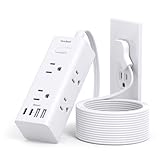
I once nearly missed a flight because I was frantically trying to repack my carry-on, convinced my power strip was going to get confiscated. It was a ridiculous panic attack brought on by a vague worry about electronics in luggage. The whole ordeal made me wonder: are extension cords allowed in checked baggage? It seems like such a simple question, but the rules around what you can and can’t pack can be surprisingly murky, especially when you’re trying to power up more than just your phone on vacation.
Let’s cut through the confusion. The short answer is generally yes, but there are nuances you absolutely need to know before you just toss one in your suitcase. I’ve wasted enough time and money on travel gadgets that turned out to be useless or, worse, travel hazards. So, let’s get this sorted so you don’t end up like me, sweating in an airport security line.
So, Can You Actually Pack Extension Cords in Checked Luggage?
Alright, let’s get straight to it. The question of ‘are extension cords allowed in checked baggage?’ pops up because, frankly, nobody wants their gear confiscated. The good news? For the most part, you can pack standard household extension cords in your checked luggage. Think of those reliable, multi-outlet strips you use at home to power your entertainment center or your home office setup. Those are generally fine.
Airlines and TSA (in the US, and similar bodies elsewhere) are primarily concerned with items that pose a direct fire hazard, are explosive, or could be used as weapons. A typical extension cord, made of plastic and copper wiring, doesn’t fall into those categories on its own. They’re not batteries that can overheat and ignite, nor are they sharp objects. They’re just passive conduits for electricity.
However, this isn’t a free-for-all. There are a few caveats that are worth understanding. Firstly, and this is a big one, the cord itself must be in good condition. No frayed wires, no exposed circuitry, no dodgy repairs. If it looks like it’s seen better days and could potentially short out, it’s a problem. Inspectors can, and will, flag items that appear unsafe, and an extension cord that looks like it survived a hurricane might just get the boot.
Secondly, the type of extension cord matters. We’re talking about the standard, household kind. Anything that might be considered specialized, like those used for high-powered industrial equipment or anything with built-in surge protection that’s exceptionally complex (though most surge protectors are fine), might warrant a second look. But for the average traveler looking to plug in a laptop, a phone charger, and maybe a travel hair dryer, your standard strip should be a non-issue. I’ve flown with my trusty six-outlet power strip countless times, and it’s never once raised an eyebrow. It’s become as key as my passport for keeping all my devices juiced up.
The key takeaway here is that the TSA isn’t going to confiscate a perfectly functional extension cord because it’s an extension cord. They’re looking for danger. So, as long as yours is intact and looks safe, you should be golden. The real headaches, if any, come with other electronic accessories, batteries, or items that could be construed as hazardous. Keep that in mind as we move forward.
What Kind of Extension Cords Are Actually Safe to Pack?
When we talk about packing extension cords, it’s key to differentiate between what’s common and what might raise a flag. The vast majority of travelers asking ‘are extension cords allowed in checked baggage?’ are thinking about the everyday kind. These are typically 3-foot, 6-foot, or even 10-foot cords with multiple outlets, often featuring a flat plug that’s handy for tight spaces. They’re designed for home use, for plugging in lamps, computers, or charging stations. These are generally your safest bet for packing.
The reason these are usually fine is their inherent design. They’re passive devices. They don’t generate heat on their own (unless there’s a fault), they don’t contain volatile chemicals, and they’re not designed to explode or ignite. They simply conduct electricity from a wall outlet to your devices. Most airlines and security agencies understand this. They’re more concerned with lithium-ion batteries (which can be problematic if damaged) or items that could be used as weapons.
However, there’s a bit of a grey area with more specialized cords. For instance, if you’re looking at heavy-duty cords meant for outdoor equipment or industrial machinery, these might be bulkier and have different safety ratings. While still unlikely to be outright banned, their sheer size and potential for higher current draw could theoretically attract more scrutiny. Stick to the standard consumer-grade versions.
Another factor is integrated surge protection. Many modern extension cords come with built-in surge protectors, which are incredibly useful. These are almost always acceptable. They contain components like Metal Oxide Varistors (MOVs) that divert excess voltage. They don’t pose an unusual risk compared to a regular cord. The TSA’s guidelines, and most airline policies, focus on the physical object and its potential for misuse or inherent danger, not on standard protective features. (See Also: Are Extension Cords Safe For Christmas Lights )
I once bought a ridiculously long, super-thick extension cord for a camping trip years ago. It was probably overkill for a tent, but I figured it would be handy. When I tried to pack it, I remember thinking, ‘Is this thing going to be a problem?’ It was bulky, and the insulation felt thicker. Thankfully, it sailed through. But it highlighted for me that while standard cords are fine, anything that looks significantly different or more industrial might make you pause. My advice? Stick to the common, multi-outlet power strips you’d find in any electronics store. They are designed for everyday, safe use, and that’s what security personnel are accustomed to seeing.
Can I Pack a Power Strip with Surge Protection?
Yes, in most cases, power strips with built-in surge protection are allowed in checked baggage. These devices are designed with safety features to protect electronics from voltage spikes and are not considered a fire hazard by aviation security authorities like the TSA. As long as the power strip is in good working condition and doesn’t have any visibly damaged components, it should be permitted.
Common Mistakes and What to Watch Out For
The biggest mistake people make when considering ‘are extension cords allowed in checked baggage?’ is assuming all cords are created equal. While the basic answer is yes, ignoring condition and type can lead to unnecessary hassle. I’ve seen people try to pack cords that looked like they’d been chewed by a badger, complete with electrical tape holding frayed wires together. That’s a no-go, and frankly, it’s a fire hazard waiting to happen anywhere, let alone in a confined airplane cargo hold.
Another common pitfall is confusing extension cords with other types of electrical equipment. For example, while a standard extension cord is fine, a portable power station that includes a large battery pack might have different regulations, especially regarding its battery capacity and whether it needs to be in carry-on. Always double-check the rules for the specific type of device you’re bringing. Batteries, especially lithium-ion ones, are where you’ll find the most stringent regulations.
Then there’s the sheer quantity. While one or two standard extension cords for personal use are unlikely to be an issue, packing dozens of them might look suspicious. Security personnel might question if you’re intending to sell them or if they’re for commercial purposes, which could lead to extra checks. Stick to what you realistically need for your trip.
I remember a friend who, bless his heart, decided he needed three different surge-protected power strips for a week-long vacation. He’d laid them out in his suitcase, all neatly coiled. When he got to his destination, TSA had apparently opened his bag and removed two of them. He was baffled. They didn’t leave a note, but he figured it was the sheer redundancy. It was a clear case of overkill, and while they weren’t outright banned, the security officer probably just decided it was excessive. It taught me to be judicious with what I pack. Less is often more, especially when dealing with electrical items.
One area where advice can be misleading is regarding specific voltage compatibility. While not a direct security issue, bringing a US-style extension cord to a country with drastically different voltage or plug types is a practical mistake. You might be allowed to pack it, but it will be useless. Always research the plug and voltage standards of your destination. Using a converter is one thing, but a basic extension cord doesn’t change voltage; it just extends the reach of the socket.
Here’s a quick rundown of things to avoid:
| What to Avoid | Why It’s a Problem | My Verdict |
|---|---|---|
| Frayed or Damaged Cords | Obvious fire hazard and safety risk. | Absolutely not. Toss it. |
| Industrial-Grade Cords | Bulkier, higher power rating – might draw scrutiny. | Generally okay, but stick to consumer versions if possible. |
| Excessive Quantity | Looks like you’re stocking a shop, not traveling. | Pack only what you need for personal use. |
| Cords with Obvious Faults | Loose connections, melting plastic – you get the idea. | If it looks dodgy, it probably is. |
Real-World Use Cases and Practical Tips
So, beyond just asking ‘are extension cords allowed in checked baggage?’, the real question is, ‘how do I actually make this work for me while traveling?’ I’ve found that a good quality, compact extension cord is a lifesaver, especially when you’re dealing with limited outlets in hotel rooms or even Airbnb rentals. My personal go-to is a 3- or 6-foot cord with 3-4 outlets and one USB-A and one USB-C port built-in. This covers my phone, my tablet, my portable charger, and sometimes even my laptop if I’m doing any work.
One of the most practical uses I’ve found is in hotel rooms where the only available outlets are behind the bed or too far from the desk. Instead of crawling around on the floor or having my charger dangling precariously, I can simply plug my extension cord into the distant outlet and have a convenient strip right where I need it. It’s a small comfort, but it makes a big difference in my daily routine, especially when I’m trying to charge multiple devices overnight. (See Also: Are Appliance Extension Cords Safe For Air Conditioners )
Another scenario: resorts or cruise ships. These places are notorious for having a severe shortage of accessible outlets. Bringing a compact power strip means I can charge my camera batteries, my e-reader, and my phone simultaneously, rather than having to rotate devices, missing out on precious downtime. It also means I’m not hogging the single outlet available in the communal area if I’m traveling with friends or family.
Here’s a simple process for packing and using your extension cord effectively:
- Choose Wisely: Opt for a cord that’s compact, lightweight, and has a decent number of outlets (3-4 is usually plenty). Built-in USB ports are a huge bonus. Look for reputable brands; cheap knock-offs can be a genuine hazard.
- Inspect Thoroughly: Before packing, check for any damage. Coil it up and make sure the cord is flexible and the insulation is intact. Test it with a small appliance at home to make sure it works.
- Pack Smart: Coil the cord neatly and place it in your checked bag. You can tuck it into a side pocket or wrap it around other items to save space. Avoid cramming it in so tightly that it might kink or damage the wiring.
- Use with Caution at Destination: When you arrive, be mindful of where you plug it in. Avoid overloading it by plugging in multiple high-draw appliances (like hair dryers or curling irons) simultaneously if the strip isn’t designed for it. Stick to chargers, laptops, and low-power devices.
I once stayed in a hostel in Southeast Asia where the only accessible power point was on a wall across the room from my bunk. Without my trusty extension cord, my phone would have been useless overnight. I literally plugged it into the distant socket and ran the cord along the wall to my bedside. It wasn’t pretty, but it worked perfectly. It’s these kinds of situations where a simple extension cord proves its weight in gold. Don’t underestimate the power of having accessible outlets when you need them most.
Understanding Airline and Tsa Regulations
When you’re packing, especially for international travel, it’s natural to question ‘are extension cords allowed in checked baggage?’. Both airlines and security agencies like the TSA have regulations, but they are primarily focused on safety and security. For standard extension cords, the guidelines are generally quite permissive, as they don’t typically fall into prohibited categories.
The TSA’s website (and similar advisories from other countries’ aviation security bodies) lists prohibited items. These usually include explosives, flammable liquids, weapons, and certain types of batteries. A regular, undamaged extension cord doesn’t fit any of these descriptions. They are viewed as common household electrical items. The key is that they are passive devices. They don’t contain their own power source that could fail catastrophically, nor are they inherently dangerous if used correctly.
However, it’s important to remember that security personnel have the final say. If an item looks suspicious, is damaged, or is deemed a potential risk for any reason, they can confiscate it. This is why maintaining your extension cord in good condition is most important. A frayed cord, exposed wires, or a plug that looks melted or damaged is a red flag. It doesn’t matter what the official rules say; if it looks unsafe, it’s going to be questioned.
The Federal Aviation Administration (FAA) in the US also has regulations, but again, these are focused on preventing hazards. They don’t typically single out extension cords for prohibition. The general principle is that if something isn’t explicitly banned, and it doesn’t pose an obvious threat, it’s usually allowed. This applies to most consumer electronics and their accessories.
I once had a friend who was flying with a very old, slightly warped extension cord. He was worried about it. At security, they pulled his bag aside. The officer looked at the cord, gave it a bit of a squeeze, and then handed it back. It wasn’t confiscated, but it clearly warranted a closer inspection. That experience solidified my commitment to only traveling with extension cords that look and feel brand new, or at least in excellent, like-new condition. It’s just not worth the stress or the risk.
It’s also worth noting that while checked baggage is generally more lenient for electrical items than carry-on, some items might be restricted in both. For instance, lithium-ion batteries over a certain capacity are almost always required to be in carry-on luggage, and sometimes even forbidden entirely if they exceed limits. Extension cords themselves don’t have this issue, but if you’re packing a power bank or a laptop charger that includes a battery, be aware of those specific rules. For a plain extension cord, though, checked baggage is usually the way to go, offering more space and fewer restrictions than carry-on.
Are Extension Cords Allowed in Checked Baggage on International Flights?
Yes, generally, standard extension cords are allowed in checked baggage on international flights. Aviation security regulations for most countries are similar to those of the TSA in the United States, focusing on items that pose a significant safety or security risk. A typical, well-maintained extension cord does not fall into this category. However, as with domestic flights, the cord must be in good working condition, and security personnel always reserve the right to inspect or confiscate any item they deem potentially hazardous. (See Also: Are Old Extension Cords Dangerous )
Can I Pack a Power Strip If It Has USB Ports?
Yes, power strips that include integrated USB ports are generally allowed in both checked and carry-on baggage. These are common travel accessories designed to consolidate charging needs. As long as the power strip itself is in good condition and doesn’t have any obvious damage or defects, it should not cause any issues with airport security.
What Happens If My Extension Cord Is Confiscated?
If your extension cord is confiscated, it will be due to it being deemed a safety hazard or a prohibited item by airport security. The security officer will explain the reason, and you will typically have the option to either discard the item or, in some cases, have it returned to someone who can take it home for you. If it’s simply in poor condition, you’ll likely have to leave it behind.
Are There Any Specific Brands of Extension Cords That Are Better for Travel?
While specific brands aren’t usually singled out by security, opting for well-known, reputable brands known for quality electronics is advisable for travel. Brands that focus on travel accessories or have a good track record for durable electronics often produce more compact and reliable extension cords. Look for certifications like UL or CE, which indicate safety standards have been met, though these aren’t typically checked by security for extension cords.
Can I Pack a Surge Protector Separately?
Yes, you can pack a surge protector separately, whether it’s integrated into an extension cord or a standalone unit. Surge protectors are generally permitted in checked baggage. If you are concerned about its size or appearance, placing it in your checked luggage alongside other electronics accessories is the most common and accepted practice.
The Final Word on Extension Cords in Your Suitcase
So, to wrap this up: yes, are extension cords allowed in checked baggage? The overwhelming answer is yes, provided they are standard, undamaged household items. I’ve learned that for travel, a compact, multi-outlet extension cord with USB ports is almost indispensable. It transforms a hotel room with scarce outlets into a functional workspace or charging station. My own travel experience has shown me that the slight inconvenience of packing one is vastly outweighed by the convenience it offers.
Don’t overthink it too much, but also don’t be careless. Check your cord, pack it neatly, and use it reasonably at your destination. These simple steps make sure you avoid any unnecessary drama. It’s about being prepared and making smart choices, not about bringing something that’s inherently banned. Safe travels and happy charging!
Conclusion
Ultimately, when you’re wondering if extension cords are allowed in checked baggage, the answer is almost always a resounding yes, as long as they’re in good condition. I’ve relied on mine more times than I can count to keep my devices powered up without resorting to awkward contortions to reach a hidden outlet. It’s a simple piece of kit that can save you a lot of frustration on the road.
My advice? Invest in a decent travel-sized one. You know, the kind that’s not ridiculously long and bulky but has enough outlets for your essentials, maybe even a USB port or two. It’s one of those small comforts that makes traveling a little bit easier, a little bit less of a hassle, and a lot more connected.
So, next time you’re packing, don’t leave your trusty extension cord behind. It’s a practical tool that’s permitted and often a lifesaver. Just make sure it’s in tip-top shape before it goes into your suitcase. Happy travels, and may all your devices stay charged!