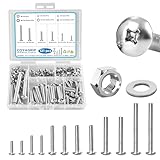
I remember the first time I had to replace a clutch. The manual, bless its paper heart, said nothing about the flywheel bolts. So, naturally, I assumed they were just like any other bolt: thread it in, torque it down, good to go. I was wrong. So, are flywheel bolts reusable? The short, blunt answer is: usually not, and here’s why you shouldn’t bet your engine on it.
This isn’t some conspiracy by parts manufacturers. There are solid mechanical reasons behind this, and ignoring them can lead to some seriously expensive, potentially dangerous headaches. We’re talking about connecting your engine’s grunt to your transmission, folks. This isn’t the place for guesswork or cutting corners.
Let’s break down what you need to know before you even think about reusing those important fasteners.
The Grim Reality: Why Most Flywheel Bolts Aren’t Meant for a Second Tour
Look, I’ve been wrenching on cars and bikes for longer than I care to admit, and I’ve seen my fair share of ‘oops’ moments. One of the most common and costly mistakes people make is assuming all bolts are created equal. They are not. Flywheel bolts are subjected to some pretty intense forces and temperature cycles that can weaken them over time. Think about it: your engine is firing, creating massive rotational forces, and the flywheel is right there, bolted to the crankshaft. It’s a direct link. These aren’t just holding a plastic trim piece on; they are transmitting thousands of foot-pounds of torque.
The materials used for flywheel bolts are typically high-strength steel, often with specific hardening processes. When they are torqued down to spec, they are stretched slightly to create a clamping force. This is called preload. This controlled stretching is what keeps the bolt tight under vibration and load. However, this stretching is a one-time deal for optimal performance and safety. Repeatedly tightening and loosening these bolts can cause microscopic fatigue, which is invisible to the naked eye. You might not see any damage, but the bolt’s integrity is compromised. It’s like bending a paperclip back and forth; it gets weaker with each bend until it snaps. That’s the last thing you want happening to a bolt holding your flywheel on.
I learned this the hard way on an old VW Golf I was restoring. I was on a tight budget, and the flywheel bolts looked perfectly fine. No rust, no stripped threads, nothing obvious. I torqued them down exactly to spec, reassembled everything, and fired it up.
Within a week, I started hearing a faint knocking sound. A few days later, it was a definite clunking noise every time I let off the gas. Turns out, one of the reused bolts had stretched beyond its elastic limit and was just loose enough to let the flywheel shift slightly. It was a nightmare to get back apart, and I ended up having to replace not just the bolts but also the flywheel and crank pilot bearing because of the damage caused by the play.
That little bit of ‘saved’ money turned into hundreds of dollars in new parts and a week of my life I’ll never get back. So, no, in most cases, flywheel bolts are not reusable, and it’s a risk you absolutely shouldn’t take.
The common advice from the factory service manual is almost always to replace them. While some may argue that if the bolt passes a visual inspection and thread check, it’s fine, I’d tell you that’s playing Russian roulette with your engine. The forces involved are too great, and the consequences of failure are too severe. I’d rather spend $30 on new bolts than risk a $3,000 engine repair.
What to Look for (and What You Won’t See)
So, if you’re staring at a set of used flywheel bolts and wondering if they’ll make the cut, what are you actually looking for? The honest truth is that the most dangerous damage is often invisible. You can visually inspect for: (See Also: Are All 5 Lug Bolt Patterns The Same )
- Stripped or Damaged Threads: This is the most obvious. If the threads are chewed up, rounded off, or cross-threaded, they’re toast. Don’t even consider reusing them.
- Corrosion or Rust: Significant rust, especially deep pitting, can weaken the bolt material. Light surface rust might be okay if it cleans up easily, but anything substantial is a no-go.
- Bent or Deformed Shaft: If the bolt looks bent or the head is damaged, it’s been through something it shouldn’t have.
- Signs of Overheating: Discoloration, particularly a bluish or purplish tint, can indicate the bolt was overheated, which changes its metallurgical properties and makes it brittle.
Now, here’s the kicker: none of that addresses the real problem. The real enemy is metal fatigue and the plastic deformation that occurs when a bolt is torqued past its yield point. Even if a bolt looks perfect, it might have been stretched slightly beyond its elastic limit during its first installation. This means it won’t clamp with the same force the second time around, or worse, it could fail catastrophically under load. Think of it like stretching a rubber band too far; it loses its elasticity and won’t snap back properly. With metal, the effect is permanent and can lead to a weakened fastener.
Manufacturers specify replacement for a reason. They have engineers who’ve done the calculations and testing. They know that the cost of new bolts is peanuts compared to the potential failure cost. I’ve seen people try to get away with reusing them, and sometimes they get lucky. But luck runs out. I’d rather have a slightly lighter wallet and peace of mind than a seized engine and a bill that makes my eyes water. The advice to replace them isn’t just a suggestion; it’s a important safety and reliability measure.
The Contrarian View (and Why I Mostly Disagree)
Now, I know what some of you might be thinking. “My buddy Joe reused his flywheel bolts on his ’85 Camaro, and it’s been fine for 50,000 miles!” Or maybe you’ve heard from a mechanic who says, “If they look good, they’re good.” And yeah, sometimes, people get away with it. It’s true that not every single reused bolt will fail immediately. But here’s my take: everyone says you should replace them, and I agree, but with a tiny caveat that most people miss.
The difference often comes down to the type of vehicle and the specific application. For most passenger cars and light trucks, especially those with high-revving engines or heavy-duty applications (like towing or performance driving), the factory recommendation to replace them is absolutely a must in my book. The stresses are just too high.
However, on some older, lower-stress, or less performance-oriented engines, some manufacturers might have had different recommendations. For example, on very old, slow-turning tractor engines or certain industrial equipment where the loads are predictable and much lower, a visual inspection might suffice for a second or even third use. But for the vast majority of vehicles on the road today, especially anything you plan to drive regularly or with any sort of spiritedness, the risk is far too great. The “common advice” is generally correct because it applies to the overwhelming majority of situations. Going against it is like playing doctor with your car; you might get lucky, but you’re more likely to cause a bigger problem.
My personal rule of thumb, which has saved me a lot of grief, is this: if the service manual says replace, I replace. If it doesn’t explicitly say replace and only says torque to spec, and I can confirm the bolts aren’t stretch bolts (more on that in a bit), and they look absolutely pristine, I might consider it on a personal project where failure wouldn’t be catastrophic. But even then, the cost difference is usually so small that it’s not worth the mental overhead. For anyone else’s vehicle, or for anything I rely on daily, new bolts are the only way to go. Don’t be that guy who calls me crying three months later because his flywheel fell off.
Stretch Bolts vs. Standard Bolts: The Important Distinction
This is where things get a bit more technical, and it’s a distinction that many DIYers miss, leading them down the wrong path. When we talk about reusing bolts, we have to differentiate between standard, torque-to-yield (TTY) or “stretch” bolts, and traditional bolts.
Standard Bolts
These are your everyday bolts. You tighten them to a certain torque specification. They might stretch a tiny bit, but it’s within their elastic limit, meaning they’ll return to their original length when the tension is released. These are generally the most likely candidates for reuse, if they show no signs of damage or fatigue. However, with flywheel bolts, even standard ones often experience loads and vibrations that push them towards their yield point, making reuse risky.
Torque-to-Yield (tty) / Stretch Bolts
This is where it gets serious. Many modern engines use TTY bolts, often referred to as “stretch bolts.” These bolts are designed to be tightened beyond their elastic limit. They are intentionally stretched to a specific length or a specific angle after reaching a base torque. This controlled plastic deformation creates an incredibly strong and precise clamping force. The problem? This stretching is a permanent change to the bolt’s structure. Once stretched, it has permanently altered its molecular alignment and yield strength. Reusing a TTY bolt is like trying to re-inflate a balloon that’s already popped; it just won’t hold the same pressure or integrity. (See Also: Are Bolt On Wheelie Bars Any Good )
How do you tell if you have TTY bolts? Often, the service manual will explicitly state it.
They might also look slightly different, sometimes having a smoother shank or a specific marking. However, the most reliable indicator is the tightening procedure: if it involves an initial torque followed by a specific angle of rotation (e.g., torque to 50 ft-lbs, then turn an additional 90 degrees), you are dealing with TTY bolts. If the manual says to replace them, you absolutely must replace them. There is no grey area with TTY bolts.
The cost of new TTY flywheel bolts is minimal compared to the potential catastrophic failure. Some aftermarket performance flywheels might come with their own set of reusable bolts, but this is usually stated clearly in the product description, and they are engineered specifically for that purpose.
Practical Tips and What the Experts (sometimes) Say
Given all this, here’s my practical advice. When it comes to flywheel bolts, err on the side of caution. This isn’t a place to save a few bucks and hope for the best. Here’s a breakdown of my own experience and what I’ve gathered from talking to folks who know their stuff:
| Scenario | Verdict | Reasoning |
|---|---|---|
| Standard bolts, visually perfect, on a low-stress classic car. | Maybe, with extreme caution. | Only if service manual doesn’t mandate replacement AND they are confirmed non-TTY. Still risky. |
| Any TTY/Stretch bolts (angle-tightened). | ABSOLUTELY NOT. | Designed for single use. Failure can be catastrophic. |
| Bolts with any visible thread damage, corrosion, or deformation. | ABSOLUTELY NOT. | Compromised integrity. Clear signs of wear. |
| Bolts that came with a new performance flywheel. | Probably Yes. | Usually engineered for reuse, but check manufacturer’s instructions. |
| All other cases for modern passenger vehicles. | REPLACE THEM. | Cheap insurance against a massive repair bill and safety hazard. |
When you buy new flywheel bolts, make sure they are the correct grade and specification for your vehicle. Aftermarket kits might offer slightly stronger bolts, which can be a good upgrade for performance applications, but make sure they are compatible with your flywheel and crankshaft. Always clean the threads on both the crankshaft and the flywheel. Use a torque wrench and follow the manufacturer’s recommended tightening sequence and torque values precisely. If angle tightening is specified, use an angle gauge or a reliable torque wrench with an angle finder. Don’t guess.
I’ve seen mechanics debate this, and some will tell you they’ve reused bolts hundreds of times with no issue. My counter-argument is always, “What’s the cost of that one time it does fail?” It’s not just about the bolts; a loose flywheel can damage the crankshaft, the transmission input shaft, and other components. The cost of a new set of flywheel bolts is usually somewhere between $20 and $100, depending on the vehicle and the quality. That’s a fraction of the potential repair bill. It’s a simple, cheap, and highly effective way to make sure a important component is installed correctly and safely.
Common Mistakes and Avoiding Catastrophe
People mess up flywheel bolt installation in a few key ways, and they often don’t realize it until it’s too late. The biggest mistake, as we’ve hammered home, is reusing old bolts when they shouldn’t be. But even with new bolts, things can go sideways.
Mistake 1: Not Following the Tightening Sequence. Flywheels are usually secured with 6 or 8 bolts. They need to be tightened in a specific star or criss-cross pattern, incrementally. Tightening one bolt all the way down before moving to the next can warp the flywheel, leading to runout issues, vibration, and uneven clamping force. This can cause premature failure of the bolts or the flywheel itself. Always consult your service manual for the correct sequence. It’s usually something like: tighten all bolts finger-tight, then torque bolt 1 to spec, then bolt 3, then bolt 5, then bolt 2, bolt 4, bolt 6, and repeat until all are torqued. It sounds tedious, but it’s important.
Mistake 2: Incorrect Torque or Angle. This is huge. Over-tightening can strip the threads in the crankshaft (an incredibly expensive repair) or snap the bolt head off. Under-tightening means the bolts won’t have sufficient clamping force, leading to vibration and potential loosening. If your torque wrench isn’t calibrated or you’re guessing, you’re asking for trouble. For TTY bolts, the angle is just as important as the initial torque. Too little angle, and the clamping force is insufficient. Too much, and you risk snapping the bolt or exceeding the crankshaft’s thread strength. I recommend a good quality, calibrated torque wrench and, if dealing with angle-tightened bolts, a reliable angle gauge. (See Also: Are Caliper Bolts One Time Use )
Mistake 3: Contaminated Threads. The threads on the crankshaft and inside the flywheel bolt holes need to be clean and free of oil, grease, or thread locker (unless specified). Oil on the threads acts as a lubricant, meaning you’ll reach the specified torque value before the bolt has actually stretched to its intended clamping force. This results in under-tightening, even with a torque wrench. Clean the threads thoroughly with brake cleaner or a similar solvent. Some manufacturers might specify a thread locker for certain bolts, but this is rare for flywheel-to-crankshaft applications and is usually for accessory bolts. Always confirm with your manual.
Mistake 4: Using the Wrong Type of Bolts. Not all bolts are created equal. Using generic hardware store bolts, even if they have the correct thread pitch and length, is a recipe for disaster. Flywheel bolts are made from specific high-tensile strength materials and undergo precise manufacturing processes. Generic bolts might not have the same fatigue resistance or tensile strength, and they can fail under the extreme conditions of engine operation. Stick to OEM or reputable aftermarket automotive fastener manufacturers.
Can I Reuse Flywheel Bolts If They Look Perfectly Fine?
Generally, no. Even if they look fine, they may have been stretched beyond their elastic limit during the initial installation. This microscopic deformation weakens them and compromises their ability to maintain proper clamping force. For Torque-to-Yield (TTY) bolts, reuse is absolutely out of the question as they are designed for single use.
What Happens If a Flywheel Bolt Breaks?
If a flywheel bolt breaks while the engine is running, it can cause severe damage. The flywheel could come loose, leading to catastrophic engine failure, damage to the crankshaft, transmission, and potentially even personal injury if parts detach from the vehicle. It is a important fastener for engine operation.
How Do I Know If My Flywheel Bolts Are Torque-to-Yield (tty)?
TTY bolts are typically identified by their tightening procedure, which involves an initial torque followed by a specific angle of rotation (e.g., tighten to 50 ft-lbs, then turn an additional 90 degrees). Your vehicle’s service manual will explicitly state if TTY bolts are used and the correct procedure.
Are There Any Exceptions Where Flywheel Bolts Can Be Reused?
While highly discouraged for most applications, some older, very low-stress engines or specific industrial equipment might have different recommendations. However, for the vast majority of modern cars and motorcycles, especially anything subjected to significant load or vibration, the advice is always to replace them. Aftermarket performance flywheels sometimes include reusable bolts designed for that specific product, but this is clearly stated by the manufacturer.
What’s the Cost Difference Between New and Used Flywheel Bolts?
New flywheel bolt sets typically range from $20 to $100, depending on the make and model of the vehicle and the quality of the bolts. This is a relatively small cost when compared to the potential repair bill of tens of hundreds or even thousands of dollars if a reused bolt fails and causes catastrophic engine damage.
Conclusion
So, let’s cut to the chase. Are flywheel bolts reusable? My advice, honed by years of experience and a few expensive lessons, is a resounding ‘generally no.’ The forces involved in connecting your engine to your transmission are immense, and these small fasteners are doing a important job. The risk of failure, even if it seems small, is simply too high to justify reusing old bolts, especially when new ones are relatively inexpensive insurance.
Always consult your vehicle’s service manual. If it says replace, then replace. If you’re dealing with Torque-to-Yield (TTY) bolts, consider it a mandate. The cost of new flywheel bolts is a pittance compared to the potential fallout from a catastrophic failure. Don’t be penny-wise and pound-foolish on this one.
Before you button everything up, double-check your torque specs, your tightening sequence, and make sure you’re using quality parts. Your engine will thank you for it, and you’ll sleep a lot better knowing that important connection is solid.