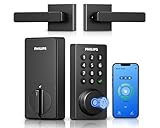
I remember the first time I saw one of those sleek, futuristic smart locks on a neighbor’s door. My initial thought was pure skepticism: ‘Great, another gadget that’s going to get hacked and let the bad guys right in.’ Years later, after wrestling with a few of these things myself, I’ve got a much clearer picture. The big question on everyone’s mind, and the one I’m tackling head-on, is: are front door smart locks secure? It’s not as simple as a yes or no, and frankly, most of the marketing fluff you read online doesn’t tell you the whole story.
Let’s be real, the idea of ditching your keys for a keypad or your phone sounds pretty convenient. But convenience shouldn’t come at the expense of your actual security. So, let’s cut through the noise and get down to what really matters when you’re considering one of these devices for your home.
The ‘hackability’ Myth: What Actually Happens
Okay, let’s address the elephant in the room: can someone just ‘hack’ my smart lock and walk in? The short answer is: it’s complicated, and usually, the ‘hack’ isn’t what you see in the movies. Most of the time, when people worry about smart lock security, they’re thinking about someone wirelessly brute-forcing their way in. While theoretical vulnerabilities exist for any connected device, the reality of a physical break-in is far more common. Think about it – a crowbar or a smashed window is a lot faster than trying to exploit a complex Bluetooth or Wi-Fi exploit.
The primary ways smart locks can be compromised aren’t necessarily through sophisticated cyber-attacks. More often, it’s user error, weak Wi-Fi passwords, or physical manipulation. For example, if you have a weak Wi-Fi password, an attacker could potentially gain access to your home network and then, theoretically, attempt to interfere with your smart lock if it’s connected via Wi-Fi. However, most reputable smart locks use encrypted communication protocols, making this a very difficult feat for the average opportunist. The real weak links are often the human element and the installation.
I learned this the hard way with an early model I tried. I was so enamored with the app control that I completely neglected to set up a strong, unique password for the Wi-Fi network it was connected to. A few weeks later, my internet went down.
Turns out, my neighbor’s kid, who was apparently dabbling in ‘ethical hacking’ (or so he claimed), had figured out my Wi-Fi password and was messing with devices on the network. My smart lock was one of them. It didn’t ‘open’ itself, but it did start randomly beeping and flashing red, which was unnerving, to say the least. It taught me that the ‘smart’ part of the lock is only as secure as the network it’s on and the authentication methods you use to access it.
A truly secure smart lock setup means securing the entire ecosystem, not just the device itself.
Another common vulnerability isn’t digital at all: it’s the physical installation. If a smart lock isn’t installed correctly, it can be more susceptible to tampering. For instance, if the deadbolt mechanism itself is loose or improperly aligned, it could be forced more easily, regardless of how sophisticated the electronic components are. The strength of the deadbolt itself, the material of your door, and the frame all play a massive role in overall security. Don’t assume a fancy electronic gizmo makes a flimsy door impenetrable. The basics of physical security still apply, and often, they’re the first line of defense.
One aspect people often overlook is the physical key override. Many smart locks still have a traditional keyhole. If this keyhole is easily accessible and the key is standard, it’s no more secure than a traditional deadbolt. Some manufacturers are addressing this with tamper-resistant cylinders or by making them less obvious, but it’s something to scrutinize. The convenience of a smart lock shouldn’t create new, obvious physical entry points.
What to Actually Look for (beyond the Shiny App)
Forget the marketing hype about ‘military-grade encryption’ for a second. What you really need to focus on are a few tangible features and considerations that make a smart lock genuinely secure and practical. First off, consider the brand’s reputation and their track record with security updates. A company that consistently pushes firmware updates to patch vulnerabilities is a much better bet than one that treats their product like a ‘set it and forget it’ item. Look for brands that are transparent about their security protocols and offer customer support that actually understands technical issues, not just basic troubleshooting.
When I’m evaluating a smart lock, I prioritize the locking mechanism itself. Does it have a solid, solid deadbolt?
Is the bolt throw long enough (ideally 1 inch)? How is the build quality? A cheap, plasticky casing is a red flag. Metal construction, especially for the exterior components, provides a much better physical deterrent.
I also look at the battery life. Constantly worrying about your lock dying and leaving you stranded, or worse, vulnerable, is a pain. Good battery life, and clear low-battery notifications (both on the device and in the app), are a must for me. Some models even have a backup battery option or a physical keyhole, which, while I generally try to avoid relying on the key, offers peace of mind. (See Also: Are There Different Size Holes For Installing Door Locks )
Connectivity is another huge factor. Most smart locks use Bluetooth, Wi-Fi, or Z-Wave/Zigbee. Bluetooth is generally secure for short-range communication but requires your phone to be nearby. Wi-Fi offers remote access but introduces network security concerns. Z-Wave and Zigbee are low-power, mesh network protocols that are often considered more secure for smart home devices because they don’t rely on your home Wi-Fi and have their own security layers. If your Wi-Fi network is your primary concern, a Z-Wave or Zigbee lock, paired with a compatible hub, might be a safer bet. I’ve found that Bluetooth-only locks, while less feature-rich in terms of remote access, often feel simpler and more secure because they have fewer potential points of external attack.
Let’s talk about authentication methods. Keypads are common, and you want one that’s responsive and has durable buttons (so you can’t tell which numbers are worn out). Fingerprint scanners are getting better, but they can be finicky in wet or cold conditions. The most convenient is often app-based entry, but again, this relies on your phone’s security and the app’s integrity.
For maximum security, I like a system that offers multiple authentication options. For example, a keypad, a fingerprint scanner, and the app, all requiring different layers of verification. I recently installed a lock that has a keypad and a fingerprint scanner, and the ability to create temporary access codes for guests.
This has been incredibly useful. My sister, who watches my dog when I’m away, doesn’t need to borrow my phone or a physical key; she just uses her own code.
Here’s a quick rundown of what I prioritize:
| Feature | My Verdict |
|---|---|
| Physical Build Quality | Key. Metal, solid deadbolt. Cheap plastic is a no-go. |
| Connectivity Type | Z-Wave/Zigbee preferred for network security. Wi-Fi is okay if network is locked down. Bluetooth is simple. |
| Battery Life & Notifications | Must be good. Clear alerts are a must. |
| Authentication Options | Multiple methods (keypad, fingerprint, app) are best. Temporary codes are a lifesaver. |
| Brand Security Updates | Important. Look for active support. |
Common Mistakes and How to Avoid Them
The biggest mistake I see people make with smart locks is treating them like a magic bullet that replaces all other security measures. You wouldn’t install a top-tier alarm system on a door with a paper-thin frame, right? The same logic applies here. A smart lock needs a solid foundation. This means making sure your door itself is solid, your door frame is sturdy, and your existing deadbolt (if you’re adding a smart lock to it, or if it’s a backup) is of good quality. I’ve seen people install high-tech locks on hollow-core doors, which is just asking for trouble. If someone can easily kick the door in, the smart lock becomes irrelevant.
Another common pitfall is neglecting the network it connects to. If your home Wi-Fi is password-protected with ‘password123’ or your pet’s name, you’re leaving a massive door open (pun intended). Strong, unique passwords for your Wi-Fi network are most important. I’d recommend changing your default router password immediately upon setup and using a combination of uppercase and lowercase letters, numbers, and symbols. Furthermore, consider enabling WPA2 or WPA3 encryption on your router, which are the most secure standards available. If your smart lock uses Wi-Fi, segmenting it onto a separate guest network can also add a layer of protection, isolating it from your main devices.
The ‘set it and forget it’ mentality is dangerous. Many smart locks receive regular firmware updates to patch security flaws and improve performance. Failing to install these updates is like leaving your car’s engine unserviced. It might run fine for a while, but you’re increasing the risk of a breakdown or a serious problem down the line. Make sure you’re subscribed to notifications from the manufacturer about updates and that you have a system in place to apply them promptly. I’ve had a few instances where an update fixed a glitchy sensor or improved the responsiveness of the keypad. It’s worth the few minutes it takes.
Over-reliance on a single authentication method is another mistake. While one-touch entry is convenient, what happens if your phone battery dies, the fingerprint scanner is dirty, or you forget your keypad code? Having a backup is important.
This is why I always advocate for smart locks that offer multiple ways to get in. For instance, a physical key override (even if it’s a high-security one), a reliable keypad, and app access.
I once got locked out of my house because my phone died mid-way through a storm. Thankfully, I had a hidden spare key (something I wouldn’t recommend long-term for security reasons, but it saved me that day). Since then, I’ve made sure all my smart lock setups include a solid secondary access method.
Finally, don’t underestimate the power of physical access to the lock itself. If the exterior keypad or fingerprint scanner is easily accessible from the street or a porch, it might be a target for vandalism or tampering. Some locks have a more recessed design or a protective shroud, which can help. Also, be mindful of where your smart lock is physically located. If it’s on a poorly lit porch or a gate that’s easily reached from the outside, that’s an added risk. Think about how someone would physically interact with the lock and if that interaction is easily observable or preventable. (See Also: Are Sesame Seeds Kosher For Passoveris Pollock Kosher )
Real-World Use: The Good, the Bad, and the Annoying
So, what’s it actually like living with a smart lock day-to-day? It’s a mixed bag, honestly. The convenience is undeniable. Never fumbling for keys in the dark with grocery bags in hand is a genuine win. Granting temporary access to a friend or a repair person without having to be there yourself? Priceless. I’ve had friends visit while I was out of town, and I could just send them a code, and they were in and out without any hassle. It feels modern and efficient.
The bad? Battery anxiety is real. I’ve had a couple of smart locks that seemed to chew through batteries like crazy, especially in colder weather. You get those low-battery warnings, and then you’re scrambling to replace them, all while wondering if you’ll get locked out before you can. It’s less of an issue with newer models that have better power management, but it’s something you need to be prepared for. I’ve started keeping a small stash of the correct batteries in my car and a spare set in my home office, just in case.
The annoying part can be the tech glitches. Sometimes the app will be slow to connect, or the lock might not register the fingerprint on the first try. These are minor annoyances, but they break the ‘smooth’ experience that companies love to advertise. I had one lock that, for a week, would randomly decide my voice command wasn’t clear enough, even though I was speaking perfectly normally. It was frustrating enough that I almost went back to my old deadbolt. Software updates have smoothed out many of these kinks over the years, but you still encounter the occasional hiccup.
The real surprise for me wasn’t a security breach, but how much I came to rely on the activity logs. Most smart locks keep a detailed history of who entered, when, and how (keypad, app, etc.). For a while, I was just checking it out of curiosity. Then, one evening, I noticed a log entry from when no one should have been home. It wasn’t an intrusion, just a family member forgetting to lock the door after taking out the trash, but it made me realize the value of that oversight. It’s a digital audit trail that can provide a significant layer of awareness about your home’s access. This transparency is a huge plus for peace of mind.
Another aspect to consider is integration with other smart home devices. If you have a smart home hub, you can often set up automations. For example, opening the door can disarm your alarm system, turn on the porch lights, and open the thermostat. This is where the ‘smart’ really shines, but it also means your smart lock’s security is tied to the security of your entire smart home ecosystem. If one part is compromised, it could have a domino effect. I’ve found that keeping integrations simple and only connecting to trusted devices and platforms has been the safest approach.
The actual physical installation can also be a mixed bag. Some smart locks are dead simple to install, taking less than 30 minutes with just a screwdriver. Others can be a bit more involved, requiring precise alignment or even some minor door adjustments. If you’re not comfortable with basic DIY, it’s definitely worth budgeting for professional installation. I once spent a frustrating afternoon trying to get a lock to align perfectly, only to realize I’d slightly misread the instructions. A professional would have had it done in 20 minutes.
A Contrarian View: When Simpler Is Safer
Everyone talks about the advanced features, the app control, the remote access – and sure, those are the selling points. But here’s my contrarian take: for many people, the most secure smart lock is the one with the fewest ‘smart’ features, or even no smart features at all. I know, it sounds counterintuitive when we’re talking about ‘smart’ locks. But hear me out.
The more complex a device, the more potential points of failure it has, both digitally and physically. Every extra feature, every piece of wireless communication, is a potential vulnerability. If your primary goal is security, and your main concern is preventing unauthorized entry, a high-quality, well-installed traditional deadbolt is incredibly hard to beat. It has no Wi-Fi to intercept, no Bluetooth to spoof, no app to hack, and no firmware to update. It just works, reliably, day in and day out.
When I say ‘simpler,’ I don’t necessarily mean a cheap lock. I mean a mechanical lock that’s built to last, with a solid deadbolt mechanism, a pick-resistant cylinder, and a solid strike plate. Brands like Schlage, Kwikset (their higher-end mechanical lines), and Medeco are known for their durability and security. These locks have been around for decades, and while they don’t offer the convenience of opening your door from a beach in Hawaii, they offer a very high level of fundamental security against physical intrusion.
The reason I say this is because I’ve seen too many people get seduced by the convenience of smart locks and then become complacent about the underlying security. They might rely too heavily on the app, forget to update firmware, or have a weak Wi-Fi password, thinking the smart lock itself is enough. My own experience with the neighbor’s kid messing with my network proved that the ‘smart’ part can be the weakest link. If you’re looking for maximum security and minimal fuss, a top-tier mechanical deadbolt is often the most secure and reliable option. You can always add a separate, less important smart home device for convenience, like a smart doorbell or a smart light, without tying your entire home’s access to a complex electronic system.
Furthermore, traditional locks don’t have battery issues. They don’t go offline during a power outage. They don’t require software updates that could introduce bugs. They are, in essence, simpler and more resilient. For many homeowners, especially those in areas with frequent power outages or unreliable internet, sticking with a solid mechanical lock might be the smartest move from a pure security and reliability standpoint. The ‘smart’ features, while appealing, often add complexity that can, paradoxically, reduce overall security if not managed meticulously.
Practical Tips for a Secure Smart Lock Setup
Alright, you’ve decided to go for a smart lock, or you already have one and want to make sure it’s as secure as it can be. Here are some practical, hands-on tips that have served me well. First and foremost, when you get your smart lock, read the installation manual thoroughly. Don’t just glance at it. Make sure every part is correctly fitted, especially the deadbolt and the strike plate on the door frame. A sloppy installation is an open invitation. If you’re not confident, pay for a professional. It’s a small price for peace of mind. I’ve seen too many diy installations that were borderline useless from a security perspective. (See Also: Are Sliding Door Locks Common )
Next, secure your Wi-Fi network like it’s the vault holding your most prized possessions. If your smart lock connects via Wi-Fi, this is a must. Change your router’s default username and password immediately. Use a strong, unique password for your Wi-Fi network. Enable WPA2 or WPA3 encryption. Consider setting up a separate guest network for your smart home devices. This isolates them from your primary computers and phones, meaning if a smart device is compromised, your sensitive data on your main network is less likely to be affected. I’ve found this segregation significantly reduces my network attack surface.
Enable two-factor authentication (2FA) for your smart lock app and any associated accounts. This adds an extra layer of security, requiring not just your password but also a code from your phone or email to log in. If someone steals your password, they still can’t get into your lock’s control panel without that second factor. Many apps have this option readily available in their security settings. It might add an extra step, but it’s a small inconvenience for a significant security boost.
Be extremely selective about granting access. If your smart lock allows you to create temporary or scheduled access codes for guests, use them! Don’t give out permanent codes unless it’s for immediate family. When guests leave, revoke their codes. If you have a cleaner or a dog walker, set a code that only works during their specific working hours. This minimizes the risk of a code falling into the wrong hands or being used at an opportune moment for a burglary. I have a set of codes for family, a different set for service providers, and I delete them as soon as they’re no longer needed. It’s a bit of admin, but it’s worth it.
Regularly check for firmware updates. I can’t stress this enough. Manufacturers release updates to patch security vulnerabilities. Set up automatic updates if your device offers it, or make a note to check monthly. Similarly, keep your phone’s operating system and the smart lock app updated. Outdated software on your phone can also be a gateway for attackers. Think of it like changing the locks on your house periodically, but for your digital devices. This proactive approach is key to maintaining are front door smart locks secure.
Finally, don’t forget the physical keys. If your smart lock has a physical key override, make sure it’s a high-security key. And for goodness sake, don’t hide a spare key under the doormat or in a fake rock. If you need a spare, consider giving it to a trusted neighbor or family member who lives nearby. The convenience of a smart lock is fantastic, but it’s always best to have a solid, reliable backup plan that doesn’t involve leaving your key in an obvious spot.
Frequently Asked Questions About Smart Lock Security
Can Smart Locks Be Hacked Remotely?
Yes, theoretically, smart locks can be hacked remotely, but it’s not as simple as what you see in movies. Most reputable smart locks use encrypted communication protocols to protect against basic remote attacks. However, vulnerabilities can exist in the software, the mobile app, or the home Wi-Fi network the lock is connected to. A determined attacker with advanced skills and knowledge might be able to exploit these if they are not properly secured.
Are Keyless Entry Smart Locks Safe?
Keyless entry smart locks can be safe, but their security depends heavily on the specific technology used and how well it’s implemented. Keypads can be vulnerable if numbers are worn down, revealing frequently used digits. Fingerprint scanners can be fooled or fail in certain conditions. App-based entry relies on the security of your smartphone and the app itself. The safest keyless systems often incorporate multiple authentication methods and solid encryption.
What Is the Most Secure Type of Smart Lock?
The most secure type of smart lock generally combines a high-quality, physical deadbolt with strong encryption for its wireless communication and multiple, secure authentication methods. Locks that use Z-Wave or Zigbee protocols, which create their own secure mesh networks, are often considered more secure than those relying solely on Wi-Fi, as they reduce reliance on your home’s potentially less secure Wi-Fi network. Brands with a strong reputation for security updates and transparent practices are also key indicators.
Do Smart Locks Drain Phone Battery?
Smart locks themselves do not directly drain your phone’s battery when they are not actively communicating. However, if you are constantly using the smartphone app to check status, manage access, or open the door, the Bluetooth or Wi-Fi radios on your phone will be more active, which can lead to increased battery consumption. The battery life of the lock itself is a separate concern, and some models can be more power-hungry than others.
Final Thoughts
So, after all this, are front door smart locks secure? The answer, as with most things in life, is: they can be, but it’s not automatic. The convenience they offer is undeniable, and for many, it’s a worthwhile trade-off. However, you absolutely cannot just install one and forget about it. Your security is a layered approach, and a smart lock is just one piece of the puzzle. You need to be diligent about network security, software updates, and understanding the physical limitations of your door.
If you’re looking for the ultimate peace of mind with minimal fuss, a top-tier mechanical deadbolt might still be your best bet. But if you’re willing to put in the effort to secure your digital and physical setup, a smart lock can offer a fantastic blend of convenience and security. Just remember to treat it as a connected device that requires ongoing attention, not a set-it-and-forget-it gadget.
My final thought? Do your homework, secure your network, and never underestimate the importance of a solid deadbolt. When it comes to keeping your home safe, a little bit of proactive effort goes a very long way in making sure your front door smart locks secure.