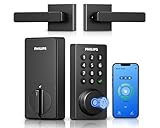
I remember the first time I saw a truly keyless door lock in action. It was on a fancy Airbnb, and instead of fumbling for keys in the dark, I just punched in a code. Seemed like pure magic. But then the nagging thought creeps in: are keyless door locks safe? My initial thought was a resounding ‘yes,’ because, hey, no more lost keys, right? But after years of tinkering with different smart home gadgets and hearing horror stories from friends, my opinion is a bit more… nuanced.
It’s not as simple as ‘yes’ or ‘no.’ Like most things in life, it depends on a whole bunch of factors, and frankly, a lot of them are about you, the user, more than the lock itself. Let’s cut through the hype and get down to what actually matters when you’re thinking about ditching your traditional deadbolt.
The Real Deal: How Do These Things Even Work?
Alright, let’s get this out of the way: a keyless door lock isn’t some mystical portal. At its core, it’s a deadbolt with a brain. Instead of a cylinder that turns with a metal key, you’ve got electronics. The most common types use a keypad for a PIN code, a touchscreen for a code, or even Bluetooth to talk to your smartphone. Some fancy ones have fingerprint scanners, which feel straight out of a spy movie, though I’ve found those can be finicky in humid weather or if your fingers are a bit grubby.
The beauty is that you can often program multiple codes. Think temporary ones for guests, a permanent one for the family, and maybe even a scheduled one for the dog walker that only works between 9 AM and 5 PM. This flexibility is a huge selling point. No more hiding a spare key under the welcome mat – a move I still see people doing, which is frankly insane if you think about it. Someone can just lift that mat and be inside faster than you can say ‘burglar.’
The technology behind it usually involves a small motor that retracts or extends the bolt. When you enter the correct code, or your phone signals approval, the electronics tell the motor to do its thing. It’s a pretty straightforward mechanical action, but it’s all controlled by software and sensors. This is where things can get complicated, and where security can either be rock-solid or surprisingly flimsy.
Power is another consideration. Most of these locks run on batteries, usually AA or 9V. When the battery gets low, you typically get a warning – a blinking light, a beep, or a notification on your phone. If the battery completely dies, most still have a physical key override or a hidden contact point where you can touch a 9V battery to give it just enough juice to disarm it. I’ve personally used the 9V battery trick once when I forgot to change the batteries and got locked out after a late night. It worked, but it wasn’t exactly graceful.
The complexity of the electronics means there’s more to go wrong than with a simple mechanical lock. Firmware updates, Wi-Fi connectivity (if it’s a smart lock), and the integrity of the keypad or scanner are all potential points of failure or vulnerability. It’s a trade-off: convenience and advanced features versus the sheer, unyielding simplicity of a metal key.
The ‘hack-Proof’ Myth and Other Overhyped Bs
Let’s be blunt: the idea that a keyless door lock is inherently ‘hack-proof’ is a load of garbage. Anyone who tells you otherwise is trying to sell you something. These things are computers, and like all computers, they can have vulnerabilities. I’ve personally wasted a good chunk of change on a smart lock that promised ‘military-grade encryption’ and all sorts of mumbo-jumbo, only to find its app was clunky and the Bluetooth connection was spotty. It felt more like a novelty than a secure entry point.
The most common concern people have is about someone brute-forcing the code. If it’s a simple 4-digit code, yeah, someone could theoretically try every combination. Most modern locks have lockout features, though. After a few incorrect attempts, they’ll usually disable the keypad for a minute or two. This makes brute-forcing impractical for a physical lock. It’s not like hacking into a website where you can try thousands of passwords per second without consequence. (See Also: Are There Different Size Holes For Installing Door Locks )
However, where the real vulnerabilities lie for some of these devices isn’t necessarily the keypad itself, but the software and the network connection. If your smart lock connects to your home Wi-Fi, and your Wi-Fi is compromised, then theoretically, someone could gain access. This is why having a strong, unique password for your Wi-Fi is most important. I learned this the hard way after a neighbor’s kid managed to get onto my network and start messing with my smart lights. Made me realize how interconnected everything is.
Then there’s the issue of remote access. If you have a smart lock that you can control with your phone from anywhere, that connection is a potential entry point. If the company’s servers are breached, or the app has a flaw, that’s a problem. I’ve seen reports of older smart locks being vulnerable to relay attacks, where someone could basically extend the range of your phone’s Bluetooth signal to open your door, even if they weren’t right next to it. Many newer models have protections against this, but it’s something to be aware of.
The common advice often focuses on strong PINs, but that’s only part of the picture. You need to consider the entire ecosystem: the lock’s firmware, the manufacturer’s security practices, the app’s security, and your home network’s security. It’s a layered approach, and if one layer is weak, the whole thing can crumble. So, no, not ‘hack-proof,’ but potentially very secure if you choose wisely and take your own security seriously.
What to Look for: Beyond the Shiny Buttons
When you’re looking at keyless door locks, forget about the marketing fluff. Focus on what actually matters for security and reliability. First off, build quality. I’ve held some cheap-feeling plastic locks that just screamed ‘break-in target.’ You want something solid. Metal construction, a solid keypad or touch screen, and a deadbolt that feels smooth and strong when it extends and retracts. If it feels flimsy in your hands at the store, imagine it out in the elements, taking a beating.
Next, consider the locking mechanism itself. Does it have a physical key override? Most do, and while you might think that defeats the ‘keyless’ aspect, it’s a vital backup for when batteries die or electronics glitch. Make sure the key cylinder, if it has one, is high-quality and pick-resistant. Honestly, if a thief is determined enough to pick a high-security cylinder, they’re probably going to bypass a door lock altogether with a crowbar anyway.
For keypad locks, look at the button design. Are they widely spaced? Is there a way to obscure your finger movements when you’re typing? Some have touchscreens that show which numbers were pressed most recently, which is a terrible design. Others have illuminated keypads, which can be helpful in the dark but might also give away your typing pattern if someone is watching. Consider models that allow for longer PINs (6 digits or more) as they are exponentially harder to guess.
If you’re going for a smart lock, dig into the connectivity. Does it use Wi-Fi, Bluetooth, or a proprietary wireless protocol? Wi-Fi locks offer the most remote access convenience but are also more susceptible to network-based attacks. Bluetooth locks are generally more secure locally but require you to be within range for direct control. Some systems use a separate hub, which adds another layer of complexity but can sometimes improve security and reliability by creating a dedicated network for your smart devices.
Manufacturer reputation and support are also huge. Are they a well-known company that’s been around for a while? Do they regularly release firmware updates to patch security holes? What’s their customer service like? I once had a smart lock from a startup that went out of business six months after I bought it. When the firmware needed updating, tough luck. Stick with brands that have a track record and a commitment to ongoing support. Here’s a quick breakdown of features to weigh: (See Also: Are Sesame Seeds Kosher For Passoveris Pollock Kosher )
| Feature | Pros | Cons | My Verdict |
|---|---|---|---|
| Keypad Entry | Convenient, no phone needed | Can be seen, codes can be forgotten | Solid for basic security. Make sure it has lockout features. |
| Smartphone App Control (Bluetooth/Wi-Fi) | Ultimate convenience, remote access | Relies on phone battery, network security concerns | Great if you manage your digital security well. Wi-Fi adds risk. |
| Fingerprint Scanner | Fast, unique identifier | Can be unreliable with dirty/wet fingers, weather sensitive | A cool addition, but not a sole security measure for me. |
| Physical Key Override | Key backup for power loss | Defeats ‘keyless’ if used frequently; cylinder is a weak point if low quality | A must. Must have a decent quality cylinder. |
| Auto-Lock Feature | Peace of mind, never forget to lock | Can accidentally lock you out if door isn’t fully closed | Lifesaver, but use with caution and always test the door. |
Common Mistakes People Make (including Me)
One of the biggest blunders I see people make is treating a keyless lock like a magical forcefield. They install it and then forget about all the other basic security practices. You wouldn’t leave your car opened just because it has an alarm, right? The same applies here. You still need to make sure your doors and windows are secure, your lights are on a timer when you’re away, and your Wi-Fi password is a beast.
Another mistake is going for the cheapest option available. I’ve been guilty of this. I bought a really inexpensive smart lock because I wanted to ‘try out’ the technology without breaking the bank. It worked… mostly. But the app was buggy, the battery life was abysmal, and I always had a nagging feeling it wasn’t as secure as it should be. It ended up costing me more in frustration and a replacement than if I’d bought a decent one from the start. My experience with that sub-$100 model taught me that sometimes, you really do get what you pay for.
People also often overlook the importance of firmware updates. Manufacturers release these to fix security vulnerabilities and improve performance. If your smart lock isn’t set to update automatically, or if you ignore the update prompts, you’re leaving yourself exposed. It’s like not patching your computer – you’re just asking for trouble. I used to ignore those update notifications on my phone apps, but for security devices, it’s a must-do.
Then there’s the setup itself. Many of these locks are DIY-friendly, but if you don’t install it correctly, it can compromise the fit and therefore the security. A door that doesn’t close properly, a bolt that doesn’t fully engage, or a loose installation can all be exploited. Read the instructions, watch a few YouTube videos if you’re unsure, and make sure it’s installed tight and flush.
Finally, and this is a big one for smart locks: password hygiene. If your lock is connected to an account, use a strong, unique password for that account. Don’t reuse passwords from other sites. Use a password manager. And enable two-factor authentication (2FA) if the app offers it. I’ve had friends who reused passwords, and when one of their other online accounts was breached, the hacker tried that same password on their smart home apps. Thankfully, they had 2FA enabled, but it was a serious wake-up call.
Are Keyless Door Locks Safe? A Reality Check
So, are keyless door locks safe? The answer, in my experience, is a cautious ‘yes, if you do your homework and manage them properly.’ They offer a level of convenience that’s hard to beat, and when you choose a reputable brand and implement good security practices, they can be just as secure, if not more secure, than traditional locks.
The key is understanding their limitations and your role in maintaining their security. A mechanical lock is simple: it either works or it doesn’t. A keyless lock is a piece of technology. It requires power, software, and often a network connection. Each of these elements introduces potential points of failure or vulnerability.
I’ve found that for everyday use, a solid keypad lock from a well-known brand is fantastic. The convenience of not needing to carry keys, especially when I’m out for a run or juggling groceries, is a big deal. The peace of mind from knowing I can remotely check if the door is locked (via the app) is also a big plus. I’ve personally opted for a model that has a good physical key backup, a solid keypad with lockout features, and uses Bluetooth for local control rather than Wi-Fi for direct access, to minimize the attack surface. (See Also: Are Sliding Door Locks Common )
For many people, the security benefits of a keyless lock can outweigh the risks, especially when compared to the risks associated with lost keys or poorly secured traditional locks. The ability to grant temporary access to visitors, monitor who enters and when, and receive alerts can enhance overall home security. However, if you’re not comfortable managing software updates, strong passwords, and network security, you might want to stick with what you know.
The industry is constantly evolving, and manufacturers are getting better at addressing security concerns. But as a user, you need to stay informed. Read reviews, check for security advisories from the manufacturer, and never assume your lock is impenetrable. The most secure lock is one that is properly installed, regularly maintained, and backed by a user who understands and practices good digital hygiene.
Faq: Your Keyless Lock Questions Answered
Can Keyless Door Locks Be Hacked Remotely?
Yes, some keyless door locks, particularly smart locks that connect to your home Wi-Fi or the internet, can be hacked remotely. This usually happens if the lock’s software has vulnerabilities, if the manufacturer’s servers are compromised, or if your home network itself is breached. Always opt for locks with regular firmware updates and strong encryption.
Do Keyless Door Locks Work Without Wi-Fi?
Many keyless door locks do not require Wi-Fi to function for basic entry. Keypad locks and Bluetooth-enabled smart locks can operate independently. Wi-Fi is typically only needed for remote access and smart home integration features, allowing you to control the lock from your smartphone when you’re away from home.
What Happens If a Keyless Door Lock Runs Out of Battery?
Most keyless door locks have a backup system for when the batteries die. This often includes a physical key override, allowing you to use a traditional key. Some smart locks also have an external contact point where you can temporarily touch a 9V battery to provide enough power to disarm the lock and enter your code.
Are Keypad Locks More Secure Than Key Card Locks?
Generally, keypad locks and key card locks offer similar levels of security, with the main difference being the method of entry. The security depends more on the quality of the lock’s internal mechanism, the manufacturer’s security protocols, and how well the user protects their PIN or card. Both can be vulnerable if poorly implemented or managed.
Can I Install a Keyless Door Lock Myself?
Yes, most keyless door locks are designed for DIY installation and come with detailed instructions. However, proper installation is important for both security and functionality. If you are not comfortable with basic tool use or following installation guides, it’s advisable to hire a professional to make sure the lock is fitted correctly to your door.
Final Verdict
So, to circle back to the initial question: are keyless door locks safe? My honest verdict is that they can be, and often are, very safe. The convenience they offer is undeniable, and for many, the benefits of advanced features like remote access and temporary codes outweigh the potential risks. However, this safety isn’t automatic. It requires an informed user who understands that technology needs maintenance and vigilance.
Choosing a reputable brand, understanding the security features (and limitations) of your specific model, and diligently managing your digital security – strong passwords, regular updates, and secure home networks – are a must steps. Don’t fall for the ‘unhackable’ hype. Instead, focus on making your chosen lock as secure as possible through informed choices and responsible usage.
Ultimately, the decision comes down to your comfort level with technology and your willingness to take proactive steps to secure your home. If you’re willing to put in the effort, a keyless door lock can be a fantastic upgrade to your home security and daily life.