I once spent a solid afternoon arguing with a mechanic buddy about what constitutes a ‘wheel’ on a vehicle. He was adamant that anything that rotates and allows movement fell under the umbrella. I, on the other hand, drew a hard line at anything that wasn’t, you know, a circular thing you put tires on. This whole debate got me thinking about the very definition of ‘wheel’ and, more specifically, whether hinges are classed as wheels. It sounds like a silly question, but digging into it reveals some interesting ideas about how we categorize parts and what makes something functional.
What the Heck Are We Even Talking About?
Look, let’s get this straight right off the bat. When you’re talking about cars, bikes, or any vehicle that rolls on the ground, the word ‘wheel’ immediately conjures up images of rubber tires, metal rims, and the whole assembly that makes the thing move. It’s the primary interface between the machine and the road. Without wheels, your car is just a very heavy, very stationary box.
They’re fundamental. They are designed for continuous rotation, typically at high speeds, and they bear the vehicle’s entire weight while enabling locomotion. They are engineered with materials and designs specifically for that purpose – think about the stresses, the friction, the constant centrifugal force.
It’s a whole different ballgame compared to, say, a door hinge.
Now, hinges. What do they do? They connect two solid objects, usually a door to a frame, a lid to a box, or panels on a car body.
Their primary function is to allow rotational movement in a controlled manner, usually through a limited arc. They pivot.
They swing. They don’t typically roll freely across a surface, and they’re definitely not designed to carry the brunt of a vehicle’s momentum or its static weight in the same way a wheel does. My first car, a beat-up old Civic, had doors that squeaked so bad you could hear them coming a mile away. The hinges were rusted, seized up, and I eventually had to replace them.
They were a pain in the neck, but nobody ever suggested they were a type of wheel that had gone bad. The very idea seems absurd when you think about their mechanical function and design intent.
So, are hinges classed as wheels? My gut, and frankly, years of working on cars and bikes, screams a resounding ‘no’. It’s like asking if a rudder is a sail. They both help control a vessel, but they do entirely different jobs and work on completely different principles. Hinges are about articulation and connection; wheels are about locomotion and continuous rotation. The purpose, the design, the materials, the stress points – it’s all worlds apart. I’ve seen some truly bizarre engineering solutions in my time, but never has a hinge been described or treated as a wheel. The common understanding, the mechanical definition, and the practical application all point to them being distinct entities in the automotive world and beyond.
The Functional Divide: Rotation vs. Rolling
Let’s really hammer this home. The core difference, the absolute linchpin, is function. Wheels are built for rolling. Their entire existence is predicated on that continuous, low-friction rotation that propels a vehicle forward or backward.
Think about the physics involved: bearings, axles, tire contact patch, rolling resistance. It’s a marvel of engineering designed for sustained movement over distances. A wheel is a component that, when paired with a tire, helps the movement of a vehicle by rotating on an axle.
It’s designed to handle significant loads, dissipate heat generated by friction, and maintain grip with the ground. The materials are chosen for durability and strength under these specific conditions. When I’m rebuilding a suspension, the wheels are a massive part of that. They’re not just decorative; they’re a vital, dynamic component.
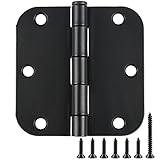
Hinges, on the other hand, are designed for controlled, usually limited, angular movement. They connect two parts and allow them to pivot relative to each other. A car door hinge, for instance, allows the door to swing open and closed.
It’s subjected to forces, sure – the weight of the door, the use applied when opening or closing, and road vibrations – but it’s not designed for constant, high-speed rotation. The failure mode for a hinge is usually bending, shearing, or becoming stiff and squeaky, not wobbling uncontrollably or wearing down its ‘tread’. I had a classic Mustang where the door hinges were so worn that the doors sagged.
It looked terrible and made closing them a real effort. Replacing those hinges was a fiddly job, requiring precise alignment, but it was about restoring articulation, not enabling rolling motion. It’s a completely different mechanical problem.
Consider the context. When you buy new tires, you’re buying for your wheels. When you buy a new car, you’re concerned with the size and type of its wheels because they directly impact ride comfort, handling, and fuel efficiency.
No one ever asks about the ‘hinge size’ or ‘hinge performance’ in relation to how the car drives down the road. The common advice around wheel maintenance includes things like balancing and alignment, which are entirely irrelevant to hinges. The very engineering principles are distinct. Wheels are about dynamic, continuous motion; hinges are about static connection and controlled articulation. (See Also: A Box Without Hinges Key )
Trying to lump them together is like saying a propeller is a type of brake because both involve rotation. It just doesn’t make sense from a functional or mechanical perspective.
People Also Ask: What This Actually Means
Let’s tackle some of the questions that pop up when people start pondering this. You might be asking, “What is the main function of a wheel?” As we’ve discussed, it’s locomotion – enabling movement by rolling.
It converts rotational motion into linear motion. Simple, right? Then there’s, “What are the parts of a vehicle wheel?” This typically includes the rim, tire, hub, lug nuts, and sometimes a hubcap.
Notice ‘hinge’ isn’t on that list. It’s fundamentally different.
Another common query is, “How does a hinge work?” It usually involves two plates with holes, connected by a pin. One plate is attached to one object, the other to another, and the pin allows them to rotate around it. It’s a pivot, not a roller.
Someone might also wonder, “Are all rotating parts wheels?” Absolutely not.
Think of a fan blade, a water wheel, or even a bearing itself. These rotate, but they aren’t wheels in the vehicular sense. The term ‘wheel’ in automotive contexts has a very specific meaning tied to its role in movement. Similarly, you might ask, “What is the difference between a hinge and a joint?”
While both allow movement, a joint can be much more complex, like a ball-and-socket joint in suspension, which allows movement in multiple directions. A hinge is typically a single-axis pivot. This distinction further highlights how specific the definition of ‘wheel’ is. Hinges are pivot points; wheels are rolling elements.
They serve fundamentally different purposes in the mechanics of any system, particularly vehicles.
I’ve seen folks try to get creative with mechanical definitions, and while that’s fine for theoretical discussions, in practical terms, especially when you’re talking about cars and bikes, the distinction is clear. If you’re ever at a junkyard or a parts store, you’ll find wheels in the wheel section and hinges in the body or door hardware section. They are treated as entirely separate categories of parts. This segregation isn’t arbitrary; it’s based on function and design.
The engineering that goes into making a wheel that can withstand thousands of miles of abuse is vastly different from the engineering that goes into a hinge that allows a door to open smoothly. Trying to equate them misses the fundamental purpose and design intent of each component.
The Case Against ‘hinges as Wheels’: A Contrarian View (sort Of)
Now, here’s where I have to play devil’s advocate, but honestly, it’s a bit of a stretch. Some people might argue that any component that helps movement, especially rotational movement, could technically be considered a ‘wheel’ in a very broad, abstract sense. They might point to the fact that a hinge rotates around an axis, just like a wheel rotates around an axle.
If you squint hard enough, you could say they both involve circular motion. I’ve heard people say, “Well, a gear rotates, and gears are part of a drivetrain, which ultimately makes the wheels turn, so aren’t they all just interconnected rotational elements?”
It’s an interesting thought experiment, but it ignores the primary function and design intent. This is like saying a doorknob is a type of wheel because you turn it.
My take? That’s a semantic game, not a practical or engineering one. While technically true in the most abstract sense that a hinge rotates, it’s like saying a hinge is a type of lever because you apply force to it. Yes, but that’s not its primary purpose or how we categorize it.
Everyone says hinges are for opening and closing, and I agree. I disagree with the notion that this makes them in any way related to wheels. The common understanding of a ‘wheel’ in the context of vehicles implies rolling locomotion. (See Also: Are Integrated Washing Machine Door Hinges Standard )
Hinges don’t roll. They pivot. The forces they handle, the way they wear, and their contribution to the vehicle’s operation are entirely different. So, while I can see the abstract argument, it’s not how the world works, and certainly not how mechanics or car owners think about their parts.
It’s a definition that’s too broad to be useful.
Think about this: If we called hinges wheels, then door handles, steering wheels (which are actually wheels, but for steering, not locomotion!), and even the pivot points in your brake calipers would all fall under the same category. It would be a chaotic mess of definitions.
The specificity of the term ‘wheel’ in the automotive industry is important. It denotes a part with a specific role in propulsion and movement. Hinges have their own distinct role in providing access and articulation.
They are designed and manufactured differently, fail in different ways, and require different maintenance. So, while I can entertain the abstract idea for a moment, the practical reality is that hinges are not wheels, and calling them so serves no useful purpose other than to confuse.
Real-World Applications and When It Matters
So, when does this whole debate about whether hinges are classed as wheels actually matter? Mostly, it doesn’t. In everyday conversation, in the mechanic’s shop, or when ordering parts, the distinction is so obvious that it’s never brought up. You wouldn’t walk into a tire shop and ask for hinges. You wouldn’t tell your mechanic, “My car’s wheels feel stiff; I think the hinges are worn out.” It’s just not how the language of vehicles works. However, understanding the difference is important for mechanical comprehension and for correctly identifying parts when you’re doing maintenance or repairs. Knowing that hinges are designed for pivoting and wheels for rolling helps you diagnose problems correctly.
For instance, if your car door is sticking or sagging, you’re looking for door hinges. If your car feels like it’s vibrating at speed or pulling to one side, you’re looking at your wheels, tires, and suspension components. Trying to fix a sagging door by replacing the wheels would be a spectacularly expensive and futile exercise.
Conversely, if your wheels are damaged, replacing them is a straightforward process, assuming you have the right tools and know-how. My first car, that old Civic, had a notoriously loose door hinge after a minor fender bender. The fix was a new hinge, not new tires, even though both involve metal and rotation.
The cost of replacing four wheels and tires was easily over $600 back then, while a set of hinges was maybe $100, plus labor. The practical implications of misidentifying parts are significant.
There are also legal and regulatory aspects. Vehicle safety standards, for example, focus heavily on wheel and tire integrity because they are directly tied to the vehicle’s ability to move, stop, and handle safely. Hinges, while important for structural integrity and passenger safety (keeping doors closed), are not typically regulated in the same way as primary locomotion components. The design and testing requirements for a wheel are far more rigorous due to the extreme forces and continuous operation they endure. So, while both are mechanical components of a vehicle, their distinct functions place them in entirely separate categories for engineering, maintenance, legal, and even common-sense purposes. It’s a clear-cut case of different tools for different jobs.
Common Mistakes and What to Watch For
The biggest mistake people make, if you can even call it that, is getting too abstract with definitions. As we’ve seen, trying to force hinges into the ‘wheel’ category is a semantic exercise that doesn’t hold up in the real world of automotive engineering or repair.
Another common misconception, particularly for beginners, is confusing the type of rotation. A wheel rotates continuously and freely on an axle to enable locomotion.
A hinge rotates on a pin, typically through a limited arc, to allow articulation. They are fundamentally different movements with different purposes.
I once saw a forum post where someone was asking if they could swap out their car’s door hinges for something ‘more solid’ and then use them as some kind of secondary rolling mechanism. It was… baffling. Their understanding of how parts worked was completely off.
When you’re dealing with vehicle parts, always focus on function. What is this part supposed to do?
Wheels are for rolling and moving the vehicle. Hinges are for connecting and allowing pivoting. If you’re troubleshooting a problem, ask yourself which function is failing. (See Also: Are Hinges Wheeels )
Is the car not moving properly? Look at wheels, tires, brakes, drivetrain.
Is a door not opening or closing smoothly? Look at hinges, latches, and the door frame. Don’t get sidetracked by abstract similarities. The automotive industry is built on specialization; each part has a job.
Trying to make a hinge do the job of a wheel, or even classifying it as one, is a recipe for disaster, both in terms of understanding and in terms of actual repairs. It’s like trying to use a screwdriver as a hammer – you might make it work in a pinch, but it’s inefficient, and you’ll likely damage both the tool and the nail.
Pay attention to the language used by manufacturers and mechanics. They don’t call wheels hinges, and they don’t call hinges wheels. This consistent terminology reflects a clear, functional understanding. If you’re unsure about a part, look it up in a service manual or on a reputable parts website.
You’ll see wheels listed under ‘wheels and tires’ and hinges under ‘body hardware’ or ‘doors’. This isn’t arbitrary; it’s based on decades of engineering and practical experience. My uncle, a retired mechanic with over 40 years under his belt, always stressed the importance of knowing the precise name and function of every part.
He’d often say, “If you call a spark plug a wrench, you’re going to have a bad day trying to fix an engine.” The same applies here. Stick to the functional definitions, and you’ll avoid a lot of confusion.
Hinge vs. Wheel: A Practical Comparison
To really drive the point home, let’s break down a few key differences in a table. This isn’t about getting bogged down in overly technical jargon, but about seeing the tangible distinctions that make these parts so different. When I’m looking at a car, I see wheels as the primary interface for motion, and hinges as the facilitators of access. It’s a pretty clear split in my mind.
| Feature | Wheel | Hinge | Verdict (Are they the same?) |
|---|---|---|---|
| Primary Function | Locomotion, rolling motion | Articulation, pivoting motion | No. Completely different functions. |
| Movement Type | Continuous rotation on an axle | Rotational movement on a pin, usually limited arc | No. One is for continuous rolling, the other for controlled swinging. |
| Typical Load Bearing | Vehicle weight, dynamic forces, impact | Weight of the attached component (e.g., door), use forces | No. Wheels bear far greater and more dynamic loads. |
| Design Focus | Durability, friction reduction, grip, speed handling | Strength, smooth pivot action, corrosion resistance | No. Different engineering priorities entirely. |
| Common Failure Modes | Wear, damage, balancing issues, punctures | Stiffness, squeaking, bending, shearing | No. Failures are distinct and indicate different problems. |
| Maintenance Focus | Tire pressure, alignment, balancing, rotation | Lubrication, adjustment, replacement if bent/worn | No. Maintenance tasks are specific to each part’s function. |
As you can see, there’s just no overlap. While both are mechanical components found on vehicles, their roles, design, and operation are distinct. The question of whether hinges are classed as wheels is, in practical automotive terms, a non-starter. They are different parts with different purposes, and that’s how they’re treated by everyone involved in building, maintaining, or driving vehicles.
What Is the Difference Between a Wheel and a Tire?
A wheel is the rigid metal part (the rim) that the tire mounts onto. The tire is the rubber component that actually contacts the road. The wheel provides the structure and mounts to the axle, while the tire provides grip, cushioning, and the rolling surface. They work together as a unit, but they are distinct parts.
Can a Hinge Be Considered a Type of Joint?
Yes, in a very broad mechanical sense, a hinge is a type of joint. It’s a pivot joint that connects two rigid bodies, allowing them to rotate relative to each other around a fixed axis. However, in the context of vehicles, ‘joint’ often refers to more complex suspension components like ball joints or CV joints.
Why Are Wheels So Important for Vehicles?
Wheels are arguably the most important component for a vehicle’s ability to move. They enable locomotion by allowing the vehicle to roll smoothly over surfaces with minimal friction. They also play a huge role in handling, braking, and ride comfort, making them indispensable.
What Happens If a Car Hinge Breaks?
If a car hinge breaks, the door it’s attached to will likely become loose, sag, or even detach completely. This is a serious safety hazard, as the door could fly open while driving. It would also prevent the door from opening or closing properly, compromising the vehicle’s security and weather sealing.
Are There Any Edge Cases Where a Hinge Might Be Confused with a Wheel?
Perhaps in highly abstract or theoretical discussions of mechanical movement, one might draw parallels. For example, some specialized robotic arms might use rotating joints that superficially resemble hinges but are engineered for continuous, precise rotation. However, in the context of standard automotive or bicycle mechanics, there are no practical edge cases where a hinge is considered a wheel.
Conclusion
So, to put it plainly: no, hinges are not classed as wheels. The confusion, if any, stems from an overly abstract definition of ‘rotation’. In the real world of automotive engineering and repair, they are distinct components with entirely different functions, designs, and failure modes. Wheels are for rolling; hinges are for pivoting. Simple as that.
My advice? Stick to the practical definitions. When you’re working on your car or bike, know what a wheel is meant to do (roll and move you) and what a hinge is meant to do (open and close something). This clarity saves you time, money, and a whole lot of confusion. Don’t get caught up in semantic debates that have no bearing on how your vehicle actually works.
Next time you’re looking at your car, take a moment to appreciate the distinct roles of each part. The wheels get you there, and the hinges let you get in and out. Both vital, but neither is the other. Now, if you’ll excuse me, I’ve got a door on my old pickup that’s starting to creak. I know exactly what I’ll be looking at – and it ain’t the tires.