I remember staring at the toolbox, completely baffled. My old pickup truck’s tailgate wouldn’t swing down properly, sticking halfway. I was convinced I needed some fancy new part, maybe some kind of sliding mechanism. Then, a buddy, grease-stained and wise, just pointed. “Dude, it’s the hinge. Just need to lube ‘em up.” It got me thinking, though. We talk about wheels all the time – tires, rims, how they help things roll. But what about the things that let other things swing open, like doors or tailgates? Are hinges considered wheels in any universe?
It’s a weird question, I know. Nobody’s out there arguing about whether your car door’s hinges are secretly trying to be tires. But mechanically speaking, there’s a bit more to it than just saying ‘yes’ or ‘no’. Let’s break down what actually makes a wheel a wheel, and where a hinge fits into the whole picture.
What Makes a Wheel Roll? It’s Not Just Roundness
Alright, let’s get down to brass tacks. What’s the fundamental job of a wheel? It’s pretty simple: to reduce friction and allow something to move smoothly over a surface. Think about it. If you tried to drag a heavy box across the floor, it’d be a nightmare. But slap some casters on it, and suddenly you’re pushing it around like it’s nothing. That’s the magic of a wheel – it converts linear motion (pushing or pulling) into rotational motion, and that rotation drastically cuts down on the resistance you feel. This principle is behind everything from your car’s tires to the little wheels on your office chair.
The key here is that the wheel is designed to rotate and bear weight while doing so. It’s not just about being round. A round rock rolling down a hill is acting like a wheel, but it’s not engineered as one.
A proper wheel has a hub, spokes (sometimes), and a rim, all designed to distribute load and withstand forces while spinning. The axle is its partner in crime, the stationary element that the wheel spins around.
Together, they create a system that makes locomotion far more efficient. You’ll find this basic design applied everywhere. Even the tiny wheels on a drone are fundamentally the same concept as the massive wheels on a semi-truck, just scaled differently and adapted for specific purposes.
It’s this continuous rotation under load that really defines a wheel. The goal is to keep on rolling, mile after mile, turn after turn. They’re built for endurance in their specific rotational task. Compare that to something that just pivots. There’s a fundamental difference in purpose and design, even if both involve movement. The materials, the tolerances, the way forces are managed – it’s all geared towards that rolling action. Most automotive components are designed with specific functions in mind, and while some might share principles, their primary roles set them apart.
Hinges: The Unsung Heroes of Swing
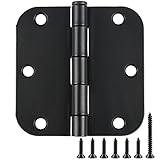
Now, let’s talk hinges. My initial confusion about my tailgate was a perfect example. A hinge’s job is to connect two objects while allowing them to pivot relative to each other. It’s about controlled movement, yes, but it’s a swinging or opening/closing motion, not a rolling one. Think about your front door. It swings open and shut on hinges. The hinge is the pivot point, and the door moves in an arc. It doesn’t roll across your floor. The same goes for cabinets, car doors, or even the lid on your toolbox. The hinge is the joint, the point of articulation.
The common advice when a hinge acts up is usually about lubrication, tightening, or sometimes replacement. You’re not going to grease up your car’s door hinges expecting them to start spinning freely to help you move faster. Their function is to provide a stable connection that allows for a specific range of motion. They’re designed to handle shear forces and some torque, but their core mechanism isn’t about reducing friction in a rolling motion. They are built to endure repeated pivoting, often under static load (like the weight of a door) or dynamic load (like a car door being opened and closed frequently). (See Also: A Box Without Hinges Key )
I’ve spent more time than I care to admit trying to get stubborn hinges to behave. Sometimes a little WD-40 works wonders, making that annoying squeak disappear. Other times, especially on older vehicles, the hinge pins wear out, or the metal itself starts to deform. Replacing them can be a pain, involving anything from simple pin removal to welding on new ones. But the fix always involves restoring or replacing the pivot mechanism, never trying to make it roll. It’s a different kind of mechanical problem, with a different set of solutions.
Do Hinges Have a Bearing?
Yes, most hinges have some form of bearing surface, even if it’s just two metal surfaces rubbing together. Higher-quality hinges, especially those designed for heavy-duty applications like car doors or industrial gates, will often incorporate actual ball bearings or roller bearings within the hinge pin assembly. This reduces friction and wear, making the pivot smoother and more durable. Even a simple butt hinge has surfaces designed to slide against each other, acting as a basic bearing. It’s this sliding contact, rather than rolling, that is characteristic of a hinge’s operation.
The Mechanics: Rotation vs. Pivoting
Here’s where the distinction really solidifies. Wheels are built around the concept of continuous rotation. They spin on an axle. This rotation is what allows them to cover distance with minimal effort. The friction generated is primarily between the axle and the wheel’s hub, or within bearings designed for high-speed rotation. Think about the physics: the circumference of the wheel is moving much faster than the axle. This difference in speed and the resulting friction are managed through lubrication and bearing design. The entire point is to keep that rotation going as smoothly and efficiently as possible.
Hinges, on the other hand, help pivoting. They have a fixed axis of rotation, and the two connected parts move in an arc around that axis. The friction occurs between the surfaces that are sliding past each other – the pin rubbing against the knuckles of the hinge. While some lubrication helps, the fundamental interaction is one of sliding friction, not rolling friction. The design focuses on strength and the ability to withstand forces that would try to pull the connected objects apart or twist them away from the pivot. The goal isn’t continuous motion; it’s controlled, limited motion.
This is why you’ll never see a hinge described as a ‘rolling component’ in an engineering context. Its function is fundamentally different. You can have a wheelbarrow with wheels that roll, and a wheelbarrow with a handle that pivots on a hinge to dump the load. They are distinct mechanical elements serving distinct purposes. The kinetic energy transfer is different, the wear patterns are different, and the typical failure modes are different. A wheel is about covering ground; a hinge is about creating a movable joint.
Why the Confusion? Looking at Similarities
I get why someone might scratch their head. Both wheels and hinges are about allowing things to move. They both involve parts connecting and interacting. And sometimes, the effect of a hinge can feel a bit like a small, controlled ‘roll’ – the edge of a door moving through an arc. Plus, let’s be honest, the names themselves don’t scream ‘function’. ‘Wheel’ just sounds like it rolls, sure, but ‘hinge’ could mean anything. When you see something moving, and it’s not just sliding directly, your brain might lump it into a broader category of ‘things that move’.”
Consider the common caster wheel. It’s a wheel, sure, but it’s attached to a mechanism that allows it to pivot. So you have a rolling component that also swivels. This combination can sometimes make people think about other pivoting mechanisms. Or think about a rotary actuator – it’s designed for continuous rotation, but it’s a more complex system than a simple wheel and axle. It’s the grey areas where things get interesting. The automotive world is full of these: suspension components that articulate, steering linkages that pivot. They all involve movement, but the specific type of movement and the underlying mechanical principle are what matter.
My own initial confusion with the tailgate probably stemmed from the fact that the tailgate opens like a door (pivoting on hinges) but it also needs to be lowered and raised (which, if it had wheels, would be a rolling action, but it doesn’t). It’s the dual nature of some components that can blur the lines in casual thinking. But once you strip away the context and look at the core function, the difference between a wheel and a hinge is pretty stark. (See Also: Are Integrated Washing Machine Door Hinges Standard )
Are Hinges and Wheels Interchangeable?
Absolutely not. They are designed for fundamentally different mechanical purposes and cannot be interchanged. A wheel’s purpose is to help rolling motion and reduce friction for linear movement over a surface. A hinge’s purpose is to provide a pivot point for rotational motion, allowing two objects to be joined while still moving relative to each other in a swinging or opening manner. Using a hinge where a wheel is needed, or vice versa, would result in a complete failure of the intended mechanical function. You can’t make a door roll on hinges, and you can’t use wheels to connect two parts that need to swing open.
When Does a Wheel Become More Than Just a Wheel?
This is where things get a little nuanced, and where you might see some overlap in systems. A wheel isn’t just a round thing; it’s part of a system. For example, a car’s steering system uses wheels, but it also involves tie rods, ball joints, and a steering column – all of which pivot and articulate. The wheels themselves are designed to roll, but they are connected to a complex arrangement of parts that allow for steering, which involves pivoting. So, while the wheel itself is still a wheel, its context within a larger assembly can involve other types of motion.
Another example is in some types of machinery where a wheel might be used as part of a cam mechanism, or a roller that guides a track. In these cases, the component might be round and spin, but its primary function isn’t just to enable linear locomotion. It’s controlling or dictating a specific type of motion, often in conjunction with other parts. However, even in these scenarios, the component that is designed to roll and reduce friction for movement is still fundamentally classified as a wheel. The added function doesn’t change its core identity as a rolling element.
I once tried to jury-rig a very basic cart for moving heavy engine blocks in my garage. I used heavy-duty casters, which are basically wheels with a swiveling mount. They roll, but they also pivot. I was trying to get a smooth, multi-directional movement. The casters worked, but the pivot mechanism on the casters themselves started to bind under the extreme weight. It highlighted that while the wheel part was doing its job, the pivoting part (the swivel mechanism) was a separate component, and it was that which was struggling. The wheel was the rolling element; the swivel was the pivot. Two distinct functions.
Common Mistakes and Practical Tips
The biggest mistake people make is thinking too broadly about ‘movement’. If something moves, it must be a wheel, right? Wrong. Understanding the type of movement is key. Is it rolling friction being overcome, or sliding friction? Is the goal to cover distance efficiently, or to provide an articulated joint? Once you can answer that, the distinction becomes clear.
Here’s my rule of thumb: If it’s designed to spin and significantly reduce resistance for linear travel along a surface, it’s a wheel (or part of a wheel system like a caster). If it’s designed to connect two things and allow them to swing or pivot relative to each other, it’s a hinge. It’s that simple, really. Don’t overthink it. My tailgate hinge didn’t need to become a wheel; it just needed some grease. Spending money on a fancy ‘sliding tailgate mechanism’ would have been a waste of money for my problem.
A practical tip from my own garage: always keep a can of good quality lubricant, like a silicone spray or a graphite-based one, handy. For squeaky hinges or sticky mechanisms, a good spray can work wonders. For more heavy-duty applications, or where rust is a major issue, a thicker grease might be better. And before you replace anything, ask yourself if it’s truly broken or just needs a bit of maintenance.
Most squeaks and sticking are fixable with a bit of elbow grease and the right product. Don’t fall for the sales pitch that you need a whole new system when a simple fix will do. I learned that the hard way with a $150 ‘upgrade’ that a $5 can of spray would have solved. (See Also: Are Hinges Wheeels )
Comparing Hinges and Wheels: A Quick Look
To make it crystal clear, let’s put them side-by-side:
| Feature | Wheel | Hinge | My Verdict |
|---|---|---|---|
| Primary Function | Reduce friction for linear movement; rotation | Provide pivot for rotational movement; articulation | Both enable movement, but the ‘how’ is different. |
| Type of Friction | Primarily rolling friction | Primarily sliding friction | Rolling is smoother, sliding is more controlled for joints. |
| Axis of Motion | Rotates around a stationary axle | Fixed pivot point, parts swing around it | One spins free, the other swings controlled. |
| Common Application | Vehicles, carts, furniture, machinery | Doors, lids, gates, cabinets, car bodies | Think ‘roll’ for wheels, ‘swing’ for hinges. |
| Maintenance Focus | Bearings, tire pressure, alignment | Lubrication, pin integrity, structural strength | Different parts mean different care. |
This table really hammers it home. They are designed for different jobs, use different principles, and require different care. There’s no overlap in their fundamental mechanical purpose. So, to directly answer the question: no, hinges are not considered wheels, nor do they function like them.
### People Also Ask
What Is the Difference Between a Bearing and a Hinge?
A bearing is a component designed to reduce friction and support a load between moving parts, typically helping rotation or linear motion. A hinge, on the other hand, is a mechanism that connects two objects and allows them to pivot relative to each other, acting as a joint. While hinges often incorporate bearing surfaces to help smoother pivoting, their primary function is to create an articulated connection, not to enable free rotation like a standalone bearing.
Are Hinges Wheels for Cars?
No, hinges are not wheels for cars. Hinges on a car, such as door hinges or tailgate hinges, are designed to allow those parts to open and close by pivoting. Wheels on a car are round components that rotate on an axle to allow the vehicle to move efficiently across the ground. They serve entirely different purposes and have different mechanical designs.
What Do You Call a Part That Rotates but Isn’t a Wheel?
There are many parts that rotate but aren’t wheels. A pulley rotates and is used with a belt to transmit power or change direction. A gear rotates and meshes with other gears to transmit torque and change speed or direction. A spindle rotates and is often used to hold a tool or workpiece in machinery like a lathe or drill press. A camshaft rotates to operate valves in an engine. These are all rotating components with specific functions distinct from a wheel’s primary role in locomotion.
Conclusion
So, there you have it. Hinges and wheels are both vital mechanical components, and they both allow for movement, but that’s where the similarity ends. One rolls, the other swings. One reduces friction for distance, the other provides a controlled pivot. My old tailgate taught me a valuable lesson: always understand the core function before you start looking for fancy solutions. Most of the time, the simple answer is the right one.
Next time you’re wrestling with a stuck door or wondering about a rattling component, take a second to identify what it’s actually supposed to be doing. Is it rolling? Is it pivoting? Knowing the difference will save you time, money, and a whole lot of frustration. And remember, a bit of lubricant can fix a lot of problems that aren’t actually about wheels at all.
Ultimately, the question of whether are hinges considered wheels is a clear no. They are distinct, designed for separate purposes, and their mechanics are fundamentally different. Stick to that clear definition, and you’ll be ahead of the game.