I remember the first time I tried to hang a heavy shed door by myself. It felt like wrestling a bear. The thing kept sagging, the screws wouldn’t bite, and I swear it weighed more than I did.
My buddy Dave, who’s built more stuff than I’ve had hot dinners, just shook his head. “You’re fighting it too much,” he grunted. “It’s all about how it moves.”
This got me thinking, not just about that door, but about a common misunderstanding: are hinges made of wheels? It sounds like a silly question, but the mechanics behind how things swing open and shut are often more complex, and sometimes simpler, than we imagine. Let’s cut through the noise and talk about what really makes things pivot.
Not Wheels, but Rolling Parts: The Truth About How Hinges Work
Okay, let’s get this straight right off the bat: are hinges made of wheels? No, not in the way you’re probably picturing a car tire or a skateboard wheel. Hinges don’t typically have distinct, round wheels that spin freely.
Instead, the magic of a hinge lies in its ability to allow rotational movement. Think about it – a door needs to swing, not roll. The core principle is smooth movement with minimal friction, and while wheels are fantastic for rolling, they’re not what’s typically inside a hinge assembly. The common understanding of a ‘wheel’ is a circular object that rotates on an axle, enabling movement across a surface.
Hinges, on the other hand, are designed to help angular motion around a fixed axis. So, while the end result is movement, the mechanism isn’t usually a literal wheel.
It’s more about pins, barrels, and knuckles that articulate. I learned this the hard way when I tried to ‘improve’ my garden gate hinge by shoving a couple of old ball bearings into it, thinking it would make it smoother.
It just jammed up something fierce and made a terrible grinding noise. Lesson learned: stick to what the hinge was designed to do.
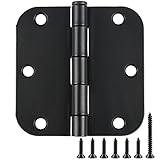
The primary function of a hinge is to connect two objects while allowing them to pivot relative to each other. For a door, one leaf of the hinge attaches to the door frame, and the other attaches to the door itself.
The pin that runs through the center of the hinge knuckles is the axis of rotation. The contact points between the knuckles and the pin are where friction occurs. To minimize this friction, hinges often incorporate features that allow for a degree of sliding or rolling action within the hinge components, but these aren’t freestanding wheels. Some high-end or specialized hinges might use ball bearings or roller bearings to achieve exceptionally smooth operation, especially for very heavy doors or applications requiring frequent movement.
In these cases, you’ll see small, round bearings, but they’re integrated into the hinge mechanism, not acting like independent wheels you’d find on a cart. The common, everyday door hinge you see on your house? It’s usually just two sets of interlocking metal plates (knuckles) with a pin holding them together. The smoothness comes from how well those surfaces are machined and lubricated, not from a wheel rolling.
When Hinges Get Stiff: Common Issues and My Own Stumbles
I’ve wasted more money on WD-40 than I care to admit, thinking a liberal spray would fix every squeaky hinge in the universe. Turns out, that’s often a rookie mistake.
WD-40 is a water dispersant and a light lubricant, great for getting a seized screw loose or cleaning up rust, but it evaporates pretty quickly. For hinges, especially exterior ones that get hammered by weather, you need something more substantial. My first shed door project, the one I mentioned earlier, suffered from this. I’d spray it down with WD-40 every few months, and it would quiet down for a week, then start groaning again.
It was frustrating. Then, on a recommendation, I tried a proper silicone spray lubricant or even a light grease for the pin. Game changer.
The door started swinging like new, and the effect lasted for ages. That’s when I realized that the ‘movement’ in a hinge isn’t just about overcoming initial resistance; it’s about maintaining that smooth action over time and through different conditions. (See Also: A Box Without Hinges Key )
One of the most common reasons hinges become difficult to operate is the accumulation of dirt, dust, and rust. This debris gets ground between the knuckles and the pin, increasing friction. Another culprit is wear and tear.
Over years of use, the metal surfaces can become slightly deformed or worn down, leading to binding or looseness. I once had a cabinet hinge in my kitchen that started sticking.
I tried lubricating it, but it was still stiff. When I finally took it apart – which, by the way, is a whole other can of worms if you don’t know what you’re doing – I found a tiny bit of dried paint and a small pebble lodged in the pin channel. I cleaned it all out, greased it up, and it worked perfectly again.
This experience highlighted for me that while the ‘are hinges made of wheels’ question is a bit of a red herring, the principle of smooth rotation is key, and anything that interferes with that axis is a problem. For many people, the solution seems to be replacing the hinge entirely, but a bit of cleaning and the right lubricant can often save the day and a lot of cash. I’ve learned to be a bit more patient and observant before reaching for my wallet.
What to Look for: Beyond the Basic Swing
When you’re buying hinges, whether for a door, a cabinet, or even something as niche as a custom car trunk lid, you’re not just buying a metal joint. You’re buying a specific type of movement.
The first thing to consider is the weight and size of the object you’re hinging. A flimsy hinge for a lightweight cabinet door will buckle under the strain of a heavy exterior door. This is where understanding load-bearing capacity comes in.
You’ll see hinges rated for different weights, and picking one that’s significantly overkill is usually better than picking one that’s just ‘enough’. I once installed hinges on a heavy oak cabinet that were just a bit too light.
Within a year, the doors were sagging so badly that they were scraping the floor. I had to replace them with heavy-duty ones, which cost me more time and money than if I’d bought the right ones the first time.
Beyond strength, think about the environment. Are these hinges going to be exposed to rain, salt, or high humidity? If so, you’ll need corrosion-resistant materials. Stainless steel, solid brass, or certain coated steels are good choices.
Plain steel hinges will rust faster and can leave unsightly marks. Also, consider the aesthetics.
Hinges come in a massive variety of styles, finishes, and sizes. A plain butt hinge is functional, but for a piece of furniture or a high-end door, you might want a decorative strap hinge or a concealed Euro-style hinge. The type of swing matters too. Most doors use standard butt hinges, but some applications might require double-acting hinges (like saloon doors that swing both ways) or continuous hinges for very long, narrow applications.
The question of ‘are hinges made of wheels’ might be misleading, but the idea of smooth, controlled movement is most important. For really heavy-duty stuff, like a garage door or a large gate, you’re often looking at systems that do incorporate rollers or bearings to manage the weight and ease of operation, though these are usually part of a larger track system rather than just a simple hinge.
| Material | Pros | Cons | My Verdict |
|---|---|---|---|
| Steel (plain) | Cheap, strong | Rusts easily, needs regular lubrication | Okay for indoor, low-traffic areas. Avoid outdoors. |
| Stainless Steel | Excellent corrosion resistance, durable | More expensive than plain steel | My go-to for exterior doors and damp environments. Worth the cost. |
| Brass | Corrosion resistant, attractive patina over time | Can be softer than steel, more expensive | Great for interior decorative doors and cabinets. Looks classy. |
| Aluminum | Lightweight, corrosion resistant | Not as strong as steel for heavy loads | Good for lightweight interior doors or gates where rust is a concern. |
Common Mistakes People Make with Hinges
I’ve made plenty. The biggest one? Over-tightening screws. When you’re trying to get a door to hang just right, it’s tempting to crank down on those screws to make sure it’s ‘secure’.
But you can strip the wood, or worse, warp the hinge leaf itself, creating binding. I learned this on a particularly stubborn interior door that just wouldn’t sit flush. I kept tightening the screws, thinking I was fixing it. (See Also: Are Integrated Washing Machine Door Hinges Standard )
It ended up creating a slight bend in the hinge barrel, and the door always had a slight gap at the top. Eventually, I had to back off, shim the hinge slightly, and then re-tighten carefully. Patience is key. Another huge mistake is not using enough hinges.
For anything heavier than a lightweight internal door, using just two hinges is asking for trouble down the line. Three or even four hinges distribute the weight more evenly and prevent sagging. When I built that heavy garden gate, I initially used two standard gate hinges.
Within six months, the weight of the wood and the constant stress of opening and closing had warped them, and the gate was dragging.
The third common blunder is ignoring the orientation of the hinge. Most standard hinges are designed to be installed a certain way to allow the door to open outwards or inwards correctly without binding. Trying to force a hinge into the wrong orientation will cause friction and can damage the hinge or the door.
And then there’s the whole ‘are hinges made of wheels’ confusion leading people to try and ‘fix’ a stiff hinge by forcing grease or oil where it doesn’t belong, or trying to hammer in something that’s not a pin. Forgetting to lubricate new hinges is also an oversight. While they might be smooth out of the box, a little light grease on the pin can make a world of difference in longevity and ease of use, especially for exterior applications.
My neighbor once installed a new back door and it squeaked from day one. He figured it would ‘wear in’.
It never did. It just got louder.
Real-World Applications: More Than Just Doors
The concept of a hinge, or a mechanism that allows controlled rotational movement, extends far beyond your front door. Think about your car. The hood, the trunk lid, the doors themselves – they all rely on hinge systems.
Car hinges are often much more complex than household door hinges, incorporating gas struts for support and smooth lifting, or multi-axis joints for precise positioning. I had a car once where the trunk hinge started to seize up.
It was a real pain to open, and I was genuinely worried about breaking it off. It wasn’t a wheel issue, but a buildup of grime and rust on the pivot points. A good clean and some specialized automotive lubricant fixed it right up, costing me about $20 in product instead of hundreds for a repair or replacement. Then there are smaller applications.
Picture the lid of your laptop. It has hinges that allow it to open and close, often with detents to hold it at various angles.
The hinges on a jewelry box, a toolbox, or even the cover of an electrical panel box all serve this basic function. They allow access while keeping things connected.
When we talk about ‘are hinges made of wheels’, it’s worth considering applications where rolling is involved. For example, a sliding door on a cabinet or a patio door doesn’t use a traditional hinge; it uses rollers that run in a track. The principle is similar – controlled movement – but the mechanism is entirely different. In automotive, think about a convertible roof mechanism; it often uses a combination of pivot points and sometimes even roller systems to fold and stow the roof.
Even something as simple as a refrigerator door uses hinges, but they are often designed to lift slightly as they open, creating a seal. So while the core idea of hinges is pivot points, the specific implementation varies wildly based on the weight, frequency of use, and the desired movement. The car industry, for instance, is a masterclass in engineered hinge systems that manage weight, safety, and ease of use, often far more sophisticated than your average house door hinge. (See Also: Are Hinges Wheeels )
Practical Tips for Smoother Swings
Here are a few things I’ve picked up that genuinely make a difference. First, when installing new hinges, especially for exterior applications or heavy doors, grease the pin before you install it.
A thin coat of lithium grease or a good quality machine oil on the pin itself, and a dab where the knuckles meet, will make installation easier and make sure a smoother start. Don’t just slap them on dry. Second, for existing squeaky hinges, skip the WD-40 as a long-term fix. If it’s just a temporary silence you need, fine.
But for a lasting solution, try a silicone spray lubricant or a light machine oil. If the squeak persists, you might need to remove the pin, clean out any gunk or rust with steel wool, re-lubricate the pin and the inside of the knuckles, and then reinsert it.
I find a small wire brush or even a stiff toothbrush can be helpful for cleaning inside the knuckles if you can get the pin out.
Third, if you’re dealing with a door that’s binding or sagging, check if the hinge screws are fully seated and tightened properly. If they’re stripped, you can often fix this by removing the screw, dipping it in wood glue, and then inserting a wooden matchstick or toothpick into the hole to fill it. Let the glue dry, then re-drill a pilot hole and re-screw. This provides a fresh, solid anchor point.
For seriously warped or worn hinges, sometimes the only real fix is replacement. When you do replace them, make sure to get the same size and screw pattern, or be prepared to fill old holes and drill new ones.
It’s also a good time to upgrade if you’ve been having issues. If you’re wondering about the load capacity, it’s always better to err on the side of caution and buy hinges rated for a higher weight than you think you’ll need. That little bit of extra strength can save you a lot of headaches later on.
Do Hinges Use Ball Bearings Like Wheels?
Some high-end or heavy-duty hinges incorporate ball bearings or roller bearings to help smoother movement, particularly for very heavy doors or frequent use. However, these bearings are integrated into the hinge mechanism itself, not free-spinning like traditional wheels. Most standard hinges rely on the smooth contact between metal knuckles and a pin for rotation.
What’s the Best Lubricant for Squeaky Hinges?
For a long-term solution to squeaky hinges, avoid relying solely on WD-40. Silicone spray lubricants, light machine oil, or a thin application of lithium grease on the pin and knuckles are generally more effective and last longer. For extreme conditions or very heavy doors, specialized lubricants might be necessary.
Why Do My Cabinet Doors Sag?
Cabinet doors typically sag due to insufficient support or wear on the hinges. This can happen if the hinges are too light for the weight of the doors, if the screws have loosened or stripped the wood, or if the hinges themselves have become worn or bent over time. Making sure you have the correct number and type of hinges, and that they are properly installed and tightened, is important.
Can I Fix a Bent Hinge?
Minor bends in a hinge leaf might be straightened with careful use of pliers or a vise, but it’s often difficult to achieve a perfect result. If the hinge barrel or pin is bent, it’s usually best to replace the entire hinge, as bending can weaken the metal and compromise its function. Bent hinges often lead to binding and uneven door alignment.
What’s the Difference Between a Hinge and a Track System?
A hinge allows rotational movement around a fixed axis, typically for swinging doors or lids. A track system, on the other hand, uses rollers or slides within a defined path to allow linear motion, like that of a sliding door or a drawer. While both help movement, the type of motion and the mechanisms involved are fundamentally different.
Final Thoughts
So, to finally put the question to bed: are hinges made of wheels? The short answer is no, not in the literal sense most people imagine. They are marvels of mechanical engineering that rely on smooth articulation around an axis, not on rolling components like wheels. Understanding this distinction helps you tackle maintenance and installation with a clearer head. Whether it’s a car trunk, a cabinet door, or a garden gate, the principle of controlled rotation is key, and making sure that axis of movement stays clean and well-lubricated is far more important than any notion of wheels.
Next time you hear a squeak or find a door dragging, resist the urge to just douse it in any old spray. Take a moment to consider what’s actually happening mechanically. A little bit of the right lubricant, a gentle clean, or even just tightening a screw properly can often solve the problem. And if you’re buying new hinges, think about the load, the environment, and the desired swing. It’s not rocket science, but a bit of informed attention goes a long way in making sure things swing smoothly for years to come.