I remember staring at a pile of salvaged cabinet doors in my garage, convinced I could make them into a killer workbench. Then came the hinges. I grabbed a handful from an old shed door, figuring, ‘How hard could it be?’ Turns out, pretty darn hard. That’s when I first asked myself, are hinges universal? The short answer, as you’ll soon see, is a resounding ‘hell no’. It’s a question that trips up more DIYers than you’d think, leading to wasted time and frustrating afternoons.
It’s easy to see a hinge and think ‘metal flap that swings stuff open.’ But the devil, as always, is in the details. From weight ratings to swing direction, the ‘universal’ idea crumbles faster than a cheap biscuit.
The Simple Truth: No, They’re Not Universal
Let’s get this out of the way first: if you’re hoping to grab any old hinge and slap it onto any old door or cabinet, you’re setting yourself up for disappointment. The idea that hinges are universal is a myth, a convenient fiction perpetuated by people who either don’t do much hands-on work or are just trying to sell you something. I learned this the hard way when I was building a custom bookshelf for my living room. I had a bunch of heavy oak planks and wanted that smooth, modern look.
I found some sleek-looking European-style hinges online, ordered them, and eagerly waited. When they arrived, they looked fine, but the door sagged like a tired old man after two days. Turns out, those fancy hinges weren’t rated for the weight of solid oak, and my ‘universal’ assumption cost me extra shipping fees to return them and another week of waiting for the right ones.
What makes hinges not universal boils down to a few key factors. First, there’s the material and its strength. A thin, stamped steel hinge designed for a lightweight interior door is going to buckle under the load of a solid wood exterior door or a heavy gate.
Then there’s the size and shape. Hinges come in different lengths, widths, and pin thicknesses.
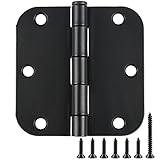
A short, stubby hinge won’t provide enough support for a tall door, and a thin pin might bend under stress. Even the radius of the corner matters – you can’t just jam a square-cornered hinge into a rounded mortise, or vice-versa, without some serious modification or a really ugly gap. It’s like trying to fit a square peg in a round hole, but with structural integrity on the line.
Beyond the physical dimensions and strength, there’s the pivot point and how it’s engineered. Different hinge designs create different arcs of motion and distribute weight differently. Some are designed for a full 180-degree swing, others are limited to 90 degrees, and some have built-in stops. You might also encounter concealed hinges, which are completely different beasts, or strap hinges that are meant for a completely different aesthetic and load-bearing purpose. My buddy Dave, who’s a cabinet maker, always says, ‘The hinge is the unsung hero, but it’s also the most specific part of the whole damn job.’ He’s not wrong.
Deconstructing the Hinge: What Actually Matters
So, if they aren’t universal, what does make a hinge suitable for a particular job? It’s a combination of factors, and understanding them is key to avoiding my bookshelf disaster or any other hinge-related headache. The absolute first thing you need to consider is the weight of the door or object it needs to support. This is a must.
Most hinges have a weight rating, often listed per pair. For a standard interior hollow-core door, you might get away with lighter-duty hinges.
But for a solid wood door, a gate, or a heavy cabinet door, you need to step up. I once saw a cheap shed door sag so badly its bottom edge was dragging on the ground because the hinges couldn’t handle the weight of the treated lumber.
It looked pathetic and was a pain to open. (See Also: A Box Without Hinges Key )
Next up is the size and type of the door/opening. Is it an interior door, exterior door, cabinet door, gate, or something else? Exterior doors need to be weather-resistant and often stronger. Cabinet doors have different needs – they might require concealed hinges for a clean look or heavy-duty ones if they’re large and made of solid wood.
The dimensions of the door itself – height and width – also play a role in hinge selection. A taller, wider door will put more use on the hinges, requiring longer or stronger ones. You also need to think about the swing direction and clearance.
Does the door need to open 90 degrees, 180 degrees, or more? Some hinges have built-in stops to prevent over-swinging, which can be important for protecting walls or adjacent objects. I’ve got a closet door that swings almost 270 degrees because the hinge allows it, and I’ve dinged my drywall more times than I care to admit.
Wish I’d known about hinges with built-in stops back then.
Finally, consider the material and finish of the hinge. While not directly related to functionality in terms of swing, it impacts durability and aesthetics. Steel is common and strong, brass offers corrosion resistance and a classic look (but can be softer), and stainless steel is great for harsh environments.
The finish – whether it’s painted, plated, or coated – matters for rust prevention and matching your decor. For example, using a plain steel hinge on an exterior door in a humid climate is a recipe for rust stains and eventual failure. You need to match the hinge to the environment it’ll be in.
I learned this with a set of antique-looking hinges I put on my garden gate; they looked great for about six months before rust started creeping in, ruining the aesthetic and weakening them.
Common Hinge Mistakes and How to Avoid Them
The biggest mistake, as I’ve hammered home, is assuming universality. But there are other, more specific blunders that can lead to frustration. One I see often, especially with cabinet doors, is choosing the wrong type of mounting plate or base plate.
Many cabinet hinges come with separate plates that attach to the cabinet frame, and the hinge itself clips onto the plate. If you have overlay doors (doors that sit on top of the cabinet frame), inset doors (doors that sit inside the frame), or semi-overlay doors, you need different types of mounting plates. Trying to use a plate meant for a full overlay on an inset door will result in a massive, unfixable gap.
I spent an entire weekend trying to get cabinet doors to sit flush, only to realize I had the wrong darn mounting plates. It felt like I was wrestling an octopus.
Another common pitfall is underestimating the number of hinges needed. For lightweight doors, two hinges might suffice. But for heavier doors, especially taller ones, three or even four hinges are often necessary to distribute the weight evenly and prevent sagging. Adding a third hinge to a sagging door is often the simplest fix, and it’s something I recommend trying before you condemn the entire hinge set. I’ve saved a few doors this way. It’s always better to have a bit of overkill than not enough support. The physics of use mean that the further down the door you go, the more force is applied to those lower hinges. (See Also: Are Integrated Washing Machine Door Hinges Standard )
People also frequently forget about the screws. The screws that come with hinges are usually adequate for standard lumber, but if you’re installing on a metal frame, particle board, or a very hard wood, you might need different screws or anchors. Using screws that are too short or too thin means the hinge won’t be securely attached, and the door will eventually become loose or pull away. I once had a hinge pull out of a cheap particle board cabinet because the screws were too short. It took a bit of wood filler and longer screws to fix, but it was a lesson learned about screw selection.
Finally, there’s ignoring the ‘reveal’ or ‘gap’. Hinges affect how much of the door frame or cabinet box you see around the door when it’s closed. Different hinge types and adjustments allow for varying degrees of overlay or inset. If you’re going for a specific aesthetic, like a flush-mounted look or a deliberate gap, you need to select hinges that allow for that. Trying to force a hinge to create a reveal it wasn’t designed for usually results in binding or uneven gaps. My first attempt at building a custom closet door system resulted in one door sitting slightly proud of the frame because I didn’t account for the hinge’s inherent offset.
Real-World Hinge Applications: Beyond the Door
While doors are the most obvious application, hinges are used in countless other places where something needs to pivot. Think about toolboxes; the lid is attached with hinges. Chests, trunks, and storage bins all use hinges. The lid on my old metal toolbox, the one I used for years hauling tools to job sites, had simple, solid steel strap hinges. They got banged around, covered in oil, and probably never got a drop of lubricant, but they held up because they were over-engineered for the weight of the lid and contents. That’s the kind of pragmatic, no-nonsense approach I appreciate.
Then there are furniture applications. Cabinet doors, as we’ve discussed, are a big one. But what about desks with fold-down lids, or tables with drop leaves? These often use specialized hinges designed to not only support the weight but also to fold neatly out of the way when not in use. I have a small, antique writing desk where the fold-out writing surface is supported by a clever little quadrant hinge – it’s a beautiful piece of engineering that allows the surface to lie flat without any visible brackets underneath. It’s the kind of detail that makes you appreciate good design.
Gates, both interior and exterior, are another huge area. Small garden gates might use simple butt hinges, but larger, heavier gates, especially those with automated openers, require heavy-duty, often specialized hinges that can handle significant weight and shear forces. Garage doors, while often using roller systems, also incorporate hinges, particularly in sectional doors where panels meet. And don’t forget less common applications like access panels, hatches on boats or RVs, or even the lids of certain types of industrial equipment. Each of these uses a hinge custom to its specific load, movement, and environmental conditions.
For instance, I once helped a friend build a custom chicken coop. We used a combination of standard butt hinges for the main door and smaller, specialized self-closing hinges for the egg-collection door at the back. The self-closing hinges were a pain to install and adjust, but they were important for keeping the chickens secure and preventing predators from getting in. They weren’t ‘universal’ at all – you couldn’t just grab any old hinge for that task.
| Hinge Type | Typical Use | Pros | Cons | My Verdict |
|---|---|---|---|---|
| Butt Hinge | Interior doors, cabinet doors | Simple, common, relatively inexpensive | Visible when door is closed, can sag over time if not rated properly | Reliable workhorse for most interior doors. Get the right size and pins. |
| Ball Bearing Hinge | Heavy interior/exterior doors, high-traffic doors | Smooth operation, very durable, reduced friction, handles weight well | More expensive than standard butt hinges, slightly bulkier | Worth the extra cash for heavy doors. Makes a noticeable difference. |
| Concealed Hinge (e.g., European/Euro Hinge) | Cabinet doors, modern furniture | Hidden for a clean look, often adjustable | Requires precise installation, can be complex to adjust, specific mounting hardware | Key for modern cabinetry, but be prepared for a learning curve. |
| Strap Hinge | Gates, rustic doors, chests | Decorative, strong for certain applications, can span wider areas | Can look clunky on modern applications, requires specific mounting | Great for a rustic or barn door look. Practical for gates. |
| Continuous Hinge (Piano Hinge) | Long, narrow openings (desks, toolboxes, cabinets) | Distributes load evenly along the entire length, very strong | Can be difficult to cut to length, requires precise alignment | Perfect for long, slender applications where even support is key. |
Practical Tips for Choosing and Installing Hinges
When you’re staring at a wall of hinges at the hardware store, or scrolling through endless options online, remember a few key things. First, measure everything meticulously. Measure the door’s height, width, and thickness. Measure the existing mortise (the cutout in the door jamb or frame) if you’re replacing hinges.
Note the corner radius – is it square or rounded? If it’s rounded, what’s the radius?
Many hinges have a specific corner profile (e.g., 1/4″ radius, 5/8″ radius, or square). If you get the wrong one, it won’t sit flush, and you’ll have gaps or binding. I once spent an hour trying to force a square-corner hinge into a rounded mortise on an old cabinet, only to end up gouging the wood.
Just get the right shape from the start.
Second, always opt for quality over price, especially for load-bearing applications. Cheap hinges might look similar, but they’re often made with thinner metal, weaker pins, or lower-quality plating that will fail prematurely. (See Also: Are Hinges Wheeels )
For a budget project where the door isn’t important, maybe it’s okay. But for your main entry door, a heavy gate, or a frequently used cabinet, investing in a reputable brand with a good weight rating is a no-brainer.
I’ve seen too many flimsy hinges bend or break, leading to doors that won’t close properly or, worse, fall off. For instance, I paid about $8 per pair for decent ball-bearing hinges for my exterior garage doors, while the cheapest ones were $2.50. The $8 ones have lasted for years without a squeak, while the cheap ones would have been a constant headache.
Third, don’t forget the screws. Most hinges come with standard wood screws. If your frame or door is made of something else (metal, plastic, engineered wood), you’ll need different fasteners. For particle board or MDF, using longer screws or specific anchors can make a huge difference in holding power. Always pre-drill pilot holes, especially in hardwoods, to prevent splitting the wood. The size of the pilot hole should be slightly smaller than the screw’s shank diameter. This makes driving the screw easier and prevents cracking.
Finally, consider adjustable hinges if you need fine-tuning. Many modern cabinet hinges, particularly European styles, offer a degree of adjustability – you can often move the door slightly up, down, left, or right by turning screws on the hinge mechanism. This is invaluable for getting perfectly even gaps between doors or making sure a flush fit. If you’re new to installing doors or cabinets, these adjustable hinges can save you a lot of frustration. They allow for those minor corrections that make a professional finish possible. I’ve seen people spend hours planing and sanding doors to get the fit right, only to find out their hinges could have done the job with a few turns of a screwdriver.
People Also Ask: Hinges Edition
Can You Use Any Hinge on Any Door?
Absolutely not. Hinges are designed for specific applications based on door weight, size, material, and desired swing. Using the wrong hinge can lead to sagging, binding, premature wear, or outright failure. Always match the hinge’s specifications to the door’s requirements.
What Is the Standard Door Hinge Size?
The most common size for interior residential doors is 3.5 inches tall with 3.5-inch wide leaves (when closed). However, sizes vary significantly based on door weight, thickness, and style. Exterior doors and heavier interior doors often use 4-inch hinges, and commercial doors can be even larger. Always measure the existing hinge or the door and frame to determine the correct size.
How Do I Know What Kind of Hinge I Need?
First, determine the weight and size of the door. Then, consider where it’s located (interior/exterior) and the swing needed. For cabinets, consider the overlay of the door. Look at the existing hinge if you’re replacing one, noting its size, shape, screw hole pattern, and corner radius. When in doubt, consult the manufacturer’s specifications or a hardware professional.
Do Hinges Need to Match?
Functionally, no, hinges on the same door usually don’t need to match each other if they are all the correct type and rating for that door. However, for aesthetic reasons, it’s highly recommended to use matching hinges on the same door and often throughout a room or house for a cohesive look. If you’re replacing just one hinge, try to find an exact match in size, material, finish, and corner radius.
Final Thoughts
So, to circle back to our original question: are hinges universal? The answer is a firm and resounding no. They’re specialized pieces of hardware, and treating them as such is the key to a project that doesn’t end up sagging, sticking, or falling apart. I’ve wasted enough time and money on the wrong ones to know that investing a little extra thought upfront pays off big time.
Next time you’re tackling a project involving a door, gate, or even a cabinet, take a moment. Measure twice, buy once, and choose the hinge that’s actually designed for the job. Your future self, wrestling with a perfectly hung door, will thank you.