I remember staring at my dad’s old shed door, the one that always squeaked like a dying mouse. It was a classic wooden thing, heavy and stubborn. I was maybe ten, and for some reason, I got it in my head that if I could just get it off its hinges, I could roll it around like a giant wooden skateboard. It was a silly thought, born out of a kid’s fascination with movement. But it brings up a question that sounds absurd but actually gets to the heart of how things work: are hinges wheels?
On the surface, the answer is a big fat no. Wheels roll. Hinges pivot. But if you dig a little deeper, the lines start to blur. The core idea behind both is enabling motion, allowing one part to move relative to another. It’s about overcoming friction and providing a pathway for that movement.
The Basic Idea: What Makes Things Move
Look, let’s get this out of the way early. No, hinges are not wheels. Not in the way you’re probably thinking, anyway. A wheel’s whole deal is to rotate around an axle, turning linear motion into rotational motion or vice-versa. Think of a car tire, a bicycle wheel, or even the caster on your office chair. They are designed for continuous, rolling movement. They reduce friction by presenting a constantly changing point of contact with the ground.
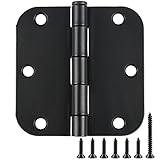
Hinges, on the other hand, are built for pivoting. They create a joint that allows two objects to swing open or closed relative to each other. The classic door hinge, the kind you see on almost every house, has two plates that attach to the door and the frame, connected by a pin. The door swings on that pin. It’s a controlled arc, not a continuous roll. The friction here is mostly the rubbing of the pin against the barrels of the hinge plates, and the metal-on-metal contact.
My first real automotive ‘aha!’ moment with this wasn’t about hinges specifically, but about how different types of movement are achieved. I was trying to fix a notoriously stiff trunk lid on an old pickup truck. The problem wasn’t the hinges themselves; they were fine. The issue was the sheer weight and the angle. Trying to force it open felt like trying to roll a boulder uphill. It made me appreciate how much effort wheels save us by changing the nature of the resistance. A wheel doesn’t fight the ground; it dances with it. A hinge fights the resistance of its pivot point.
So, while both are mechanisms for enabling movement, they do it in fundamentally different ways. Wheels are about efficient, continuous rotation. Hinges are about controlled, often limited, angular motion. It’s like comparing a dancer’s pirouette to a robot arm’s sweep. Both are movement, but the mechanics and the outcome are worlds apart.
When Hinges Get Fancy: The Blurring Lines
Now, where the idea of ‘are hinges wheels’ starts to tickle the brain is when you look at more complex hinge designs, or when hinges are used in ways that mimic rolling. Think about some specialized applications. For instance, some heavy-duty industrial equipment uses what are called ‘rolling element hinges’ or ‘roller bearing hinges’. These aren’t your standard door hinges. They incorporate actual ball bearings or roller bearings within the hinge structure. The goal here is to significantly reduce friction and allow for much smoother, heavier loads to be moved.
In these cases, the hinge assembly might contain small rolling elements that help the pivot. While the entire hinge unit isn’t a wheel, the principle of using rolling elements to reduce friction is borrowed directly from wheel technology. It’s like saying a gearbox isn’t an engine, but it uses gears, which are fundamental to how engines transfer power. The rolling elements within these advanced hinges allow the hinge to ‘roll’ its way through its arc of motion, rather than just sliding or grinding. This drastically increases the lifespan and the ease of operation, especially for things like aircraft hangar doors, large industrial gates, or even heavy vault doors.
I remember seeing one of these beastly hinges on a fire station’s massive bay door. It was this chunky, industrial-looking thing, and when the door opened, it moved with an almost unnerving silence and fluidity, despite its immense size and weight. You could see the roller bearings inside, doing their job. It wasn’t a single wheel, but the concept of rolling friction reduction was clearly at play. It made me rethink the simple definition I’d always held. It’s not that the hinge is a wheel, but that it can incorporate wheel principles to achieve its function better.
This leads to another angle: what about hinges that help movement in more than one axis, or allow for a degree of sliding along with the pivot? Some specialized furniture hinges, like those used in complex cabinetry or pop-up TV mounts, can have multiple points of articulation. While they still pivot, the combination of movements can sometimes feel ‘roll-like’ in its smoothness or the way it guides an object. It’s a sophisticated interplay of joints, and while no single component is a wheel, the overall effect is a highly engineered motion that uses principles similar to those that make wheels effective. (See Also: A Box Without Hinges Key )
Common Misconceptions and What Actually Works
One of the biggest misconceptions when people ask ‘are hinges wheels’ is that they’re looking for a direct, one-to-one comparison. They expect a hinge to either be a wheel or definitely not. But the reality is more nuanced. The confusion often stems from how we categorize motion. We have linear motion (pushing something straight), rotational motion (spinning), and then all the variations in between. Both wheels and hinges are mechanisms that manage these types of motion, but their primary functions and designs are distinct.
A common mistake I see, especially with DIY projects, is trying to use a standard hinge where a different type of joint or even a simple rolling mechanism would be far more appropriate. For instance, trying to build a rolling toolbox with just basic butt hinges for the lid. The lid will swing, sure, but it won’t be easy to open with heavy tools inside, and it won’t have that smooth, effortless lift you get from gas struts or even simple drawer slides. You end up with a lid that fights you every step of the way.
Conversely, I’ve also seen people over-engineer simple solutions. Want to make a small tabletop flip up? You probably don’t need a complex, multi-axis hinge that costs $50. A couple of well-placed basic hinges or even a simple prop rod might do the trick. The key is to match the mechanism to the specific type of motion and the load required. Wheels excel at reducing friction for continuous movement over a surface. Hinges excel at controlled angular movement, like opening a door or a lid.
My own blunder involved trying to make a custom monitor stand. I wanted it to swing out from the wall and tilt easily.
I bought some heavy-duty gate hinges, thinking their robustness would mean smooth movement. What I got was a stand that swung, but with a lot of resistance and a tendency to drift.
It felt clunky. After much frustration, I ended up replacing them with a combination of a swivel base (which is basically a bearing, like a lazy susan) and a simpler tilt mechanism. The swivel base acted like a giant, flat wheel bearing, and that was the component providing the smooth, low-friction rotation I needed for that part of the movement. The hinges handled the outward swing, but the true ‘rolling’ action came from the bearing.
So, when you’re thinking about movement, ask yourself: do I need continuous rolling, or controlled pivoting? Do I need to overcome significant friction for a long travel distance, or just a swing? The answer will steer you away from thinking ‘are hinges wheels?’ and towards the right hardware for the job.
Real-World Applications: Where the Debate Matters
The question of ‘are hinges wheels’ isn’t just academic; it has real implications for how we design and build things, from the cars we drive to the furniture in our homes. In the automotive world, the most obvious place you see hinges is on doors, hoods, and trunks. These are classic pivot points. But even here, engineers are constantly tweaking hinge design to improve ease of use, reduce noise, and manage weight. Think about how smoothly a luxury car door closes compared to a cheap hatchback. Part of that refinement comes from advanced hinge engineering, sometimes incorporating bushings made of low-friction materials or even small roller elements for specific pivot points.
Motorcycle kickstands are an interesting example. They pivot on a hinge, but the bottom often has a small roller or a wider foot designed to slide rather than dig into softer ground. Is the kickstand hinge a wheel? No, but the design borrows the principle of reduced ground resistance. Similarly, the way a motorcycle’s swingarm pivots on its bearings allows the rear wheel to move up and down – the swingarm itself doesn’t roll, but it helps the wheel’s interaction with the road. (See Also: Are Integrated Washing Machine Door Hinges Standard )
Consider something like a retractable awning. The arms that extend and retract often use a series of joints. Some of these joints might pivot like hinges, but the overall system might also incorporate rollers or sliding mechanisms to help it extend smoothly. The goal is always to make the movement as effortless as possible, and that often means borrowing ideas from different types of mechanical motion. It’s about reducing the force you need to apply. Wheels do this by making contact with a surface and rotating. Hinges do it by providing a stable pivot. But when the load is heavy or the movement needs to be exceptionally smooth, the line can blur.
My own experience with a custom-built motorcycle trailer really highlighted this. I wanted the trailer bed to tilt backwards for easy loading. I used heavy-duty piano hinges to connect the bed to the trailer frame. While they pivoted, the weight of the motorcycle made it a real struggle to tilt. I ended up adding small caster wheels to the rear edge of the trailer bed, so when I tilted it, the bed rolled on these wheels. The hinges still connected it, but the actual movement of tilting was now helped by the wheels. It transformed a back-breaking chore into a manageable task. The hinge was the pivot, but the wheels provided the effortless motion.
Hinges vs. Wheels: A Comparative Table
To really nail down the differences, let’s break it down. It’s not about which is ‘better’, but what each is for. This table lays out some key distinctions:
| Feature | Hinge | Wheel | Verdict |
|---|---|---|---|
| Primary Motion | Pivoting, swinging, angular movement | Rolling, continuous rotation | Fundamental difference in mechanics |
| Friction Management | Relies on low-friction materials, bearings (in advanced types) for reduced sliding/rubbing | Relies on rolling contact to minimize sliding friction | Wheels are inherently better for continuous, low-friction motion |
| Application Examples | Doors, lids, cabinets, gates | Vehicles, furniture casters, machinery components, toys | Distinct use cases driven by motion type |
| Load Bearing | Can bear significant loads at the pivot point | Distributes load over contact area, efficient for moving loads | Both can handle loads, but differently |
| Complexity | Can range from very simple (butt hinge) to complex (multi-axis) | Can be simple (solid wheel) to complex (spoked, pneumatic) | Both can be simple or complex |
| Ease of Movement | Good for controlled opening/closing; can become stiff | Excellent for continuous travel; requires less force over distance | Wheels offer superior efficiency for travel |
| When to Choose | When you need a fixed point of rotation for opening/closing | When you need efficient, continuous movement across a surface | Match the mechanism to the desired motion |
This table really hammers home that while both are motion enhancers, they are designed for different jobs. A hinge is like a well-trained dancer’s pivot – precise, controlled, and limited. A wheel is like a skater gliding across ice – smooth, continuous, and covering distance with ease.
Practical Tips: Getting the Right Motion
When you’re deciding whether you need something that functions like a hinge or something that rolls, the first thing to consider is the action you want to achieve. Are you opening and closing something? Or are you moving something from point A to point B? If it’s the former, a hinge is usually the way to go. If it’s the latter, wheels or casters are almost always your best bet.
Here’s my personal checklist when I’m trying to figure out the best way to make something move:
- What is the primary goal? Is it to swing something open/closed (hinge territory), or to move it along a path (wheel territory)?
- What is the load? How much weight will this mechanism need to support? Heavy loads might require more solid hinges or larger, more appropriately rated wheels. For hinges, look at the weight rating. For wheels, consider diameter and material.
- What kind of surface will it operate on? Wheels perform best on smooth, consistent surfaces. Rough terrain, carpet, or uneven floors can make wheels difficult to use, and sometimes a sliding mechanism (which a hinge is, in a way) or even a tracked system might be better.
- How much friction is acceptable? If you need something to move with almost zero effort, like a drawer slide, you’re looking at bearings or high-quality sliding surfaces. If a bit of resistance is okay for a controlled swing, a standard hinge might suffice.
- What is the range of motion? Hinges are great for a specific arc. Wheels can theoretically rotate indefinitely.
I learned this the hard way building a custom workbench. I wanted the top to fold down against the wall.
I used a couple of heavy-duty hinges. But the weight of the lumber and tools I planned to put on it meant that when folded down, the top sagged noticeably. It wasn’t just the hinge’s strength; it was the lack of support along the edge.
I ended up adding a simple leg that folded out, and then later, I realized I could have incorporated a small sliding mechanism or even a simple roller system along the wall edge to help support the weight when it was down. The hinges were fine for the pivot, but they weren’t the whole solution for supporting a load across a span. (See Also: Are Hinges Wheeels )
For anything that needs to move smoothly and with minimal effort over a distance, don’t get fixated on hinges. Look at casters, drawer slides, bearings, or even simple wheels. If you’re building something like a toy car or a mobile cart, wheels are a must. If you’re building a cabinet door or a gate, hinges are your go-to. Understanding the fundamental difference is key to avoiding wasted money and effort on parts that just aren’t suited for the job.
Are Hinges a Type of Wheel?
No, hinges are not a type of wheel. Their fundamental mechanism for creating motion is different. Hinges create a fixed pivot point for swinging or angular movement, while wheels are designed to rotate around an axle for continuous rolling motion.
Can Hinges Have Wheels in Them?
Yes, some specialized heavy-duty hinges can incorporate roller bearings or ball bearings. These rolling elements within the hinge assembly help to reduce friction and allow for smoother, heavier movement, but the hinge itself is still a joint that pivots, not a wheel in the traditional sense.
What Is the Main Difference Between a Hinge and a Wheel?
The main difference lies in their primary function and how they achieve movement. Hinges help controlled angular motion (pivoting), whereas wheels help efficient, continuous linear or rotational motion through rolling contact.
Why Do People Sometimes Compare Hinges to Wheels?
The comparison often arises because both are mechanisms designed to enable movement and overcome resistance. In certain complex applications where smooth motion is most important, advanced hinges might incorporate rolling elements, blurring the lines between simple pivoting and rolling-based mechanics.
Final Verdict
So, to settle the question that might have started as a silly thought experiment: no, hinges are not wheels. They serve fundamentally different purposes in the world of mechanics. One pivots, the other rolls. But as we’ve seen, the engineering world loves to borrow good ideas, and sometimes those ideas blend in fascinating ways, making for more solid and fluid movement.
The real takeaway isn’t whether they are the same, but understanding what each is best at. If you need something to swing open, use a hinge. If you need something to glide across a surface, use a wheel. Don’t try to make a hinge do the job of a wheel, or vice-versa, unless you’re looking at some very specialized, high-end industrial hardware where the lines get intentionally fuzzy.
Next time you’re faced with a movement challenge, whether it’s building a gate or just trying to get a stubborn cupboard door to shut properly, take a second to think about the type of motion you actually need. It’ll save you a lot of headaches and probably some cash, too. And remember, sometimes the simplest answer to ‘are hinges wheels?’ is the most accurate: they’re both about making things move, but in their own distinct ways.