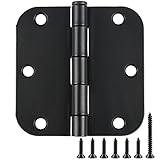
I remember the first time I tried to hang a solid core door by myself. It was a disaster. The door sagged, the strike plate was miles off, and I swear the hinges themselves looked… sad. Like they’d given up before they even started. It got me thinking about just how much we take these unsung heroes for granted. Are hinges whes? Not in the way you might think. They’re the silent workhorses of our homes, often overlooked until they scream for attention.
Forget fancy gadgets for a second. The right hinge, on the right door, is foundational. It’s the difference between a smooth swing and a frustrating scrape. I’ve spent more time than I care to admit wrestling with cheap, flimsy hardware, only to realize a few bucks more for decent hinges would have saved me hours of grief and probably my sanity.
The Unsung Heroes: Why Hinges Actually Matter
Let’s get one thing straight: hinges aren’t just bits of metal that let things swing. They’re precision-engineered components that bear weight, withstand friction, and dictate the entire feel of how something opens and closes. I learned this the hard way when I was building a custom bookshelf.
I grabbed the cheapest hinges I could find, thinking, ‘How much difference can it make?’ Turns out, a huge amount.
The doors on my beautiful, hand-built shelf sagged like a sad clown’s smile after only a few months. It was embarrassing. The weight of the wood, combined with the constant opening and closing, was too much for those bargain-basement hinges.
I ended up having to replace them with heavier-duty ones, which involved filling old screw holes and drilling new ones – a pain in the backside I could have easily avoided.
The common advice is usually to ‘buy the best you can afford.’ That’s true, but it’s also vague.
What is the best? It depends on the application.
A tiny cabinet door needs something different than a massive exterior gate. The material, the gauge of the metal, the smoothness of the pin and barrel – it all adds up. Think about the sheer number of times you open and close a door in a day.
Multiply that by the years. That’s a lot of stress on those little pivot points. If they’re not up to the task, things go south.
Fast. It’s not just about the visual; it’s about the tactile experience. A good hinge feels solid, quiet, and smooth. A bad one squeaks, sticks, and feels… loose.
It’s like the difference between a luxury car and a go-kart. Both get you there, but the journey is worlds apart.
I’ve seen people try to ‘fix’ sagging doors by shimming hinges, which is like putting a band-aid on a broken leg. It might work temporarily, but the underlying problem – the weak or incorrect hinge – remains. It’s far more efficient, in the long run, to get it right from the start. When you’re looking at hinges, don’t just glance at the price tag.
Look at the weight rating if it’s available, the material (brass, stainless steel, or even some heavier steel alloys are usually good bets), and the finish. A good finish isn’t just for looks; it often means better corrosion resistance and smoother operation.
I once bought a set of zinc-plated hinges that started rusting within a year, even though they were for an indoor cabinet. Lesson learned.
What to Look for: Beyond the Basic Swing
So, you’re staring at a wall of hinges at the hardware store. What actually separates the good from the truly awful? First off, material is king. For most interior doors, a good quality steel or even a solid brass hinge will do you proud. Stainless steel is your best bet for humid environments like bathrooms or kitchens, or if you’re anywhere near the coast. Don’t even bother with those paper-thin, stamped steel hinges that feel like they’d bend if you looked at them too hard. They are designed for the absolute cheapest furniture or utility doors, and they’ll fail you. (See Also: A Box Without Hinges Key )
The construction of the pin and barrel is also a big deal. Ideally, you want a non-removable pin for security, or a securely seated removable pin. Check how smoothly the barrel rotates around the pin. Does it bind? Is there a lot of play? A good hinge will have a snug fit. Some higher-end hinges have what’s called a ‘ball bearing’ or ‘heavy-duty’ construction, which basically means they have bearings in the barrel to reduce friction. These are overkill for a standard bedroom door but are fantastic for heavier doors or those that get a lot of use, like a pantry door or a workshop door.
My personal benchmark is the ‘knuckle test.’ Grab the hinge and try to twist the barrel around the pin. If it feels solid and there’s minimal flex, that’s a good sign. If you can feel it wobble or creak, walk away.
Another thing to consider is the number of screws. Most standard hinges have three holes per leaf, meaning six screws per hinge. For heavier doors, you might want hinges with four holes. More screws mean more stability and better weight distribution.
I once had a wardrobe door that was notoriously heavy. When I replaced the standard hinges with ones that had an extra screw hole on each leaf, the difference was night and day.
The door felt more secure, and the sagging stopped completely. It was a cheap upgrade, but the impact was massive.
Here’s a little comparison table I’ve put together based on my own experiences. It’s not exhaustive, but it covers the common types you’ll encounter:
| Hinge Type | Typical Use | Material | My Verdict |
|---|---|---|---|
| Standard Butt Hinge | Interior doors (bedroom, closet) | Steel, Brass | Workhorse for most jobs. Choose thicker gauge for better longevity. |
| Ball Bearing Hinge | Heavy interior doors, high-traffic doors | Steel, Stainless Steel | Smooth operation, less wear. Worth the extra cost for peace of mind. |
| Olive Knuckle Hinge | Cabinet doors, decorative pieces | Brass, Steel | Aesthetic choice. Make sure it’s solid enough for the door’s weight. |
| Continuous Hinge (Piano Hinge) | Long, narrow doors (cabinets, boxes) | Aluminum, Steel | Even weight distribution. Good for long runs where single hinges would sag. |
| Barrel Hinge | Concealed doors, unique applications | Various | Specialized. Often expensive and requires precise installation. |
Don’t get suckered by fancy finishes if the underlying construction is flimsy. A polished brass hinge that’s made of thin metal is still a bad hinge. Prioritize substance over superficial shine. And always, always check the door weight rating if one is provided by the manufacturer. It’s usually the biggest clue to whether a hinge can handle the job.
Common Pitfalls: What Not to Do
The biggest mistake I see people make, and one I’ve definitely made myself, is underestimating the weight of the door or cabinet. You’ve got a solid oak door? That thing is HEAVY. A cheap, thin hinge designed for a hollow-core interior door will buckle under that kind of load.
I once installed a new solid wood interior door and used the same hinges that came off the old, lighter hollow-core door. Within a week, the door was dragging on the carpet. It wasn’t the door itself that was the problem; it was the hinges that couldn’t cope. I ended up buying three new, heavy-duty hinges for about $60 – a small price to pay for a door that actually closes properly, but still money I wouldn’t have spent if I’d gotten it right the first time.
Another common blunder is ignoring the application environment. You wouldn’t use plain steel hinges in a steamy bathroom and expect them to last, yet people do it all the time. Rust, corrosion, and eventual failure are almost guaranteed. I’ve had hinges seize up and become impossible to open in bathrooms after just a couple of years. Stainless steel or a good quality, marine-grade finish is your friend in high-moisture areas. Similarly, exterior doors need hinges that can handle the elements – UV exposure, rain, snow, temperature fluctuations. The cheapest hinges are almost never built for this kind of abuse.
People also get hung up on the aesthetics and forget about functionality. That intricate, decorative hinge might look amazing on a Pinterest board, but if it’s not engineered for the weight and swing of your particular door, it’s just a pretty failure waiting to happen. I’ve seen people choose tiny, ornate hinges for heavy gates, and then wonder why the gate slams shut unexpectedly or is impossible to swing smoothly. Always prioritize the structural integrity and load-bearing capacity over pure looks. Functionality first, then find the prettiest option that meets those functional requirements. It’s a balance, but the function has to come first.
Then there’s the classic DIY mistake: not using the right screws or not pre-drilling. You try to force a screw into hardwood without a pilot hole, and you can split the wood, strip the screw head, or just end up with a loose hinge because the screw can’t get a good grip.
Conversely, using screws that are too short or too thin won’t provide adequate support. For a standard interior door, 2.5-inch wood screws are usually a good bet. For heavier doors or exterior applications, you might need longer or even lag screws. Always use screws that are appropriate for the material you’re screwing into and the weight the hinge will support.
I learned this when a cabinet hinge screw kept coming loose. Turns out, I was using drywall screws, which are too soft and don’t have enough thread depth for solid wood. Swapping to proper wood screws fixed it instantly.
People Also Ask:
-
How Do I Know What Size Hinge I Need?
You generally need to measure the height and width of the door or cabinet you’re fitting. The length of the hinge barrel should ideally match the thickness of the door jamb or frame. The width of the hinge leaf should be appropriate for the door’s weight; wider leaves and more barrels typically support more weight. Always consider the door’s material and expected frequency of use. For significant weight or frequent use, a heavier-duty or larger hinge is recommended. (See Also: Are Integrated Washing Machine Door Hinges Standard )
-
Can I Use Cabinet Hinges on a Door?
Generally, no. Cabinet hinges are designed for much lighter loads and smaller movements than door hinges. Standard interior doors are significantly heavier and require hinges with greater strength and durability. Using cabinet hinges on a regular door would likely lead to sagging, poor alignment, and premature failure of the hinge.
-
What Is the Difference Between Steel and Stainless Steel Hinges?
Steel hinges are typically made from carbon steel and are strong but prone to rust and corrosion if not coated or painted. Stainless steel hinges are made from an alloy that includes chromium, making them highly resistant to rust and corrosion, even in humid or salty environments. For applications exposed to moisture, like bathrooms, kitchens, or outdoors, stainless steel is a superior choice for longevity.
Real-World Applications: Where Hinges Shine (and Fail)
Let’s talk about actual use cases. You’ve got your basic interior door – bedroom, closet, bathroom. Here, a standard steel or brass butt hinge, about 3.5 inches tall and weighing around 1.5 to 2.5 pounds per pair, is usually perfectly adequate. Make sure they’re properly seated and screwed in. I’ve found that investing in hinges that have a bit more heft, even for these standard doors, can prevent that slow, almost imperceptible sag that happens over years. It’s the subtle things that make a house feel well-maintained, and a door that hangs perfectly is one of them.
Then you get into heavier applications. Think about a solid wood pantry door, a workshop door, or even an interior French door with glass panels. These doors carry more weight. You’ll want to step up to heavier-duty hinges.
Look for ones that are at least 3.5 inches, but often 4 inches, and have a higher weight rating. Ball bearing hinges are a godsend here. They distribute the load more evenly and reduce friction, making the door operate smoothly for years without complaining.
I installed a set of four 4-inch, heavy-duty ball bearing hinges on a large, solid oak interior door leading to my study, and the difference was astounding. It swung open like a dream, silent and effortless, and has stayed that way for five years.
That’s the payoff for choosing the right hardware.
Exterior doors are a whole different ballgame. They face the elements. You need corrosion resistance and strength.
Stainless steel or solid brass hinges are almost a must. For very heavy exterior doors, like a solid wood front door or a gate, you might need a heavy-duty strap hinge or a specialized gate hinge.
These are built for strength and to withstand forces that interior hinges can’t even dream of. I once saw a beautiful, heavy wooden garden gate fail because the hinges rusted through after just two years.
The gate literally fell off its posts. A quick swap to a proper, coated exterior hinge would have saved a lot of headache and potential damage. Always check the manufacturer’s specs for weight limits and recommended use – especially for anything exposed to weather.
Cabinet doors are another area where hinge choice is important, but often overlooked. Small cabinet doors might get away with basic Euro-style hinges, but larger or heavier cabinet doors, especially those made of solid wood, need something more solid. Continuous hinges (often called piano hinges) are excellent for long cabinet doors or lift-up lids because they distribute weight along the entire length.
For inset cabinet doors, the right type of Euro hinge is key for proper alignment and a clean look. A poorly chosen cabinet hinge can make even the most beautifully crafted cabinets look cheap and sloppy. I’ve spent way too much time adjusting cabinet doors that were fitted with the wrong hinges, only to find out the correct hinges were only a few dollars more.
One area where hinges are often critically misunderstood is in relation to specific architectural styles. For example, a rustic farmhouse might call for decorative black iron strap hinges that look period-appropriate, but if they’re not rated for the door’s weight, they’re just decorative liabilities. Conversely, a sleek modern home might use concealed or invisible hinges for a minimalist look, but these require incredibly precise installation and are often less forgiving than traditional hinges. It’s about matching the hinge to the structural needs and the aesthetic of the project. My contrarian opinion? Forget the purely decorative hinges for load-bearing applications unless you’ve meticulously verified their structural capabilities. They often look the part but don’t play it well.
Maintenance and Troubleshooting: Keeping Things Smooth
Even the best hinges need a little love now and then. The most common issue is squeaking. Usually, this is just a sign that the pin needs a little lubrication. A quick squirt of WD-40 or a silicone-based lubricant can work wonders. You might need to remove the pin, wipe it clean, lubricate it, and reinsert it. For really stubborn squeaks, a bit of graphite powder can be effective. I keep a small can of graphite lubricant in my toolbox specifically for hinges. It’s cleaner than oil and works like a charm. Just a little goes a long way. (See Also: Are Hinges Wheeels )
Sagging doors are another frequent headache. As I’ve mentioned, this is often due to undersized or worn-out hinges. The first step is to check if the hinge screws are still tight. Sometimes, the wood in the jamb or the door itself has compressed, causing the screws to loosen.
Tighten them up. If they spin freely, you’ll need to repair the screw holes. A common trick is to remove the screw, insert a few wooden toothpicks or a small wooden dowel into the hole with some wood glue, let it dry, then trim it flush and re-drill a pilot hole.
This gives the screw something solid to bite into. If tightening and repairing the holes doesn’t fix it, it’s time for new, heavier-duty hinges.
There’s no magic fix for a hinge that’s simply not strong enough.
Another problem can be hinges that bind or stick, making the door hard to open or close. This can be caused by bent hinges, debris in the barrel, or misalignment. If the hinge itself looks bent or damaged, it probably needs replacing. If it seems clean but stiff, try the lubrication trick.
Sometimes, a slight misalignment can be fixed by carefully shimming the hinge leaf with thin cardboard or specialized hinge shims. This is a temporary fix, though; the root cause might be a settling foundation or an improperly installed door frame.
For truly sticky hinges, especially on exterior doors, check for rust. A wire brush can clean off surface rust, followed by lubrication. If the rust is deep, replacement is likely the only long-term solution.
I had a set of antique brass hinges on a cabinet that started to bind. They weren’t squeaking, they just felt… sticky. I tried oil, which made a mess. Then I remembered a tip about beeswax. I melted a tiny bit of beeswax and applied it to the pin and barrel. It was a big deal. It provided just enough slickness without attracting a ton of dust like oil does. It’s one of those little tricks you pick up over the years that saves you from buying a whole new set of hardware when a simple maintenance step would suffice.
For any significant troubleshooting, especially with exterior doors or heavy interior doors, consider the overall structural integrity of the door and frame. A warped door, a settling house, or a poorly installed frame can put undue stress on hinges, leading to premature failure. Sometimes, the hinge isn’t the problem, but a symptom of a larger issue. Before you blame the hardware entirely, take a step back and look at the whole picture. Proper installation and understanding the weight and forces involved are key to avoiding most common hinge headaches.
One final thought on maintenance: don’t forget about the screws. They can vibrate loose over time, especially on frequently used doors. A dab of threadlocker (the removable kind) on the screw threads before reinserting them can help keep them tight. This is especially useful for cabinet hinges or doors that get a lot of action. It’s a small step, but it can prevent a sagging door down the line.
Are Hinges Whes? The Verdict
So, to circle back to the original question: are hinges whes? In the sense of being flashy or exciting, probably not. But in terms of their impact on the function, feel, and longevity of doors, cabinets, and so much more? Absolutely. They are foundational. I’ve wasted money and time on cheap hinges, and I’ve seen the frustration that comes with their failure. The difference between a cheap hinge and a good one isn’t just a few dollars; it’s the difference between a door that operates smoothly for decades and one that sags, squeaks, and binds within months. For me, the peace of mind and the smooth operation that comes with decent hardware is well worth the investment.
I’ve learned that when it comes to hinges, you get what you pay for, and often, paying a little more upfront saves you a lot of hassle and expense later. It’s not about buying the most expensive hinge on the market, but about selecting the right hinge for the job, made from quality materials, with a construction that can handle the load. Whether it’s a simple interior door or a heavy exterior gate, the right hinge makes all the difference. Don’t underestimate them; they are the unsung heroes of your home’s functionality.
Verdict
My takeaway after years of wrestling with doors and cabinets is simple: hinges are not the place to skimp. They are the quiet connectors that allow everything to move as it should. When they fail, the whole system suffers. So, are hinges whes? Only if you choose the wrong ones. Invest in quality, match the hinge to the application, and you’ll save yourself a world of headaches.
I’ve seen too many projects derailed by cheap hardware. It’s a false economy. A good hinge feels solid, operates smoothly, and lasts. It’s the difference between a door that slams shut awkwardly and one that glides shut with a satisfying thud. Pay attention to the weight, the material, and the construction. It’s the small details that make a big difference in how your home functions.
Next time you’re hanging a door or installing a cabinet, take a moment. Look at the hinges. Are they up to the task? If there’s any doubt, err on the side of caution and get the better ones. Your future self will thank you.