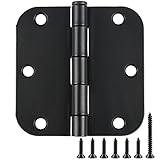
I stared at the rusty behemoth, a relic from a time before electricity hummed through every home. My great-aunt’s old ice box. Beautiful, but the door sagged like a tired old man. The hinges were toast. I figured, easy fix, right? Just grab some generic ones online. Boy, was I wrong. This whole ‘are ice box hinges interchangeable’ thing is more complicated than it looks, and I learned that the hard way, spending a weekend and a decent chunk of cash on parts that just wouldn’t work. It’s not as simple as a screw hole lining up.
It turns out, these old beauties weren’t built with a one-size-fits-all mentality. They were made with specific materials, specific weights, and specific tolerances in mind. Replacing a hinge isn’t just about attaching metal; it’s about maintaining the integrity and function of the entire unit. So, if you’re staring down a similar situation, let’s cut through the noise and get down to brass tacks.
The Anatomy of an Ice Box Hinge: What You’re Actually Looking At
First off, let’s get real. When we talk about ice box hinges, we’re usually talking about those heavy-duty, often cast-iron or ornate brass affairs that were designed to hold a solid wooden door shut against the chill. These aren’t your flimsy cabinet door hinges. They had to withstand the weight of a thick, insulated door, the constant opening and closing, and often, a bit of moisture.
They’re built like tanks, and that’s part of the problem when you need to replace them. The design considerations for these hinges were different. They weren’t just about allowing movement; they were about providing support and making sure a good seal to keep the ice (and the cold air) inside.
Think about it: a poorly fitting door meant your ice melted faster, and your food spoiled. That’s not a minor inconvenience; that was a major problem back in the day.
The materials themselves are a big clue. You’ll find a lot of cast iron, often black and a bit rough around the edges. Then there’s brass, which could be polished to a gleam or left with a patina.
Sometimes, you’ll see steel, particularly for the pins or internal workings. The construction is usually quite straightforward: a base plate that screws into the cabinet, a leaf that attaches to the door, and a pin connecting them.
But the devil is in the details – the thickness of the metal, the length of the leaves, the diameter of the pin, and how the screw holes are spaced. And don’t forget the ‘throw’ or how the hinge opens. Some ice box hinges are designed to swing the door out a full 90 degrees, while others have a more limited range of motion to prevent the door from banging into adjacent walls or cabinets.
This subtle difference in engineering can make all the difference in whether a hinge will actually work for you.
The weight of the door is a massive factor. An old ice box door isn’t light.
It’s made of solid wood, often with insulation packed in between layers. This means the hinges need to be incredibly strong and well-anchored. A weak hinge, even if it technically fits, will sag under the weight, leading to a door that doesn’t close properly.
This is where a lot of DIY attempts go south. You might find a hinge that looks right, but it just can’t handle the load.
The original manufacturers would have matched the hinge strength to the door’s dimensions and weight, a calculation that’s often overlooked by someone just trying to get their antique looking decent again. So, when you’re assessing your situation, don’t just look at the hinge; feel the weight of the door, notice how it’s currently sitting (or not sitting) on its hinges.
Why ‘close Enough’ Just Doesn’t Cut It for Ice Box Hinges
Here’s where I really learned my lesson. I bought a set of hinges that looked almost identical to the originals on my ice box. The screw holes lined up roughly, the size was about right, and the seller swore they were ‘universal’ or ‘compatible.’ Big mistake. When I finally got them installed, the door wouldn’t close flush. There was a gap you could drive a truck through. Not only did this look terrible, but it completely defeated the purpose of an ice box. The cold air was escaping like a sieve, and the warm air was creeping in. I was basically trying to cool my kitchen instead of my food. (See Also: A Box Without Hinges Key )
The problem wasn’t just the screw holes. It was the thickness of the hinge leaves.
The new ones were a millimeter or two thicker than the old ones, and that slight difference, compounded by the fact that the original door frame might have been slightly warped or settled over time, meant the door was now pushed out at an angle. Also, the ‘offset’ of the hinge was different. This is a technical term, but basically, it’s how much the hinge allows the door to clear the frame. If the offset is wrong, the door will either bind against the frame or, as in my case, won’t be able to close properly.
It’s like trying to force a square peg into a round hole – it just doesn’t work, no matter how hard you try.
Then there’s the issue of the pin. Sometimes, you can find hinges with the right leaf size and screw pattern, but the pin diameter is different. This means you can’t even use the original pin, and if the new pin is too loose, you get wobble.
Too tight, and the door will be stiff and hard to open. It’s these small, overlooked details that matter. The common advice often simplifies this, saying ‘just match the screw holes.’
But that’s like saying ‘just match the wheels’ on a car without considering the axle width or tire size. It’s the functional compatibility that counts, not just the superficial resemblance. The goal is to recreate the original function and seal, not just to have something metal holding the door.
what to Look for in Replacement Ice Box Hinges
So, what do you actually need to scrutinize when you’re hunting for replacement hinges? First, and I can’t stress this enough, is the overall dimensions. Measure everything on your existing hinge: the length and width of each leaf, the diameter of the barrel (where the pin goes), and the length of the pin itself.
Don’t just eyeball it. Use a ruler or calipers. Second, pay attention to the screw hole pattern and size.
Are the holes countersunk? What’s the diameter of each hole? This is where many aftermarket hinges fail to match.
Third, consider the material and weight. If your original hinges are heavy cast iron, you generally want to replace them with something of similar material and thickness. Lightweight hinges might look okay but won’t provide the necessary support. Fourth, think about the degree of swing and offset.
This determines how far the door opens and how it clears the frame. Sometimes, you might need to look at period-appropriate reproduction hardware if you want a truly authentic and functional fit. It’s not always about finding something that fits today, but something that would have fit then.
The Case for Reproduction Hardware (and When to Just Make Do)
Let’s talk about the elephant in the room: reproduction hardware. For many antique pieces, especially something as specific as an ice box, your best bet for true interchangeability is going to be reproduction hinges made by companies that specialize in historical hardware. These folks often take precise measurements from original pieces or have access to original factory dies. They understand the nuances of old manufacturing. (See Also: Are Integrated Washing Machine Door Hinges Standard )
I’ve found that if you can find a reproduction that matches the style and dimensions of your original hinges, it’s usually a near-perfect fit. It’s like they were made in the same factory, just a century apart. This is often the most expensive route, but it saves you a massive headache and the risk of damaging your antique.
However, not everyone can afford or find the exact reproduction. If you’re on a tighter budget, or if your ice box is more of a decorative piece than a functional one, you might consider adapting.
This is where the ‘close enough’ approach can sometimes work, but you have to be smart about it. If the original hinges are completely destroyed and unidentifiable, you might look for modern heavy-duty hinges that have a similar leaf style and mounting pattern. You might need to fill old screw holes and drill new ones. You might also need to add a shim or two to get the door to hang correctly.
This is less about true interchangeability and more about creative problem-solving. I once had to use two different types of hinges on a very old pantry cupboard because I couldn’t find a matching pair, and the doors were slightly different weights. It wasn’t ideal, but it worked.
My contrarian opinion here? Everyone says to go for authenticity above all else. And for a museum piece, sure. But for a piece that you actually want to use, or that’s part of your daily life, functionality sometimes has to trump absolute historical accuracy. If a slightly more modern, heavy-duty hinge means your ice box door actually closes and seals properly, and you can live with a minor visual difference, then that’s a win in my book. It’s about finding the balance that works for you and your specific situation. The goal isn’t always to fool a historian; it’s often to make something old work again.
when to Bite the Bullet on Original Parts
There are times when trying to find or adapt is just a fools’ errand. If your ice box is a genuine antique with very specific, ornate hinges that are integral to its aesthetic appeal – think elaborate scrollwork or unique castings – then you absolutely need to find original or high-quality reproduction parts. Trying to substitute a plain, modern hinge on such a piece would be a crime against craftsmanship. In these cases, patience is key.
You might need to scour antique architectural salvage yards, specialist forums, or even eBay for months to find a suitable replacement. I’ve seen people pay a premium for a single original hinge because it was the only way to restore a truly exceptional piece.
It’s an investment in preserving the integrity and beauty of the item.
Measuring, Mocking Up, and Avoiding Common Blunders
Okay, so you’ve decided to try and find a replacement. What’s the actual process? First, get your hands on those original hinges, or what’s left of them. Lay them out. Take pictures from every angle. Then, grab your trusty tape measure or, even better, a set of calipers. Measure the length and width of each leaf. Measure the distance from the edge of the leaf to the center of each screw hole. Measure the diameter of the screw holes themselves. Measure the diameter of the hinge barrel and the length of the pin. Write all this down. Don’t trust your memory.
The next step, and this is important for avoiding the mistakes I made, is to do a mock-up. If you’re buying new hinges, and you can’t physically take the old ones to the store (which is ideal if you’re going to a salvage yard), try to create a template. You can do this by tracing the old hinges onto cardboard or a thin piece of wood. If the new hinges are close, you can even hold the new hinge against your template to see how the screw holes line up. Some online retailers will even provide detailed diagrams with measurements for their reproduction hinges. Use these religiously.
A big blunder to avoid is assuming that hinges sold for other types of cabinets or doors will work. Ice boxes have unique requirements. Their doors are heavy, and the seal is most important. Those dainty little hinges for a spice rack just won’t cut it. Also, don’t forget to check the radius of the hinge corner. Many old hinges had rounded corners, while modern ones might be square. This might seem minor, but it can affect how the door sits against the frame. Another common mistake is not considering the orientation. Hinges are often handed – meaning there’s a left-hand and a right-hand version. Make sure you’re getting the correct orientation for your door swing.
the Screw Hole Predicament (See Also: Are Hinges Wheeels )
The screw holes are often the biggest sticking point. If the screw hole spacing is off by even a quarter of an inch, you’re in trouble.
You can’t just force a screw into a hole that’s too close to another. It’ll split the wood or just won’t hold.
Some people try to fill old holes with wood dowels and then drill new ones, but this is a skill that requires precision. If you’re not comfortable with woodworking, it’s better to find hinges where the screw hole pattern is either identical or very close. Sometimes, you might find hinges where the screw holes are a bit larger than you need.
In that case, you can use slightly larger screws or insert a small wood plug into the existing hole to make sure a secure fit for the original screw size. It’s all about making sure the hinge is firmly attached.
A Practical Comparison Table for Your Hinge Hunt
To help you visualize, here’s a quick look at what you might encounter when searching for ice box hinges, with my two cents on each type. Remember, ‘interchangeable’ is relative. What’s interchangeable for one ice box might be a disaster for another.
| Hinge Type | Pros | Cons | My Verdict |
|---|---|---|---|
| Original (Salvaged) | Guaranteed perfect fit and authentic look. | Can be rare, expensive, and in poor condition. | The gold standard if you can find them in good shape. Ideal for true restorations. |
| High-Quality Reproduction | Designed to match original specs, good durability. | Can be pricey, might still require minor adjustments. | Your best bet for a functional and visually accurate replacement. Worth the investment. |
| Generic Modern Hinges | Widely available, usually cheaper. | Rarely match screw patterns, thickness, or style. Often too light for ice box doors. | Last resort, usually requires significant modification and compromises functionality. Avoid if possible. |
| Adapting/Modifying | Can be cost-effective, allows for creative solutions. | Requires woodworking skills, risk of damaging the ice box, imperfect results. | Only for the patient and skilled DIYer. Best if the original hinge is totally unidentifiable or gone. |
When it comes to those original salvaged parts, I’ve spent hours digging through dusty bins at architectural salvage yards. It’s like a treasure hunt. Sometimes you find exactly what you need, gleaming and ready to go. Other times, you find a corroded mess that needs more restoration than a new hinge would. The key is inspecting them closely for cracks, deep pitting, and bent pins. If you find a set that looks promising, buy them. You can always clean them up, but you can’t magically create them if they’re gone forever. This is where you’re really betting on patience and luck.
When Are Ice Box Hinges Interchangeable? The Hard Truth.
So, to finally answer the burning question: are ice box hinges interchangeable? The answer, bluntly, is rarely, if ever, truly interchangeable without some caveats. The concept of ‘interchangeable’ implies a direct swap with no modifications needed, and for the most part, that just isn’t the reality with antique ice box hardware. These pieces were custom-fitted, built for specific models, and often hand-finished. The variations in size, weight, material, and design mean that a hinge from one ice box is highly unlikely to be a perfect, drop-in replacement for another, even if they look superficially similar. It’s a common misconception that old items were made with such standardization that parts are universally compatible.
The closest you’ll get to true interchangeability is by finding either an original part from the exact same model of ice box, or a high-quality reproduction specifically designed to mimic that model. Even then, slight variations in the wood of your ice box, or minor wear and tear over the decades, might necessitate tiny adjustments. It’s not a simple ‘unscrew the old, screw in the new’ situation. You’re more likely looking at a process that involves careful measurement, meticulous sourcing, and potentially some minor woodworking or metalworking skills to get a perfect, functional fit.
Think of it like trying to find a replacement part for a classic car. You can’t just grab any old steering wheel; it needs to be the right diameter, with the right spline count for the steering column, and the right style to match the car’s era. Ice box hinges are no different.
They are functional components with very specific design parameters. If your goal is a perfectly functioning and aesthetically correct ice box, you need to approach the hinge replacement with the mindset of restoration, not just repair.
It’s a journey, and sometimes the most straightforward path is to accept that true interchangeability is a myth for most antique hardware. The goal is to find something that works and looks the part, even if it takes a bit of effort to get there.
Final Thoughts
So, to sum it up, the idea of ‘are ice box hinges interchangeable’ is mostly a hopeful fantasy. Unless you’re pulling hinges from an identical model or using a perfectly matched reproduction, you’re going to be doing some work. My advice? Measure twice, buy once, and be prepared to get your hands dirty. It’s not always a simple swap. If you’re restoring an ice box, embracing a bit of adaptation might be your best route to a functional, usable piece of history.
Don’t be like me, buying a drawer full of useless metal. Take your time, do your homework on the specific model of your ice box if you can identify it, and understand that precision matters. Sometimes, the best solution isn’t the easiest, but it’s the one that makes your old ice box actually keep things cold again, rather than just looking pretty.
Ultimately, if you’re faced with a sagging door and mystery hinges, your best bet is to become a detective. Research your ice box model, hunt for specialists in antique hardware, and be prepared for a bit of a quest. It’s a rewarding challenge when you finally get that door to swing smoothly and seal tight.