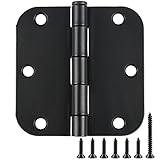
I remember the first time I tried to replace a squeaky interior door hinge. I figured, how hard could it be? They all look the same, right? Wrong. So, are interior door hinges standard? The short answer is ‘mostly,’ but that ‘mostly’ is what trips a lot of people up and sends them back to the hardware store, frustrated and holding the wrong darn thing. It’s a deceptively simple part of your house that can cause a surprising amount of grief if you don’t know what you’re looking for.
The common advice online is usually pretty generic, telling you to just match the size and finish. But I’ve learned the hard way that there’s more to it than just how they look. Understanding the subtle differences is key to a smooth, silent door operation, not just for a quick fix but for the long haul.
When ‘standard’ Gets Complicated
Okay, let’s cut to the chase: are interior door hinges standard? Yes, in many ways, they follow common dimensions and designs that have been around for ages.
The most common type you’ll encounter on interior doors is the butt hinge, and these typically come in specific sizes that have become industry norms. Think about the most common door you see every day – it’s probably swinging on a pair of these.
They’re designed to be relatively simple, consisting of two leaves (the flat parts that attach to the door and the frame) joined by a pin, which allows the door to pivot open and shut. The vast majority of interior doors in residential homes are fitted with 3 ½ inch hinges, and this is the dimension most people mean when they talk about standard interior door hinges. These usually have three screws per leaf, totaling six screws per hinge, which is plenty of holding power for a lightweight interior door.
The thickness of the hinge material, often referred to as gauge, also tends to be fairly standard. While you might find some lighter-duty hinges for very specific applications, most interior doors will use hinges with a gauge that provides adequate strength without being overly bulky. The knuckle – that’s the round, cylindrical part where the pin sits – is also pretty uniform in its basic design across different brands and manufacturers. This standardization is why, for many people, swapping out a hinge is a quick, no-fuss job. You unscrew the old one, screw in the new one, and boom, done. It feels like a solved problem, a piece of hardware that’s just… there, doing its job without complaint.
However, the ‘standard’ can get fuzzy when you start looking at variations in corner radius and the number of screw holes. Hinges come with either a square corner or a rounded corner (usually a ¼ inch radius). This might seem minor, but if you’re replacing a hinge and the mortise (the cutout in the door or frame) was made for a square corner, sticking a round-cornered hinge in there won’t sit flush.
It’ll either leave a gap, look sloppy, or require you to chisel out the mortise to match the new hinge. I learned this the hard way when I was trying to match an old, original hinge on a vintage dresser I was refurbishing. The hinge itself looked standard, but the corner was square, and every new hinge I bought had rounded corners. It took me three trips to different hardware stores and a lot of fiddling before I found a supplier that still carried square-cornered hinges.
It was a small detail, but it made all the difference.
Then there’s the finish. While brushed nickel, oil-rubbed bronze, and polished brass might be common choices, the actual plating and coating can vary significantly in durability and appearance. A cheap hinge might look great out of the box but will start to corrode or peel within a year, especially in a humid bathroom. So, while the basic dimensions might be standard, the devil, as always, is in the details.
The Hidden Variables: Beyond Size and Shape
Let’s talk about the stuff that isn’t immediately obvious when you’re just glancing at a hinge. Because while the 3 ½ inch dimension is a good starting point, there are other factors that make hinges not perfectly interchangeable, and these are the things that can turn a simple DIY fix into a frustrating ordeal. The first big one is the pin itself.
Most interior door hinges have non-removable pins (NRP) unless specified otherwise, which is a security feature. But for a standard interior door, you usually want a removable pin.
Why? Because it makes taking the door off its frame incredibly simple. If you ever need to move the door, paint the frame, or just get it out of the way, you can lift the pin out, and the door practically falls off. With an NRP, you’re stuck.
You have to remove all the screws from the hinges on both the door and the frame to get the door off, which is a pain in the neck, especially if you’re doing it alone.
Another variable is the ‘slotted’ screw hole. On some hinges, particularly those designed for older homes or for easier installation on slightly out-of-plumb frames, one of the screw holes on the frame-side leaf will be slotted. This allows for a little bit of vertical adjustment. If your door frame isn’t perfectly square – and trust me, very few are – these slotted holes can be a lifesaver.
They let you fine-tune the door’s position, making sure it hangs straight and closes properly without binding. If you’re just replacing a hinge with a standard one that doesn’t have this feature, and your frame is a bit wonky, you might find your new door sits a little crooked or rubs against the frame in one spot. It’s a detail that most people don’t consider until they’re staring at a misaligned door and wondering why the new hinges didn’t magically fix everything. (See Also: A Box Without Hinges Key )
Then there’s the gauge, or thickness, of the metal. While most interior doors don’t require heavy-duty hinges, using a flimsy, thinner gauge hinge when the original was a bit beefier can lead to sagging doors over time. The door itself might not feel heavy, but repeated use, combined with slight swelling or shrinking of the wood, puts stress on the hinge. I once bought a cheap multipack of hinges online because they were a bargain.
They looked identical to the ones I was replacing, but within six months, the doors I’d hung started to sag noticeably. The metal was just too thin and flexible. When I finally replaced them with slightly thicker gauge hinges, the doors hung perfectly again. It felt like I’d been duped by a seemingly standard product that was actually cut-rate.
Finally, consider the specific type of door. A standard interior passage door (like for a bedroom or closet) is one thing. But what about a bifold door, a louvered door, or a door with a unique profile? These might use specialized hinges that look similar but have different mounting points or pivot mechanisms. So, while the term ‘standard interior door hinge’ generally refers to the common 3 ½ inch, 3-knuckle butt hinge, always do a quick visual inspection of the old one and consider how it’s attached before you head to the store.
Common Mistakes That Make You Buy Twice
Let’s be honest, I’ve made my share of DIY mistakes, and hinge replacement is a classic arena for them. The biggest blunder people make when they’re trying to figure out if interior door hinges are standard is assuming all 3 ½ inch hinges are the same. As I’ve hammered home, they are not.
The most common mistake is not checking the corner radius of the hinge leaf. If your old hinge has square corners where it meets the door or frame, you must buy hinges with square corners.
If you buy rounded ones, they won’t sit flush in the mortise, leaving gaps and making the door look unprofessional. It’s like trying to fit a square peg into a round hole, but for your door frame. I learned this the hard way on a bathroom door. The old hinge was worn out, and I grabbed a shiny new pack of what I thought were identical hinges.
I installed them, and the door wouldn’t close properly. It was rubbing on the top because the rounded corner of the new hinge wasn’t sitting into the square mortise cut into the jamb. I had to go back, buy the correct ones, and then spent an extra twenty minutes chiseling out the mortise to perfectly fit the new, rounded corners. Lesson learned the hard way, costing me time and money.
Another frequent error is neglecting the screw holes. Standard hinges usually have three screw holes per leaf, for a total of six. However, some older doors or heavier-duty applications might use hinges with four holes per leaf. If you buy a three-hole hinge to replace a four-hole one, you’ll have a loose connection and a door that’s prone to sagging. Conversely, trying to force a four-hole hinge into a frame that only has space for three can be a headache. Always count the screw holes on your existing hinges before you buy replacements.
People also get caught out by the hinge pin. Many interior door hinges are designed with a non-removable pin (NRP) for security.
While this is great for exterior doors, for interior doors, you generally want a hinge with a removable pin. This makes it incredibly easy to take the door off its hinges when you need to move it, paint the room, or rehang it. If you accidentally buy NRP hinges for an interior door, you’ll find yourself in a pickle the next time you need to remove the door; you’ll have to unscrew the entire hinge instead of just lifting the pin.
I’ve seen friends struggle with this, scratching their heads and fumbling with screwdrivers when a simple pull-out pin would have saved them ages.
Finally, and this is a big one that often gets overlooked: the finish and material quality. You see a pack of hinges for $10 and another for $30.
They look the same, right? Wrong.
The cheaper ones are often made with thinner metal, inferior plating, and poorer manufacturing tolerances. They might look fine on the shelf, but they’ll start to squeak, rust, or even bend under the weight of the door within a year or two. This leads to doors that sag, don’t close properly, and require replacement again, meaning you’ve spent more money in the long run than if you’d bought decent quality from the start.
Stick to reputable brands and check the weight and feel of the hinge; you can often tell the difference between cheap tin and solid steel. (See Also: Are Integrated Washing Machine Door Hinges Standard )
Real-World Use: Hinges in My House
I’ve got a pretty old house, and it’s a constant lesson in how things were built, and how they age. When it comes to interior door hinges, I’ve gone through the whole spectrum. My bedroom door, for instance, had these incredibly noisy hinges. Every time I opened or closed it, it sounded like a dying seagull.
I figured, “Okay, time for new hinges.” I went to the hardware store, grabbed a pack of the most common 3 ½ inch, oil-rubbed bronze hinges I could find, and swapped them out. The squeaking stopped, but the door now sagged a good half-inch at the latch side. Turns out, the old hinges, while noisy, were likely a heavier gauge steel.
The new ones, though standard in size, were thinner and couldn’t quite handle the weight of the solid core door without bowing slightly. It wasn’t a disaster, but it was annoying. I ended up having to shim the frame to compensate, which is a hacky fix I’m not proud of.
It taught me that size isn’t the only thing that matters; the material and construction are just as important.
Then there’s the hinge on my linen closet door. This one is a bit different. It’s a narrower door, and it gets used constantly. The original hinges were starting to feel a bit loose, not the door itself, but the hinges in the frame.
I noticed that the mortises in the door jamb were getting a bit worn, and the screws weren’t biting as well as they should. For this situation, I went with hinges that had a few more screw holes per leaf, and importantly, one of the holes on the jamb-side leaf was slotted.
This allowed me to adjust the vertical alignment of the door slightly and get a much more secure fit in the slightly enlarged mortise. It wasn’t a standard replacement in terms of hole count, but it solved a specific problem of a worn frame. It’s those little design variations that can make or break a repair.
I also had a situation where I needed to replace a single hinge on a door that was painted shut for years. When I finally got it open, the hinge was rusted solid.
I needed to remove the door, but the pin wouldn’t budge. I ended up having to carefully cut the pin with a hacksaw blade while holding the door, which was a clumsy and potentially dangerous job. If I had realized it was a non-removable pin, I would have planned differently. This is why I now make it a habit to check if the pin can be lifted out by gently tapping the bottom of the hinge with a screwdriver.
For interior doors, a removable pin is almost always the better choice for ease of maintenance and future access.
The biggest surprise I had was with a set of antique doors I installed in my living room. They were beautiful, but the hinges were mismatched and frankly, awful. I wanted something that looked period-appropriate but functioned smoothly.
I ended up finding reproduction strap hinges. These are much longer and more decorative than standard butt hinges. While not technically ‘standard’ in the way a butt hinge is, the mounting points and pivot mechanism were designed to work with the door and frame in a similar fashion, but the aesthetic was completely different. It reinforced my understanding that while a standard exists, there are always specialized options if you know what to look for and what problem you’re trying to solve beyond just hanging a door.
Types of Interior Door Hinges and What to Look For
When we talk about interior door hinges, we’re usually referring to butt hinges. These are the most common and consist of two leaves connected by a barrel (or knuckle) through which a pin passes. The two leaves are designed to be mortised into the edge of the door and the edge of the door frame (jamb). Here’s a breakdown of what to look for, going beyond just the basic size:
1. Size: The industry standard for interior doors is a 3 ½ inch hinge. This is measured from the top of the barrel to the bottom of the leaf. Most interior doors will use two or three of these hinges per door. If you have a particularly tall or heavy interior door (like a solid wood one), you might consider 4-inch hinges. But for the vast majority of hollow-core or standard solid-core doors, 3 ½ inches is the way to go.
2. Corner Radius: This is where many DIYers trip up. Hinges come with either a square corner or a rounded corner (most commonly a ¼ inch radius). You MUST match the corner radius of the new hinge to the mortise in your door and frame. If the old hinge had square corners, you need square ones. If it had rounded corners, you need rounded ones. Trying to force a different radius will leave gaps or require you to modify the mortise, which is extra work. (See Also: Are Hinges Wheeels )
3. Knuckles and Pin: Most standard interior butt hinges have three knuckles (the round parts holding the pin). The pin itself is usually made of steel and allows the door to pivot. For interior doors, it’s highly recommended to use hinges with a removable pin. This makes taking the door off the frame incredibly easy if you ever need to move it, paint, or rehang it. Non-removable pins (NRP) are more common on exterior doors for security. You can usually tell if a pin is removable by looking for a cap at the bottom of the barrel or by gently trying to tap it upwards with a screwdriver.
4. Gauge (Thickness): While not always explicitly stated, the thickness of the metal matters. Thicker gauge hinges are stronger and less prone to bending. For standard interior doors, a medium gauge is usually sufficient. If a door feels particularly heavy or you notice existing hinges are bent, opt for a slightly thicker gauge. Cheap hinges are often made of thin, flimsy metal that will sag over time.
5. Finish: This is largely aesthetic but can also indicate quality. Common finishes include brushed nickel, polished chrome, oil-rubbed bronze, matte black, and brass. Higher quality finishes are more durable and resistant to tarnishing or chipping. Consider the overall style of your home when choosing a finish. A good quality finish won’t just look good; it will last.
6. Screw Holes: Most 3 ½ inch hinges will have three screw holes per leaf, for a total of six. However, some might have four, especially if designed for heavier doors or older frames. Always check the number of holes on your existing hinges to make sure compatibility. Some hinges also feature a ‘slotted’ screw hole on the frame-side leaf, which allows for minor vertical adjustment of the door, a useful feature if your frame isn’t perfectly plumb.
What Is a Standard Interior Door Hinge Size?
The most common standard size for interior door hinges is 3 ½ inches in height. This measurement is taken from the top of the hinge barrel to the bottom of the hinge leaf. They typically have three knuckles (the round parts that hold the pin) and use three screws per leaf.
Can I Use Exterior Hinges on Interior Doors?
While you can physically attach exterior hinges to an interior door, it’s generally not recommended. Exterior hinges are typically heavier duty, often made of thicker gauge metal and sometimes with different corrosion-resistant finishes to withstand the elements. They can be bulkier and might not fit flush in the mortises cut for standard interior hinges. The primary reason to avoid them is that they often feature non-removable pins (NRP) for security, which is a hassle for interior doors where easy removal is often desired.
How Many Hinges Do I Need Per Interior Door?
For most standard interior doors (up to about 7 feet tall), two hinges are sufficient if they are solid and well-installed. However, three hinges are very common and provide better support, especially for heavier solid-core doors or taller doors. Using three hinges distributes the weight more evenly, preventing sagging over time and making sure a smoother operation.
The Truth About Hinge Quality and Longevity
Let’s talk about what separates a hinge that lasts five years from one that lasts fifty. It’s not magic; it’s manufacturing quality. When you’re buying hinges, especially for interior doors where you might not think twice about them, it’s easy to grab the cheapest pack on the shelf. I’ve done it. I bought a $15 multipack of hinges once because, hey, it’s just a door hinge, right? Big mistake. They looked like standard 3 ½ inch hinges, brushed nickel finish, three screws per side. Perfect. Or so I thought.
Within about a year, the finish started to wear off on the bathroom door, revealing a dull, corroded metal underneath. Worse, the doors themselves started to sag. They felt flimsy from day one, and the constant opening and closing had clearly taken its toll. The metal was thinner than I realized, and the tolerances in the barrel where the pin sits were just sloppy. This allowed for more play, and over time, that play translates into a door that doesn’t hang straight and is a pain to close.
I’ve since learned that you should expect to pay a bit more for quality. Reputable brands, even for basic interior hinges, will use better materials and have more precise manufacturing processes. This often means thicker gauge steel for the leaves and a more solid pin that fits snugly in the barrel. The finishes are also typically more durable, designed to withstand regular use without immediately showing wear and tear. For instance, I now look for hinges with a thicker, heavier feel. When you hold a good quality hinge next to a cheap one, you can feel the difference. It’s like comparing a solid piece of forged steel to a stamped tin plate.
The construction of the barrel and pin is also key. A well-made hinge will have a smooth-operating pin that doesn’t bind or feel loose. The knuckles should be perfectly aligned, making sure the door swings evenly. Some higher-end hinges even have ball bearings or washers built into the barrel to reduce friction and prevent squeaking, though this is less common and usually overkill for standard interior doors. For most of us, the goal is a solid, smooth-operating hinge that won’t warp or wear out prematurely.
Consider the source of the hinge. While you can find decent hinges at big-box home improvement stores, sometimes specialty architectural hardware suppliers or even well-hand-picked online retailers will carry higher-quality options that might not be as readily available. Doing a little research and reading reviews can save you a headache down the line. It might cost you an extra $10 or $20 for a set of three good hinges, but trust me, that investment pays off in terms of longevity, smooth operation, and avoiding the frustration of having to replace them again in just a couple of years. The common advice to just “match the size and finish” is woefully insufficient when it comes to making sure the longevity and proper function of your doors.
“conclusion”: “
So, are interior door hinges standard? Yes, but with enough variations that you absolutely need to pay attention. The 3 ½ inch, three-knuckle butt hinge with a removable pin is the most common, but don’t let that fool you into blindly grabbing the first pack you see. Always check the corner radius, count the screw holes, and consider the weight and feel of the material. Buying the wrong hinge, or a cheap, poorly made one, is a sure way to create more problems than you solve.
Verdict
My advice? Take a moment to really look at the hinge you’re replacing. Snap a quick photo with your phone. If you can, take the old hinge with you to the hardware store. It’s the small details – the square vs. round corner, the slotted screw hole – that will save you trips back to the store and make sure your door hangs and operates as it should. Don’t underestimate these little guys; they hold up your doors and can be surprisingly finicky.
Ultimately, if you’re not sure, it’s better to spend a few extra bucks on a reputable brand or consult with someone at a good hardware store. Getting it right the first time means a quiet, smooth-swinging door for years to come, and that’s always worth it. So next time you need to replace one, remember that ‘standard’ has its limits.