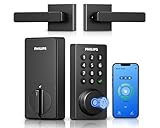
Remember fumbling for keys in the pouring rain, groceries slipping out of your arms? Yeah, me too. That’s why I jumped headfirst into the world of smart door locks a few years back. I was promised convenience, security, the whole nine yards. But like a lot of tech promises, the reality was… messier. The question I get asked most is: are kepad door locks safe? It’s not a simple yes or no, and frankly, a lot of what you read online is pure marketing fluff or outright wrong. Let’s get real about what you’re actually buying.
How These Gadgets Actually Work (and Where They Screw Up)
So, you’ve seen those sleek metal things replacing your old deadbolt. They look fancy, right? Most smart door locks work on a few core principles. You’ve got your keypad, which you punch numbers into. Then there’s usually a Bluetooth or Wi-Fi connection that lets you talk to your phone. Some have little motors inside that physically turn the deadbolt. Simple enough. You can set unique codes for family, friends, the dog walker. You can even grant temporary access remotely if you’re feeling generous. I remember setting up a code for my sister to water my plants while I was away. Thought I was so clever.
The first hiccup? Battery life. These things eat batteries. My first unit, a pretty decent one, needed AA batteries every six to eight weeks. That’s like $20 a year in batteries alone, and it means you’re constantly checking levels. If the battery dies when you’re locked out, you’re stuck. Most have a hidden battery terminal on the outside you can juice with a 9V, but finding that in a panic is another story. I once had a lock just… die. No warning. My neighbor had to let me in through a back window. Embarrassing and frankly, a bit unnerving.
Then there’s the connectivity. Wi-Fi models are great for remote access – open the door from 500 miles away for a guest. But they’re also a bigger target. A weak Wi-Fi password or a router with security holes? Your lock is potentially vulnerable. Bluetooth is generally more secure at close range, but you can’t grant access when you’re out. Some locks use a hybrid approach, which is often the best bet. My current lock uses both, and I’ve found the Bluetooth is reliable for day-to-day use, and the Wi-Fi kicker is there if I really need it. But I’ve seen Bluetooth connections drop randomly, leaving me standing at my own door like an idiot, waving my phone around.
Another thing nobody tells you: installation. Most are designed to be DIY, but some are fiddly. You need a good, solid door and frame. If your door is warped or your frame is loose, even the best lock won’t be secure. I had to shim my door frame on my last house to get one to operate smoothly. It wasn’t a huge deal, but it added an extra hour and some frustration to what was supposed to be a quick upgrade. The physical security of the lock itself is usually decent, but if your door can be kicked in easily, a fancy lock won’t stop that.
What to Look for (and What to Ignore)
When you’re scanning online reviews, it’s a minefield. Everyone’s raving about the latest model with a built-in fingerprint scanner or voice control. Forget the bells and whistles for a second. The most important thing is the security protocol. Does it use strong encryption? For Wi-Fi, is it WPA2 or WPA3? For Bluetooth, what version is it, and does it implement secure pairing? Look for brands that are transparent about their security. Some will even publish reports on their security audits. If a company is just saying ‘military-grade encryption’ without any specifics, I’d be skeptical. That’s marketing speak, not a fact.
Consider the physical build. Is it solid metal, or is it mostly plastic? A cheap plastic housing can be pried open or smashed relatively easily. Look for locks made from zinc alloy or solid brass. The deadbolt itself needs to be substantial. A thin, flimsy bolt is useless. Many smart locks integrate with your existing deadbolt mechanism, which is usually a good sign because those are tested. Others replace the entire unit. If it’s a full replacement, check reviews specifically on the physical build quality. I’ve seen some that looked great but felt cheap and flimsy in the hand. My current lock has a heft to it; you can feel the quality.
Think about the user interface. How easy is it to program? Can you reset codes easily if someone leaves the company? How do you manage access for guests? Some apps are clunky and unintuitive. I once spent 20 minutes trying to figure out how to delete a guest code from a poorly designed app. Frustrating is an understatement. Look for apps that are clean, well-rated in the app stores, and offer clear controls. A simple keypad interface is also key. If it’s too complicated to enter a code, what’s the point? (See Also: Are Sesame Seeds Kosher For Passoveris Pollock Kosher )
Here’s a contrarian view: everyone obsesses over fingerprint scanners. I find them unreliable. My fingers get sweaty, dirty, or just don’t register half the time, especially in humid weather or when I’ve just been gardening. It often takes three or four tries. I’d rather punch in a code, even if it feels a bit old-school. It’s more consistent. Plus, if your fingerprint is compromised (which is unlikely, but possible), that’s a permanent problem. A PIN code can be changed.
| Feature | What to Look For | My Verdict |
|---|---|---|
| Connectivity | Wi-Fi (WPA2/WPA3) and/or Bluetooth (secure pairing) | Hybrid is best. Wi-Fi for remote, Bluetooth for local. |
| Build Quality | Solid metal (zinc alloy, brass) with a solid deadbolt | Don’t skimp here. Feels matters. |
| App Interface | Clean, intuitive, easy code management | A bad app ruins the experience. |
| Battery Life | Longer life, clear low-battery warnings, emergency power option | Expect to replace batteries often; make sure backup. |
| Physical Key Backup | Yes, always! | A must. Technology fails. |
Common Mistakes People Make with Smart Locks
The biggest mistake I see people make is assuming a smart lock is a magic bullet for security. It’s not. It’s a component. If your door is weak, your frame is flimsy, or your windows are easily accessible, a smart lock doesn’t solve the fundamental vulnerabilities. I’ve seen people spend $300 on a fancy lock and then not even bother to reinforce their door frame. That’s like putting a high-tech alarm on a cardboard box. The lock is only as strong as the door it’s attached to, and the frame it engages with. Make sure your door and frame are solid before you even think about upgrading.
Another common error is relying solely on the smart features. What happens when the Wi-Fi goes down? Or your phone battery dies? Or the app glitches? This is why a physical key backup is absolutely vital. Some newer models are doing away with keyholes entirely, which, in my opinion, is just asking for trouble. If the tech fails, you’re locked out. I’ve heard horror stories from people who installed keyless smart locks and then found themselves stranded. My own experience with a dead battery and no manual override taught me that lesson the hard way. Always, always, always have a physical key option.
People also underestimate the importance of strong, unique PIN codes. Using your birthday, your house number, or a simple sequence like 1234 is asking for trouble. Think about it: if someone is trying to guess your code, they’ll start with the easiest ones. Long, random codes are best. I keep a list of my most-used temporary codes in a password manager on my phone, and I change them regularly. For family members, I use codes that are slightly related to their birthdate but scrambled – something memorable for them, but not obvious to a casual observer. And never, ever share your master code.
Finally, many folks don’t keep their firmware updated. Manufacturers release updates to patch security vulnerabilities. If you ignore those update prompts, you’re leaving your lock exposed. It’s like never changing the oil in your car. It might run for a while, but eventually, something’s going to break. Most smart locks will prompt you for updates through their app, but it’s easy to dismiss them. Make it a habit to check for updates at least once a month, or enable automatic updates if your lock supports it. I’ve had to manually trigger an update on a couple of occasions because the auto-update failed.
Real-World Use: What’s Actually Convenient?
Let’s talk about the good stuff, because there is some. The convenience of not needing to carry a physical key is undeniable. Going for a run, a bike ride, or even just taking out the trash without worrying about where to put your keys feels liberating. I can hand a temporary code to a friend who’s dropping something off while I’m at work. I get an alert on my phone when they arrive and when they leave. This peace of mind is worth something. It’s that feeling of being in control of who comes and goes from your home, even when you’re not there.
Another genuinely useful feature is the ability to check if your door is locked from anywhere. I’m notoriously bad at double-checking. I’ll be halfway to work and suddenly wonder, “Did I lock the front door?” With a smart lock, I can just pull up the app and see the status. If it’s opened, I can lock it with a tap. This has saved me a lot of anxiety-induced U-turns. It’s the small things like that which make the technology feel worthwhile, rather than just a gimmick. (See Also: Are Sliding Door Locks Common )
Integration with smart home systems is also a big plus for some. If you have smart lights or a smart thermostat, being able to have your door lock trigger a “welcome home” scene (lights on, thermostat adjusts) is pretty neat. I’ve set mine up so when I open the door after 6 PM, the porch light automatically turns on. It’s a small touch, but it adds to the overall comfort and ease of living. This interconnectedness, when it works smoothly, is where the real power of smart home tech lies. It’s not just about the lock itself, but how it interacts with everything else in your home.
However, the ‘convenience’ often comes with its own set of annoyances. Like I mentioned, battery changes. And then there are app updates that sometimes reset your settings, or connectivity issues that mean you can’t control the lock for a few hours. I’ve had moments where the app just wouldn’t connect, and I had to resort to my physical key. It’s a trade-off. You gain some convenience, but you introduce a new set of potential problems. It’s not always the smooth experience advertised.
Are Kepad Door Locks Safe? The Verdict on Hacking and Vulnerabilities
This is the big question, and the honest answer is: safer than a flimsy deadbolt, but not impenetrable. The fear of hacking is real, and it’s not unfounded. Hackers are always looking for new ways into systems, and smart locks are a potential entry point. However, most high-quality smart locks from reputable brands are designed with multiple layers of security. They use encryption to protect the data transmitted between your phone and the lock, and between the lock and your Wi-Fi network. They also employ secure pairing processes for Bluetooth connections.
The reality is, most successful breaches of smart locks don’t happen through sophisticated remote hacking. They happen through social engineering (tricking you into giving up your PIN or password), exploiting weak Wi-Fi security, or by physically attacking the lock or the door. If your home Wi-Fi network is secured with a strong password and updated regularly, and you use strong, unique PIN codes for your lock, you’ve already significantly reduced the risk. The common advice is to treat your smart lock’s PIN code like you would your online banking password – don’t share it, don’t make it obvious, and change it periodically.
I’ve been following discussions on security forums for years, and while there have been isolated incidents of vulnerabilities discovered, the major manufacturers are usually quick to patch them. For instance, in 2020, a security researcher found a flaw in some models that could allow an attacker to bypass authentication. The company in question, August, released a firmware update within days to fix it. This responsiveness is what you should expect. If a company is known for ignoring security reports, steer clear. Companies like Yale and Schlage have been making physical locks for decades, and they bring that security mindset to their smart offerings.
The statistics on smart lock hacking are actually pretty low compared to other types of cybercrime. A study by the National Cyber Security Centre (NCSC) in the UK, for example, highlighted that while IoT devices, including smart locks, have vulnerabilities, the actual number of successful remote hacks targeting home users remains relatively small, often due to user error or weak network security. The biggest risks often come from physical access or malware on a user’s own devices. So, while the fear is understandable, don’t let it paralyze you. Focus on good security hygiene for your home network and your lock’s access codes.
Faq: Are Smart Locks Secure?
Can a Smart Lock Be Hacked?
Yes, any electronic device can potentially be hacked, but smart locks from reputable manufacturers employ multiple security measures like encryption and secure pairing to make remote hacking very difficult. Most ‘hacks’ exploit user error, weak home Wi-Fi passwords, or physical vulnerabilities rather than sophisticated remote attacks. (See Also: Are The Rams Locked Into The 6th Seed )
Are Smart Locks Safer Than Traditional Locks?
It depends on the quality of both. A high-quality smart lock with solid security protocols can be safer than a cheap, old mechanical lock with a weak bolt. However, a poorly implemented smart lock or one used with weak security practices can be less safe. Physical security of the door and frame also plays a huge role.
What Is the Biggest Security Risk for Smart Locks?
The biggest risks often stem from user error: weak PIN codes, sharing access codes, not updating firmware, or having unsecured home Wi-Fi networks. Physical attacks on the door or lock, or an attacker gaining access to your phone, are also significant concerns.
Do Smart Locks Have a Physical Key Backup?
Most good smart locks do. It’s important to make sure your chosen lock has a physical key override. This acts as a failsafe in case of battery failure, electronic malfunction, or connectivity issues, making sure you can always get into your home.
Final Thoughts
So, are kepad door locks safe? My honest verdict is that they can be, but only if you’re smart about it. Don’t just buy the cheapest one or the one with the most flashy features. Do your homework. Make sure it has strong encryption, a solid build, and a reliable physical key backup. Pay attention to how you set up your home Wi-Fi and your PIN codes. Treat your smart lock’s security with the same seriousness you would your bank account.
The convenience is real, and for many, the peace of mind from being able to check your door’s status remotely or grant temporary access is a big deal. But this convenience comes with responsibility. You’re trading a mechanical vulnerability for a digital one, and you need to manage that digital side proactively. If you’re willing to put in the effort to secure your network and your codes, then a smart lock can absolutely enhance your home security and daily life.
Ultimately, the decision comes down to balancing convenience against the potential risks, and understanding that technology is only as good as the user behind it. Think about your own habits and your home’s setup before you make the switch. What are you willing to accept as a trade-off for that keyless entry?