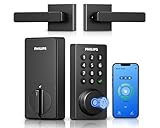
I remember the first time I swapped out a traditional deadbolt for one of those fancy electronic keypad locks. It felt like living in the future, ditching keys and fumbling for them in the dark. But then came the nagging question: are keypad door locks safe? It’s not just about convenience; it’s about your home’s security. I’ve spent years trying out different models, some brilliant, some utter trash, and learned a few hard truths along the way.
We’re going to cut through the marketing fluff and get down to what really matters when you’re considering one of these things for your front door.
So, Are Keypad Door Locks Safe? Let’s Get Real.
Look, the simple answer to ‘are keypad door locks safe’ is yes, but with major caveats. Most modern electronic deadbolts from reputable brands are surprisingly secure, often more so than your average flimsy knob lock. They’re built with sturdy materials, feature tamper alerts, and can even integrate with smart home systems for remote monitoring. The core mechanism is usually a solid bolt that retracts electronically when the correct code is entered. Think of it like a super-sophisticated tumbler system, but instead of tiny pins, you’re dealing with microchips and motors.
However, the ‘safe’ part hinges heavily on a few things: the quality of the lock itself, how you use it, and what you’re protecting it from. I once bought a cheap, off-brand keypad lock that looked slick but felt flimsy. The keypad buttons wore down to illegible smudges within six months, and I swear I could hear it creaking in the wind. That was a hard lesson in not skimping on security hardware. The better locks have reinforced internal components, often metal, not just plastic gears that can strip.
What people often forget is that even a fortress is only as strong as its weakest point. If your keypad lock is installed on a door with a weak frame, or if your windows are wide open, the lock becomes almost irrelevant. I’ve seen people get locked out of their own homes because the battery died on their fancy keypad lock – not a security breach, but a massive inconvenience that feels like one when you’re stranded on your porch at 10 PM. Battery life and backup key access are genuine considerations that go beyond just brute force security.
The consensus among security pros is that a good quality electronic deadbolt, properly installed, offers a comparable, if not superior, level of security to a traditional deadbolt. They’re harder to pick than many traditional locks because there’s no physical cylinder to manipulate in the same way. However, like any electronic device, they can have their own vulnerabilities, which we’ll get into. It’s a trade-off, and understanding those trade-offs is key to making an informed decision about whether they are safe enough for your peace of mind.
The Tech Behind the Code: How They Actually Work
Understanding how these things operate demystifies them a bit and helps you see where the potential weak spots might be. At its core, a keypad door lock replaces the mechanical key cylinder with a digital interface. You punch in a sequence of numbers – your PIN – and if it matches the one stored in the lock’s memory, a motor kicks in. This motor then drives a bolt, usually a deadbolt, either extending or retracting it from the door frame. It’s a pretty straightforward electro-mechanical process.
The brains of the operation is a small circuit board with a microcontroller. This chip stores your PIN codes, manages user access (if it’s a smart lock), handles battery power, and controls the motor. Many also have features like automatic locking after a set period, tamper detection (which can trigger an alarm or send an alert to your phone), and a low-battery warning system. I’ve had locks that would send me a notification on my phone when the battery dipped below 10%, which is handy, but I also learned to put a fresh set of AA batteries in mine every six months, just to be safe, even if it didn’t warn me. It’s cheap insurance.
Connectivity is where things get more complex and, for some, more concerning. Smart locks connect to your home Wi-Fi or Bluetooth.
This allows for remote control via a smartphone app, granting access to guests from miles away, checking your lock status while you’re on vacation, or integrating with other smart home devices. This is great, but it also introduces potential attack vectors. If your Wi-Fi network is compromised, or if the lock’s firmware has a vulnerability, theoretically, someone could gain unauthorized access.
I’ve personally experienced a smart lock glitch where it just refused to connect to Wi-Fi for a couple of days, leaving me to rely on the physical backup key, which, thankfully, it still had. That was a stark reminder that the tech isn’t always perfect. (See Also: Are Sesame Seeds Kosher For Passoveris Pollock Kosher )
The complexity means there’s more to go wrong than with a simple mechanical lock. Firmware updates are supposed to patch security holes, but they also require a stable connection and the lock to be functioning correctly. Some older or cheaper models might not even receive regular updates, leaving them perpetually vulnerable to known exploits. When you’re looking at these, you need to think about the manufacturer’s reputation for software support as much as the physical build quality.
Common Mistakes People Make (and How I Almost Fell for Them)
One of the biggest mistakes I see people make is assuming that just because it’s electronic, it’s inherently better or doesn’t require maintenance. I’ve spent more than one frustrating hour jiggling a stubborn keypad lock because the batteries were low and the mechanism was struggling, or worse, because I hadn’t cleaned the keypad properly and it was misreading my input. It sounds dumb, but a dirty keypad is a real issue. Grime can get into the tiny gaps around the buttons, making them sticky or unresponsive. A quick wipe-down with a damp cloth is often all it takes, but it’s something most people don’t think about.
Another error is not considering battery life and backup access. I almost got myself locked out of my own garage one winter night. It was freezing, I had groceries, and the keypad lock on the garage service door just… died. No warning, no low-battery light. Luckily, my partner was home and could let me in. That taught me the value of always having a backup key, even if it feels redundant. Some smart locks have hidden keyholes, others have a battery terminal you can connect to an external 9V battery to give it enough juice to disengage. I now make it a point to test that 9V battery trick at least once a year, just in case.
Installation is a big one, too. People sometimes try to force a lock into a door frame that isn’t quite aligned perfectly, or they don’t use the correct screws. I’ve had to re-drill holes and shimmy a lock into place after a shoddy DIY installation. A poorly installed lock, even a high-end one, can be easier to tamper with or can simply wear out faster because parts are under stress. Manufacturers usually provide templates and clear instructions, but rushing through it or assuming you know best can be a costly mistake. I’ve learned to take my time, measure twice, and if I’m unsure, I’ll call a handyman. It’s cheaper than a new lock or a potential break-in.
Finally, people often choose a lock based purely on aesthetics or price, ignoring the underlying security features and the manufacturer’s track record. A sleek, modern keypad lock might look great, but if it’s made from cheap plastic or has a reputation for glitches, it’s not worth the risk. I once bought a lock that was about $100 cheaper than a comparable model from a well-known brand. It worked for about a year, then started acting up. The keypad became unreliable, and customer support was non-existent. That $100 saving cost me a lot more in frustration and eventually the price of a replacement. It’s a classic case of ‘you get what you pay for’ when it comes to home security.
What to Look for: Features That Actually Matter
When you’re shopping for a keypad door lock, don’t get dazzled by all the bells and whistles. Focus on what actually contributes to security and reliability. First off, the physical build quality. Does it feel solid? Is the keypad made of durable material that won’t wear off easily? I’ve found that locks with metal keypads tend to hold up much better than plastic ones over time. Look for reputable brands known for durability. I’ve had good experiences with brands like Schlage and Yale; they’re not always the cheapest, but they’ve proven reliable in my experience.
Next, consider the locking mechanism itself. Most keypad locks function as deadbolts. You want one that has a strong, thick bolt. The backset (the distance from the edge of the door to the center of the deadbolt hole) is also important for proper installation and security. Most standard doors use a 2-3/8 inch or 2-3/4 inch backset. Make sure the lock you choose is compatible or adjustable.
User code capacity is another practical feature. Can it store multiple codes? This is useful if you have family members, dog walkers, or cleaners who need access. Some higher-end smart locks can even assign unique codes to different people, allowing you to track who entered and when. I found this incredibly useful when my teenage son started coming home from school before me; I could see he actually got home safely. The ability to easily add or delete codes without having to reset the entire lock is also a big plus.
Battery life and backup power options are a must. Look for locks that boast long battery life (often rated in months or years) and, importantly, a backup power solution. This could be a hidden keyhole, a 9V battery terminal on the exterior, or the ability to easily swap batteries. I can’t stress enough how important this is. There’s nothing worse than a dead lock when you need it most. Some smart locks also offer auto-lock features, which can be a lifesaver for forgetful folks like me. You set it to lock after a certain time, say 30 seconds, and it takes the worry out of whether you remembered to turn the deadbolt.
Finally, if you’re opting for a smart lock, consider the connectivity and security protocols. Does it use strong encryption? Is the associated app well-reviewed and regularly updated? For me, I prefer locks that offer both Wi-Fi and Bluetooth connectivity, giving me flexibility. But ultimately, the core security relies on the physical lock and a strong PIN, not just the smart features. (See Also: Are Sliding Door Locks Common )
| Feature | My Verdict | Why |
|---|---|---|
| Physical Build Quality | Top Priority | Durable materials and solid feel prevent tampering and make sure longevity. |
| Keypad Material | Metal | Resists wear and tear better than plastic, keeping codes legible. |
| Battery Backup | Key | Prevents being locked out when batteries inevitably die. |
| User Code Management | Very Useful | Allows for temporary access and tracking, enhancing convenience and security. |
| Tamper Alerts | Good to Have | Provides an extra layer of notification if someone tries to force entry. |
| Smart Home Integration | Convenient, Not Key | Adds remote control and automation, but not core to basic safety. |
Real-World Use: The Good, the Bad, and the Annoying
In my own house, I’ve got a smart keypad lock on the front door and a simpler, non-smart one on the garage entry. The smart lock has been a mixed bag, mostly good. The convenience of not needing my keys when my hands are full of groceries is fantastic.
Being able to let a friend in when I’m running late is a lifesaver. The auto-lock feature has saved me from that sinking feeling of “did I lock the door?” more times than I can count.
I’ve also found the activity log useful – knowing my kids made it home from school on time adds a little peace of mind. For the most part, it operates smoothly, and the app is generally reliable, though I’ve had it disconnect from Wi-Fi a couple of times, requiring a quick reset.
The downside? Battery changes. Even with good batteries, you’re still looking at replacing them every 6-12 months, depending on usage and brand.
It’s an expense and a chore. And that one time, as I mentioned, the battery just died without warning, leaving me shivering on the porch. It was a cold, hard lesson. Also, the reliance on Wi-Fi for smart features means if your internet is down, some of those advanced functions are gone.
For my garage door lock, which is a simpler, battery-powered keypad model without Wi-Fi, it’s been incredibly reliable. It just does its job: enter code, motor whirs, door opens. No app, no internet required.
It’s less feature-rich, but it’s also less prone to electronic failure. It makes me think sometimes that simpler is better for basic security needs.
I’ve also had friends who’ve had issues with keypad locks failing in extreme weather – either freezing up in the cold or getting too hot and malfunctioning in direct sun. While most are designed to withstand outdoor conditions, it’s worth considering your local climate when choosing a model. My front door lock is partially covered by an overhang, which I think has helped extend its life and prevent issues. I also learned that not all ‘tamper alerts’ are created equal. Some just make a little beep on the lock itself, which you might not hear if you’re not home. Others send a push notification to your phone, which is much more practical.
The biggest annoyance, though? Forgetting the code. Seriously. I’ve had moments of sheer panic trying to remember a 4- or 6-digit sequence that I haven’t used in a while, especially if the backup key is tucked away somewhere less accessible. It’s a funny paradox: you eliminate the need for a physical key, only to find yourself relying on a code you might forget.
People Also Ask
Can Keypad Door Locks Be Hacked?
Yes, but it’s not as simple as Hollywood makes it out to be. Basic keypad locks are generally not hackable in the way a smart lock might be. Smart locks with Wi-Fi or Bluetooth connectivity can be vulnerable if their firmware has flaws or if your home network is compromised. However, manufacturers regularly release security updates to patch these vulnerabilities. For most users, with a strong PIN and up-to-date software, the risk is low. Physical bypass methods, like brute-forcing the keypad or using electronic signal jammers, are also potential, though less common, threats. (See Also: Are The Rams Locked Into The 6th Seed )
Are Smart Locks Less Secure Than Traditional Locks?
This is a hot debate. A high-quality smart lock from a reputable brand, properly installed and maintained, can be as secure, or even more secure, than a traditional deadbolt. They offer features like encryption and remote monitoring. However, they introduce new potential vulnerabilities related to software, Wi-Fi connectivity, and battery power. Traditional mechanical locks have no electronic components to exploit but can be susceptible to lock-picking or bumping if they are older or of lower quality. The security depends heavily on the specific product and its implementation.
Do Keypad Door Locks Need Batteries?
Yes, almost all electronic keypad door locks require batteries to function. These batteries power the keypad, the internal motor that operates the bolt, and any smart features like Wi-Fi or Bluetooth connectivity. The battery life varies significantly by model and usage, but it’s common to need battery replacements every 6 to 12 months. Most locks provide a low-battery warning, and many have a backup power option, such as a 9V battery terminal on the exterior, to allow access if the main batteries die unexpectedly.
What Is the Best Pin Code for a Door Lock?
The best PIN code is one that is difficult for someone to guess and easy for you to remember. Avoid obvious sequences like your birthday, anniversary, simple patterns (1234, 0000), or repeating numbers. A good strategy is to use a 4- to 6-digit code that combines numbers you might associate with something personal but not easily discoverable. Some people use a memorization technique or a random number generator. The key is to make it unique and not easily traceable to you. Regularly changing your PIN, especially if you’ve shared it with others, is also a good practice.
Keypad Lock vs. Traditional Deadbolt: A Final Comparison
When it comes down to it, are keypad door locks safe compared to a traditional deadbolt? It’s not a simple ‘yes’ or ‘no.’ For basic security, a solid, well-made traditional deadbolt is a hard-to-beat champion. It’s simple, reliable, and has no electronic vulnerabilities. However, it relies entirely on your ability to remember to lock it and keep track of your keys. Lose your keys, and you’re calling a locksmith to rekey or replace the entire unit, which can cost $100-$200 or more.
Keypad locks, particularly smart ones, offer convenience and enhanced control. They can provide remote access, activity logs, and auto-locking, which traditional locks simply can’t. My personal experience has shown me that a good quality keypad lock, installed correctly, offers a strong layer of security. The primary vulnerabilities lie in the technology itself – battery failure, Wi-Fi issues, or potential (though often overstated for the average user) hacking. The main annoyance for me has been the regular battery replacements and the occasional connectivity hiccup.
I’ve found that the decision really comes down to your priorities. If your absolute top priority is simplicity and zero electronic failure points, a high-quality mechanical deadbolt might be your best bet. But if you value convenience, remote access, and features like auto-locking, and you’re willing to do a little bit of maintenance (like battery swaps and keeping software updated), then a good keypad or smart lock is a perfectly safe and effective choice for securing your home. I’ve personally stuck with a smart lock on my main entry and a non-smart keypad on my garage, giving me a balance of convenience and reliability. It’s about understanding the trade-offs and choosing what fits your lifestyle and security needs best.
Final Verdict
So, are keypad door locks safe? For the most part, yes, especially the reputable brands. They offer modern security features that traditional locks can’t match, and the convenience factor is undeniable for many. I’ve learned that the key is to invest in quality, install it properly, and do the basic maintenance. Don’t skimp on the batteries, and always have a backup plan, whether it’s a hidden key or a 9V battery ready to go.
The real vulnerabilities often lie less in the lock itself and more in user error, poor installation, or a compromised home network for smart locks. If you’re considering one, do your homework on the brand, understand the features you’re paying for, and remember that even the best lock needs your attention.
Ultimately, my advice is to weigh the convenience against the small risks and be prepared. For me, the peace of mind and convenience they offer outweigh the minor hassles. Just make sure you pick one that’s built to last and doesn’t feel like it’ll fall apart in your hands.