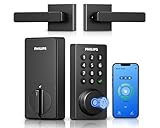
I remember fumbling for my keys in a torrential downpour, my arms loaded with groceries, while my kid wailed in the back seat. That’s when I swore off traditional locks forever. Now, after years of wrestling with various keyless gadgets on my own front door, I’ve got some hard-won opinions. The big question on everyone’s mind is: are keyless digital locks for house door safest? It’s not as simple as a yes or no.
I’ve bought the shiny, techy ones that promised the moon and delivered a leaky faucet. I’ve also found a few gems that actually make life easier and, dare I say, more secure. Let’s cut through the marketing fluff and get down to what really matters when you’re thinking about ditching the old key.
The Real Deal on How Keyless Locks Work
Forget those sci-fi movie scenes where a hacker instantly bypasses a digital lock with a laptop. Most keyless entry systems, especially the ones you’d put on your front door, are a lot simpler – and thankfully, more secure – than that. At their core, they rely on a few main methods to grant access. The most common is the keypad, where you punch in a numerical code. This is basically a modern twist on the old dial lock, but with more combinations and less fiddling.
Then you have the RFID or NFC systems. Think of these like the key cards you use at a hotel, but usually in the form of a fob or even your smartphone. Your phone, when held near the lock, communicates via short-range radio waves, telling the lock to open. This is pretty convenient because most of us have our phones glued to our hands anyway.
Biometrics, like fingerprint scanners, are the fancier end of the spectrum. These devices scan your unique fingerprint and compare it against stored patterns. The technology has come a long way, and for the most part, they’re surprisingly accurate these days, though I’ve had a few stubborn moments with damp fingers on a chilly morning. Voice activation is also out there, but honestly, I wouldn’t trust my front door to my neighbor yelling ‘Open Sesame!’
The actual mechanism inside the door is usually a motor-driven deadbolt. When the lock receives the correct signal (the right code, the authenticated fob, or a recognized fingerprint), the motor engages, retracting the deadbolt. It’s all about electronic communication and mechanical action. A lot of these systems also have a backup physical keyway, just in case the batteries die or the electronics go on the fritz. I’ve found this to be a lifesaver more than once.
One thing that often gets overlooked is the power source. Most smart locks run on batteries – usually AA or a specific lithium-ion pack. How long they last depends on usage and battery quality. I’ve seen them last anywhere from six months to over a year. The better ones will send you notifications when the battery is getting low, which is a feature I’d never go without now. It’s better to get a warning than to be stuck outside in the rain wondering why your fancy lock won’t open.
What to Actually Look for (and What to Ignore)
When I’m shopping for a keyless lock, the shiny marketing brochures are the last thing I look at. What I care about is reliability and security, plain and simple. First off, the build quality. Does it feel solid? Is the metal casing solid, or does it feel like it’s made of recycled soda cans? A cheap-feeling lock is a red flag. I once bought a supposedly high-end model that felt flimsy, and within a year, the keypad started sticking. Not a great feeling when you’re trying to get inside in a hurry.
Connectivity is another big one, especially if you want the ‘smart’ features. Look for Wi-Fi or Bluetooth capabilities, depending on what you need. Bluetooth is great for direct control from your phone when you’re nearby, while Wi-Fi allows for remote access – letting you lock or open the door from anywhere in the world. This is handy if you have a dog walker or a cleaner who needs access, but it also introduces another potential point of vulnerability if not set up correctly.
Encryption is a must. The communication between your phone and the lock, or between the lock and the Wi-Fi network, needs to be encrypted. Most reputable brands will use industry-standard encryption protocols, but they don’t always shout about it. If you can’t find information on their security measures, that’s a bad sign. I always check the manufacturer’s website or even their technical documentation for details on their security protocols. It’s not the most exciting read, but it’s worth it. (See Also: Are Sesame Seeds Kosher For Passoveris Pollock Kosher )
Battery life is also a practical concern. I’ve seen manufacturers claim 12 months, but in real-world use with multiple daily entries, I’ve often found it closer to 8. Look for locks that use standard AA batteries, as they are easy to find and replace. Rechargeable options are good too, but make sure they hold a decent charge. A dead lock is just a fancy paperweight.
Here’s a contrarian take: everyone raves about fingerprint scanners, but I’m not entirely sold for a front door. While they’re cool, I’ve found them to be less reliable in certain conditions – like wet or cold fingers – and there’s a slightly higher perceived risk of a faulty scan or a rare spoofing attempt compared to a well-chosen code or a secure fob. For me, a strong, unique PIN code entered on a solid keypad, or a reliable smartphone app control, is often the most practical and secure combination for day-to-day use.
Finally, check the compatibility with your existing door. Most locks fit standard doors, but it’s worth double-checking the backset (the distance from the edge of the door to the center of the bore hole) and the door thickness. You don’t want to buy a lock only to find out it won’t fit.
| Feature | My Verdict | Why |
|---|---|---|
| Build Quality | High Priority | Durability and resistance to tampering. |
| Connectivity (Wi-Fi/Bluetooth) | Medium Priority | Key for smart features, but adds complexity. |
| Encryption | Must-Have | Protects against remote hacking and signal interception. |
| Battery Type & Life | High Priority | Convenience and reliability. Standard AAs are best for ease of replacement. |
| Physical Key Backup | High Priority | Lifesaver for dead batteries or electronic failures. |
| App Usability | Medium Priority | A clunky app can ruin the experience, even with a good lock. |
| Smart Home Integration | Low Priority | Nice to have, but not key for core security. |
Common Mistakes People Make with Keyless Locks
One of the biggest blunders I see people make is using default or super-simple PIN codes. I’ve heard of people using ‘1234’, ‘0000’, or their birthday. Seriously? This is like leaving your keys under the welcome mat. If the lock has a keypad, pick a code that’s at least six digits, mixes numbers, and isn’t easily guessable. Think about it: if a burglar has five minutes to spare, they’re not going to try every possible eight-digit combination. They’ll go for the obvious ones first.
Another mistake is not securing the Wi-Fi network the lock connects to. If your home Wi-Fi is wide open or uses a weak password, then your smart lock is effectively connected to the internet through a sieve. Make sure you have a strong, unique password for your Wi-Fi, and consider setting up a separate guest network for your smart devices if your router supports it. This adds a layer of isolation.
People also neglect firmware updates. Just like your computer or phone, smart locks get software updates to patch security vulnerabilities and improve performance. If your lock is connected to Wi-Fi, it can usually update automatically. If not, make sure you’re manually checking for updates through the app. Skipping these is like leaving your front door opened after you’ve gone to bed.
Over-reliance on the app alone is another pitfall. While the app is convenient, it’s not the only way to control your lock, nor should it be the only way you rely on. I had a situation once where my phone died, and I had forgotten my backup PIN. Luckily, I had a physical key, but it was a stark reminder. Always have a backup method – a physical key, a spare code known by a trusted person, or a keypad with a memorable code.
Ignoring the physical security of the lock itself is also a big mistake. While digital security is important, a determined attacker might still try to brute-force the physical mechanism or even pry the lock off. Look for locks that have a sturdy design, are made from strong materials, and ideally, have some form of tamper detection. Some higher-end models will even sound an alarm if they detect forced entry attempts.
Finally, and this is a big one for me, is not understanding the different access levels. Many smart locks allow you to grant temporary access to guests, which is fantastic. But make sure you revoke that access once it’s no longer needed. I once gave a friend a temporary code for my garage door, and then I completely forgot about it for months. It’s a small oversight, but it’s the kind of thing that can come back to bite you. (See Also: Are Sliding Door Locks Common )
Real-World Use and My Personal Lock Saga
My journey with keyless locks started about seven years ago. I was living in an apartment with a notoriously sticky deadbolt and a landlord who was always on vacation when I needed a spare key. I bought one of the first generation smart locks, a Bluetooth-only model. It was clunky. The app was buggy, and it often took three or four tries to connect to the lock. Sometimes it would just decide not to work, and I’d have to dig out my old physical key. It felt more like a hassle than a convenience.
After that frustrating experience, I swore off them for a couple of years. Then, about three years ago, I bought my current house and decided to give it another shot. This time, I opted for a Wi-Fi enabled lock with a keypad and a fingerprint scanner, along with a physical key backup. The difference was night and day. The installation was straightforward – a bit more involved than just screwing in a deadbolt, but manageable. The app was much more polished, and the connection was solid.
The keypad is my primary method. I have a six-digit code that I change every six months. It’s not a sequence, and it’s not my birthday. It’s just… numbers. I’ve found that this works flawlessly 99% of the time. The fingerprint scanner is my secondary option. It’s great for when I’m jogging and don’t have my phone or keys. Most of the time, it recognizes my print on the first try, but I’ve had a few hiccups when my hands are sweaty from a workout or wet from washing them. It’s not a dealbreaker, but it’s not the foolproof solution some marketing claims.
The remote access feature has been a godsend. My elderly mother lives nearby, and I can let her in if she forgets her key or needs help without me having to drive over. I also use it to let in the occasional repair person. The peace of mind knowing I can lock or open the door from anywhere is worth a lot to me. It’s the kind of feature that, once you have it, you can’t imagine living without it.
One time, I was on vacation and a pipe burst in my laundry room. I got an alert from my smart home system, and within minutes, I was able to remotely open the door for the emergency plumber to get in and shut off the water. Without the keyless lock, I would have had to call a locksmith, and that would have cost a fortune and taken much longer. That single incident paid for the lock itself.
However, I also learned a valuable lesson about battery management. The lock sent me a low battery warning, but I was busy and put off changing them for a week. Then, one evening, after a long day, I came home to a dead lock. My phone battery was also low. Thankfully, I had the physical key tucked away in my car, but it was a cold, dark, and slightly panicked moment. Now, I change the batteries religiously when the warning comes up, and I keep a spare set in my pantry.
Are Keyless Digital Locks for House Door Safest? Practical Tips
So, to directly answer the question: are keyless digital locks for house door safest? For me, when chosen and used correctly, they absolutely can be. They offer features and convenience that traditional locks simply can’t match. But the ‘safest’ part hinges entirely on you and the product you choose. It’s not just about buying the most expensive gadget; it’s about understanding its limitations and using it intelligently.
Here are some practical tips I’ve gathered that have made my life with smart locks significantly better:
- Choose reputable brands. Don’t go for the cheapest option you find online. Stick with established companies that have a track record for security and customer support. Look for brands that are transparent about their encryption methods and security testing.
- Prioritize a physical key backup. This is a must. Whether it’s a hidden key outside (use a lockbox, not under a mat!) or a spare with a trusted neighbor, having a way in if the electronics fail is most important.
- Use strong, unique PIN codes. If your lock has a keypad, make sure your code is not sequential, repetitive, or easily guessable. Aim for at least six digits. Change it periodically, perhaps every 6-12 months.
- Secure your home Wi-Fi network. If your lock connects via Wi-Fi, your Wi-Fi password is your first line of defense. Use a strong, unique password and enable WPA3 encryption if your router supports it. Consider a separate network for your smart home devices.
- Keep firmware updated. Manufacturers release updates to fix security flaws. Make sure your lock’s firmware is always up to date, either through automatic updates or by checking the app regularly.
- Understand user access management. If you grant temporary access to others, make sure to revoke it promptly once it’s no longer needed. This is especially important for cleaning services or short-term guests.
- Test your lock regularly. Don’t just set it and forget it. Periodically test all access methods – keypad, app, fingerprint – and check battery levels. This builds confidence and catches potential issues early.
- Consider a lock with tamper detection. Some advanced locks will alert you if someone is trying to force them open, providing an extra layer of immediate awareness.
Can a Keyless Lock Be Hacked?
Yes, theoretically, any electronic device can be hacked. However, modern keyless locks from reputable manufacturers use strong encryption to protect their wireless communications. Physical hacking, like prying the lock open, is still a possibility, but many locks are built with solid materials to resist this. The most common vulnerabilities are often related to weak home Wi-Fi passwords or poorly managed user access codes, rather than a direct exploit of the lock’s internal software. (See Also: Are The Rams Locked Into The 6th Seed )
How Do I Choose a Keyless Lock for My Front Door?
When choosing, prioritize build quality, strong encryption, and a reliable battery backup. Decide if you need Wi-Fi for remote access or if Bluetooth is sufficient for local control. Look for user-friendly apps and features like tamper alerts. Always make sure it has a physical key backup and check compatibility with your door’s dimensions.
What Is the Most Secure Type of Keyless Lock?
The ‘most secure’ is subjective and depends on usage. However, locks that combine solid physical construction with strong, encrypted digital communication and a well-managed user access system are generally considered the most secure. This often means a keypad lock with a strong, unique PIN, paired with a secure app control, and always a physical key backup.
Are Smart Locks Safe From Burglars?
Smart locks, when properly installed and maintained, can be as safe as, if not safer than, traditional deadbolts against opportunistic burglars. They eliminate the risk of lock-picking and the obvious vulnerability of easily bypassed physical keys. However, they are not invincible. Sophisticated burglars might attempt physical bypass methods, or exploit unsecured home networks if the smart lock is connected to Wi-Fi.
Faqs About Keyless Entry Systems
What Happens If My Keyless Lock Runs Out of Battery?
Most keyless locks have a physical key backup that you can use in this situation. Some models also have external terminals where you can temporarily connect a 9-volt battery to power the lock long enough to enter your code or use the app. Reputable smart locks will also send you multiple low-battery warnings through their app well in advance.
Can I Install a Keyless Digital Lock Myself?
For most standard doors, yes. Keyless digital locks are designed for DIY installation. They usually replace your existing deadbolt and require basic tools like a screwdriver. Always check the manufacturer’s instructions and video guides, as installation can vary slightly between models. If you’re not comfortable with basic DIY, hiring a handyman is a reasonable option.
How Do I Reset a Keyless Lock If I Forget My Code?
Most keyless locks have a reset procedure, which often involves removing the battery and pressing a specific button inside the lock mechanism or using a reset pin. The exact method varies by manufacturer and model. You’ll typically need to refer to your lock’s user manual for the specific instructions on how to perform a factory reset and then set up new codes.
Are Keyless Digital Locks for House Door Safest in Terms of Weather Resistance?
Weather resistance varies significantly between models. Look for locks specifically rated for outdoor use with an IP (Ingress Protection) rating, such as IP54 or higher, which indicates resistance to dust and water spray. Extreme temperatures, heavy rain, and direct sunlight can affect battery life and the performance of electronic components over time, so choose a model designed for your climate.
Final Thoughts
After all my tinkering and a few minor crises, I can confidently say that keyless digital locks for house door can be a significant upgrade in convenience and security. The key is to not just buy one, but to buy a good one and use it like you mean it. Don’t skimp on quality, secure your network, and always have a backup plan.
The peace of mind knowing I can grant access remotely or check my door’s status from miles away is something I wouldn’t trade back. It’s about making your home smarter and, in my experience, safer. Just remember the battery warning – that’s a lesson learned the hard way.
So, are keyless digital locks for house door safest? If you’re smart about your choice and your usage, then yes, they absolutely can be.