I still remember the sheer panic when I realized I’d left my house keys on the kitchen counter, halfway to the airport. That gnawing feeling? Forget it. That’s why I jumped on the keyless lock bandwagon years ago, convinced it was the future. Now, after years of fiddling with apps, dealing with dead batteries, and fending off slightly skeptical visitors, I’ve got some real-world thoughts on whether keyless front door locks are safe.
It’s a question that pops up a lot, and for good reason. We’re talking about the primary defense for your home. So, let’s cut through the marketing hype and get down to what actually matters.
So, Are Keyless Front Door Locks Safe? The Tech Behind It
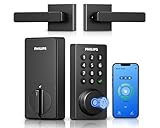
Look, at their core, these things are just fancy deadbolts with electronics. You’ve got your keypad entry, your fingerprint scanner, or your Bluetooth/Wi-Fi connection that talks to your phone. The ‘brains’ of the operation are usually a small circuit board, a motor to throw the bolt, and the interface you use to get in. Most run on batteries, hence the occasional frantic search for AAAs or the dreaded low-battery warning.
The safety aspect really boils down to a few things: how hard is it to trick the mechanism, how secure is the communication if it’s wireless, and how reliable is the power source? I’ve seen some truly awful smart locks that felt like a child’s toy. They’d glitch, the keypad would be unresponsive in the cold, and the app would take ages to connect. That’s not just annoying; it’s a potential security vulnerability. If the system is slow to respond or buggy, it creates a window of opportunity, however small, for someone determined. I once had a lock that would randomly decide it wasn’t connected to Wi-Fi, leaving me locked out on my own porch in a drizzle. Not ideal.
The common advice is to go for reputable brands. And yeah, there’s something to that. The big players, like August, Schlage, and Yale, have put a lot more R&D into their security protocols and firmware updates than some of the no-name brands flooding online marketplaces.
They’re more likely to have had their systems tested, and they’re usually quicker to patch vulnerabilities if they’re found. Think about it like this: a company that’s been making locks for a century probably has a better grasp on physical security than a tech startup that just slapped a Bluetooth module onto a basic lock mechanism.
They understand the nuances of how a door and frame interact, and how brute force can be applied. Their smart locks often retain a solid, physical deadbolt core, which is reassuring.
The cybersecurity side is where things get a bit more complicated. If your lock connects to Wi-Fi or uses Bluetooth, it’s technically susceptible to hacking. However, the reality is that most home intrusions aren’t about sophisticated hacking. They’re about opportunity. A thief is far more likely to try a window or a back door than to sit outside your house trying to brute-force your Wi-Fi password to get your smart lock to open. That said, it’s still worth considering how secure that wireless connection is. Most modern locks use encryption, but the strength of that encryption can vary.
What to Look for: Not All Keyless Locks Are Created Equal
So, you’re convinced you want to ditch the keys, or maybe you’re just curious. What should you actually be looking for? First off, forget those super cheap, no-name brands you see advertised everywhere. I learned that lesson the hard way, spending about $180 across two different cheap models before realizing I’d basically bought overpriced electronic paperweights. They felt flimsy, the battery life was abysmal (I was changing batteries every six weeks), and the apps were clunky and prone to crashing. One of them even had a weird delay between entering the code and the lock actually engaging, which felt… wrong.
Focus on the build quality. Does it feel solid? Does the bolt mechanism operate smoothly? A good keyless lock will have a solid physical deadbolt that’s not easily jiggled or bypassed. Many of the better ones maintain a standard deadbolt core, so even if the electronics fail, you still have a strong mechanical lock. That’s a big win in my book. My current lock, for instance, has a satisfyingly hefty feel to it, and the deadbolt throws with a solid thunk. (See Also: Are Sesame Seeds Kosher For Passoveris Pollock Kosher )
Consider the entry methods. Keypads are standard, and generally pretty reliable, as long as the buttons are durable and well-spaced. Fingerprint scanners are convenient, but their reliability can depend heavily on the quality of the sensor and how clean your finger is. I’ve found some fingerprint readers to be finicky, especially if my hands are slightly sweaty or dirty after gardening. Bluetooth locks that work with your smartphone are great for convenience, especially if you can set it to auto-open as you approach, but you’re then reliant on your phone’s battery and signal strength.
What about connectivity? If you want remote access (i.e., locking/opening from anywhere via your phone), you’ll need a Wi-Fi enabled lock or a separate Wi-Fi bridge. This is where cybersecurity becomes more of a concern, as your lock is now connected to your home network. Look for manufacturers that clearly state their encryption standards and offer regular firmware updates. Companies that are transparent about their security practices are usually a good sign. Oh, and power source. Most run on standard batteries, but some offer rechargeable options or even backup battery terminals on the outside. Knowing how you’ll handle a dead battery is important. I always keep a small supply of the right batteries in my car, just in case.
| Feature | My Verdict | Why |
|---|---|---|
| Build Quality | Key | A flimsy lock is an invitation. Needs to feel solid. |
| Battery Life | Very Important | Constantly replacing batteries is a pain and a potential failure point. |
| Entry Methods | Depends on user | Keypad, fingerprint, app – pick what works for you and test its reliability. |
| Connectivity (Wi-Fi/Bluetooth) | Convenience vs. Security | Adds functionality but introduces potential digital vulnerabilities. |
| Physical Deadbolt Core | Highly Recommended | The ultimate fallback. Never rely solely on electronics. |
| Brand Reputation | Good Indicator | Established brands tend to invest more in security and reliability. |
Common Mistakes People Make (and I Did Too)
One of the biggest mistakes I see people make, and one I definitely fell into, is assuming that ‘smart’ automatically means ‘secure’. That’s just not true. The market is flooded with devices that have a shiny app and a few extra features but lack the fundamental security and reliability of a good old-fashioned deadbolt. I bought a lock based purely on its sleek design and a long list of ‘smart’ features, only to find out its app was a buggy mess and the actual locking mechanism felt like it could be kicked in with a firm nudge. It was a $250 mistake I regretted for months.
Another common pitfall is not understanding the power requirements. People buy a lock, install it, and then forget about it until the battery dies, often at the worst possible moment. I learned to keep a mental note of when I last changed the batteries and to trust the low-battery warnings. Seriously, don’t ignore those. I once got a warning, put off changing them for a week, and then found myself locked out after a long day at work because the batteries finally gave up the ghost. It was a cold, rainy evening, and I was not a happy camper.
People also tend to underestimate the physical security aspect. A smart lock is only as strong as the door and frame it’s attached to. If you have a hollow-core door, or a frame that’s weak and loose, a high-tech lock won’t do much good. A determined attacker will simply bypass the lock entirely. I’ve seen advice that says you can just replace the lock cylinder on some smart locks with a standard one. That’s a good idea if you’re worried about specific types of electronic bypass, but it doesn’t help if the door itself is weak.
Finally, there’s the issue of password strength and management. If your lock uses a PIN code, are you using a common sequence like 1-2-3-4 or your birthday? That’s asking for trouble. And if your lock connects to your home Wi-Fi, are you using a strong, unique password for your network? Weak passwords on either your lock or your network are like leaving the front door wide open. I’ve made sure my Wi-Fi password is a complex, randomized string, and I change my lock codes periodically, especially if I’ve given one out to a temporary guest.
What About Renters? Can They Install Keyless Locks?
For renters, it really depends on your lease agreement and your landlord. Some landlords are fine with you replacing the deadbolt as long as you keep the original and reinstall it when you move out. Others might have specific rules about what you can and can’t install. It’s always best to get written permission from your landlord before making any modifications to the door hardware, even if it’s something you plan to easily reverse.
Real-World Use: My Personal Experience
After about four years with various keyless locks, I’ve come to appreciate the convenience, but I’m also acutely aware of their quirks. My first foray was with a Bluetooth-only model. It was great for the first few months. Walking up to my door and having it just… open? Felt like living in the future. But then came the winter. The cold made the Bluetooth connection spotty, and I often had to stand there, waving my phone around like an idiot, trying to get it to register. The battery life also took a nosedive in colder temperatures, which was a pain.
My next step was a Wi-Fi enabled keypad lock. This one was better overall. The keypad was reliable, and I liked being able to grant temporary access codes to friends or dog walkers. I could also check the lock status from anywhere, which was incredibly reassuring. I remember being on a vacation and suddenly wondering if I’d locked the door. A quick check of the app confirmed it was secure. That peace of mind? Priceless. However, I did experience one glitch where the firmware update bricked the lock temporarily, requiring a factory reset. That was a tense hour. (See Also: Are Sliding Door Locks Common )
Currently, I’m using a combination keypad and fingerprint scanner lock that also retains a traditional key override. The fingerprint scanner is surprisingly accurate most of the time, and the keypad is a solid backup. The key override is my absolute safety net. Even though I rarely use it, knowing it’s there makes me feel much more secure. I’ve also found that battery life has improved dramatically with newer models. I’m now getting about 8-10 months on a set of AA batteries, which is a huge improvement from the couple of months I was getting with earlier versions.
One thing that really surprised me was how quickly I got used to not needing keys. I still have a set of physical keys for my car and a spare for my deadbolt (just in case), but for my front door, I genuinely forget they exist most of the time. It’s a small thing, but it simplifies my daily routine. No more fumbling in my bag or pockets when my hands are full of groceries. The only real downside I’ve consistently encountered is the occasional need to troubleshoot when the app or the lock behaves unexpectedly. It’s not frequent, maybe once or twice a year, but when it happens, it can be frustrating.
Are Keyless Front Door Locks Safe From Physical Attacks?
Reputable keyless locks are generally quite safe from casual physical attacks. They are built with sturdy materials and often have reinforced strike plates and bolts that are harder to pry or force open than traditional locks. Many also have features like tamper alarms that sound if someone tries to force the lock. However, like any lock, they aren’t invincible. A determined attacker with the right tools and enough time could potentially bypass them. The best defense is a combination of a high-quality lock, a solid door and frame, and good external lighting to deter potential intruders.
The ‘everyone Says X, I Disagree’ Angle
Everyone says you NEED Wi-Fi for remote access. I disagree. While remote access is nice, it’s often overkill for most people and introduces a layer of digital vulnerability that many don’t consider. My current setup uses a keypad and Bluetooth, with a physical key as a backup.
I can grant temporary PIN codes, which is all the ‘remote’ access I really need for guests or deliveries. I can check the lock status through the app after I’ve left, but I don’t need to actively control it from 100 miles away. Most break-ins are crimes of opportunity, and a determined hacker isn’t going to be deterred by a weak Wi-Fi signal; they’re going to look for an easier target.
Focusing on a rock-solid physical lock with reliable electronic entry, rather than hyper-connectivity, is where the real security lies for the average homeowner.
Practical Tips for Using Keyless Locks
First, prioritize reliability over features. That fancy new lock with a built-in doorbell and facial recognition might look cool, but if its core locking mechanism is weak or its software is buggy, it’s a liability. Stick with brands that have a proven track record for making sturdy, dependable locks. I’d rather have a slightly less feature-rich lock that I know will work every single time, than a bells-and-whistles model that’s going to fail me when I need it most.
Second, understand your power source and have a backup plan. Whether it’s AA batteries, a rechargeable pack, or a physical key, know how you’ll get into your house if the electronics die. I keep a small stash of the correct batteries in my car, and I always know where my spare physical key is. It’s a small habit, but it’s saved me from being locked out more than once. Also, don’t ignore low-battery warnings. They’re there for a reason.
Third, keep your firmware and apps updated. For smart locks that connect to the internet, manufacturers often release security patches and performance improvements through updates. Enable automatic updates if the option is available, or make it a routine to check for them manually. This is how you patch those digital vulnerabilities before someone else exploits them. It’s like changing the oil in your car; it’s a maintenance task you can’t afford to skip. (See Also: Are The Rams Locked Into The 6th Seed )
Fourth, create strong, unique PIN codes and change them periodically. Avoid obvious sequences or personal information. If you’re sharing access with family, friends, or service providers, consider using temporary or timed access codes if your lock supports it. This way, you’re not giving out a permanent code that could be compromised down the line. Regularly changing codes, especially after a guest has left, is a good practice.
Finally, secure your Wi-Fi network. If your lock connects via Wi-Fi, it’s only as secure as your home network. Use a strong, unique password for your Wi-Fi, and consider enabling WPA3 encryption if your router supports it. Guest networks are also a good idea for any smart home devices if your router allows for network segmentation, keeping your primary devices separate from your IoT gadgets.
What Is the Best Type of Keyless Front Door Lock?
The ‘best’ type really depends on your priorities. For maximum convenience and ease of use, a Wi-Fi connected lock with a keypad and app control is popular. If you prioritize speed and simplicity, a fingerprint scanner can be excellent, though their reliability varies. Many people find a good quality keypad lock with a physical key backup to be the sweet spot, offering a balance of modern convenience and traditional security. Ultimately, the best type is one that is from a reputable brand, has a solid build, offers reliable entry methods for you, and includes a solid physical deadbolt as a fallback.
How Do You Bypass a Keyless Door Lock?
Bypassing a keyless door lock typically involves exploiting either its electronic or physical vulnerabilities. Electronically, this could mean attempting to hack the wireless signal (Wi-Fi or Bluetooth), exploiting software bugs through firmware vulnerabilities, or guessing weak PIN codes. Physically, it might involve trying to force the bolt, picking the mechanical key override (if present), or attacking the door and frame itself. However, for most modern, reputable smart locks, these methods require specialized knowledge and tools and are far less common than simply targeting an opened window or door.
How Long Do Keyless Front Door Locks Last?
The lifespan of a keyless front door lock can vary significantly depending on the brand, build quality, and how it’s used. Generally, a good quality smart lock from a reputable manufacturer, with proper installation and maintenance (like battery changes), can last anywhere from 5 to 10 years or even longer. The electronic components might eventually degrade, or newer software/security standards may render older models less desirable. The physical locking mechanism, if it’s a solid deadbolt, will likely outlast the electronics, but you may need to replace the entire unit when the electronics fail or become obsolete.
Verdict
So, are keyless front door locks safe? The answer, like most things in life, is complicated. They can be safe, and for many people, they offer a level of convenience that’s hard to beat. But ‘safe’ isn’t a given; it’s a result of choosing wisely, understanding the technology, and practicing good security habits. I’ve had my share of frustrations, but I haven’t gone back to a traditional deadbolt for my main entry. The key, for me, is the combination of a solid, physical lock and reliable electronic access, with a healthy dose of skepticism about overly complex ‘smart’ features.
Don’t just buy the cheapest option you find online. Do your research, read reviews, and consider what’s most important for your peace of mind. And always, always have a backup plan for when technology inevitably hiccups. If you’re looking to upgrade your home security and convenience, a keyless front door lock is definitely worth considering, but go into it with your eyes wide open.
What’s your biggest concern about keyless locks?