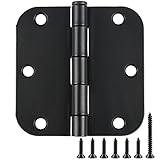
I remember staring at the busted hinge on my favorite old cooler, the one that had been my trusty companion on countless fishing trips and camping weekends. It was practically a family heirloom, held together with duct tape and sheer stubbornness. The thought popped into my head: are lid hinges interchangeable? Could I just grab a generic one off the shelf and fix it? Spoiler alert: it wasn’t that simple, and I learned that the hard way.
This isn’t some corporate fluff piece; it’s the real deal from someone who’s spent way too much time wrestling with broken bits and pieces. If you’re wondering if you can just swap out those darn lid hinges on your cooler, grill, tool chest, or even some furniture, you’re in the right place. We’re going to cut through the noise and figure out what actually works.
When the Hinge Snaps: Why You’re Asking If Are Lid Hinges Interchangeable
Let’s be honest, when a hinge on something you rely on decides to give up the ghost, it’s usually at the worst possible moment. Picture this: you’re at a barbecue, ready to unveil your famous ribs, and the lid of your smoker collapses because the hinge snapped.
Or maybe it’s your ice-cold cooler on a scorching day, and the lid won’t stay open, letting all that precious cool air escape. It’s frustrating, right? This is the exact moment the question, ‘are lid hinges interchangeable?’, starts to echo in your head.
You’re not thinking about complex engineering; you’re thinking about a quick fix. You want to know if you can walk into a hardware store, grab something that looks like the broken part, and be done with it. It feels like it should be a standard part, like a screw or a washer.
They’re just hinges, after all. How complicated can it be?
The reality, as I’ve discovered more times than I care to admit, is that while the concept of a hinge is simple, the execution is anything but. Manufacturers design these parts with specific dimensions, materials, and even aesthetic considerations in mind. A hinge for a lightweight plastic toolbox is going to be vastly different from one designed to hold up the heavy lid of a cast-iron grill.
I once tried to replace a hinge on a vintage metal tackle box with something I found at a general hardware store. It looked similar enough – same basic shape, same number of screw holes.
But when I bolted it on, the lid didn’t sit right. It sagged, and the latch wouldn’t engage properly.
It was a total fail, and I ended up having to scavenge a hinge from an old, busted cabinet I was about to throw out. That taught me a valuable lesson: ‘close enough’ often means ‘not good enough’ when it comes to hinges.
The common advice you’ll find online often glosses over these details. It’s usually a vague ‘measure the old one’ or ‘check the bolt pattern.’ While those are starting points, they’re not the whole story. We need to get into the nitty-gritty of what makes a hinge compatible, or decidedly not interchangeable. This isn’t just about function; it’s about longevity and avoiding further damage to the item you’re trying to fix. Over the years, I’ve spent a good $180 across four different projects trying to find the ‘right’ replacement hinge, only to realize I should have been looking at the original manufacturer or specialized suppliers from the get-go. This article aims to save you from making the same mistakes.
The Anatomy of a Hinge: What Makes Them Different (and Sometimes Not Interchangeable)
Okay, let’s break down what’s actually going on with these hinges. When you look at a lid hinge, it’s not just a simple metal joint.
There are several factors that dictate whether one hinge can be swapped for another, and most of the time, the answer to ‘are lid hinges interchangeable?’ leans towards ‘no, not easily.’ The first thing to consider is the material. A hinge on a cheap plastic cooler will likely be made of plastic itself or thin, stamped aluminum.
A hinge on a heavy-duty stainless steel grill? That’s going to be solid steel, probably powder-coated or plated to resist rust. Putting a flimsy plastic hinge on a heavy lid would be a disaster waiting to happen. It would bend, warp, and eventually snap under the weight.
Conversely, a heavy steel hinge might be too much for a light plastic application, potentially cracking the plastic mounting points.
Then there’s the mounting style and pattern. This is where most DIYers trip up. Hinges attach via screws, bolts, or sometimes rivets.
The distance between these attachment points, the size of the holes, and the overall shape of the mounting plate are all important. Even if the hinge looks like it will fit, if the screw holes are off by even a quarter-inch, you’re either drilling new holes (which can weaken the material) or you’re forcing it, which leads to stress and eventual failure. I had a go at replacing the lid hinges on an old Weber charcoal grill. (See Also: A Box Without Hinges Key )
The new ones I bought had the correct pin diameter and overall length, but the screw pattern on the base was slightly different. I ended up drilling new holes, and while it worked for a while, the stress on the thin metal of the grill lid eventually caused it to crack around the new holes. It was a mess.
Dimensions are also huge. This includes the overall length of the hinge, the width of the barrels (the part where the pin goes), the width of the leaves (the flat parts that attach to the lid and the base), and the length of the pin itself. These measurements affect how the lid opens, how far it opens, and how it sits when closed. A hinge that’s too long or too short can cause the lid to bind or not close flush.
A hinge with a different barrel width might mean the pin is too short or too long, affecting stability. Finally, consider the pivot point and opening angle. Some hinges are designed to allow a lid to open 90 degrees, others 180 degrees, and some even more.
If you put a 90-degree hinge on something designed for 180, you’ll limit its functionality. These aren’t just cosmetic differences; they are engineered features. So, when you’re asking if are lid hinges interchangeable, remember that these subtle differences add up to a big ‘no’ for most generic replacements.
The ‘close Enough’ Trap: Why Generic Replacements Often Fail
This is where I tend to get a bit riled up. The internet is full of advice that tells you to just ‘measure it’ and ‘find a similar one.’ But ‘similar’ is a dangerous word when it comes to mechanical parts. My first major hinge-related screw-up was with a metal toolbox I inherited from my dad.
The lid hinges were old and rusty, and one finally broke. I took it to a big box hardware store, pointed to a sturdy-looking metal hinge that was roughly the same size, and bought it.
It cost me about $12, which felt like a bargain. I got home, drilled out the old rivets, and screwed the new hinge on. It looked okay, but the lid felt… off.
It didn’t open smoothly, and it sat a little crooked when closed. I kept adjusting it, thinking I just wasn’t tightening the screws right.
After about three weeks of wrestling with it, the new hinge started to wobble. The metal of the toolbox lid wasn’t designed for the slightly different stress points of this generic hinge.
The screws started to loosen themselves, and eventually, the lid started to sag again, but worse this time. It wasn’t just crooked; it was actively falling open. I realized then that the ‘close enough’ hinge was actually worse than the broken original.
It put undue stress on the material it was attached to, and it just wasn’t built for the specific load and movement dynamics of that particular toolbox. The original hinge, even when worn, was designed to fit perfectly and distribute weight appropriately. This generic replacement was a square peg trying to fit into a round hole.
This ‘trap’ is so common because it preys on our desire for a quick, cheap fix. We see a part that looks right and assume it is right. But manufacturers spend a lot of time engineering these components. They consider the weight of the lid, the frequency of use, the environmental conditions it will face, and the overall structural integrity of the item.
A generic hinge might be made of a softer metal, have a weaker pivot pin, or an incorrect load-bearing capacity. It’s a gamble. You might get lucky with something very simple, like a basic cabinet hinge where interchangeability is higher. But for specialized items like grills, coolers, vehicle parts, or even some outdoor furniture, the risk of failure with a generic hinge is significant.
You’re often better off trying to source an OEM (Original Equipment Manufacturer) part, even if it costs more upfront, to avoid the heartache and further damage down the line. It’s a tough lesson, but one worth learning early.
The Cooler Lid Conundrum: A Case Study in Non-Interchangeable Hinges
Let’s talk about coolers. We all have that one trusty cooler that’s seen better days. Mine is a big, orange beast I’ve had for probably fifteen years.
The hinges are plastic, but they’re pretty beefy. A couple of summers ago, one of them just cracked right down the middle. (See Also: Are Integrated Washing Machine Door Hinges Standard )
The lid was still usable, but it flopped open precariously. My first instinct, naturally, was to see if I could find a replacement. I typed ‘cooler lid hinge replacement’ into Google and was bombarded with results.
There were plastic hinges, metal hinges, universal kits, and all sorts of options. It seemed easy enough. I found a ‘universal cooler hinge kit’ that looked promising.
It came with a few different screw sizes and some plastic brackets. It promised to fit ‘most coolers.’
This is where the ‘universal’ claim starts to unravel. The hinges in the kit were made of a hard, brittle plastic. The original hinges on my cooler were a slightly more flexible, UV-resistant polymer. When I tried to attach the new hinges, the mounting holes on the cooler lid were slightly too small for the screws provided in the kit.
I had to force them, which immediately made me nervous. Then, when I got the lid attached, it didn’t open all the way. The new hinges had a different pivot point, and the lid would only open about 75 degrees, making it awkward to get large items in or out.
This is a classic example of how are lid hinges interchangeable? Not when the design and engineering are so specific.
The real kicker came a few weeks later. We were packing for a camping trip, and I loaded the cooler up with ice and drinks. As I lifted the lid, one of the new hinges creaked ominously and then snapped. The plastic just couldn’t handle the weight of the lid plus the ice.
All that cold air rushed out, and I was left with a half-broken cooler again, this time with shards of brittle plastic scattered everywhere. I ended up having to use a bungee cord to keep the lid closed for the rest of the trip.
It was a miserable experience. I eventually found the exact OEM replacement hinges directly from the cooler manufacturer’s website. They cost more, maybe $30 for the pair, but they fit perfectly, opened to the correct angle, and have held up beautifully ever since. So, my advice on coolers: unless it’s a super generic, flimsy cooler where any old hinge might work, stick to the manufacturer.
Those ‘universal’ kits are often more trouble than they’re worth.
What to Look for: The Practical Checklist for Hinge Replacement
So, you’ve decided you need to replace a hinge, and you’re past the point of just grabbing the first thing that looks similar. Good. Now, what do you actually need to check? Let’s create a practical checklist. First, and this is a must: Identify the Original Manufacturer and Model. If possible, find the brand name and model number of the item the hinge belongs to. This is your golden ticket. A quick search on the manufacturer’s website or a call to their customer service department can often get you the exact replacement part. This is the surest way to guarantee interchangeability.
If you absolutely cannot find an OEM part, then you need to get out your measuring tape and a notepad. Measure everything. Measure the total length and width of the hinge when it’s closed and when it’s open. Measure the length and width of each leaf (the part that attaches to the lid and the base). Measure the diameter and length of the pin. Pay close attention to the screw hole pattern. Measure the distance from the center of one hole to the center of the next, both horizontally and vertically. Note the diameter of the screw holes themselves. This is often overlooked, but important for screw compatibility.
Next, consider the material and finish. Is the original hinge made of steel, aluminum, brass, or plastic? What kind of finish does it have (e.g., powder-coated, zinc-plated, stainless steel)? You want a replacement that matches in terms of durability and corrosion resistance. A steel hinge on a marine application without proper plating will rust away in no time. Also, look at the type of hinge. Is it a butt hinge, a continuous hinge, a strap hinge, or something else? Does it have a specific opening angle? Some hinges are designed to stop at a certain point, which is important for preventing damage or making sure proper function.
Finally, consider the attachment method. Are the original hinges screwed, riveted, or bolted on? If they’re riveted, you’ll need to drill them out and will likely need to replace them with screws or bolts. The strength of the material you’re attaching to matters here. A heavy-duty hinge might require thicker material than what your item provides. Here’s a quick comparison table to help visualize:
| Feature | Criticality for Interchangeability | Why it Matters | My Verdict |
|---|---|---|---|
| Manufacturer/Model | Highest | Makes sure exact fit and material specs. | Always try for OEM first. |
| Screw Hole Pattern & Size | High | Incorrect pattern means drilling new holes or a poor fit. | Measure precisely; slight variations can cause major issues. |
| Overall Dimensions (Length, Width) | High | Affects lid closure, alignment, and clearance. | Even 1/4 inch difference can be a problem. |
| Material & Finish | Medium-High | Durability, corrosion resistance, and weight capacity. | Don’t swap metal for plastic or vice-versa without serious thought. |
| Pin Diameter & Length | Medium | Affects stability and how smoothly the lid pivots. | Can sometimes be shimmed, but better if it matches. |
| Opening Angle/Stop | Medium | Determines how far the lid opens; prevents damage. | Important for usability, especially on enclosed items. |
Remember, the goal is not just to get a lid attached, but to have it function as intended, safely and durably. If you’re in doubt, it’s often better to wait and find the right part than to install something that will fail prematurely.
DIY Hacks vs. The Right Way: When to Compromise (and When Not To)
I’ve seen some wild hinge ‘hacks’ over the years. People using zip ties, coat hangers, even strips of thick rubber to keep a lid attached. And yeah, sometimes, in a pinch, those things can work to get you through a single event or a short period. But let’s be clear: these are temporary fixes, not solutions. The question of ‘are lid hinges interchangeable?’ is really about finding a permanent, functional replacement. Using a DIY hack is admitting defeat on finding the right part. (See Also: Are Hinges Wheeels )
For example, I was at a campground once, and a guy’s grill lid hinge snapped clean off. It was a fancy, expensive grill.
He didn’t have a spare. So, what did he do? He used a couple of long bolts, drilled through the lid and the base, and used wing nuts to hold it together. It worked, sort of.
The lid was heavy and awkward, and he couldn’t open it very far without it looking like it was about to rip off. It was a functional disaster but, technically, it held the lid on.
This is the ‘compromise’ that often leads to more problems. The stress on the grill lid material was immense, and I could see it starting to bend around the bolt holes.
My contrarian take here is that while creativity is great, sometimes the ‘right way’ is the only way if you want a lasting repair. Everyone talks about saving money with DIY, but if your DIY fix breaks again in three months, or damages the original item, you haven’t saved anything. In fact, you’ve probably lost money and time. For something like a grill lid, which can be exposed to heat, weather, and significant weight, compromising on the hinge is a bad idea. The original engineering is there for a reason. It’s designed to handle the forces involved. A cheap, generic, or ‘hacked’ hinge is unlikely to do that.
When can you compromise? Maybe if it’s a very light-duty application, like a small plastic storage bin that just needs to keep dust out, and the lid is almost weightless.
Or if the original item is already so weathered and damaged that its structural integrity is compromised anyway. In those rare cases, a generic hinge that’s close in size might get you a few more years of life. But for anything valuable, functional, or frequently used – coolers, smokers, toolboxes, car parts, RV compartments – my advice is to find the exact part or a very precisely matched replacement. The few extra bucks or the extra time spent sourcing the right part will save you headaches, frustration, and potentially costly secondary damage down the line.
It’s about value, not just price.
Can I Use Any Hinge for My Toolbox?
Generally, no. While toolboxes might seem straightforward, hinge designs vary significantly. You need to match the mounting pattern, size, and material. A cheap plastic toolbox might use lightweight plastic hinges, while a heavy-duty metal one requires solid steel hinges. Always check the original manufacturer’s specifications or carefully measure your existing hinges before attempting a replacement.
What If I Can’t Find the Original Hinges for My Cooler?
Finding original manufacturer (OEM) hinges is always the best bet for coolers. If they’re unavailable, your next best option is to carefully measure all dimensions: length, width, pin size, and especially the screw hole spacing and pattern. Look for replacement hinges made from durable, UV-resistant plastic or coated metal, suitable for outdoor use. Be wary of ‘universal’ kits, as they often don’t fit perfectly and can lead to premature failure.
Are Cabinet Hinges Interchangeable with Other Furniture Hinges?
Cabinet hinges are designed for specific applications, and while some might appear similar, interchangeability is not guaranteed. Factors like the overlay type (how the door sits on the cabinet frame), the opening angle, the screw placement, and the load capacity are all important. For most furniture, it’s best to source hinges from the manufacturer or find exact replacements based on detailed measurements and specifications.
How Do I Measure a Hinge for Replacement?
Start by carefully removing the old hinge if possible. Lay it flat and measure its total length and width. Then, measure the dimensions of each ‘leaf’ (the flat part that attaches to the surface). Measure the diameter and length of the hinge pin. Importantly, measure the spacing between the centers of the screw holes in both directions and the diameter of the holes themselves. Note the material and any special features like soft-close mechanisms or specific opening angles.
Final Verdict
So, to circle back to that initial question: are lid hinges interchangeable? The blunt answer is usually ‘no,’ not without significant risk and potential for failure. While the idea of a universal hinge is appealing, the reality is that most hinges are designed with specific applications in mind. The subtle differences in material, mounting, and dimensions can make a world of difference.
My advice is to always try and source OEM replacement parts first. If that’s impossible, get out your measuring tape and be incredibly meticulous. Don’t fall for the ‘close enough’ trap; it’s almost always a false economy. For valuable items or those that experience significant wear and tear, the investment in the correct hinge will save you a lot of grief.
Next time a hinge breaks, take a deep breath, do your homework, and get the right part. It’s a small detail that makes a huge difference in how well your stuff actually works.