I remember the first time I got properly spooked. It was a dark night, and I was home alone. Every creak of the house, every rustle outside, sounded like an intruder. I’d always just locked the deadbolt, assuming that was enough. But that night, the question, are locking doors the best way, really hit home. It felt like a flimsy barrier against whatever lurked in the shadows.
Years later, after a lot of trial and error (and some frankly embarrassing purchases), I’ve got a clearer picture of what actually keeps you secure and what’s just snake oil. We’re going to cut through the marketing hype and talk about what really matters when it comes to securing your home.
So, Are Locking Doors the Best Way? Let’s Get Real.
Look, the simple answer is: yes, locking your doors is fundamentally the most basic and necessary step in home security. If your doors aren’t locked, no amount of fancy tech or extra deadbolts will matter. It’s like wearing a bulletproof vest but leaving the helmet off. It’s a starting point, a a must baseline. But is it the best way, meaning the only or ultimate way? Hell no. Anyone who tells you just locking your deadbolt is the pinnacle of home security is either blissfully unaware or trying to sell you something simple.
I’ve seen people get complacent. They lock the door, pat themselves on the back, and think they’re Fort Knox. I’ve also been that person. I once had a cheap side door that the lock looked fine, but the frame was rotten. A good shove, and the whole thing would have popped open. The lock itself was perfectly functional, but the door it was attached to was a joke. That taught me a valuable lesson: the door, the frame, the hinges – the entire system – matters as much, if not more, than the lock itself. The phrase ‘are locking doors the best way’ implies a singular solution, and security is rarely that simple.
Think about it: a thief who wants in bad enough will find a way. But that doesn’t mean you should just give up. It means you need to make it harder for them, and make your home a less appealing target. The goal isn’t to be impenetrable, it’s to be the path of least resistance for a potential criminal. If your neighbor’s house is easier to break into, they’ll likely move on. So, while locking is key, it’s just one piece of a much bigger puzzle. We need to consider the quality of the lock, the integrity of the door and frame, and then layer on additional deterrents and detection methods. It’s about creating a multi-layered defense.
The common advice to ‘just lock your doors’ is true, but it’s also infuriatingly incomplete. It’s like telling someone to ‘just breathe’ if they’re drowning. Yes, breathing is important, but you need to get them out of the water first. For years, I focused only on the lock. I’d buy the fanciest deadbolt I could find, install it, and feel secure. Then I’d realize my flimsy screen door was practically held on by hope, or that the wood around the strike plate was splintered. The lock was only as good as the weakest part of the door assembly.
What to Actually Look for in a Lock (and What to Avoid)
When you’re staring at a wall of locks in the hardware store, it’s easy to get overwhelmed. Most people just grab the one that looks most expensive or has the most ‘security features’ listed on the box. Big mistake. I fell for that trap more times than I care to admit. I once bought a lock that advertised ‘tamper-proof’ something or other. Turns out, it was tamper-proof if you were a squirrel. A determined person could have picked it with a paperclip. The packaging is designed to make you feel safe, not to reflect reality.
Here’s the deal: you need to understand the different types of locks and what makes them strong. For exterior doors, you absolutely want a deadbolt. That’s the one with the long bolt that extends deep into the door frame. Don’t skimp here. Look for the ANSI Grade. Grade 1 is commercial heavy-duty, Grade 2 is good for residential, and Grade 3 is pretty much a doorknob lock that offers minimal security. I aim for Grade 2 for my main doors, and I’ve never regretted spending a little more. A Grade 3 lock might as well be a suggestion.
The mechanism inside matters too. Pin tumbler locks are common, but some are much better than others. Bump keys are a thing, and if a lock is easily ‘bumped,’ it’s basically useless. High-security locks often have features like restricted keyways (meaning you can’t just get copies made anywhere), drill resistance, and pick resistance. Companies like Medeco and Mul-T-Lock are known for this, but they come with a hefty price tag. For most folks, a solid Grade 2 deadbolt with decent internal pin tumblers is a good balance of security and cost. I spent about $180 on two really solid deadbolts for my front and back doors after my first set of cheap ones failed after only two years of use.
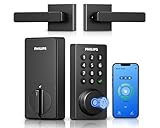
And then there are smart locks. They look cool, they’re convenient, and the marketing makes them sound like the future of security. Some of them are quite good, offering remote locking/opening and activity logs. (See Also: Are Sesame Seeds Kosher For Passoveris Pollock Kosher )
But here’s my contrarian take: I think for many people, smart locks introduce more vulnerabilities than they solve. They rely on Wi-Fi, apps, and batteries. A power outage, a Wi-Fi glitch, or a dead battery can leave you locked out or, worse, provide an entry point for hackers. I had one smart lock that was constantly disconnecting from Wi-Fi.
I ended up ripping it out and going back to a traditional deadbolt because the hassle and the nagging worry about its reliability outweighed the convenience. I’d rather have a physical lock I trust implicitly than a digital one that might fail me when I need it most.
What to Look for: A Quick Checklist
- ANSI Grade: Aim for Grade 2 or higher for exterior doors.
- Bolt Length: A longer bolt (at least 1 inch) that extends deep into the frame is important.
- Keyway: Look for pick-resistant designs. Avoid basic pin tumblers if possible, or opt for a higher-quality version.
- Material: Solid metal construction is best. Avoid flimsy plastic parts.
- Strike Plate: Make sure it’s heavy-duty and secured with long screws (3 inches or more) that go into the wall stud. This is often overlooked and is a major weak point.
Common Mistakes People Make (and How to Avoid Them)
I’ve made so many mistakes in my quest for a secure home that I could write a book. The biggest one, I think, is focusing on just one aspect of security. People install a top-of-the-line deadbolt on a hollow-core door with a flimsy frame. It’s like putting a diamond in a cardboard box. The lock is only as strong as the door and frame it’s installed in. If someone can kick your door in, the best deadbolt in the world won’t do squat. I learned this the hard way when a friend’s apartment was broken into, not by picking the lock, but by simply kicking the door in. The lock was fine, the door was not.
Another huge mistake is the strike plate. This is the metal plate on the door frame that the deadbolt slides into.
Most standard ones are flimsy and secured with short screws. This is a prime spot for a kick-in. You need a heavy-duty strike plate with screws that are at least 3 inches long, ideally 3.5 or 4 inches, and these screws need to go all the way into the wall stud behind the frame. This creates a much stronger anchor.
I upgraded my strike plates on my front and back doors, and it made a noticeable difference in how solid the door felt when locked. It cost me maybe $20 in hardware and an hour of work, but it’s one of the most effective upgrades I’ve made.
People also neglect their sliding glass doors. These are notoriously weak. Many have basic locks that can be lifted off their tracks with a pry bar or even just lifted with a bit of force. You need to add secondary security for these. Things like a Charley bar (a metal bar that wedges the sliding door into the frame) or even just a dowel rod placed in the track work wonders. I used a dowel rod for years before I invested in a proper Charley bar, and it was surprisingly effective. It’s a low-cost, high-impact fix.
Finally, there’s the issue of key control. How many people have copies of your keys? Do you ever let a contractor or a stranger have a key? If you’re not careful, your key could end up in the wrong hands. Regularly rekeying your locks, especially if you move into a new place or if a key is lost, is a smart move. It’s not as expensive as a whole new lock and can give you peace of mind. I rekeyed my locks when I moved into my current place, and it cost me about $60 for three locks.
Real-World Use Cases and Anecdotes
Let’s talk about how this plays out in the real world. I’ve lived in a few different places, and my security needs have varied. When I lived in a ground-floor apartment in a busy city, I was hyper-aware of every sound. I had a solid deadbolt, but I also reinforced the door frame with longer screws and added a door jammer for when I was home. It was about creating layers. The idea wasn’t to stop a determined professional burglar, but to deter the opportunist who might be casing the building. (See Also: Are Sliding Door Locks Common )
I remember one night, I heard footsteps outside my door. My heart leaped. I was home alone. I grabbed my phone, ready to call the police, but then I heard the footsteps move on. Later, I learned a neighbor had been having a party and people were coming and going. But in that moment, the anxiety was real. The physical security I had in place, however basic, gave me a sense of preparedness. I wasn’t paralyzed by fear because I knew I’d done what I could. The lock was engaged, the door jammer was in place. It wasn’t about feeling invincible, but about feeling prepared.
On the flip side, I had a friend who was a victim of a break-in. Their house was in a quiet suburban neighborhood, and they thought they were safe. They had standard builder-grade locks.
One evening, they went out for dinner, and when they returned, their back door was ajar. The lock was still engaged, but the door frame had been visibly splintered. The thief hadn’t picked the lock; they’d forced the door open.
It was a stark reminder that the lock is only one part of the equation. The integrity of the door and frame is just as important, if not more so, for resisting forced entry. This is why the question ‘are locking doors the best way’ needs a nuanced answer.
Another time, I was visiting a family member who had a smart lock. They were raving about how convenient it was – they could let people in remotely, check if the door was locked from their phone.
I was skeptical. Sure enough, a few weeks later, they called me in a panic.
The smart lock had malfunctioned, and they were locked out of their own house. The app wouldn’t connect, the keypad wasn’t responding. They had to call an locksmith to get in.
That experience cemented my reservations about relying solely on smart technology for primary security. A simple, well-made mechanical lock has a reliability that technology often struggles to match. For me, mechanical is still king for the core security.
DIY Security Upgrades That Actually Work
You don’t need to be a master carpenter or a security expert to make your home significantly more secure. There are plenty of DIY upgrades that are relatively inexpensive and highly effective. First and foremost, as I’ve mentioned, is reinforcing your door frame and strike plate. This is probably the single best bang-for-your-buck upgrade you can do. Get a heavy-duty strike plate and at least three-inch screws. You might need a drill and a screwdriver, but that’s about it. When you install it, make sure those screws go into the studs. You’ll feel the difference; the door will feel much more solid when it’s shut and locked. (See Also: Are The Rams Locked Into The 6th Seed )
For sliding glass doors, consider a Charley bar or a security bar that wedges the door. These are simple metal bars that sit in the track and prevent the door from being slid open. They are incredibly effective and easy to install. Another option is a track security pin or a simple dowel rod cut to size. This prevents the door from being lifted off its tracks, which is a common method of entry for sliding doors. I’ve seen these simple solutions stop break-ins cold. They are low-tech but high-reward.
Window security is another area often overlooked. Most standard windows have simple latches. For ground-floor windows or those easily accessible from the outside, consider adding window security bars, security film, or even just key-operated locks. Window security film is great because it doesn’t change the look of your window but makes the glass much harder to break. If someone tries to smash it, the glass will crack but stay largely in place, making entry difficult and noisy. It’s a subtle but effective deterrent.
Finally, think about lighting. Good exterior lighting can be a huge deterrent. Motion-activated lights are fantastic. They startle potential intruders and alert you to activity. They don’t have to be expensive; you can find decent ones at any hardware store. Illuminating dark corners, entryways, and the perimeter of your home makes it a much less attractive target. Criminals prefer the cover of darkness, so take that away from them.
| Security Measure | Ease of Installation | Cost (Estimate) | Effectiveness | My Verdict |
|---|---|---|---|---|
| High-Security Deadbolt (Grade 2+) | Moderate | $80 – $200 | High | Key. The foundation of your door security. Spend wisely here. |
| Reinforced Strike Plate & Frame Screws | Easy | $10 – $30 | Very High | Must-have. Hugely improves resistance to forced entry. Don’t skip. |
| Sliding Door Security Bar/Dowel | Very Easy | $15 – $50 (Bar) / $5 (Dowel) | High | Important for sliding doors. Simple and effective. |
| Window Security Film | Moderate | $30 – $100 per window | Moderate | Good for adding a layer of resistance without visible bars. |
| Motion-Activated Exterior Lights | Easy | $30 – $100 | Moderate (Deterrent) | Excellent deterrent, makes your home less appealing to lurkers. |
| Smart Lock (Premium) | Moderate | $150 – $300+ | Moderate to High (depends on model/features) | Convenient, but brings new risks. Use with caution and always have a mechanical backup. |
People Also Ask:
How Do I Make My Front Door More Secure?
To make your front door more secure, start with a high-quality deadbolt (ANSI Grade 2 or higher) with a long bolt that extends deep into the frame. Importantly, reinforce the door frame and strike plate with long screws (3-inch minimum) that reach into the wall studs. Make sure the door itself is solid-core, not hollow. Consider adding a secondary lock or a door reinforcement device for extra protection, especially for older or weaker doors.
What Is the Most Secure Type of Door Lock?
The most secure type of door lock is generally a high-security mechanical deadbolt. These often feature hardened steel components, drill and pick resistance, and sometimes restricted keyways that prevent unauthorized duplication. Brands like Medeco, Mul-T-Lock, and some higher-end Schlage or Kwikset models offer superior security over standard locks. While smart locks offer convenience, their reliance on electronics can introduce potential vulnerabilities that mechanical locks don’t have.
What Is the Weakest Part of a Door?
The weakest part of a door, paradoxically, is often not the lock itself but the door frame and the strike plate. If these are weak or improperly secured, a strong lock can still be defeated by brute force, such as kicking the door in. The screws holding the strike plate to the frame are particularly vulnerable. If they are short and only go into the wood frame, the frame can splinter, allowing the door to open regardless of the lock’s integrity.
Can Someone Kick in a Locked Door?
Yes, absolutely, someone can kick in a locked door. The ability to do so depends heavily on the quality and installation of the door, frame, and lock mechanism. A hollow-core door or a door with a weak frame and a standard strike plate secured by short screws can be kicked in relatively easily. Even a solid-core door can be forced if the frame is weak or the strike plate is not adequately reinforced into the wall studs. This is why reinforcing the frame and strike plate is a important security measure.
Verdict
So, to circle back to our initial question: are locking doors the best way? Locking them is the absolute baseline, the minimum effort required for any semblance of security. But the ‘best way’ involves much more than just turning a key. It’s about a solid door, a solid frame, a quality lock, and thoughtful secondary measures.
Don’t just assume that because your door is locked, you’re safe. Take a good look at your entire door system. Check the frame, the hinges, and especially that strike plate. A few simple, inexpensive upgrades can make a world of difference and give you real peace of mind, far beyond what just a lock alone can offer.
If you’re serious about home security, stop thinking about the lock as the only solution and start thinking about it as part of a complete defense. What’s the weakest link in your own home’s perimeter right now?