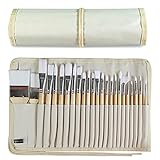
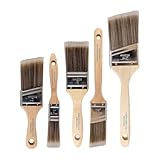
I remember staring at a wall of brushes in an art supply store, then looking at the ones I used for my foundation. Seriously, what’s the difference? Am I paying for marketing fluff, or is there some actual science behind why my drugstore foundation brush costs $15 and a similarly shaped brush for oil paints costs $50?
The question of are makeup brushes the same as paint brushes is one that pops up more often than you’d think, especially if you’ve ever eyed those fancy artist brushes and wondered if they’d work wonders for your eyeshadow.
Spoiler alert: they’re not identical, and trying to swap them willy-nilly can lead to some… interesting results.
Why Your Foundation Brush Isn’t an Easel Key
Okay, let’s get down to brass tacks. Are makeup brushes the same as paint brushes? Not really. While they both involve applying a medium to a surface with bristles, the devil is in the details, and those details matter. The biggest difference? The materials and the intended use. Paint brushes are designed to handle pigments suspended in solvents like oil, acrylics, or watercolors. These mediums can be harsh, thick, and require brushes that can withstand abrasion and chemical reactions. Makeup, on the other hand, is typically oil-based, water-based, or cream-based, and it’s applied to delicate skin. This means makeup brushes need to be gentle, hygienic, and able to blend product smoothly without irritating your face.
Think about the bristles themselves. For paint, you might see hog hair, synthetic fibers designed for specific paint types, or even squirrel hair for watercolors. These are chosen for their ability to hold a lot of pigment, create specific textures, or maintain a sharp edge for detail work. They can be stiff, absorbent, or designed to release paint slowly and evenly. My first foray into oil painting involved a set of hog bristle brushes that felt like tiny scrubbing pads. They were great for pushing thick paint around, but I can’t imagine slathering foundation with them. Imagine the texture!
Makeup brushes, especially those for foundation, concealer, and powder, are often made from synthetic fibers or animal hair like sable, goat, or pony. Synthetics are fantastic for liquid and cream products because they don’t absorb the product like natural hair can, making them easier to clean and more hygienic. Natural hairs, on the other hand, are prized for their ability to pick up and blend powder products beautifully, giving that soft-focus finish.
The density and shape are also custom for specific makeup applications. A fluffy powder brush needs to distribute product lightly, while a dense concealer brush needs to pack product precisely where you want it.
Trying to use a stiff, large paint brush for your highlighter would be a disaster – think streaks and uneven application, not a subtle glow.
My own disastrous attempt involved using a fine liner paint brush for my brows once. I was in a pinch, didn’t have my brow brush, and thought, ‘it’s just hair, right?’ Wrong. The bristles were too stiff, too long, and held way too much brow pomade. Instead of feathery strokes, I ended up with two very stark, blocky caterpillars. It looked like I’d drawn them on with a Sharpie. Lesson learned: shape and flexibility are key for precision.
The Bristle Breakdown: What’s Really Under the Hood?
When we talk about the ‘bristles,’ that’s where the fundamental differences really show up. For paint brushes, the bristles are engineered for durability and specific paint delivery systems. Natural animal hairs like sable, squirrel, and hog bristle are common. Sable, for instance, is incredibly soft and holds a lot of liquid, making it perfect for delicate watercolor washes where you want smooth, even coverage and minimal texture.
Hog bristle, conversely, is stiffer and coarser, ideal for oil or acrylic paints where you want to build texture, create visible brush strokes, and have a brush that can handle scrubbing and thick paint. Synthetic fibers have come a long way, and high-quality synthetics can mimic the properties of natural hair for specific applications, often offering better durability and resistance to solvents found in acrylics or oils.
They are also a more ethical and often more affordable choice for artists.
Now, flip that to makeup brushes. The primary concerns here are gentleness on the skin, product pickup and release, and hygiene. Synthetic bristles are king for liquid and cream foundations and concealers. (See Also: Can Acrylic Paint Go In An Air Brush )
Materials like nylon, polyester, and Taklon are commonly used. These fibers are non-porous, meaning they don’t soak up your expensive foundation or cream blush, which is a huge win for both product longevity and cleanliness.
They are also generally hypoallergenic and easy to wash thoroughly. For powder products like blush, bronzer, and eyeshadow, natural hairs are often preferred. Goat hair is a popular choice for powder brushes because it’s soft, fluffy, and has natural ‘scales’ that help pick up and distribute powder evenly.
Sable, though much more expensive, is also used for high-end eye brushes because of its incredible softness and precision.
The density and taper of makeup brush bristles are also meticulously designed. A dense, flat-top foundation brush is meant to buff product into the skin for a smooth, opaque finish. A fluffy, tapered blending brush for eyeshadow is designed to diffuse color softly in the crease. These specific shapes and densities are not usually found in standard paint brush sets, which tend to focus more on the tip shape (round, flat, fan) and bristle stiffness for paint application rather than skin application. I once bought a cheap ‘foundation brush’ that was basically just a stiff, flat paintbrush from a craft store. It was scratchy, patchy, and left streaks. It was clear the density and taper were all wrong for makeup.
Here’s a little table to break it down:
| Feature | Paint Brushes | Makeup Brushes | Verdict |
|---|---|---|---|
| Bristle Material | Hog bristle, sable, squirrel, synthetic (for various paints) | Synthetic (nylon, Taklon), natural (goat, pony, sable – for specific products) | Makeup prioritizes gentleness and non-absorption; paint prioritizes durability and paint-specific properties. |
| Primary Use | Applying paint (oil, acrylic, watercolor) to canvas, paper, etc. | Applying makeup to skin (foundation, powder, blush, eyeshadow) | Different substrates and mediums require different brush characteristics. |
| Flexibility/Stiffness | Varies greatly; can be very stiff for texture or very soft for washes. | Generally softer and more flexible for gentle skin application and blending. | Makeup brushes need to be forgiving on skin. |
| Product Absorption | Varies; some natural hairs absorb well for pigment load. | Synthetics are designed to minimize absorption; natural hairs vary. | Makeup brushes, especially for liquids, aim to keep product on the surface. |
| Hygiene Considerations | Cleaned with solvents; less emphasis on daily washing. | Frequent washing is key due to skin contact and product buildup. | Makeup brushes require more rigorous and frequent cleaning. |
The Shape of Things to Come (on Your Face)
Beyond the bristles, the actual shape and design of makeup brushes are incredibly specific, and this is where the biggest functional differences lie if you’re wondering if are makeup brushes the same as paint brushes. Think about the kind of precision you need for makeup. You might need to apply a tiny dab of concealer under your eye, blend eyeshadow smoothly into your crease, or contour your cheekbones with a specific angle. These tasks require brushes with very particular shapes, tapers, and densities that are rarely found in standard art brush sets.
For example, a foundation brush might be flat and paddle-shaped to buff product smoothly, or it could be a dense, domed brush for a more airbrushed finish. A concealer brush is often smaller and more precise, with a tapered tip to get into tight spots. Eyeshadow brushes range from small, dense pencils for detailed application to fluffy blending brushes that are wider and softer. Even powder brushes have different densities and shapes – a large, fluffy one for all-over setting versus a smaller, more targeted one for baking under the eyes.
Paint brushes, while they come in various shapes (round, flat, filbert, fan, bright), are generally designed for applying paint to a larger, more forgiving surface. A flat brush might be used to create broad strokes or sharp edges. A round brush is for lines and details.
A fan brush can create wispy textures. While you could use a round paint brush for a very precise eyeliner application, it’s likely to be far less effective and harder to control than a dedicated eyeliner makeup brush. The length of the bristles, the way they are bundled, and the ferrule (the metal part that holds the bristles) are all optimized for paint flow and control on a canvas, not necessarily for blending pigment on your eyelid without fallout or patchiness.
I once tried using a tiny round paint brush – the kind you might use for miniature figures – to apply liquid liner. It was a nightmare. The bristles were too stiff, didn’t flex enough, and I ended up with a shaky, uneven line that looked like a toddler had drawn it. My dedicated eyeliner brush, on the other hand, has a fine, slightly angled tip with just the right amount of flexibility to create a smooth, sharp flick every single time. The difference is purely in the engineering for the intended task. The way the bristles are set into the ferrule, their length relative to the handle, and the overall balance are all calibrated differently for makeup versus paint.
Why Are Makeup Brushes Different From Paint Brushes?
Makeup brushes are designed for the delicate nature of skin and the specific textures of cosmetic products, prioritizing gentleness, precise application, and hygiene. Paint brushes are engineered to handle various paint mediums and surfaces, focusing on durability, pigment load, and texture creation. The materials, shapes, and densities are custom to these distinct purposes.
The Big Mistake: When Good Intentions Go Bad
So, we’ve established they’re not the same. But what happens when you make the mistake of trying to use them interchangeably? I’ve already confessed to my brow disaster and eyeliner woes. The most common error I see, and one I’ve made myself when I was younger and more reckless with my money, is thinking that a fluffy powder brush is just… a fluffy brush. So why not use a big, fluffy paint brush for my blush or setting powder? (See Also: Can Acrylic Paints Be Used In An Aqua Brush )
The result? Often, it’s just not pretty. A large, soft paint brush, especially one intended for watercolors or softer acrylics, might seem like a good stand-in for a powder brush. However, the density of bristles is usually lower, meaning it won’t pick up and distribute powder as effectively. You might end up with uneven application, heavy splotches of color instead of a diffused glow, or excessive fallout. Conversely, a stiff, coarse paint brush meant for thick oils could feel like sandpaper on your face, leading to redness and irritation, especially if you have sensitive skin. The bristles might not blend product into the skin; they’ll just scratch it on.
Another classic mistake is assuming any small, pointy brush can do detailed work. I’ve seen people try to use tiny detail paint brushes for intricate eyeshadow looks or cut creases. While they might seem precise, the bristles are often too long and flexible, or too stiff and unforgiving. They can’t hold enough product to make a decent mark, or they’ll create harsh lines that are impossible to blend. The ferrule on a paint brush might also be shaped differently, leading to awkward grip and control when you’re trying to do something as delicate as drawing a sharp wing of eyeliner.
My friend Sarah once tried using a cheap set of acrylic paint brushes she got on sale to do her entire face. She was shocked when her foundation looked streaky, her blush was patchy, and her eyeshadow blended into a muddy mess. She blamed the makeup, not the tools. It took me an intervention with my own brush collection to show her the light. The lesson? Tools are designed for a reason. While there’s definitely overlap and you can sometimes get away with creative substitutions in a pinch (I’ve used a clean toothbrush for applying brow gel in a dire emergency, it was surprisingly effective!), relying on paint brushes for your daily makeup routine is a recipe for frustration.
Can I Use Artist Paint Brushes for Makeup?
While it might seem tempting, using artist paint brushes for makeup is generally not recommended for optimal results and skin comfort. Their bristles are designed for different mediums and surfaces, often being too stiff, too absorbent, or not shaped correctly for precise and gentle makeup application. This can lead to streaky, patchy application, skin irritation, and difficulty blending products.
Real-World Use: When a Substitute Might (barely) Work
Let’s be real for a second. Are makeup brushes the same as paint brushes? No. But are there situations where you might need to improvise and a paint brush could technically work in a pinch? Maybe. Think of it as an emergency backup, not a replacement.
For example, if you’re a watercolor artist and you’ve run out of your fine detail brush for applying a very specific, thin line of color, you might consider a dense, fine-tipped makeup brush (like a lip brush or a very small concealer brush). The synthetic fibers in a good makeup brush can hold a decent amount of liquid and offer precision. Conversely, if you’re a makeup artist on a shoot and you’ve forgotten your cream blush, but you have a very soft, flat wash brush from your watercolor set that’s been thoroughly cleaned and sanitized, you might be able to use it to dab and blend the cream onto the cheeks. The key here is the type of paint brush and the type of makeup. A soft, dense synthetic watercolor brush is a far cry from a stiff, bristle-heavy oil painting brush.
I once traveled light and forgot my eyeshadow blending brush. I had a tiny, soft, round synthetic brush in my art kit that I used for adding tiny highlights to paintings. It was surprisingly effective at diffusing the edges of my eyeshadow, though it took longer than my usual fluffy brush. The bristles were soft enough not to scratch, and the shape, while not perfect, allowed for some control. However, it was a one-off. I wouldn’t rely on it regularly.
The LSI keyword ‘cosmetic application’ is relevant here. The entire design philosophy behind makeup brushes revolves around cosmetic application. This means considering how products interact with skin, how they blend, and how they are cleaned. Paint brushes are about pigment application to a non-living surface. The demands are fundamentally different. A well-designed makeup brush is an investment in good application and healthy skin hygiene. Trying to cut corners with paint brushes often ends up costing you more in time and frustration, not to mention potentially ruining your makeup look.
The one area where there might be slight overlap, and I stress slight, is with very specific detail work. If you are an artist who uses very fluid acrylics or inks and needs extreme precision, a high-quality synthetic makeup brush designed for liquid products could potentially hold and dispense that medium well. Similarly, a very soft, small artist brush might be able to dab a bit of liquid highlighter onto a specific spot, but you’d still risk a less smooth blend than with a dedicated tool.
Do Makeup Brushes Absorb More Product Than Paint Brushes?
It depends on the materials. Synthetic makeup brushes are designed to absorb less product, especially liquids and creams, making them hygienic and economical. Natural hair makeup brushes and many paint brushes made from natural hairs can absorb more product. The key difference is that makeup brushes, particularly for liquids, are engineered to keep product on the surface for application, while some paint brushes are designed to hold a large volume of pigment for artistic effect.
Practical Tips for Choosing and Caring for Your Tools
So, you’ve decided you need the right tools for the job. Whether you’re a makeup enthusiast or an artist, understanding what to look for and how to care for your brushes will save you money and frustration in the long run. When buying makeup brushes, I always tell people to consider the type of makeup they use most often.
If you’re all about liquid foundation, invest in good synthetic brushes. If you love powder products, a few quality natural-hair brushes will make a world of difference. Pay attention to the density and shape – watch tutorials, read reviews, and see what shapes are recommended for your specific needs. (See Also: A Brushes Digital Painting )
A dense, flat-top kabuki brush is great for buffing powder foundation, while a fluffy, tapered brush is better for bronzer or blush. For eyeshadow, you’ll want a variety: a flat shader brush to pack on color, a fluffy blending brush for softening edges, and a pencil brush for precision.
My personal rule of thumb: for foundation, concealer, and cream products, go synthetic. For powders and blending, natural or high-quality synthetic blends are your friend. And don’t be afraid to mix and match brands and bristle types. Some of my favorite brushes are from different lines, each serving a specific purpose. I spent a good $180 over the first year trying out different brands before I found my holy grail foundation brush, a synthetic one that costs about $30. It was worth every penny.
Now, for paint brushes, the same principles apply, but you’re looking at different performance metrics. Are you using heavy body acrylics? You’ll want stiffer bristles, likely synthetic or hog bristle, that can handle the thick paint. Are you a watercolorist? Soft, absorbent natural hairs like sable or squirrel, or high-quality synthetics that mimic them, will give you the fluid control you need. Think about the consistency of your paint and the effects you want to achieve. Do you want sharp lines or soft washes? Texture or smooth gradients? Your choice of brush should align with those goals.
Here’s a really simple care guide that applies to both, though the cleaning agents will differ:
- Clean Regularly: Makeup brushes should be washed at least once a week (daily for foundation brushes). Paint brushes should be cleaned immediately after each use, especially with acrylics or oils, before the paint dries.
- Use the Right Cleaner: For makeup brushes, use a gentle brush cleanser, baby shampoo, or even mild soap. For paint brushes, use water for watercolors, and specific brush cleaners or solvents (like mineral spirits for oils) for other mediums.
- Rinse Thoroughly: Make sure all cleanser is washed out. Leftover product can degrade bristles and affect performance.
- Reshape and Dry: Gently reshape the bristles while wet. Lay makeup brushes flat or hang them bristles-down to dry, never bristles-up (water can seep into the ferrule and loosen the glue). Lay paint brushes flat or stand them bristles-up.
- Store Properly: Keep brushes in a dry place. Makeup brushes can be stored in cases or cups, ideally not crammed together. Paint brushes should be stored upright or flat, away from dust and humidity.
I learned the hard way about drying makeup brushes. For years, I’d just prop them up in a cup. My favorite fluffy powder brush started shedding like crazy after about two years. Turns out, water was getting into the ferrule and loosening the glue. Now I lay them flat on a towel, and they’ve lasted so much longer. It’s a small thing, but it makes a huge difference.
The Bottom Line: Different Tools for Different Jobs
Ultimately, when you boil it down, the question of are makeup brushes the same as paint brushes comes down to specialization. While both are tools that use bristles to apply a substance, their design, materials, and intended use are vastly different. Trying to use a paint brush for makeup is like trying to use a spatula to comb your hair – you might eventually get something on your head, but it’s not going to be pretty, and it’s not going to be efficient. The engineering and thought that go into creating a good makeup brush are geared towards the unique needs of skin and cosmetics, just as artist brushes are engineered for the demands of pigments and canvases.
The beauty industry invests a huge amount of research into creating brushes that are not only functional but also feel good on the skin and maintain hygiene. Similarly, the art world constantly innovates with brush materials and designs to help artists achieve specific textures, lines, and effects. The fibers, the density, the shape, the taper – every element is considered for its purpose. For instance, the way a fluffy makeup brush can diffuse powder softly is a feat of design that a generic paint brush simply can’t replicate. Likewise, the ability of a stiff hog bristle brush to create impasto texture in oil paint is something no makeup brush is designed to do.
So, while you might be able to get away with a quick, one-time substitution in a dire emergency, it’s important to understand that they are not interchangeable. Using the right tool for the job will not only give you better results but will also be more enjoyable and ultimately more cost-effective. You won’t be wasting product, you won’t be irritating your skin, and you’ll achieve the polished look you’re after. For makeup, invest in makeup brushes. For painting, invest in paint brushes. Your face (and your artwork) will thank you.
Conclusion
So, are makeup brushes the same as paint brushes? The short answer is a resounding no. While they share a superficial resemblance, the materials, construction, and intended application are worlds apart. Think of it like comparing a chef’s knife to a carpenter’s saw – both are cutting tools, but you wouldn’t use one for the other’s job and expect good results.
My advice? Stick to the tools designed for the task. If you’re doing makeup, buy makeup brushes. If you’re painting, buy paint brushes. It’s not about spending a fortune; it’s about investing in tools that will actually work for you. You’ll save yourself product, time, and a lot of frustration.
The next time you’re tempted to grab that old art brush for your foundation, remember the caterpillar brows and the streaky foundation. Stick to the experts’ tools, and you’ll be much happier with the final look. It’s just practical sense, really.