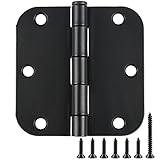
I’ve been around tools and workshops for what feels like forever. You get a feel for what’s solid and what’s just… there. So, when people ask if are piano hinges strong, I don’t just give you the datasheet. I give you the dirt from years of actual use.
Let’s cut to the chase: They’re not magic, but they’re a lot stronger than most people give them credit for, provided you pick the right one for the job. I’ve seen cheap, flimsy ones buckle under surprisingly little stress, and I’ve seen others hold up heavy doors for decades without a whimper.
It’s all about understanding the metal, the thickness, and how you install them. Get it wrong, and you’ll be replacing them sooner than you think. Get it right, and they’re a workhorse.
What Exactly Makes a Piano Hinge Tick?
Forget fancy mechanisms. A piano hinge, or continuous hinge as the more technical folks call it, is about as simple and elegant as it gets. It’s basically one long, continuous metal strip that bends over another, creating a pivot point along the entire length of the joint. Think of it like a really, really long pin-and-barrel hinge, all formed from a single piece of metal, often steel or stainless steel.
The core components are the two flat leaves and the rounded barrel in between. The leaves are what you screw or weld onto your mating surfaces – a door and its frame, a lid and a box, whatever you’re joining. The barrel, that rounded section, has a hole running through it where the pin sits.
This pin, usually a solid rod, is the key to its rotation. You can often remove and reinsert this pin, which is a neat trick for certain applications where you might need to detach a lid or door without disturbing the mounting screws.
The strength of a piano hinge comes down to a few key factors, and they’re pretty straightforward. First off, material. Are piano hinges strong?
Well, it depends if it’s made of flimsy aluminum or good old steel. Steel hinges are generally tougher. Stainless steel offers corrosion resistance along with good strength, which is why you see them on boat hatches and outdoor cabinets. Then there’s the thickness of the metal.
A thin, flimsy hinge leaf is going to bend or tear much more easily than a thick one. I remember trying to build a heavy cedar chest lid once. I grabbed a cheap, thin piano hinge from a discount store, thinking it would be fine because it was long.
Big mistake. The lid sagged after a few weeks, and the hinge started to look like a banana. I ended up having to replace it with a much thicker gauge steel hinge, and that one held up perfectly.
Another biggie is the number of knuckles and the diameter of the barrel. More knuckles (the rounded sections that interlock) mean a more distributed load and smoother operation. A thicker barrel means a stronger pin and a more substantial pivot point.
You can often feel the difference just by handling them – the heavier, more substantial ones are usually the better performers. The pin itself also matters; a solid, well-seated pin is important for carrying the load. If the pin is loose or hollow, the hinge will feel wobbly and less secure. It’s not rocket science, but paying attention to these simple details makes all the difference in whether that hinge will hold and last, or become a point of failure.
How Do They Actually Handle Weight and Stress?
The big question for anyone considering one: are piano hinges strong enough for my project? The answer is almost always yes, with a caveat.
They distribute the load across their entire length. Unlike a traditional butt hinge that concentrates stress on two small knuckles, a piano hinge spreads the weight of a door or lid evenly along the seam. This is why they’re fantastic for things like long cabinet doors, trunk lids, or even workbench surfaces. Imagine a 3-foot-long lid on a toy chest.
If you used two small butt hinges, all the stress would be on those tiny pivot points, and the lid would likely warp or the hinges would pull out of the wood. A 3-foot piano hinge, however, takes that weight and shares it across all 36 inches of its mounting surface. This makes them inherently more stable and less prone to sagging or bending, assuming they’re made of decent material and installed correctly, of course.
The load capacity isn’t just about the hinge itself, but how it’s attached. Screws are the most common fastener for wood or metal applications. The shear strength of those screws, and how well they’re seated in the material, play a massive role.
If you’re attaching a heavy door to a flimsy particleboard cabinet, even the strongest piano hinge won’t save you if the screws just rip out. You need to match the hinge’s potential with appropriate fasteners and a solid mounting surface.
For really heavy applications, you might need to use machine screws with nuts and washers on the other side, or weld the hinge directly to metal components. I once had to reinforce a heavy shop cabinet door that kept sagging. (See Also: A Box Without Hinges Key )
The hinge itself was fine, but the particleboard frame was starting to crumble around the screw holes. My fix involved cutting away the damaged material, inserting some hardwood blocks, and then re-drilling for beefier screws. That stopped the sag dead in its tracks.
Now, about that caveat: when they’re not strong enough. Think about applications where there’s significant sideways force, or where the hinge itself is the sole structural support. A piano hinge is designed for a load that’s primarily pulling away from the pivot axis (like a door’s weight). If you’re going to have people leaning heavily on a hinged lid, or using it as a step, you’re asking for trouble.
The pin can bend, the knuckles can deform, and the leaves can tear. For those kinds of extreme stresses, you need something more like a heavy-duty gate hinge or a specialized industrial pivot. But for the vast majority of everyday uses – cabinet doors, toolboxes, custom enclosures, even some lightweight hatches – they are surprisingly solid. It’s about matching the task to the tool, and a piano hinge is a brilliant tool for its intended jobs.
Choosing the Right Piano Hinge: Material, Gauge, and More
So, you’ve decided a piano hinge is the way to go. Great. Now, don’t just grab the cheapest one you see.
This is where many DIYers and even some pros trip up. The first thing to consider is the material.
For indoor use on lighter applications like cabinet doors or small boxes, plain steel is usually fine. It’s affordable and strong enough. However, if it’s going anywhere near moisture – kitchens, bathrooms, garages, or outdoors – you absolutely need stainless steel.
I learned this the hard way with a garden shed I built years ago. Used plain steel hinges because they were cheaper.
Within a year, they were rusted solid, looking like a science experiment gone wrong. Couldn’t even open the door. Switched to stainless, and they’ve been smooth as butter ever since, even after a decade of rain and snow.
Next up is the gauge, or thickness, of the metal. This is often overlooked but is a massive determinant of strength.
Hinges are typically listed with a gauge number (lower is thicker). A 14-gauge steel hinge is going to be significantly stronger and stiffer than an 18-gauge one.
For anything that has a bit of weight or needs to maintain its shape over time, I’d steer clear of anything thinner than 16-gauge, and preferably 14-gauge or even 12-gauge for heavier items. You can usually tell by feel and by looking at the edge of the hinge. Does it feel substantial, or does it feel like it could bend if you put some decent pressure on it? My rule of thumb is: if in doubt, go thicker.
It’s rarely a bad thing to have a bit of extra strength, and the cost difference isn’t usually that dramatic for the peace of mind.
The width of the leaves and the diameter of the barrel also matter. Wider leaves give you more surface area for screws, which means better load distribution and a more secure attachment. A larger barrel diameter generally indicates a thicker, stronger pin. Some hinges also come with pre-drilled holes, which can be a convenience, but always check the spacing and size to make sure they match your fasteners.
Finally, consider the pin type. Most are solid, but some might be hollow or even removable (like a quick-release pin).
For most standard applications, a solid, non-removable pin is the most solid. If you need the ability to easily detach a door or lid, a removable pin is handy, but make sure it’s secured properly so it doesn’t vibrate loose.
Common Mistakes That Undermine Hinge Strength
It’s not just the hinge itself; how you use it is just as important, maybe more so. I’ve seen people install piano hinges completely backward, thinking the longer leaf goes on the moving part and the shorter on the fixed part. Wrong. For optimal strength and smooth operation, the longer leaf (the one with the barrel) typically goes on the frame or stationary part, and the shorter leaf goes on the door or lid.
This configuration helps distribute the load more effectively and reduces the use that can cause sagging. I made this mistake on a custom cabinet I built for my workshop – the doors felt a bit stiff, and after a few months, they started to droop. Flipping the hinge leaves around fixed it right up, and they’ve swung perfectly ever since. (See Also: Are Integrated Washing Machine Door Hinges Standard )
Another common blunder is fastener overkill or underkill. Using tiny little screws on a heavy door, even with a beefy hinge, is asking for trouble. Those screws are the weakest link.
Conversely, using massive bolts on a thin piece of plywood can just split the material and provide no real structural integrity. You need to match the screw size and type to the material you’re fastening into.
For wood, I prefer wood screws with a good thread bite, or even better, machine screws with washers and nuts if it’s a thicker piece. For metal, self-tapping screws or bolts are the way to go.
If you’re attaching to something like MDF or particleboard, which can be crumbly, consider using inserts or even just using a larger screw with a wider pilot hole to minimize damage to the material’s integrity. Don’t be afraid to countersink your screws if you want a flush finish, but make sure the screw head isn’t so deep that it interferes with the hinge’s ability to close flat.
Improper alignment is also a killer. If the hinge isn’t installed perfectly straight, it puts uneven stress on the pin and knuckles. This can lead to premature wear, binding, and eventually, failure. Take your time.
Use a good straight edge or a level. Clamp the hinge in place before you start drilling and screwing. For longer hinges, it’s a good idea to use multiple reference points to make sure it’s perfectly parallel to the edge of your workpiece. Also, don’t forget about the gap.
You need a small, consistent gap between the hinge leaves and the mating surfaces to allow for smooth operation. If the hinge is too tight or rubbing against the material, it’s going to bind up and wear out much faster.
It’s these little details, often overlooked, that separate a DIY project that looks and functions like a pro job from one that looks and feels… well, amateurish.
Real-World Applications: Where Piano Hinges Shine (and Where They Don’t)
Let’s talk about where these things actually earn their keep. I’ve used piano hinges on countless projects, from building custom toolboxes and router enclosures to making hinged lids for storage bins and even modifying existing furniture. For a heavy tool chest lid, a long piano hinge is perfect. It keeps the lid aligned, prevents it from sagging, and distributes the weight evenly across the box’s frame. My favorite use? A hinged workbench top. I have a section of my workbench that lifts up to reveal a storage area. A sturdy 4-foot stainless steel piano hinge is what makes it work smoothly and securely, without any wobbles. It feels incredibly solid when you close it.
They’re also fantastic for built-in cabinetry. Think of long, narrow doors on a pantry or a media console.
A continuous hinge makes sure that the entire length of the door is supported, preventing it from warping or binding against the frame. This is especially true if you’re dealing with solid wood doors, which can expand and contract with humidity. A piano hinge can often accommodate minor shifts better than multiple butt hinges.
I’ve also seen them used on utility trailers for ramp gates and access panels. The key there is usually a heavy-duty, welded steel version, but the principle is the same: distributed support over a long length.
They can also be great for things like concert stages or large display cases where a smooth, continuous seam is aesthetically pleasing and structurally sound.
Where do they fall short? As I mentioned, extreme, direct force.
If you’re building something that’s going to be subjected to significant impacts or lateral stress, a piano hinge is probably not your best bet. Think of something like a heavy-duty gate that gets slammed shut repeatedly, or a workbench that’s designed to have heavy items dropped on it. In those scenarios, the pin can bend, or the knuckles can wear out prematurely. Also, for very lightweight, delicate projects, they might be overkill, and their continuous nature could actually be a hindrance if you need precise adjustment at specific points.
But for the vast majority of woodworking, metalworking, and general fabrication tasks where you need a strong, reliable, and continuous pivot, they are an excellent choice. Just remember to pick the right material and gauge for the job.
Faq: Your Piano Hinge Questions Answered
Are Piano Hinges Good for Exterior Use?
Yes, but only if they are made of stainless steel. Plain steel hinges will rust very quickly when exposed to rain, humidity, and salt air, rendering them stiff, unsightly, and eventually useless. Stainless steel offers excellent corrosion resistance, making it the only suitable choice for boats, outdoor furniture, sheds, or any application exposed to the elements. Always verify the grade of stainless steel if possible for maximum longevity. (See Also: Are Hinges Wheeels )
Can I Cut a Piano Hinge to Size?
Yes, you can cut a piano hinge to the desired length using a metal-cutting saw, such as an angle grinder with a cut-off wheel or a bandsaw with a metal blade. Be sure to wear appropriate safety gear, including eye protection and gloves. After cutting, it’s a good idea to file down any sharp edges and to make sure the pin can still move freely. Sometimes, cutting can slightly deform the end knuckles, so check for smooth operation.
What Is the Weight Capacity of a Piano Hinge?
The weight capacity of a piano hinge isn’t a single, simple number. It depends heavily on the material, the gauge (thickness) of the metal, the width of the leaves, the diameter of the barrel, and, importantly, how it’s installed. A heavy-gauge steel hinge properly screwed into solid wood or bolted to metal will support significantly more weight than a thin aluminum one attached with small screws. For typical applications like cabinet doors, they can handle dozens of pounds. For very heavy doors or lids, you’ll need a thick, steel or stainless steel hinge designed for high load applications.
How Do I Prevent a Piano Hinge From Sagging?
To prevent sagging, start with a hinge that is sufficiently strong for the weight of the door or lid, ideally made of thicker gauge steel or stainless steel. Make sure you use the correct fasteners for your material, and install them into a solid backing. For heavier applications, consider using machine screws with washers and nuts. Proper alignment during installation is also important; a crooked hinge puts uneven stress on the pin. Finally, if the door is exceptionally long or heavy, you might need to use two hinges rather than one to further distribute the load.
A Few Practical Tips for Using Piano Hinges
When you’re installing a long piano hinge, it’s easy to get it slightly out of alignment, especially if you’re working alone. My trick is to use clamps to hold the hinge in place while I mark my pilot holes.
I’ll often use two or three clamps spaced out along the length to keep it perfectly straight. For very long runs, I might even run a string line or use a laser level to make sure the hinge is perfectly parallel to the edge of the door or frame before drilling. This takes a few extra minutes but saves a ton of headaches down the road with binding or uneven operation.
It makes the difference between a smooth, professional-looking finish and something that feels a bit sloppy.
Another tip that’s saved me a lot of grief is regarding the pin. Some piano hinges have a removable pin. If yours does, and it’s for something that might experience vibration, like on a vehicle or a piece of equipment, consider adding a small cotter pin or a locking clip through a hole drilled in the end of the pin, or even a dab of removable threadlocker on the pin itself. This stops it from working its way out over time, which can be a real pain, and a safety hazard.
For standard furniture or cabinet applications, this is usually overkill, but it’s good to keep in mind for more demanding situations. It’s those little preventative measures that turn a good installation into a great one that lasts for years.
Finally, don’t forget about lubrication. Even the best hinges can benefit from a little grease or oil, especially stainless steel ones that might be a bit stiffer initially, or if they’re in a humid environment. A light coat of white lithium grease or even a good quality spray lubricant can keep the pin moving smoothly and prevent wear. Apply it sparingly; you don’t want a ton of grease attracting dirt. Just a little bit worked into the barrel will go a long way in maintaining smooth operation and extending the life of the hinge. It’s a simple step that many people skip, but it makes a noticeable difference in how the hinge performs over time.
Why I Stopped Using Non-Stick After Six Months
I’ve tinkered with enough cookware to know what’s worth the hype and what’s just marketing. Non-stick pans? They’re great for about six months. After that, they start to scratch, lose their slickness, and you’re left with a mediocre pan that’s not even non-stick anymore.
I remember buying a supposedly top-tier non-stick set for about $180. Seemed like a good deal.
Within a year, the coating was flaking off one of the pans, and the other two were impossible to clean properly. I ended up tossing the whole lot and going back to my trusty cast iron and stainless steel. Sure, they require a bit more care, but they last forever and perform consistently.
Honestly, the hassle and cost of replacing non-stick every year or two just isn’t worth it for me. Give me a pan I can scrape with a metal spatula and pass down to my kids any day.
Final Thoughts
So, are piano hinges strong? Yes, they absolutely can be. They’re a simple, effective solution for a wide range of applications, offering distributed support and a clean, continuous look. The key is understanding that their strength isn’t inherent to the design alone; it’s a combination of material choice, gauge, proper installation, and matching the hinge to the specific demands of your project.
Don’t skimp on quality, and definitely don’t skimp on the installation. A little extra time spent making sure alignment and using the right fasteners will pay dividends in the long run. I’ve seen too many projects fail because of a weak link, and a cheap or improperly installed hinge is an easy one to overlook.
Think about your project, choose wisely, and install it right. You’ll find that a well-chosen piano hinge is a surprisingly capable piece of hardware.