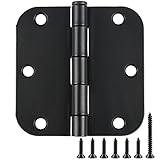
I remember the first time I tried to hang a cabinet door after a kitchen reno. Everything went smoothly until it was time to attach the hinges. I’d bought these fancy new ones, advertised as being super easy to install. The instructions mentioned these tiny plastic doodads. Dowels? For a hinge? My immediate thought was, ‘This is just more plastic junk they’re trying to sell me.’ I tossed them aside, convinced they were an unnecessary extra.
Turns out, I was wrong. Dead wrong. That cabinet door sagged like a sad old man’s shoulders within a week. It wasn’t the door’s fault, or the hinge’s, really. It was my stubborn refusal to use those little plastic dowels. So, let’s talk about whether are plastic dowels necessary for hinges, because I learned this the hard way, and you don’t have to.
Those Little Plastic Bits: What’s Their Deal Anyway?
Okay, let’s get down to brass tacks. When you buy a new set of cabinet hinges, or sometimes even door hinges, you’ll often find a small baggie of plastic pins. These are the dowels. They look utterly insignificant, often just simple cylinders of plastic.
You might think, ‘What can this tiny piece of plastic possibly do?’ It’s easy to dismiss them as an afterthought, a bit of padding in the packaging.
I certainly did. My initial thought was that they were some sort of alignment guide for manufacturing, not something I actually needed to use during installation.
I figured the screws would do all the heavy lifting, which, in my limited experience at the time, seemed logical. The screws are the metal things, right?
They’re supposed to hold things together. Plastic?
That’s for toys and cheap packaging.
But here’s the kicker: those plastic dowels aren’t just there to look pretty or confuse you. They serve a surprisingly vital purpose, especially in cabinet hinges and some lighter-duty door hinges.
Think of them as tiny structural supports. When you insert a hinge into a pre-drilled hole in a cabinet door or frame, there’s usually a bit of wiggle room.
Even the tightest fit isn’t perfectly snug. These plastic dowels fill that gap. They act as locators, making sure the hinge sits perfectly flush against the surface.
More importantly, they prevent the hinge from shifting or rocking under load. When you slam a cabinet door shut, or even just open and close it repeatedly, there’s a certain amount of torque and stress applied to that hinge.
Without the dowels, the hinge can slowly, imperceptibly, start to drift. This drift is what leads to that annoying sag, the uneven gaps between doors, and eventually, hardware failure.
The material choice – plastic – isn’t arbitrary either. Plastic, especially the types used in these dowels, has a certain amount of give.
It’s not rigid metal. This slight flexibility allows it to conform to minor imperfections in the wood or laminate. It also means it’s less likely to crack or splinter the material it’s inserted into compared to a metal pin of the same size trying to force its way into a slightly-too-tight hole. Think about it: if you hammered a metal pin into a hole that was just a hair too small, you’d risk splitting the particleboard or even solid wood. (See Also: A Box Without Hinges Key )
Plastic, on the other hand, often just compresses slightly or creates a tight friction fit. So, while they look basic, these plastic dowels are designed to be a functional, integral part of the hinge system, particularly where precise alignment and load-bearing support are needed without damaging the surrounding material.
My Own Sagging Door Debacle: A Case Study in Stubbornness
Let me tell you about the kitchen cabinet door incident. It was about ten years ago, a DIY project fueled by more enthusiasm than actual knowledge. I was replacing the old, clunky hinges on my kitchen cabinets with some sleek, modern ones I’d found online. They looked fantastic in the product photos. The installation seemed straightforward enough: unscrew the old hinges, screw in the new ones. Easy peasy. But as I said, these new hinges came with those little plastic dowels. They were about an inch long, clear plastic, and looked utterly pointless.
My reasoning, at the time, was pure, unadulterated arrogance. I thought, ‘Why would I need these? The screws will hold the hinge in place. These plastic things are just extra packaging filler, probably to make the product look more substantial.’ So, I confidently tossed them into the junk drawer, a place where good intentions and questionable hardware often end up. I installed the hinges, tightened the screws, and admired my handiwork. The doors looked great, perfectly aligned. I felt like a carpentry god. For about three days.
Then, I noticed it. The bottom cabinet door on the right seemed a little… off.
It wasn’t closing quite flush. I fiddled with the screws, adjusted them, but it just wouldn’t sit right.
Over the next week, the problem worsened. The door started to sag noticeably. When closed, there was a gap at the top and it rubbed against the adjacent door at the bottom. I was baffled.
I’d followed the instructions (minus the dowel part, of course). I started blaming the hinges themselves, thinking they were poorly manufactured. I even considered buying a completely new set.
I spent hours trying to realign it, getting increasingly frustrated. It wasn’t until a friend, who’s a professional cabinet maker, came over and took one look that the truth hit me like a ton of bricks. He didn’t even say anything at first, just reached into my junk drawer, pulled out the little baggie of plastic dowels, and asked, ‘You didn’t use these, did you?’
He explained, with a sigh that only someone who has seen countless DIY disasters can muster, that those dowels are key for proper hinge alignment and support. They prevent the hinge plate from shifting under the weight of the door, especially in particleboard or MDF cabinets, which are notoriously less forgiving than solid wood. He popped them into the holes, reinstalled the hinges, and boom – the door hung perfectly. It was a humbling, slightly embarrassing, but incredibly valuable lesson. Those plastic dowels weren’t optional; they were important. My stubbornness cost me time, frustration, and nearly the price of new hinges.
The Science of Sag: How Dowels Prevent Hinge Failure
Let’s get a bit more technical, but still in plain English. When you attach a hinge to a cabinet door or a door frame, you’re basically creating a pivot point. This pivot point carries the entire weight of the door. Think about a heavy exterior door – that hinge is under a lot of stress. Even lighter cabinet doors, when opened and closed thousands of times, experience cumulative stress. The screws that hold the hinge plate to the surface are designed to provide mechanical fastening. They create a strong connection, but they don’t necessarily guarantee perfect alignment or prevent subtle movement.
Here’s where the plastic dowels come into play. Most hinges are designed with small pilot holes, often just slightly larger than the screw shank, or sometimes the hinge itself has a small projection that fits into a corresponding hole in the door or frame. The dowels serve to fill any void in these pilot holes. Imagine a hole that’s 3mm wide and the screw shank is 3mm wide.
It sounds tight, but there’s always a tolerance. That 0.1mm gap, multiplied across all the screw holes and over time, is enough for the hinge to start shifting.
The plastic dowel, when inserted into that pilot hole before the screw, effectively becomes part of the anchor point. It centers the screw and provides a snug fit, preventing the hinge plate from rocking or rotating, even slightly, under load.
Consider the materials involved. Cabinet doors are often made from particleboard, MDF, or laminates. These materials, while cost-effective, are not as structurally sound as solid wood. They can crumble or strip relatively easily. (See Also: Are Integrated Washing Machine Door Hinges Standard )
A metal pin or even a poorly seated screw can damage these materials over time. Plastic dowels are designed to be a softer, more forgiving material.
They create a tight friction fit without the risk of cracking the particleboard. They distribute the load more evenly across the hole. This is particularly important for the hinge leaf that attaches to the door itself, as this is the part that experiences the most dynamic forces. Without them, the screws bear the brunt of the rotational forces, leading to stripping of the screw holes or loosening of the hinge over time.
This is how you get that dreaded sagging door. The hinge isn’t actually failing; the connection to the door or frame is weakening because of that initial slight movement that the dowels prevent.
A Quick Comparison: Dowels vs. No Dowels
| Feature | With Plastic Dowels | Without Plastic Dowels | My Verdict |
|---|---|---|---|
| Initial Alignment | Excellent, hinge sits flush. | Good, but can be slightly off. | Dowels make it foolproof. |
| Long-Term Stability | High, hinge remains stable. | Moderate to Poor, prone to shifting. | Dowels win for longevity. |
| Material Stress | Minimized, distributes load. | Concentrated on screws/material. | Dowels protect your cabinets. |
| Ease of Installation | Slightly more steps, but easier to get right. | Faster initial install, but more adjustments needed. | Dowels save frustration later. |
| Durability of Connection | Significantly improved. | Can degrade over time. | Dowels are a small but mighty investment. |
So, the science boils down to: better alignment, reduced material stress, and a more solid connection. It’s a simple concept, but its impact on the longevity and functionality of your doors is huge. Those little plastic dowels are doing a lot of heavy lifting, literally.
When Are Plastic Dowels Actually Necessary? (and When Can You Skip ’em?)
So, the million-dollar question: are plastic dowels necessary for hinges in every single scenario? The honest answer is no, but they are necessary in far more situations than most DIYers realize. The key factors are the type of hinge, the type of door, and the material of the mounting surface.
Cabinet Hinges: Absolutely Use Them. For almost all cabinet hinges, especially the concealed (European-style) hinges or the more traditional overlay hinges, you should absolutely use the plastic dowels. Cabinet doors are frequently made of particleboard or MDF, which are soft and prone to stripping. The hinges are designed to be precisely aligned for a clean look and smooth operation. The dowels make sure this precision and prevent the hinge plate from loosening over time, which leads to sag. If your cabinet hinges come with them, use them. Don’t be like me.
Interior Door Hinges: It Depends. For standard interior doors, it’s a bit more nuanced. Most interior doors are solid wood or have a solid wood core, and the door frames are typically solid wood. These materials are much more forgiving. The screws used for interior door hinges are often longer and thicker, providing a very strong connection. In many cases, you might be able to get away without using dowels, especially if the hinge fit is exceptionally tight. However, if you are installing hinges on a lighter hollow-core door, or if the pre-drilled holes feel a bit loose, using the dowels would be a smart move. It’s a cheap insurance policy against future sagging or loosening.
Heavy-Duty Exterior Doors: Probably Not. For heavy exterior doors, you’re typically dealing with much beefier hinges, larger and longer screws, and often mortises cut directly into solid wood frames. These applications usually don’t come with plastic dowels, and they aren’t needed. The sheer mechanical strength of the larger hardware and the solid wood construction is more than sufficient. The forces involved are handled by solid steel and wood, not tiny plastic pins. If you’re installing a solid oak entry door, you’re not going to find plastic dowels in the box.
What About the Hinge Design Itself? Some high-end hinges have built-in alignment features or a tighter manufacturing tolerance that might make dowels less important. But if the manufacturer includes them in the hardware kit, it’s a pretty strong signal they are intended for use. They are part of the system designed to make sure optimal performance and longevity. So, my general rule of thumb? If they’re provided, use them, especially for cabinet doors and any application where the mounting material isn’t solid hardwood.
LSI Keyword Integration: The concept of hinge alignment is most important for proper door function. When discussing whether are plastic dowels necessary for hinges, it’s important to note that they contribute significantly to precise hinge alignment. The longevity of your doors hinges on these small components. Remember that door hardware longevity is enhanced by proper installation techniques, and dowels are a key part of that. For those working with particleboard or MDF, using hinge dowels is especially recommended due to the material’s lesser structural integrity.
Common Mistakes and How to Avoid Them
We’ve already covered my personal sin of omitting the dowels, but there are other pitfalls people stumble into when dealing with these seemingly simple components. Understanding these can save you a headache and make sure your doors hang straight and true for years to come. One of the most common mistakes, besides not using them at all, is not seating them properly. You just push them into the pre-drilled hole. But sometimes, that hole might have a bit of sawdust or debris. If the dowel isn’t fully seated, or if it’s partially blocked, it won’t do its job effectively. This can lead to the hinge still being able to shift, defeating the purpose.
Mistake 1: Not Seating Dowels Fully.
- Before inserting a dowel, quickly check the pilot hole for any debris. A quick puff of air or a small brush can clear it.
- Insert the dowel firmly. You should feel it go in all the way. If it stops short, there’s an obstruction. Don’t force it too hard, or you might crack the material. Try to clear the obstruction.
- Once seated, the dowel should be flush or almost flush with the surface.
Mistake 2: Forcing Dowels into Too-Tight Holes. While dowels are designed to create a tight fit, if the pre-drilled hole is significantly too small, forcing the dowel can crack the wood, particleboard, or laminate. This is especially true for older furniture or cheaper materials. If you encounter this, you might need to very slightly enlarge the hole with a 1/16th drill bit, just a touch, to allow the dowel to seat without excessive force. But be cautious; going too big will render them useless. (See Also: Are Hinges Wheeels )
Mistake 3: Using the Wrong Size Dowels. Most hinge kits come with the correct size dowels. However, if you’re replacing lost dowels or using generic ones, make sure they match the diameter of the original or the pilot hole. Too small, and they won’t provide a snug fit. Too large, and you risk splitting the material or not being able to insert the screw properly.
Mistake 4: Over-Reliance on Dowels Alone. The dowels are part of a system. They work with the screws. Don’t overtighten the screws trying to compensate for a poorly seated dowel, as this can strip the holes. Conversely, don’t undertighten them, thinking the dowels will hold everything perfectly on their own. The screws provide the primary clamping force. The dowels provide alignment and prevent rotational movement. They are partners, not replacements for each other.
Mistake 5: Ignoring the Hinge Type. As discussed, not all hinges require dowels. If your hinge is designed to be mortised directly into solid wood, or if it uses a completely different mounting system (like clip-on hinges with integrated mounting plates that screw directly), then dowels are likely not part of the equation. Always refer to the manufacturer’s instructions, but understand why those instructions exist. If they provide dowels, it’s because the hinge design benefits from them.
By being mindful of these common errors, you can make sure that those little plastic dowels do their job effectively, contributing to a professional-looking and smoothly functioning installation.
Practical Tips for Using Plastic Dowels in Hinges
Alright, let’s wrap up the practical advice. You’ve learned why these little things matter, you’ve heard my cautionary tale, and you know about the common mistakes. Now, how do you make sure you get it right every time?
First off, always keep the hardware that comes with your hinges. Don’t toss the baggie. If you lose one, try to find a replacement of the exact same size. Measure the diameter and length of the original. You can often find replacement dowels at hardware stores, but they might be sold in larger quantities than you need.
When you’re installing hinges, especially on cabinet doors, put the dowels in before you try to align and screw in the hinge plate. It’s a sequential process. Insert the dowels into their respective holes in the door or frame. Then, position the hinge plate over the dowels and press it into place. You should feel the hinge settle snugly against the surface, guided by the dowels. Once it’s seated correctly, then you can drive in the screws. This makes sure that the hinge is perfectly aligned from the start.
If you’re working with very old or delicate wood, or if you’re just being extra cautious, you can put a tiny dab of wood glue or even a drop of dish soap on the dowel before inserting it. This can help it slide in more easily and create a better seal without excessive force. Wipe away any excess immediately. For cabinet doors, especially those made of particleboard, this extra step can provide a little more security and help prevent future loosening. However, this is usually only necessary if you’re struggling to get the dowel seated smoothly.
Another tip is to use the right tools for the job. While you can often push dowels in by hand, sometimes a gentle tap with a rubber mallet can help seat them fully without damaging the surrounding material or the dowel itself. Just be sure to tap gently and make sure the dowel is going in straight.
Finally, remember that these dowels are often designed to be a permanent fixture once installed. They contribute to the long-term stability of the hinge. Don’t try to remove them unless you’re replacing the hinge. They are meant to be part of the structural integrity of the hinge mounting. So, to reiterate, for cabinet doors, always use the plastic dowels if provided. They are not optional extras; they are a important component for making sure your doors hang correctly and last a long time. My cabinet doors are still hanging straight, and it’s all thanks to those tiny plastic bits I once scorned.
Faq: Your Burning Questions About Hinge Dowels Answered
What Is the Purpose of Plastic Dowels in Hinges?
Plastic dowels in hinges primarily serve to make sure precise alignment and prevent movement or shifting of the hinge plate against the mounting surface. They fill any slight gaps in pre-drilled holes, creating a snug fit that stops the hinge from rocking or rotating under load, thereby preventing issues like door sag and loosening over time. They also help protect the mounting material, especially particleboard and MDF, from damage.
Can I Use Metal Dowels Instead of Plastic Ones?
While theoretically possible, it’s generally not recommended. Plastic dowels are chosen for their slight flexibility and softer material, which prevents them from cracking or damaging softer mounting materials like particleboard or MDF. Metal dowels are much harder and can potentially split wood or laminate if the hole isn’t perfectly sized, or they might not provide the same level of vibration dampening that plastic offers. Stick to the material provided or recommended by the hinge manufacturer.
How Do I Know If My Hinges Need Plastic Dowels?
If the hinge hardware kit includes plastic dowels, it’s a strong indication that they are intended for use with that specific hinge and application. Generally, cabinet hinges, especially those used on particleboard or MDF doors, will benefit greatly from dowels. For solid wood interior or exterior doors, dowels are less commonly needed due to the superior strength of the materials, but if included, they still contribute to a more secure installation.
What Happens If I Don’t Use the Plastic Dowels?
If you don’t use the plastic dowels when they are intended, the hinge plate can shift slightly over time due to the movement and weight of the door. This can lead to misalignment, uneven gaps between doors, doors that don’t close properly, and eventually, door sag. In materials like particleboard, repeated stress from an unsecured hinge can also strip the screw holes, compromising the entire mounting. My own experience with a sagging cabinet door is a testament to this.
Verdict
So, to circle back to the big question: are plastic dowels necessary for hinges? My answer, based on years of regret and subsequent success, is a resounding ‘yes’ for cabinet doors and most interior applications where they’re provided. They’re not some marketing gimmick; they are a small but mighty component that makes sure your hardware functions as intended for the long haul. Skipping them is like building a house and deciding the foundation is optional – you might get away with it for a while, but eventually, things start to crumble.
Don’t be the person who has to reinstall hinges a year down the line because the doors are sagging. Take the extra 30 seconds it takes to seat those little plastic pins. It’s a small effort that pays off immensely in terms of durability, aesthetics, and your own sanity. Trust me on this one. You’ll thank yourself later.