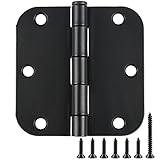
I still remember the day I installed those cheap cabinet doors in my workshop. They swung open with the enthusiasm of a toddler who’d just discovered caffeine and slammed shut with the subtlety of a dropped anvil. I’d bought what I thought were ‘self-closing’ hinges, only to discover they were a cheap imitation that barely did the job. It taught me a harsh lesson: not all hinges that claim to close on their own are created equal. So, are self closing and spring loaded hinges the same thing? Let’s cut through the marketing fluff and get down to brass tacks.
If you’ve ever wrestled with a door that just wouldn’t stay put, or slammed shut with a startling bang, you’ve likely considered hinges that do the work for you. But the terminology can be confusing, leading to a lot of wasted money and frustration. I’ve been there, and I’m here to tell you the real deal.
The Actual Difference: It’s All About the Mechanism
Look, the short answer is that ‘self-closing’ is more of a function, while ‘spring-loaded’ describes a key mechanism that often enables that function. You can’t really have a truly reliable self-closing hinge without some kind of spring mechanism to provide the force. But not all spring-loaded hinges are designed for the same purpose or with the same quality. It’s like saying all vehicles with wheels are the same thing – technically true, but a go-kart and a dump truck are vastly different beasts.
Think about it: what makes a door ‘self-closing’? It’s the ability to swing shut on its own without you having to push it all the way. This requires a force.
That force typically comes from a spring. So, a spring-loaded hinge can be a self-closing hinge. The confusion often arises because some hinges are marketed as ‘self-closing’ but have a weak, poorly designed spring, or the mechanism isn’t solid enough for consistent use. I once bought a set of what were advertised as ‘self-closing’ door hinges for my shed.
They had a tiny, flimsy spring that could barely overcome the weight of the door itself, let alone any wind or resistance. After about a week, they were basically just regular hinges that sagged a bit. Total waste of about $30.
The real distinction is in the quality and intent of the spring mechanism. A good self-closing hinge uses a well-engineered spring system that provides consistent, controlled closing power. This might involve a coiled spring, a gas strut, or a more complex internal system. The goal is to provide a smooth, predictable closing action. On the other hand, you might have a simple spring hinge that just adds a little tension, but isn’t designed for automatic closure from a full open position. These are common on lightweight interior cabinet doors where you just want them to snap shut lightly.
So, to be clear: ‘self-closing’ is the outcome. ‘Spring-loaded’ is often the means. If a hinge is truly self-closing, it absolutely must be spring-loaded in some fashion. The devil, as always, is in the details of the spring design and the overall construction of the hinge. Not all springs are created equal, and neither are all hinges.
What to Look for: Beyond the Buzzwords
When you’re out shopping, whether online or in a big box store, you’ll see a lot of jargon. ‘Self-closing,’ ‘automatic closing,’ ‘soft-close,’ ‘spring hinge,’ ‘concealed spring,’ ‘door closer.’ It’s enough to make your head spin. My advice? Forget the fancy terms for a second and focus on what actually matters: the mechanism and the build quality. If a hinge is advertised as self-closing, I want to know how it achieves that. Is it a visible coil spring that looks beefy? Is it a concealed mechanism that hints at a more sophisticated design? I’ve learned to be skeptical of anything that looks too simple or flimsy.
One of the biggest mistakes I made early on was assuming that if it said ‘self-closing,’ it would work flawlessly. I bought a set for a kitchen cabinet, and they were technically ‘self-closing,’ but the action was so violent it rattled the dishes inside. It was like a tiny, angry spring trying to slam the door shut with all its might.
No adjustment, no control. That’s not what you want.
You want a smooth, controlled deceleration. This is where terms like ‘soft-close’ come into play. A true soft-close mechanism, which is a type of self-closing hinge, uses hydraulics or a damper along with the spring to slow the door down in the last few inches of its travel.
It’s a night-and-day difference in user experience. I once spent an extra $40 on a set of cabinet hinges that had this feature, and honestly, it was worth every penny for the peace and quiet alone. (See Also: A Box Without Hinges Key )
When examining a hinge, look for materials. Are they solid metal? Is there any plastic that looks like it will crack under pressure? The spring itself should feel substantial. If you can push it with your finger and it feels weak, it’s probably not going to do a great job. For exterior doors, especially, you need hinges that can withstand the elements and the forces of wind. Stainless steel or a heavy-duty coated steel is usually the way to go. For interior doors, especially lighter ones like cabinets or closet doors, you might get away with lighter-duty options, but I still prefer a well-made mechanism.
Here’s a quick cheat sheet I mentally run through:
| Feature | What to Look For | My Verdict |
|---|---|---|
| Closing Action | Smooth, controlled, not jerky or violent. Adjustable speed is a bonus. | Key for a good experience. |
| Spring Strength | Appears solid, coiled tightly, or part of a well-engineered system. | Needs to overcome door weight and air resistance. |
| Material Quality | Solid metal (steel, brass, stainless). No cheap-looking plastic parts. | Durability and longevity. |
| Adjustability | Can you adjust tension, closing speed, or hold-open position? | Highly recommended for fine-tuning. |
| Brand Reputation | Known for hardware, good reviews for similar products. | Can save you headaches, but not a guarantee. |
Don’t be afraid to ask questions or look at the product specifications carefully. If it’s unclear, move on.
Common Pitfalls and Why They Happen
I’ve fallen into more than my fair share of hinge-related traps. One of the most common, and something I’ve repeated more times than I care to admit, is buying the cheapest option available. You see a pack of four ‘self-closing’ hinges for $15, and your wallet screams “yes!” Your sanity, however, should be screaming “no!” These cheap hinges often use weak springs, brittle metal, and poor tolerances. They might work for a week, a month, or if you’re incredibly lucky, a year. But eventually, they’ll fail. The spring will weaken, the pivot will seize up, or a piece will simply snap.
Another big pitfall is misunderstanding the application. A hinge designed for a lightweight interior closet door is not going to cut it for a heavy exterior gate. Many ‘self-closing’ hinges are optimized for specific weights and sizes. If you try to use a light-duty hinge on a heavy door, the spring won’t have enough power, and the hinge will likely fail prematurely. I tried to use some basic spring hinges on a solid core interior door, and while they technically closed it, the door would sag noticeably when open, and the closing action was very slow and weak. It looked terrible and felt cheap.
Then there’s the issue of installation. Even the best hinges won’t work if they’re installed incorrectly. This means making sure the mortise (the cutout in the door frame or door) is the correct depth, that the screws are fully seated, and that the hinge is plumb and square. I once had a hinge that was constantly binding, and it turned out I’d mortised it about 1/16th of an inch too deep on one side. It was a tiny mistake, but it ruined the smooth operation of the hinge. Many spring-loaded and self-closing hinges require precise alignment to function correctly. If there’s too much friction or misalignment, the spring mechanism has to fight against that, and it won’t operate as intended.
Finally, people often overlook adjustability. Some of the better self-closing hinges allow you to adjust the closing speed, the latching speed (how fast it closes the last few inches), and even the hold-open position. If you buy a hinge that’s not adjustable, you’re stuck with whatever action the manufacturer designed. This is particularly frustrating if the closing is too fast, too slow, or the door slams shut when you wanted it to close gently.
I learned this the hard way with a set of gate hinges. They closed, sure, but they slammed shut with enough force to make the whole gate shudder.
I spent hours trying to rig up some kind of damper, only to realize I should have bought hinges with adjustable closing speed in the first place. It would have saved me a weekend of fiddling.
Real-World Use Cases: Where They Shine (and Where They Don’t)
So, where do these self-closing, spring-loaded hinges actually make sense? For me, the biggest win is on interior doors where you want to encourage quiet closure or prevent doors from being left open accidentally. Think about a laundry room door, a pantry door, or even a bathroom door. If you’ve got kids who tend to leave doors ajar, a self-closing hinge can be a sanity saver. I installed a set of adjustable, soft-close spring hinges on my pantry door years ago, and it’s been fantastic. No more finding the pantry door wide open when I’m trying to carry groceries in. It just gently swings shut behind me. The soft-close feature means no startling bangs, either.
Exterior doors are another prime candidate, especially if you live in a windy area or want to make sure your doors are securely closed for security or energy efficiency. A good quality, heavy-duty self-closing hinge on a garage entry door or a side porch door can make a big difference. It prevents the door from being blown open by gusts of wind and makes sure it latches properly. I’ve seen people try to use basic door closers that attach to the top of the door frame, but a well-integrated spring hinge can often look cleaner and be just as effective for many applications. For a heavy wooden garden gate, a solid, often externally mounted, self-closing spring hinge is almost a requirement if you don’t want it banging around in the breeze.
However, there are places where they absolutely don’t belong, or at least not the standard, off-the-shelf kind. I’m looking at you, delicate glass cabinet doors or fancy interior doors that are meant to be opened and closed manually with a satisfying weight. (See Also: Are Integrated Washing Machine Door Hinges Standard )
For these, a regular, high-quality ball-bearing or butt hinge is far better. The smooth, controlled action of a good hinge allows you to appreciate the craftsmanship and the feel of the door. Forcing a self-closing mechanism onto a door where it’s not intended can look awkward, feel unnatural, and potentially damage the door or frame over time.
I once saw a beautiful antique armoire fitted with self-closing hinges. It looked utterly ridiculous, and the action was so jarring it felt like it was going to break the old wood.
That’s a hard no from me.
Another area where they can be overkill is on doors that need to be held open frequently or for extended periods. While some high-end self-closing hinges have a hold-open feature, it’s not always as solid or convenient as a simple doorstop or a standard hinge. If you plan on propping a door open regularly for ventilation or access, a standard hinge is probably more practical. The mechanism for holding the door open on some self-closing hinges can be finicky or may not work well with significant weight or drafts.
Finally, consider the aesthetic. Some self-closing mechanisms, especially the older or cheaper ones, can be quite bulky or visually unappealing. If you have a door with a very specific style, you’ll want to make sure the hinge complements it, not detracts from it. The concealed spring hinges are much better for this, but they can also be more expensive and complex to install.
Installation and Adjustment: Getting It Right
Let’s talk about actually installing these things, because if you mess this up, you’ll be cursing the day you ever heard the term ‘self-closing hinge.’ The first rule is to read the instructions. Yes, I know, it sounds obvious, but I can’t count the times I’ve skipped them only to realize later I missed a important step. For most standard self-closing hinges (think cabinet doors or lightweight interior doors), installation is similar to a regular hinge. You’ll need to mark out the locations on the door and frame, chisel out the mortises to the correct depth (this is key!), and then screw the hinges in place.
The important part for spring-loaded hinges is often making sure they are installed in the correct orientation and that the spring mechanism is properly engaged. Some hinges have a spring that needs to be tensioned before installation, while others are self-contained units. If you’re dealing with a more complex door closer mechanism attached to the top, installation can be more involved, often requiring precise measurements and adjustments to the arm and closer body. For exterior doors, especially, a proper installation is vital for weatherproofing and security.
Once installed, you’ll almost certainly need to make some adjustments. This is where those better-quality hinges really pay off. Many self-closing hinges have adjustment screws. These typically control:
- Closing Speed: How fast the door moves from wide open to almost closed.
- Latching Speed: How fast the door closes the final few inches to engage the latch.
- Backcheck: A feature that slows down the door if it’s opened too vigorously (prevents slamming against the wall).
- Hold-Open: If the hinge has this feature, it might control the angle at which the door stays open.
My first experience with adjustable hinges was for a back door that faced a lot of wind. The initial closing speed was too fast, and it would bang. I fiddled with the adjustment screw for about 15 minutes, and I was able to get a nice, smooth, controlled close that wouldn’t slam shut even in a moderate breeze. It was incredibly satisfying. Without that adjustment, the hinge would have been annoying and potentially damaging.
If your hinge has a visible coil spring, you might be able to adjust the tension by rotating the spring or inserting it into a different slot. Always start with the least amount of tension and gradually increase it until the door closes reliably without slamming. For hinges with concealed hydraulic or pneumatic dampers, look for small screws, often marked with ‘+’ and ‘-‘ symbols, that allow you to fine-tune the speeds. A common mistake is overtightening the adjustment screws, which can damage the mechanism. So, make small turns and test frequently.
A Few Practical Tips From the Trenches
Alright, after years of wrestling with doors and hardware, here are a few things I’ve learned that might save you some headaches. First, always, always buy hinges in sets for a single door. Don’t mix and match. Even hinges from the same manufacturer that look identical can have slightly different spring tensions or internal mechanisms, leading to an uneven or jerky door action. If a door needs two hinges, buy a pair. If it needs three, buy three from the same package. It sounds obvious, but I’ve seen people try to make do with what they have lying around, and it never ends well.
Second, don’t be afraid to spend a little more. I know that $15 pack of four hinges is tempting, but I guarantee you’ll end up spending more time and money down the road when those cheap ones fail. Invest in a reputable brand known for quality hardware. Brands like Stanley, Schlage, or even some of the higher-end cabinet hardware manufacturers often have a better track record. I once spent around $180 on a set of heavy-duty, self-closing hinges for a large garden gate. They weren’t cheap, but they’ve been working flawlessly for five years, through snow, rain, and heat. That’s money well spent. (See Also: Are Hinges Wheeels )
Third, consider the ‘hold-open’ feature carefully. While it sounds great, make sure it’s something you’ll actually use and that it functions reliably. Some hold-open mechanisms are only effective at specific angles, or they might not be strong enough to keep a heavy door open against a strong draft. If your primary need is just for the door to close automatically, focus on that aspect and perhaps get a separate doorstop if you need to prop it open.
Fourth, for exterior applications, pay close attention to the material. Stainless steel is usually best for resistance to rust and corrosion, especially if you live in a coastal area or a place with harsh winters. Even powder-coated steel can eventually chip and rust. If the hinge will be exposed to the elements, spend the extra money on materials that will last. A rusted-out hinge on your front door looks terrible and can become a security risk.
Finally, and this is a big one for DIYers: test the closing action before fully tightening all screws. Sometimes, a slight loosening or tightening of a screw can affect the hinge’s alignment and thus its closing action. Make your final adjustments with everything snug but not fully torqued down, test the swing, and then fully tighten everything. This can save you from having to back everything out and start again.
What Is the Difference Between a Self-Closing Hinge and a Spring Hinge?
Basically, a self-closing hinge is a type of spring hinge. ‘Self-closing’ describes the function—the door swings shut on its own. ‘Spring hinge’ describes a component that provides the force for this action, usually a coiled spring. While all self-closing hinges must be spring-loaded, not all spring hinges are designed to reliably close a door from any open position without assistance.
Can I Convert a Regular Hinge to a Self-Closing Hinge?
Generally, no, not effectively. Regular hinges lack the internal spring mechanism required for automatic closure. While you could technically attach a separate spring or a surface-mounted door closer, it’s usually a clunky, unreliable, and aesthetically unappealing solution. It’s far better to replace standard hinges with ones specifically designed to be self-closing.
Are All Self-Closing Hinges Also Spring-Loaded?
Yes, for all practical purposes, a hinge that is truly self-closing must incorporate some form of spring mechanism to provide the necessary closing force. Whether it’s a visible coil spring, an internal torsion spring, or a hydraulic/pneumatic system (which often uses a spring to return it to a closed position), a spring is the fundamental component that powers the self-closing action.
Do Self-Closing Hinges Work on Heavy Doors?
Yes, but you need to select the right type. Heavy doors require heavy-duty self-closing hinges with solid springs and sturdy construction. Many self-closing hinges are rated for specific door weights and sizes. Using a light-duty hinge on a heavy door will result in poor performance, premature failure, or the hinge simply not being able to close the door effectively.
What Is a Soft-Close Hinge?
A soft-close hinge is a type of self-closing hinge that incorporates a damping mechanism (often hydraulic or pneumatic) to slow down the door’s closing action in the final few inches of travel. This prevents the door from slamming shut, providing a quiet and controlled closure. It’s a premium feature often found on higher-quality cabinet and interior door hinges.
Verdict
So, to wrap this up: are self closing and spring loaded hinges the same thing? Not exactly, but they’re closely related. Think of ‘self-closing’ as the job description and ‘spring-loaded’ as the key skill required to do that job. A good self-closing hinge uses a well-engineered spring system to reliably bring a door shut. My own trial-and-error journey has shown me that quality and the right mechanism matter far more than the marketing terms used.
Don’t get caught out by cheap imitations or the wrong type of hinge for your needs. Pay attention to the build, the materials, and whether adjustability is offered. If you’re fitting a door that needs to close itself, invest in hardware that’s designed for it, and you’ll save yourself a lot of frustration and potential damage down the line. It’s about making sure the hinge does the work for you, smoothly and reliably.
Next time you’re looking at hinges, remember this: check the spring, check the construction, and check the reviews. Your doors, your ears, and your wallet will thank you.