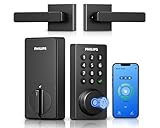
I remember the first time my smart lock decided to be… not smart. I was fumbling with groceries, my hands full, and the keypad was unresponsive. After about thirty seconds of increasingly frantic poking, I had to awkwardly balance everything on the porch to dig out my actual key. It was a moment that made me question the whole premise.
For years, the tech world has been pushing these things as the future, promising convenience and security. But when you stop and actually think about it, you have to ask: are smart door locks safe? It’s not a silly question, and the answer isn’t a simple yes or no. It’s complicated, like most things that involve a Wi-Fi signal and your front door.
Let’s cut through the marketing hype and get down to brass tacks. I’ve lived with more than my fair share of these gadgets, fiddled with their settings, and even dealt with a few glitches. What I’ve learned is that while they can be great, they aren’t magic bullets, and there are definitely things you need to know before you install one.
The Siren Song of Keyless Entry: How They Actually Work
Look, the appeal is obvious. No more digging for keys when your hands are full, no more worrying about who has copies. My first smart lock, a fancy touchscreen model, felt like living in the future. Punch in a code, hear a satisfying thunk, and you’re in. Or, even better, whip out your phone and tap an app. It felt liberating, like I’d finally escaped the tyranny of metal keys. This ease of access is what makes people wonder if are smart door locks safe enough for their homes.
Most smart locks fall into a few main categories. You’ve got your keypad entry models, which are basically electronic deadbolts. Then there are the ones that rely entirely on Bluetooth or Wi-Fi, controlled via a smartphone app. Some are hybrids. They connect to your home Wi-Fi network, allowing you to control them remotely – meaning you can lock or open your door from literally anywhere with an internet connection. This remote access is a big selling point, especially for letting in dog walkers or contractors when you’re not home.
Under the hood, these things use motors to physically retract or extend the bolt. The ‘smart’ part comes from the electronics that interpret your input (keypad code, app command) and tell the motor what to do. They often have backup battery power, and most will give you a warning when the batteries are low – usually a series of beeps or a notification on your phone. Some even have a physical keyhole as a last resort, though many of the sleeker, more modern designs have ditched that entirely. That’s a point of contention for me; I like having a physical backup I can trust implicitly, no electronics required.
The connectivity is where things get interesting, and frankly, a little concerning for some. Your Wi-Fi-enabled lock talks to your home router, which then connects to the lock manufacturer’s servers. Your app on your phone also talks to those servers. So, it’s not a direct link between your phone and your door in most cases. This network of communication is what raises questions about vulnerability. If any part of that chain can be compromised, your door security is at risk.
I’ve seen my fair share of connectivity hiccups. A router reboot sometimes means my lock won’t reconnect immediately, leaving me staring at a ‘device offline’ message in the app. It’s frustrating, especially when you’re in a hurry. And while the companies assure you their encryption is top-notch, the idea of my front door being controlled by a server farm somewhere gives me pause. The convenience is undeniable, but understanding this interconnectedness is the first step in assessing if are smart door locks safe for your specific needs.
When Convenience Becomes a Headache: My Own Dumb Lock Story
I’m going to tell you about the time my ‘smart’ lock made me feel like an idiot. I was out for the evening, and my partner texted to say they were heading home and had forgotten their keys. No problem, right? I opened the app, tapped ‘open,’ and got a ‘command failed’ error. I tried again. Nothing. Panicked, I tried again, this time from a different part of town, hoping it was a signal issue. Still nothing. My partner was standing on the porch in the rain, getting progressively colder and more annoyed.
This went on for about ten minutes. I was toggling Wi-Fi on and off, restarting the app, even contemplating calling a locksmith at 9 PM. It turned out the issue wasn’t a hack, or a software bug in the traditional sense. My home Wi-Fi router had decided to do an automatic firmware update at the exact wrong moment, and the lock, dependent on that connection, had gone dark. My partner eventually had to wait for a neighbor to get home so they could use their phone to call me and I could walk them through the manual override, which involved a tiny, fiddly reset button hidden inside the battery compartment and a prayer.
That experience really hammered home for me that these devices are only as reliable as the infrastructure they depend on. It’s not just about the lock itself; it’s about your Wi-Fi signal, your internet provider, and the manufacturer’s servers. If any one of those fails, your fancy smart lock can become a very expensive, very useless paperweight. I learned that day that ‘always connected’ doesn’t always mean ‘always working,’ and that’s a important point when we’re talking about are smart door locks safe. (See Also: Are Door Locks Part Of Condo Owner )
This isn’t an isolated incident for me. I’ve also had locks drain batteries in a matter of weeks because of a faulty connection or an app that kept trying to ping the device unnecessarily. I’ve had them randomly re-lock themselves when I’ve just opened the door. It’s these little glitches, the moments of unreliability, that make you lose confidence. You start second-guessing whether the convenience is worth the potential for being locked out, or worse, locked in.
The common advice is to have a backup, and that’s good advice, but it doesn’t erase the fundamental question of whether the primary system is sound. For me, that hiccup in the rain was a wake-up call. It made me appreciate the simple, brute-force reliability of a good old-fashioned deadbolt. While smart locks offer undeniable perks, my own dumb lock experience is a constant reminder that technology isn’t always foolproof, especially when it’s guarding your home.
Are Smart Door Locks Safe From Hackers? The Real Risks
This is the big one, isn’t it? Everyone pictures a shadowy figure in a black hoodie, tapping away at a keyboard, and suddenly your front door swings open. While that’s a bit Hollywood, the reality of hacking smart door locks is more nuanced but no less serious. The primary concern revolves around the communication protocols and the security of the software. If the encryption is weak, or if there are vulnerabilities in the firmware, an attacker could potentially intercept signals or exploit flaws to gain access.
One common attack vector involves ‘man-in-the-middle’ attacks, where an attacker intercepts the communication between your app and the lock’s server. If the data isn’t properly encrypted, they could capture your credentials or even send their own commands. Another worry is brute-force attacks on PIN codes if the lock doesn’t have proper lockout mechanisms after too many failed attempts. I’ve seen basic keypad locks that let you try over and over, which is just asking for trouble. A determined hacker could potentially cycle through combinations until they get it right, especially if the code is simple.
Network security is also most important. If your home Wi-Fi network is compromised – say, due to a weak password on your router – then any device connected to it, including your smart lock, becomes vulnerable. This is why it’s so important to secure your home network first. Think of it like this: if the locks on your house are amazing but your windows are wide open, you’ve got a problem. And then there’s the physical aspect. While many smart locks have tamper alerts, they aren’t impenetrable. A skilled burglar could still try to physically bypass the lock, though this is often noisier and more time-consuming than a digital hack.
I’ve read plenty of reports over the years about researchers finding vulnerabilities in specific smart lock models. Sometimes it’s a flaw in the Bluetooth handshake, other times it’s a back door left open in the cloud service. Most reputable manufacturers patch these issues quickly, but it requires you to keep your lock’s firmware updated, which isn’t always as automatic as you’d hope. For me, the biggest fear isn’t a sophisticated remote hack, but rather a simple exploit of a poorly secured network or a device that hasn’t been updated in years. That’s why, when people ask me are smart door locks safe, I always stress that it’s not just about the lock itself, but the entire digital ecosystem it lives in.
Here’s a comparison of common smart lock types and their potential vulnerabilities:
| Lock Type | Primary Connection | Common Vulnerabilities | My Verdict |
|---|---|---|---|
| Keypad Entry (Wi-Fi/Bluetooth) | Wi-Fi, Bluetooth, App | Weak PINs, Network breaches, Firmware exploits | Decent if PIN is complex & network is secure. Better than nothing, but not top-tier security. |
| Full App Control (Wi-Fi/Bluetooth) | Wi-Fi, Bluetooth, App | Server breaches, App vulnerabilities, Network issues | Convenient but more points of failure. Remote access is a double-edged sword. |
| Standalone Keypad (No Network) | None | PIN brute-force (if no lockout), Physical bypass | Simpler, fewer digital risks, but less ‘smart’. Good for basic needs. |
| Smart Lock with Physical Keyhole | Wi-Fi, Bluetooth, App + Physical Key | Same as above, plus traditional lock picking vulnerabilities | Best of both worlds for peace of mind, but the electronic part still has risks. |
What to Look for: Building a Smarter, Safer Lock
If you’re still set on going smart – and I get it, the convenience is tempting – there are definitely things you should be looking for to maximize safety. My biggest piece of advice is to avoid the cheapest options. You get what you pay for, and a $50 smart lock is probably not going to have the same level of security engineering as a $200 one. Think about the brand reputation. Are they known for cybersecurity, or are they just churning out gadgets? I tend to stick with companies that have a track record in home security, rather than just consumer electronics.
Encryption is your friend. Look for locks that use strong encryption standards, like AES-256, for their wireless communications. This makes it much harder for attackers to snoop on your data. Check if the lock supports two-factor authentication (2FA) for your account, even though it’s on your phone. This adds an extra layer of security to your account itself, preventing someone from just logging in with your username and password. Some locks also offer ‘guest access’ with time-limited codes, which is fantastic for letting a friend in for a few hours without giving them permanent access. I’ve used this for my sister when she housesat, and it felt secure knowing her code would expire.
Firmware updates are a must. A good smart lock company will regularly push out updates to patch security holes. Make sure the lock you choose supports automatic firmware updates, or at the very least, makes it incredibly easy to update manually. You don’t want to be stuck with a known vulnerability because you forgot to check for an update. It’s like leaving your computer unpatched – a hacker’s dream. Also, consider the physical build. Does it feel solid? Are there any obvious weak points? Even the best digital security can be undermined by flimsy hardware. (See Also: Are Keypad Door Locks Secure )
And please, for the love of all that is holy, use a strong, unique password for your Wi-Fi network and your smart lock account. Don’t use ‘password123’ or your pet’s name. Think of something long and complex, and use a password manager to keep track of it. This is the most basic, yet often overlooked, step in securing your smart home. It’s the digital equivalent of deadbolting your door. So, when you’re evaluating if are smart door locks safe, remember that the technology is only one piece of the puzzle. Your own digital hygiene is just as important.
Here’s a quick checklist for choosing a safer smart lock:
- Brand Reputation: Stick with established brands known for security.
- Encryption Standards: Look for AES-256 or similar strong encryption.
- Account Security: Does it support 2FA for your app account?
- Guest Access: Features like timed codes add flexibility and security.
- Firmware Updates: Automatic updates are best; easy manual updates are a must.
- Physical Build: Does it feel sturdy and well-made?
- Physical Key Backup: Consider models that still offer a traditional key slot.
- Network Security: Make sure your home Wi-Fi is robustly password-protected.
Common Mistakes People Make with Smart Locks
I’ve seen friends and family make a few classic blunders when they jump into the world of smart locks. The most common one? Treating them like a magic security wand. They install it, punch in a weak PIN, and think their home is suddenly Fort Knox. That’s just not how it works. A smart lock is a tool, and like any tool, it needs to be used correctly and maintained.
One of the biggest mistakes is using default or easy-to-guess PIN codes. We’re talking birthdays, anniversaries, the sequence ‘1234’. Manufacturers often suggest simple codes to start, and people just… leave them. Or they use the same code for multiple devices. If someone gets hold of that code, they’ve got access. I saw someone use the same four digits for their smart lock, their alarm system, and their mailbox – which, incidentally, had a keypad too. That’s just asking for trouble. My rule is simple: if it’s easy to remember, it’s probably easy to guess.
Another common pitfall is neglecting firmware updates. Like I said before, these updates often contain important security patches. If your lock is constantly ‘offline’ or you never check for updates, you could be leaving a gaping hole for hackers. It’s the digital equivalent of leaving your front door wide open and hoping no one notices. I’ve had to remind more than one person that their ‘smart’ lock was actually quite dumb because it hadn’t spoken to its manufacturer in months.
Relying solely on the app without a backup plan is also a big mistake. My own rainy-day incident is proof of that. What happens if your phone dies, your Wi-Fi goes down, or the app glitches? If you haven’t got a physical key, or a way to manually override the lock, you’re in a world of pain. I know some of the sleeker models have ditched the keyhole entirely, and while they look cool, I think that’s a design flaw for anyone who values reliability. Always have a fallback. Always.
Finally, people often underestimate the importance of their home Wi-Fi security. If your router has a weak password or an outdated protocol, your smart lock is vulnerable even if the lock itself is perfectly secure. It’s like having a high-security vault inside a flimsy shed. I’ve seen people go to great lengths to secure their locks but then use ‘password123’ for their Wi-Fi. It’s a disconnect. So, when you’re thinking about are smart door locks safe, consider the entire network, not just the lock itself. These aren’t just fancy gadgets; they’re part of your home’s security infrastructure.
Are Smart Door Locks Safe? A Real-World Perspective
After years of tinkering and living with various smart locks, I can tell you this: they can be safe, but it’s not automatic. It’s a constant balancing act between convenience and security. The technology has come a long way. Early models were buggy and frankly, not very secure. Today, you can find locks from reputable brands that use solid encryption and have decent track records. However, they’re not infallible. The biggest takeaway for me is that a smart lock is only as strong as the weakest link in its chain, and that chain includes your home network, your phone’s security, and your own vigilance.
I’ve had guests use my smart lock without issue, letting themselves in and out smoothly. I’ve also had moments of panic where the app refused to connect, or the lock seemed unresponsive. These glitches are less frequent now than they used to be, but they still happen. For me, the daily use is mostly smooth. I like being able to grant temporary access to a friend, or check if I remembered to lock the door after leaving for work. These are real benefits that a traditional lock just can’t offer.
However, I still have a traditional deadbolt on my back door, and I keep a physical key for my smart lock hidden in a discreet place outside. Why? Because I’ve learned that digital systems can fail. Batteries die, Wi-Fi goes down, apps crash, servers have outages. In those moments, I want a backup I can rely on 100%, no questions asked. It’s not about being paranoid; it’s about being practical. The peace of mind from knowing I have a foolproof way to get into my own house, even if the tech fails, is worth the minor inconvenience of hiding a spare key. (See Also: Are The Rams Locked Into 6 Seed )
The question of are smart door locks safe is really about how much risk you’re willing to accept and how much effort you’re willing to put in. If you’re someone who meticulously manages your passwords, keeps your software updated, secures your home network, and buys from reputable brands, you’re going to have a much safer experience than someone who just plugs it in and forgets about it. It requires a bit more ongoing attention than a dumb lock, but the rewards can be significant if you do it right.
I’ve seen people get really bogged down in the technical details, worrying about every possible hack. While it’s good to be informed, don’t let it paralyze you. For most people, a well-chosen and properly managed smart lock from a good brand will be a secure and convenient addition to their home. Just remember that ‘smart’ doesn’t mean ‘invincible’. It means ‘connected’, and that connection is both its strength and its potential vulnerability.
Frequently Asked Questions About Smart Door Lock Safety
Are Smart Door Locks Hackable From the Internet?
Yes, smart door locks connected to the internet can be hacked. Attackers can exploit vulnerabilities in the lock’s firmware, the manufacturer’s servers, or your home Wi-Fi network. This could involve intercepting communication, brute-forcing access codes if they aren’t properly secured, or exploiting software flaws. Proper security measures on your network and the lock itself are important to mitigate these risks.
Can a Smart Lock Be Overridden Without a Key or Code?
In some cases, yes. While designed to be secure, sophisticated attackers might find ways to bypass the digital security through advanced hacking techniques or by exploiting specific vulnerabilities in the device. Additionally, if the lock’s battery dies and there’s no physical key backup, or if there’s a severe software malfunction, it might become impossible to open without manual intervention or professional help.
Are Smart Locks with Bluetooth Safer Than Wi-Fi?
Neither Bluetooth nor Wi-Fi is inherently ‘safer’ on its own; it depends on the implementation and security protocols used. Bluetooth locks are typically only accessible when you are within a short range, which can limit remote hacking but doesn’t prevent physical proximity attacks or exploiting Bluetooth vulnerabilities. Wi-Fi locks offer remote access but are dependent on your home network’s security and the manufacturer’s server integrity.
Do Smart Locks Drain Batteries Quickly?
Battery life for smart locks can vary significantly depending on the model, how often it’s used (locking/opening actions), and the connectivity method. Locks that frequently communicate over Wi-Fi or are used many times a day will drain batteries faster than those used less often or only via Bluetooth. Most modern smart locks are designed to be reasonably power-efficient, and low-battery warnings are standard.
Should I Get a Smart Lock If I Live in an Apartment?
Getting a smart lock for an apartment depends on your lease agreement and the landlord’s permission. Some apartment buildings have restrictions on changing locks or installing new hardware. If permitted, a smart lock can offer convenience, but make sure it meets the building’s security requirements and doesn’t violate any rules. The complexity of your Wi-Fi network and potential interference from neighbors’ devices are also factors to consider.
Verdict
So, are smart door locks safe? My honest answer is they can be, but it requires a conscious effort. It’s not a ‘set it and forget it’ kind of deal. You need to be mindful of your Wi-Fi security, keep firmware updated, use strong passwords, and always, always have a physical backup. I’m not saying ditch the tech if you’re tempted by the convenience. I still use mine, but I do it with my eyes wide open.
The real risk isn’t usually a shadowy hacker from afar, but rather an unsecured network, a forgotten update, or a simple, exploitable PIN code. These are things you can control. Don’t let the marketing fool you into thinking it’s foolproof security. It’s a tool, and its effectiveness hinges on how well you wield it.
My final thought? If you’re going smart, invest in a reputable brand, understand the security implications, and maintain your system. And maybe, just maybe, keep that old-fashioned key handy. You never know when your ‘smart’ lock might decide to take a nap.