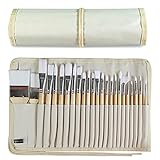
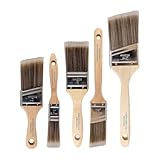
I remember staring at a wall of paint brushes, feeling utterly defeated. It was right after I’d spent a frankly embarrassing amount of money on a set that promised the moon and delivered… well, a patchy mess. That’s when I first encountered the idea of snap paint brushes. My initial thought? “Is this just another gimmick?” I’ve been burned enough times by overhyped art supplies to be skeptical. So, to answer the burning question: are snap paint brushes good? Let’s cut through the marketing BS.
Honestly, the concept alone sounds too convenient. Brushes that somehow… connect? It felt like something out of a cartoon. But after digging in and actually putting some to the test, I’ve got some thoughts. And yeah, they’re not all glowing, but there’s definitely a place for them, if you know what you’re doing.
Why I Was So Skeptical About Snap Brushes
Let’s be real, the term ‘snap paint brushes’ sounds like something a kid would invent for a toy. My first thought was, ‘How are these supposed to work without shedding all over my canvas?’ I’ve spent years honing my technique with traditional brushes – the feel of a good hog bristle in my hand, the way a fine sable holds pigment. The idea of a brush that clicks together or expands felt… wrong.
Like it would compromise the integrity of the brush head itself. I envisioned flimsy plastic connectors, bristles that were too stiff or too loose, and a general lack of control that would send my carefully mixed colors splattering everywhere. My biggest fear was that the connection point would be a weak link, literally and figuratively, breaking down after a few uses or, worse, failing mid-stroke.
I mean, we’re talking about precision work sometimes, right? You need a tool you can trust, not something that feels like it’s going to fall apart. So, when I first saw them advertised, my internal monologue was basically a string of profanities directed at marketing departments everywhere.
I recall one particularly frustrating session years ago with a set of cheap synthetic brushes I bought online. They looked decent enough in the photos, but when they arrived, the ferrules were loose, and the bristles felt like plastic wire. Every stroke was a gamble, leaving behind stray hairs and uneven lines. I ended up scraping off a good chunk of my painting and starting over.
That experience left me wary of any brush that wasn’t a known quantity from a reputable art supply store. The ‘snap’ mechanism seemed like it would only add another layer of potential failure.
I’d seen plenty of brushes with clever designs that ultimately flopped because the core functionality was compromised. So, when someone first mentioned snap brushes to me, my immediate, gut reaction was a resounding ‘no way.’ It felt like sacrificing quality for a bit of novelty.
I’d rather stick to what I know works, even if it means a bit more hassle with cleaning and storage. The thought of a brush breaking apart mid-project sent shivers down my spine.
The common advice, echoed by countless artists and art supply store clerks, is to invest in good quality traditional brushes. They talk about bristle type, ferrule construction, handle balance. It’s all very… sensible. And for the most part, it’s true. But what if you don’t have the luxury of a massive budget, or you’re painting in a cramped space, or you just need something that’s incredibly easy to pack and clean? That’s where the notion of snap brushes starts to pique my interest, even if my inner traditionalist is screaming.
How Do These Snap Paint Brushes Actually Work?
Okay, so the core idea behind most snap paint brushes isn’t some arcane magic; it’s usually pretty straightforward engineering. The most common designs involve a ferrule that can either telescope or have a separate piece that screws or clicks onto another. Think of it like a collapsible pen or a telescopic fishing rod. For example, you might have a brush where the handle itself is split into two sections that securely lock together with a twist or a firm push.
Or, you might have a longer handle that the brush head ferrule slides down into and then secures with a locking mechanism – a twist-lock or a button-press system. The goal is to reduce the overall length for storage or travel, making it more portable and less prone to getting bent or damaged. Some brands might offer interchangeable heads that snap onto a single handle, which is a slightly different concept but often falls under the ‘convenience’ umbrella.
The key is the locking mechanism. It needs to be solid enough to hold the two parts firmly together when you’re painting, preventing any wobbling or separation. A poorly designed lock will feel loose, and that’s where the real problems start.
A good one, however, should feel as solid as a traditional one-piece handle. I’ve seen designs where the ferrule simply slides over a protruding part of the handle and is held in place by friction or a small spring clip. Others use a screw-thread system, which can be very secure but might add a tiny bit of bulk.
The best ones I’ve encountered have a satisfying click when they lock into place, giving you that confidence that they’re not going to unexpectedly come undone. It’s all about how well the connection is engineered to maintain the rigidity and balance of the brush, which is what you rely on for control.
The materials used in the connector are also important; cheap plastic can wear down or crack, while a well-machined metal or durable polymer will last much longer. (See Also: Can Acrylic Paint Go In An Air Brush )
There’s also the aspect of the brush head itself. The ‘snap’ feature primarily relates to the handle or ferrule, not necessarily the bristles. So, you can find snap brushes with synthetic bristles, natural hog bristle, or even softer squirrel or goat hair equivalents, depending on the brand and the intended use. The innovation is in the handle’s ability to change length, not necessarily in a revolutionary bristle technology. However, some systems might be designed to accept different types of brush heads, offering a versatile solution if you need to switch between flats, rounds, or fan brushes without carrying a whole new set. This interchangeability is a big draw for artists who are constantly on the go or have limited workspace.
What to Look for When Buying Snap Brushes
Alright, let’s talk brass tacks. If you’re even considering dipping your toes into the snap brush pool, there are a few things you absolutely need to scrutinize. First and foremost is the locking mechanism.
This is where most cheap snap brushes fail. You want a system that feels secure, with no wobble or give when you grip it. A satisfying ‘click’ or a firm twist-lock is a good sign.
I personally hate those that just rely on friction; they always seem to loosen up over time. Spend a moment to actually feel how it locks together. Does it feel flimsy?
Does it require a ridiculous amount of force to connect or disconnect? That’s usually a red flag. I once bought a set where the plastic locking mechanism snapped after about a month of light use. Lesson learned.
Next, examine the ferrule and the brush head itself. The ferrule (that metal part holding the bristles) should be securely crimped onto the handle, just like on a traditional brush. Any looseness here means bristles will eventually start falling out, and nobody wants that. Look for a well-formed ferrule that doesn’t have sharp edges.
As for the bristles, it depends on what you’re painting. For acrylics or oils, you’ll likely want synthetic bristles that are firm and springy.
For watercolors or gouache, softer, more absorbent synthetic or natural bristles are better. Don’t let the ‘snap’ feature distract you from the basic quality of the brush head.
A great handle can’t save a terrible brush. I’ve seen snap brushes with incredibly stiff, scratchy synthetic bristles that are only good for rough textures, and others with surprisingly soft, well-shaped synthetic rounds that hold a decent point.
Consider the overall construction. Is the handle made of durable plastic or a lightweight metal?
Metal handles often feel more premium and balanced, but can be heavier. Plastic handles are lighter but can feel a bit cheap if not well-made. The length when collapsed is also a factor if portability is your main goal. Measure it out and compare it to your existing pencil case or art bag.
Finally, read reviews, but take them with a grain of salt. Look for common complaints about the locking mechanism or bristle shedding.
Sometimes, a slightly higher price point on a snap brush indicates better engineering and materials. I found a set from a lesser-known brand online that was surprisingly well-built because they clearly put more effort into the locking mechanism than the bigger, more established companies who might see it as a secondary product line. It’s about finding that sweet spot where convenience doesn’t come at the total expense of performance.
Here’s a quick rundown of what I look for, with a verdict on each:
| Feature | My Verdict | Why |
|---|---|---|
| Locking Mechanism Security | Must be rock solid | Wobble means lost control and potential breakage. |
| Ferrule Crimp Quality | Tight and secure | Loose ferrules are the harbinger of doom for brush bristles. |
| Bristle Type & Quality | Appropriate for medium, holds shape | A good handle can’t fix bad bristles. |
| Handle Material & Balance | Durable and comfortable grip | Weight and feel matter for long painting sessions. |
| Collapsed Size | Fits my needs (travel/storage) | The primary reason for buying them. |
| Brand Reputation (for innovation) | Mixed, but look for focus on mechanics | Some brands nail it, others miss the mark. |
Common Mistakes Artists Make with Snap Brushes
The biggest mistake I see people make, and frankly, one I almost made myself, is treating snap brushes like disposable tools. Because they’re often marketed towards convenience and portability, some artists assume they can just toss them around, jam them into bags, or neglect proper cleaning. That’s a recipe for disaster. The locking mechanism, no matter how well-engineered, is still a point of potential weakness. (See Also: Can Acrylic Paints Be Used In An Aqua Brush )
If you’re constantly forcing them into tight spaces or not cleaning them thoroughly, that mechanism can seize up, wear down, or even snap. I’ve seen artists try to clean them by just rinsing the tips and leaving paint to gum up the inner workings. That’s a fast track to a useless brush. You need to disassemble them (if designed to be disassembled) and clean both parts thoroughly, making sure no paint or debris gets trapped in the connection points.
Another common pitfall is expecting them to perform identically to their high-end, traditional counterparts in every single aspect. While good snap brushes can be surprisingly capable, there might be subtle differences in balance, or a tiny bit of flex in the handle that you wouldn’t get with a solid piece of wood. If you’re expecting the exact same feel and precision as a Kolinsky sable brush with a perfectly weighted handle, you might be disappointed.
They’re often a compromise – offering portability and ease of use in exchange for a marginal difference in handling. I learned this the hard way when I tried to do extremely fine detail work with a snap brush set that was clearly designed for broader strokes.
The point on the round brush wasn’t as sharp, and the ferrule felt a bit too light, making those delicate lines a struggle. It wasn’t the brush’s fault; it was mine for expecting it to do something it wasn’t primarily designed for.
People also tend to overlook the importance of the type of snap brush. Not all snap mechanisms are created equal. Some are designed for simple extension, while others are meant to be fully separated for cleaning or storage. Misunderstanding this can lead to frustration.
For example, if you try to force a brush apart that’s only designed to telescope, you’ll likely break it. It’s like trying to unscrew a jar lid that’s just a push-on cap. Always read the instructions, even if it feels obvious. I’ve had friends who bought snap brushes and then complained they couldn’t clean them properly because they didn’t realize the handle was supposed to twist apart.
It sounds silly, but these details matter. Lastly, and this is a big one that trips up many people, is not considering the medium you’re using. Using stiff, synthetic snap brushes for delicate watercolor work, or very soft, flowy brushes for thick impasto oil painting, will naturally lead to poor results. The brush needs to be the right tool for the job, and the snap feature is just an added bonus.
My Real-World Experience with Snap Brushes
I’ve gone through a few sets of snap brushes over the years, mostly out of curiosity and the need for a travel-friendly option for sketching and plein air painting. My first set was a cheap, no-name brand I picked up online for about $20. The handles snapped together okay, but the bristles were awful – stiff and prone to splitting. They shed like crazy, leaving little plastic hairs all over my watercolor washes. I honestly regretted that purchase within a week. They felt more like glorified toothbrushes than art tools. I ended up donating them to a local school art program, figuring kids might be less picky.
My second foray was with a mid-range set, costing closer to $60. This was a significant improvement. The handles locked securely with a satisfying click, and the bristles were a decent synthetic blend, suitable for acrylics and even some lighter oil work.
I took these on a camping trip, and they were a lifesaver. Being able to pack them down small meant I could actually bring a decent variety of brush shapes without taking up half my backpack. The cleaning process was also easier; I could separate the handle and ferrule (they were designed to come apart for cleaning) and make sure everything was spotless. I remember one afternoon, painting by a lake, the light was absolutely gorgeous, and I was able to switch between a flat brush for the water and a small round for the reeds without fumbling through a bulky case.
It felt liberating. However, even with this better set, I noticed that after about a year of intermittent use, one of the locking mechanisms started to feel a bit looser. It still held, but the ‘rock solid’ confidence was slightly diminished.
My current favorite set, which cost me around $85, is from a brand that specializes in art tools for hobbyists and travelers. These brushes have metal ferrules and handles that feel more substantial. The locking mechanism is a screw-type, which I find to be the most reliable.
They’ve held up for over two years of regular use – I use them for quick sketches, occasional travel painting, and even for base coating larger areas when I’m working on a big canvas and don’t want to use my most expensive brushes. The bristles are a good quality synthetic that holds its shape well and cleans up easily. The real surprise was how well they handle paint; they have a nice spring and pick up a good amount of pigment.
I wouldn’t use them for hyper-realistic portraiture where every single hair matters, but for most other applications, they perform admirably. They’ve proven that you don’t necessarily have to sacrifice too much quality for the convenience.
Snap Brushes vs. Traditional Brushes: When to Choose Which
This is where it gets interesting, and where I think a lot of the ‘are snap paint brushes good’ debate gets muddled. It’s not about one being inherently superior; it’s about the right tool for the right job. If you’re a professional artist working in a studio, or someone who demands the absolute highest level of precision and control for detailed work, you’re probably going to stick with your traditional brushes. There’s a reason why master painters throughout history have relied on well-crafted, single-piece brushes. (See Also: A Brushes Digital Painting )
The balance, the feel, the immediate feedback they provide is often unmatched. For those moments when you’re rendering a portrait or creating intricate patterns, you want a brush that feels like an extension of your own hand, without any mechanical interfaces to interrupt that connection. That’s where the tactile experience of a solid handle and a perfectly weighted brush becomes most important. My finest liner brushes, for example, have a handle so perfectly balanced that it feels like it’s guiding my hand.
You just don’t get that with a multi-part handle.
However, if you’re a student, a hobbyist, a traveler, or someone with limited space, snap brushes can be an absolute lifesaver. Think about it: instead of carrying three or four bulky traditional brushes in a pencil case, you can carry a single snap brush that extends to full length.
This is ideal for sketching on the go, plein air painting where space is at a premium, or even just for keeping a compact art kit in your backpack for spontaneous creative sessions. I’ve found them invaluable for quick watercolor sketches when I’m out and about. They’re also often more budget-friendly than a comparable set of high-quality traditional brushes, making them a great entry point for beginners who aren’t ready to invest heavily in their supplies.
Plus, for mediums like acrylics or oils where you might be using a variety of brush types (flats, rounds, fans), a system with interchangeable snap-on heads can offer incredible versatility without the clutter. Imagine having one handle and a few different brush heads – it’s a compact solution that covers a lot of ground.
Here’s a table to help you decide:
| Scenario | Best Choice | Why |
|---|---|---|
| Studio work, high detail, professional use | Traditional Brushes | Unmatched balance, feel, and precision. |
| Travel painting, plein air, limited space | Snap Brushes | Compact, portable, and convenient. |
| Beginner art supplies, budget-conscious | Snap Brushes (good quality set) | More affordable way to get a variety of shapes. |
| Sketching and quick studies | Snap Brushes | Easy to pack and use anywhere. |
| Experimenting with different mediums/techniques | Both, depending on specific needs | Snap brushes with interchangeable heads offer versatility. |
| Durability and long-term investment | Traditional Brushes | Generally more solid and less prone to mechanical failure. |
Ultimately, the question of ‘are snap paint brushes good’ hinges on your personal needs and expectations. They aren’t a replacement for your most cherished studio brushes, but they absolutely have their place. They’re a practical solution that bridges the gap between convenience and capability for many artists. The trick is to be discerning about which ones you buy and how you use them. Don’t expect miracles from the cheapest options, and always treat them with a reasonable amount of care. When used appropriately, they can be a valuable addition to your art kit.
Can Snap Paint Brushes Be Used for All Types of Paint?
Yes, snap paint brushes can be used for most types of paint, including watercolors, acrylics, and oils. The key is to select snap brushes with bristles appropriate for the medium. For watercolors, look for softer, more absorbent bristles. For acrylics and oils, firmer, more resilient synthetic bristles are usually best. The snap feature itself doesn’t dictate the paint compatibility; the brush head and bristle type do.
Are Snap Paint Brushes More Expensive Than Traditional Brushes?
Generally, good quality snap paint brushes tend to be in a similar price range to mid-to-high quality traditional brushes of the same material and number of bristles. Very cheap, low-quality snap brushes can be found for less, but they often sacrifice performance. The added complexity of the telescoping or locking mechanism means they’re rarely cheaper than basic traditional brushes. However, a set with interchangeable heads might offer more value for money than buying multiple separate brushes.
Do Snap Paint Brushes Shed Bristles More Often?
Not necessarily. If a snap brush is well-made, the ferrule should be securely crimped, just like on a traditional brush, and shedding should be minimal. However, poor construction, especially around the locking mechanism or ferrule, can lead to increased bristle loss. The stress on the handle where it connects can also, in poorly designed models, indirectly affect the ferrule’s integrity over time. So, while not an inherent flaw of the design, it’s a common issue with lower-quality snap brushes.
How Do I Clean and Maintain Snap Paint Brushes?
Cleaning snap paint brushes requires a bit more attention than traditional ones. If the brush is designed to separate into two or more parts for cleaning, do so. Thoroughly wash the bristles with appropriate soap or cleaner for your paint medium. Make sure no paint residue is left in the ferrule or, if applicable, the connection points of the handle. Dry them thoroughly, bristles up, and reassemble only when completely dry. Avoid getting paint into the locking mechanism, as it can cause it to stick or seize up. Regular maintenance of the locking mechanism itself, perhaps with a tiny drop of lubricant if recommended by the manufacturer, can also help make sure longevity.
Verdict
So, are snap paint brushes good? My honest answer is: it depends. They aren’t going to replace your favorite, perfectly balanced studio brushes overnight. If you’re a purist or work on incredibly detailed projects where every micron of control matters, you’ll likely want to stick to traditional. The mechanical connection, no matter how well-designed, is a compromise.
But for anyone who values portability, convenience, or a more budget-friendly entry into the art world, a good set of snap brushes can be a revelation. I’ve found them invaluable for travel, sketching, and even for certain tasks in my home studio when I need something practical and easy to pack away. The key is to be smart about your purchase: look for secure locking mechanisms, quality bristles, and a design that’s easy to clean and maintain.
Don’t dismiss them as just a gimmick. They’ve earned a spot in my art bag. The next time you’re packing for a trip or just want a no-fuss option for a quick painting session, consider giving a decent pair of snap paint brushes a try. You might be surprised at how useful they are.