I remember the first time I had a serious drain clog under my kitchen sink. Water was backing up, smelling like a week-old gym sock, and I was convinced I needed some fancy, industrial-strength plumber’s snake. Then I looked under the sink and saw the P trap. It looked… simple. Too simple, maybe? I spent a good hour Googling, feeling overwhelmed by jargon and diagrams. Are there really different types of P traps, or is it just one basic design everyone’s talking about? Turns out, the answer isn’t as straightforward as you might think, and understanding them can save you a lot of hassle and a few bucks.
Look, most of us just want our sinks to drain. We don’t think about the humble P trap, that U-shaped pipe lurking beneath. But this little guy is doing some heavy lifting, keeping your house from smelling like a sewer. So, yeah, there are variations, and knowing what they are is surprisingly useful, even if you’re not a DIY guru.
The P Trap: More Than Just a Bend in the Pipe
Let’s get one thing straight right off the bat: the fundamental job of any P trap, regardless of its specific design or material, is the same. It’s the unsung hero of your plumbing system, the silent guardian against the noxious gases that rise from your sewer lines. Without it, your home would smell like, well, a sewer. The P trap achieves this by holding a small amount of water in its U-shaped bend. This water creates a seal, a barrier that prevents sewer gases from entering your living space. Every time you run water down a sink, shower, or toilet, it flows through the trap, replenishes the water seal, and pushes out the old water and waste.
So, when people ask ‘are there different types of P traps,’ they’re often thinking about variations in material, shape (though the ‘P’ shape is pretty standard), and how they connect. The basic mechanism of the water seal is universal, but the specifics can matter for installation, durability, and even how easily they clog. Think of it like car tires. They all do the same basic job of keeping your car on the road, but you have all-season, summer, winter, and performance types, each with different benefits and drawbacks depending on your needs.
I learned this the hard way when I replaced a leaky faucet. The old trap was a cheap plastic thing that had warped over time. I just grabbed the cheapest replacement I could find at the hardware store, a simple ABS plastic model. It worked fine for a while, but it felt flimsy. Later, when I tackled a more persistent clog, I realized that while the shape was the same, the material and construction could make a difference in how easily it could be accessed or how prone it was to cracking under pressure or temperature changes. That initial frustration led me down the rabbit hole of understanding these seemingly simple plumbing components.
People often confuse P traps with other plumbing components. A common question is about the difference between a P trap and a S trap. A S trap is an older design that has a second downward bend, creating an ‘S’ shape. This design is problematic because it can siphon out the water seal under certain conditions, defeating its purpose. Most modern plumbing codes prohibit S traps for this very reason. The P trap, with its single U-bend followed by a horizontal outlet to the drainpipe, is the code-compliant and effective solution for maintaining that important water seal.
The term ‘P trap’ itself refers to the shape created by the U-bend and the subsequent horizontal pipe that connects to the waste line. However, variations exist primarily in the materials used and the specific fittings employed for installation and maintenance. These differences, while seemingly minor, can impact longevity, ease of cleaning, and even the acoustic properties of your drain system (some cheaper plastics can be noisy).
Materials Matter: From Plastic to Metal
The most significant differentiator among P traps, in my experience, is the material they’re made from. You’ll primarily encounter two main types: plastic and metal. Each has its own pros and cons, and your choice often comes down to budget, installation ease, and how much you value longevity or aesthetics.
Plastic P Traps
These are the workhorses of modern plumbing, especially in new construction and DIY renovations. They are typically made from ABS (Acrylonitrile Butadiene Styrene) or PVC (Polyvinyl Chloride). Why are they so popular? They’re incredibly lightweight, inexpensive, and relatively easy to cut and assemble using solvent cement or friction-fit connections. For a homeowner looking for a quick, budget-friendly fix, a plastic P trap is often the go-to. I’ve installed more of these than I can count. They’re forgiving for beginners because if you mess up a cut or a connection, it’s not a huge financial loss.
However, plastic isn’t without its downsides. Over time, especially with exposure to hot water or harsh drain cleaners, plastic can become brittle.
I once had a plastic P trap under a bathroom sink that developed a hairline crack after about five years. It started as a slow drip, barely noticeable, but it escalated into a steady leak. Cheap plastic can also be more prone to absorbing odors over time, though this is less common with good quality ABS or PVC.
Another annoyance is that they can sometimes be more susceptible to grease buildup, which can be harder to dislodge than from a smoother metal surface. They also tend to be noisier; you’ll often hear more gurgling and water sounds with plastic traps compared to metal ones.
Metal P Traps
When you think of older homes or more upscale installations, you’re often thinking of metal P traps. The most common materials here are brass, chrome-plated brass, or stainless steel. Metal traps are generally more durable, resistant to heat, and less prone to cracking or becoming brittle. A chrome-plated brass P trap, for example, looks sleek and feels substantial. They are often chosen for exposed plumbing in bathrooms or kitchens where aesthetics matter. The smooth surface of metal also makes them, in my opinion, easier to clean and less likely to retain odors or stubborn grease.
The trade-off? Metal P traps are more expensive, heavier, and can be trickier to install, especially if you need to cut or modify them. Brass is a softer metal, so while it’s durable, it can be more easily scratched or dented than stainless steel.
Stainless steel is the premium option – virtually indestructible and highly resistant to corrosion, but it comes with a hefty price tag. For a hidden trap under a sink that rarely needs attention, plastic is fine. (See Also: Are Omega Watch Straps Real Alligator )
But if it’s an exposed fixture, or if you want something that feels like it will last forever and looks good doing it, metal is the way to go. I once splurged on a polished nickel P trap for a vintage-style vanity, and while it cost me about $75, it added a touch of class that plastic just couldn’t match. It also felt incredibly solid.
Opinion/Verdict Table: P Trap Materials
| Material | Pros | Cons | Best For | My Verdict |
|---|---|---|---|---|
| ABS/PVC Plastic | Inexpensive, Lightweight, Easy to Install | Can become brittle, Potentially noisier, May absorb odors over time | Budget renovations, Hidden plumbing, DIYers | Good for the price and ease, but not my first choice for longevity or aesthetics. Gets the job done. |
| Chrome-Plated Brass | Durable, Good Aesthetics, Relatively easy to clean | More expensive than plastic, Can be scratched, Heavier | Exposed plumbing, Mid-range renovations, Durability needed | A solid middle-ground. Looks good and lasts longer than cheap plastic. |
| Stainless Steel | Extremely Durable, Corrosion Resistant, Sleek Look | Most expensive, Can be harder to work with | High-end renovations, Industrial settings, Ultimate longevity | The king. If you can afford it and your setup allows, it’s hard to beat. |
Beyond the Bend: Different P Trap Designs and Features
While the basic U-shape is iconic, you’ll find some variations and features that distinguish different P trap assemblies. These aren’t fundamentally different types in the way plastic vs. metal are, but they are important distinctions for installation, maintenance, and problem-solving. Understanding these will help you when you’re trying to figure out if there are different types of P traps that are better suited for your specific situation.
Standard P Trap
This is what most people picture. It’s a simple U-bend with inlet and outlet connections. It’s designed to connect directly to the underside of a sink drain and then to the wall drainpipe. Most come with slip-joint connections, meaning they use nuts and washers that tighten by hand or with pliers, making them relatively easy to disassemble for cleaning. This is the most common type you’ll find in homes. I’ve used countless standard plastic and chrome-plated brass P traps that fit this description.
Refrigerator P Trap (or Washing Machine Standpipe Trap)
You might not see these often, but they’re important. Some washing machine standpipes or refrigerator drain lines require a P trap to prevent sewer gas from entering. These traps are often integrated into the standpipe fitting itself or are a specialized unit designed to connect to a smaller diameter pipe. For washing machines, the trap is usually located higher up, near the top of the standpipe, to make sure the water seal is maintained even when the machine isn’t in use. This is a good example of a P trap adapted for a specific application, making sure that even specialized appliances are protected from sewer gases.
Bottle Trap
These are the stylish cousins of the P trap, often found in modern bathrooms, especially where exposed plumbing is a design element. A bottle trap looks more like a solid cylinder or bottle with internal baffles that create the water seal.
They are generally made of metal (often chrome-plated brass or stainless steel) and have a much cleaner, more minimalist appearance than a traditional P trap. They function identically by holding water, but their design is more contemporary. They can be a bit trickier to clean if a clog occurs deep inside the chamber, but their visual appeal makes them a popular choice for designers and homeowners who prioritize aesthetics. I installed one in a powder room once, and it looked fantastic, a real upgrade from the standard U-bend.
Adjustable or Swivel P Traps
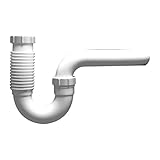
Sometimes, the alignment between your sink drain and the wall drainpipe isn’t perfect. This is where adjustable or swivel P traps come in handy. These traps have extra articulation points, often using a series of swing joints or a flexible tube, that allow you to connect misaligned pipes. They are a lifesaver when you’re dealing with older plumbing or installations that weren’t perfectly plumbed.
While they add a bit more complexity and potential leak points, their adjustability makes them invaluable in tricky situations. They are a practical solution when you can’t easily modify the existing drainpipe. I used one in a basement bathroom where the rough-in for the drain was just slightly off.
It saved me from having to reroute the entire pipe.
Repairable/Clean-out P Traps
Many standard P traps are designed for easy disassembly thanks to slip-joint connections. However, some are specifically designed with a clean-out plug or cap. This plug is usually located at the bottom of the U-bend, allowing direct access to clear clogs without having to completely disassemble the trap. (See Also: Are Traditional Mouse Traps Humane )
You simply unscrew the plug, clear out any debris, and screw it back in. This feature is incredibly useful for high-use sinks or situations where clogs are a frequent problem. I’ve seen these on both plastic and metal traps, and honestly, if you have the option, go for it. It makes dealing with hair clogs in bathroom sinks so much easier.
My sister’s bathroom sink used to clog constantly from hair, and the clean-out plug on her P trap was a godsend.
Common Mistakes and What to Look For
When you’re dealing with plumbing, especially something as basic as a P trap, it’s easy to make mistakes. Most of them are born out of not knowing what you don’t know. I’ve certainly made my share, so let’s talk about the common pitfalls and what to keep an eye out for when you’re buying or installing one.
Mistake 1: Ignoring the Material
As we’ve discussed, materials matter. Grabbing the absolute cheapest plastic trap might save you a few dollars upfront, but it could mean dealing with brittleness, noise, or even odor issues down the line. Conversely, overspending on a fancy metal trap for a rarely used utility sink is just throwing money away.
Always consider the environment the trap will be in and the demands placed upon it. For a kitchen sink that handles a lot of hot grease and food particles, a more solid metal trap might be a wiser investment over several years, even if the initial cost is higher than a plastic one.
I once saw a friend use a very thin, cheap plastic trap under his kitchen sink, and within two years, it had warped enough to cause a slow leak. He ended up having to replace it with a better quality plastic one anyway, costing him more in the long run.
Mistake 2: Over-tightening Slip Joints
Most P traps use slip-joint connections with rubber or plastic washers. These are designed to create a watertight seal when tightened. However, especially with plastic traps, over-tightening can strip the threads or crack the plastic fitting. This creates a leak that’s even worse than before. The key is to tighten them until they are snug and the washer is compressed, creating a seal. You shouldn’t need a huge amount of force. If it feels like you’re going to break it, you probably are. A good rule of thumb is finger-tight plus a quarter turn with pliers, but always check the manufacturer’s instructions.
Mistake 3: Forgetting the Water Seal’s Importance
This sounds obvious, but sometimes people get so focused on the installation or fixing a clog that they forget the trap’s primary function. If a sink is rarely used (like in a guest bathroom or a basement utility sink), the water seal in the P trap can evaporate. This allows sewer gases to back up. The solution? Simply run water down the drain for a minute or two every couple of weeks to refresh the seal. If you’re going away on a long trip, do this before you leave. It’s a simple maintenance step that prevents a nasty surprise when you return.
Mistake 4: Using the Wrong Type for the Job
While the ‘P’ shape is standard, some applications might benefit from specialized traps. For instance, if your sink drain is significantly off-center from the wall pipe, a standard trap might not connect without forcing it, leading to leaks. In such cases, an adjustable or swivel trap is far more appropriate. Similarly, if you anticipate frequent clogs (think a busy commercial kitchen or a workshop sink), a trap with a clean-out port is a smart choice. Don’t try to make a standard trap work in a situation where a specialized one is designed to solve the problem more efficiently.
What to Look For When Buying:
1. Material Quality: For plastic, look for thick-walled ABS or PVC. For metal, check the thickness of the plating (if applicable) and the base metal. Stainless steel is usually a safe bet for durability.
2. Connection Type: Most are slip-joint, which is fine. Make sure it comes with the necessary nuts and washers. Some higher-end traps might use compression fittings, which are also good but require a bit more precision. (See Also: Are Sticky Mouse Traps Humane )
3. Clean-out Feature: If clogs are a concern, seek out a trap with a clean-out plug. It’s a small feature that can save you a lot of headaches.
4. Manufacturer Reputation: Stick with known plumbing brands. They generally have better quality control and more reliable products than off-brand options.
5. Price vs. Value: Don’t just buy the cheapest. Consider how long you expect it to last and the potential for future problems. Investing a little more upfront can save you money and frustration later.
Contrarian Take: Do You really Need Fancy P Traps?
Okay, here’s my contrarian opinion: For most homes, for 95% of sinks, the standard, inexpensive ABS plastic P trap is perfectly adequate and the most sensible choice. Everyone talks about aesthetics, durability, and noise, and sure, those things can matter. But let’s be brutally honest. The primary function of a P trap is to hold water. A $5 plastic trap does that just as well as a $75 chrome-plated brass one. The noise difference is often minimal, especially if your pipes are properly insulated or you have a decent subfloor.
I’ve seen countless expensive metal P traps fail due to corrosion at the joints or minor damage, and I’ve seen cheap plastic ones last for decades without issue. The ‘durability’ argument often falls flat when you consider that clogs are the main reason most P traps get replaced or removed. If a clog is bad enough to warrant disassembly, a plastic trap is far easier to cut off and replace than a metal one, especially if you don’t have specialized tools.
The only times I’d strongly advocate for something fancier are:
1. Exposed Plumbing: If the P trap is visible and part of your bathroom or kitchen’s design. A bottle trap or a sleek chrome trap looks a million times better than a white plastic U-bend.
2. High-Stress Environments: Think commercial kitchens where grease buildup is extreme, or workshops where harsh chemicals might be used. Metal might offer better resistance.
3. Specific Code Requirements or Unique Installations: Sometimes, local codes might lean towards certain materials, or you might have an extremely unusual pipe configuration requiring a specialized adjustable trap.
But for your average bathroom sink or kitchen, don’t get suckered into thinking you need a fancy trap. The common advice to always go for metal for durability? I disagree. Plastic is more forgiving, cheaper, and in the grand scheme of things, often lasts just as long for the average homeowner because clogs are the real enemy, not time itself. Focus on proper installation, regular minor maintenance (running water), and clearing clogs promptly, and your cheap plastic P trap will likely serve you just fine.
Faq: Your P Trap Questions Answered
Why Do P Traps Smell Sometimes?
The smell usually comes from a compromised water seal. This can happen if the trap is dry (from disuse), if there’s a crack in the trap allowing evaporation, or if an improper S-trap design is siphoning the water out. Sometimes, significant buildup of organic matter within the trap can also decompose and emit odors, even with a proper water seal.
Can I Use a Flexible P Trap?
Yes, flexible P traps (often made of corrugated plastic) are available and can be useful for connecting misaligned pipes or navigating tight spaces where rigid traps won’t fit. However, they can be more prone to clogging and leaks over time compared to rigid traps, and their flexibility might make them less durable in the long run.
How Often Should I Clean My P Trap?
There’s no set schedule, as it depends on usage and what goes down the drain. For sinks prone to grease or hair clogs (like kitchens and bathrooms), it’s wise to check and clean the P trap proactively every 6-12 months. If you notice slow draining or persistent odors, cleaning it is usually the first step.
What’s the Difference Between a P Trap and an S Trap?
The key difference is the shape and functionality. An S trap has a second downward bend after the U-bend, creating an ‘S’ shape. This design can siphon out the water seal due to pressure changes in the drain system, allowing sewer gases to enter your home. P traps have a single U-bend followed by a horizontal outlet and are designed to maintain a consistent water seal, making them the standard and code-compliant choice.
How Do I Clear a Clog in a P Trap?
For simple clogs, you can place a bucket underneath the U-bend to catch any water and debris, then unscrew the slip nuts on either side of the trap. Remove the trap, clear out the clog manually or with a brush, and reassemble. If your trap has a clean-out plug, use that first. A plunger or a drain snake can also be effective for clogs further down the line.
Verdict
So, to circle back to the original question: are there different types of P traps? Yes, absolutely, but the differences are mostly about material, specific design features like clean-outs or bottle shapes, and adjustability, rather than a fundamental shift in how they work. The core function – creating that water seal to keep your house smelling fresh – remains the same across the board.
For most of us, a standard, decent-quality plastic P trap will do the job perfectly fine. Don’t get swayed by the allure of fancy materials unless aesthetics are a major concern or you’re dealing with a particularly harsh environment. Focus on correct installation, keeping an eye out for slow drains or odd smells, and remember to run water in seldom-used sinks periodically.
If you do encounter issues, remember that clearing a P trap is usually a manageable DIY task. Grab a bucket, a pair of pliers, and maybe some gloves, and tackle it. It’s a small part of your home’s plumbing, but it plays a huge role in comfort. Don’t overcomplicate it, but don’t ignore it either.