I once spent an entire Saturday morning wrestling with a door that just wouldn’t stay shut. Turns out, the hinge pins had walked out enough to let the whole door sag. It got me thinking: are there door hinges with no removable pin? It sounds like a simple question, but the answer opens up a whole can of worms about security, convenience, and sometimes, just plain bad design.
Honestly, for a long time, I just assumed all hinges worked the same way – a pin you could knock out. It’s how they’ve been made for decades, right? But then I ran into situations where I needed a door to be, well, more permanent. That’s when I started digging.
The Classic Door Hinge: Pin Included (and Why That Matters)
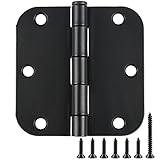
Let’s start with what most people picture when they think of a door hinge. You’ve got two knuckles on each leaf, and a pin that slides down through them, holding the two halves of the hinge together. This pin is usually held in place by a little bit of friction, sometimes a small cap at the top, and in older hinges, maybe even a nail head hammered into the bottom to keep it from popping out entirely.
This is your standard, ubiquitous door hinge. It’s been around forever for a reason: it works. It allows for smooth operation, and importantly, it makes maintenance and even replacement a breeze.
If a hinge gets stiff or corroded, you can usually just tap the pin out, clean it up, lubricate it, or swap it for a new one without taking the door off its frame.
But here’s the kicker: that removable pin is also a security vulnerability. Think about it. If someone wants to force entry, all they need is a hammer and a nail set (or even just a flathead screwdriver for some pins) to knock the pins out from the outside.
Once the pins are out, the door can be pulled right off its frame, even if it’s locked. I learned this the hard way, not through a break-in, but by trying to move a heavy shed door.
I thought I was being clever by tapping the pins out to make it lighter to handle. Big mistake. The door sagged dramatically, and I nearly dropped it on my foot.
It took me and my neighbor a good 20 minutes to get it back into place and re-seat those pins, all while trying to balance a heavy slab of wood.
Common advice for enhancing security often revolves around deadbolts and reinforced door frames, which are undeniably important. However, the humble hinge often gets overlooked. If your hinges have readily removable pins, they represent a weak point that can be exploited. For exterior doors, especially those on a house or a shed where security is a concern, this is a significant oversight. Even on interior doors, say, to a basement or an office where you might want a bit more privacy or to keep kids out, a removable pin offers less security than a fixed one. (See Also: A Box Without Hinges Key )
When the Pin Decides to Stay Put: Security Hinges
So, yes, are there door hinges with no removable pin? Absolutely. These are often called security hinges, non-removable pin (NRP) hinges, or sometimes permanent hinges. The fundamental difference is how the pin is secured. Instead of a pin that can be tapped out, these hinges have a pin that is either permanently attached to one of the hinge leaves or is designed in a way that it cannot be removed from the outside. The most common design involves a set screw or a similar mechanism that locks the pin in place. Another common type has a rounded pin head that sits flush within a groove or channel on the hinge leaf, preventing it from being driven out.
The mechanism varies. Some NRP hinges have a small ball bearing or a pin that sits in a groove, preventing the main pin from being lifted out. Others might have a fixed pin that’s welded or riveted in place. The goal is always the same: to prevent the door from being removed from its frame by manipulating the hinge pin.
When the door is closed, the pin (or the part that acts as the pin) sits in a channel or groove that’s accessible from the outside. When the door is opened, this pin engages with a corresponding channel or groove on the other hinge leaf, effectively preventing the door from being taken off. If the door is shut, the pin is fully engaged, and if someone tries to drive it out, it simply can’t be removed.
I remember installing a set of NRP hinges on my garage door after a minor incident where someone tried to jimmy it open. It was a bit more fiddly to install because you can’t just hang the door and then knock the pins in. You have to align everything perfectly. But once they were in, that sense of security was palpable. The door felt more solid, more permanent. It was a small change, but it made a big difference to my peace of mind. The actual pin on these hinges is often flush or nearly flush with the hinge surface when the door is closed, meaning there’s nothing for a tool to grab onto and use out.
Types of Non-Removable Pin Hinges
- Stud Hinges: These have a rounded or slightly pointed stud on one leaf that fits into a corresponding recess on the other. When the door is closed, the stud is hidden. When opened, it’s exposed but designed to resist outward force.
- Ball Bearing Hinges (with fixed pin): While many ball bearing hinges have removable pins for smooth operation, some security versions have a pin that is permanently installed and can’t be removed. The ball bearings themselves help with the smooth swing.
- Welded/Riveted Pins: In some very basic or industrial applications, the pin might be physically welded or riveted to one of the hinge leaves, making removal impossible without cutting or grinding.
The key takeaway here is that if security is even a mild concern, especially for exterior doors, you should be looking for hinges that don’t have a easily removable pin.
Are There Door Hinges with No Removable Pin? Installation and Practicalities
So, you’ve decided you need hinges that don’t have a removable pin. Great. Now, how do you actually put them on? The installation process for security hinges, or NRP hinges, is generally similar to standard hinges, but with a important difference: you can’t just hang the door and then tap the pins in. This means you need to have the door and frame perfectly aligned before you begin screwing the hinge leaves in place.
Here’s a simplified process, keeping in mind that exact steps will vary by manufacturer:
- Prepare the Door and Frame: Make sure the mortises (the cut-outs for the hinge leaves) in both the door and the frame are clean and the correct depth. Measure carefully. This is where precision really counts.
- Attach Hinge Leaves to the Door: Place the door flat on a protected surface. Position the hinge leaves on the door edge, aligning them correctly. Screw them into place.
- Align Door to Frame: This is the tricky part. You’ll need a helper, or some blocks and shims, to hold the door in the frame at the exact position it needs to be. The goal is to have the hinge barrels (the parts that enclose the pin) perfectly aligned so the pin can be inserted.
- Insert the Non-Removable Pin: Once aligned, the pin will slide into place. If it’s a set-screw type, you’ll tighten that set screw to secure the pin. For other types, the pin might simply be designed to seat firmly in its channel.
- Test the Door: Open and close the door several times to make sure it swings smoothly and latches correctly. Check for any binding or rubbing.
I once tried to rush this on a pantry door. I thought, “It’s just a pantry, how important can the alignment be?” Famous last words. I ended up with a door that scraped the floor on one side and wouldn’t close properly on the other. It took me an hour of readjustment, loosening screws, shimming, and re-tightening to get it right. With security hinges, that initial alignment is a must. You can’t easily fix alignment issues by fiddling with the pins later.
The weight of the door is also a factor. Heavier doors will put more stress on the hinges and require more careful alignment. For very heavy doors, like solid wood entry doors or metal security doors, you might need more than the standard three hinges, and the alignment becomes even more important. The metal security hinges I installed on my shed, for example, were much thicker and heavier than standard interior door hinges. They required precise mortise depth, or the door wouldn’t sit flush in the frame. (See Also: Are Integrated Washing Machine Door Hinges Standard )
The Overrated Advice and What Actually Works
Here’s something that grinds my gears: the endless advice about security that completely ignores the hinges. You’ll see articles and videos touting reinforced strike plates, beefy deadbolts, and even fancy alarm systems. All good stuff, sure. But what’s the point if someone can just pop the pins out of your hinges and lift the door off the frame in ten seconds flat? It’s like putting a super-strong lock on your front door but leaving the back window wide open.
This is where the common advice is just plain wrong for many situations. People assume hinges are just functional hardware, not a security component. They’re wrong. For exterior doors, especially vulnerable ones, treating hinges as a security feature is most important. That’s why I push for security hinges. It’s not about paranoia; it’s about addressing the obvious weak points.
I had a friend whose garage was broken into. They had a good deadbolt on the house door, but the garage door, leading into the house, had standard hinges. The police told him the thieves simply hammered the pins out of the garage door hinges. It took them less than a minute. They were inside the house before anyone knew. He immediately replaced all his exterior door hinges with NRP versions. He said the peace of mind was worth every penny, even though the hinges themselves weren’t outrageously expensive, maybe an extra $10-$15 per hinge compared to basic ones. He bought them from a local hardware store, not some fancy online retailer.
Another thing I see is people trying to “secure” standard hinges by hammering a nail into the top of the pin. Does this work? Sometimes, sort of. It might deter a casual opportunist. But a determined thief can still often overcome this. It’s a band-aid solution. For real security, you need a hinge designed from the ground up to prevent pin removal. The internal mechanisms of NRP hinges are far more solid than a hammered-in nail. It’s like comparing a castle wall to a picket fence.
Security Hinge Verdict Table
| Hinge Type | Removable Pin? | Security Level (Exterior Door) | Ease of Installation | Opinion |
|---|---|---|---|---|
| Standard Butt Hinge | Yes | Low | Easy | Fine for interior closet doors, but a no-go for exteriors. |
| Security Hinge (NRP) | No | High | Moderate (requires good alignment) | My go-to for any exterior or vulnerable interior door. Worth the slight hassle. |
| Heavy Duty / Ball Bearing Hinge | Often Yes | Moderate (depends on pin security) | Easy | Good for smooth operation on heavy doors, but check if pin is secured. |
The bottom line is that standard hinges, with their easily removable pins, are a significant security risk for any door that faces outward or leads into a secured area. If you’re serious about preventing forced entry, you need to upgrade your hinges.
What to Look for: Beyond the Pin
When you’re shopping for door hinges, especially if you’re specifically looking for ones that don’t have a removable pin, there are a few other things to keep your eyes peeled for. It’s not just about the pin itself; the material and the construction quality play a big role in how long the hinge will last and how well it will perform.
First off, the material. Most decent door hinges are made from steel, often with a coating like zinc, brass, or a powder coat for corrosion resistance and aesthetics. For exterior doors, you’ll want something that can withstand the elements. Stainless steel is excellent for harsh environments, but often comes at a premium.
Zinc-plated steel is a good all-around choice for most applications, offering a balance of durability and cost. Avoid flimsy-looking hinges made of thin metal or cheap alloys, especially for doors that get a lot of use or are exposed to moisture. I once bought a cheap set of brass-plated hinges for a garden shed, and within a year, they were looking pretty sad, showing rust spots through the plating.
Next, consider the construction of the hinge barrel itself. This is the part where the pin goes. A well-made barrel will be smooth and free of burrs. For NRP hinges, pay attention to how the pin is secured. Is it a solid set screw that’s recessed and less likely to be tampered with? Or is it a simpler mechanism? Look at how the knuckles (the rounded parts that interlock) are formed. They should fit snugly together without excessive play. Too much play means the door can sag over time, even with a secure pin. (See Also: Are Hinges Wheeels )
The gauge of the steel is also important, though it’s not always clearly stated on packaging. Thicker steel means a stronger hinge. For standard interior doors, a common gauge might be around 0.097 inches. For exterior or heavy doors, you’ll want something thicker, maybe 0.127 inches or more. This is where those cheap, lightweight hinges really fail. They bend and flex under load, leading to door sag and eventual failure.
Finally, think about the finish. While this is largely aesthetic, a good finish protects the underlying metal. Options include polished brass, brushed nickel, oil-rubbed bronze, black, and painted finishes. For outdoor use, make sure the finish is suitable for exterior conditions. A powder coating or a high-quality plated finish will generally hold up better than a simple paint job. I’ve found that brushed nickel and oil-rubbed bronze tend to hide minor scratches and scuffs better than polished finishes, which is a plus in a high-traffic area.
Key Features to Check
- Material: Steel (zinc-plated, stainless) is best for durability.
- Barrel Construction: Smooth, well-formed barrels without burrs.
- Pin Security Mechanism: For NRP hinges, look for a solid, recessed set screw or similar.
- Steel Gauge: Thicker steel means a stronger hinge. Harder to find spec but feel the weight.
- Finish: Appropriate for the environment (indoor vs. outdoor) and aesthetic preference.
When in doubt, always opt for a heavier-duty hinge. It might cost a few more dollars, but it will likely last longer and perform better, especially if you’re dealing with a door that needs to be secure.
The Faq Section: Clearing Up the Confusion
Are There Door Hinges with No Removable Pin?
Yes, absolutely. These are commonly known as security hinges or non-removable pin (NRP) hinges. They are designed with a pin that cannot be easily knocked out from the exterior, thus preventing the door from being removed from its frame by force. This is a significant security enhancement for exterior doors.
Why Would I Need Hinges with No Removable Pin?
You would need hinges with no removable pin primarily for security reasons. Standard hinges with removable pins represent a weak point, as the pins can be driven out from the outside, allowing the door to be detached from its frame. NRP hinges eliminate this vulnerability, making forced entry much more difficult.
Are Security Hinges More Expensive?
Generally, security hinges tend to be slightly more expensive than standard door hinges. The added manufacturing complexity for the non-removable pin mechanism contributes to the higher cost. However, the price difference is often marginal, especially when considering the significant security benefit they provide.
Can I Replace Standard Hinges with Security Hinges on Any Door?
Yes, you can typically replace standard door hinges with security hinges on most doors. The installation process is similar, but it’s important to make sure precise alignment during installation, as you cannot easily adjust the door’s position by removing and reinserting pins later. For very old or custom doors, always double-check compatibility.
How Do I Identify a Security Hinge?
Security hinges are often labeled as ‘non-removable pin’ (NRP) or ‘security hinges’ by the manufacturer. Visually, you’ll notice that the pin cannot be accessed or driven out from the exterior side when the door is closed. Some have a set screw that secures the pin, while others have a specially designed pin and barrel system that prevents removal.
Final Thoughts
So, to circle back to the main question: are there door hinges with no removable pin? Yes, they exist, they’re called security hinges, and for a lot of situations, they’re a no-brainer. I’ve learned the hard way that overlooking the simple hardware can be a costly mistake, both in terms of money and peace of mind. The ability to simply knock out a hinge pin is a massive security flaw that many people just don’t think about until it’s too late.
For any exterior door – your front door, back door, garage service door, shed door – opting for NRP hinges is one of the most straightforward and cost-effective security upgrades you can make. It’s a small investment that pays dividends in protecting your property. Don’t let the convenience of a removable pin lull you into a false sense of security.
My advice? Take a look at your exterior doors right now. If they have standard hinges, make a note to switch them out. It’s a weekend project that’s well worth the effort, and you’ll sleep a lot better knowing that simple hardware isn’t the weakest link.