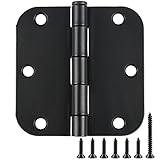
I remember the first time I tried to hang a saloon-style door in my kitchen. It looked so cool in the movies, that effortless swing, that classic vibe. I figured, how hard could it be? Turns out, pretty darn hard if you don’t have the right hardware. I ended up with a door that sagged, wouldn’t close properly, and looked like it had been installed by a grumpy badger. So, to answer the burning question: are there special hinges for a swinging door? The short answer is a resounding yes, and they’re absolutely vital if you don’t want a wobbly mess.
Trying to use standard door hinges for a swinging door is like trying to use a butter knife to chop steak. It might technically make contact, but it’s not designed for the job and the results will be frustratingly poor. These doors are meant to swing freely, often both ways, and that requires a specific kind of pivot and support.
Why Standard Hinges Just Don’t Cut It
Look, I’m all for DIY and making do with what you have. I’ve salvaged old lumber, repurposed furniture, and generally tried to be resourceful. But when it comes to the mechanics of a door that’s meant to swing back and forth, relying on regular butt hinges is a recipe for disaster.
I learned this the hard way, trying to install a double-swinging pantry door using hinges I had lying around from an old closet. Big mistake.
These hinges are designed to hold a door closed, to swing in one direction, and to manage vertical weight distribution. A swinging door, on the other hand, needs to handle forces from multiple directions.
It needs to pivot, not just swing on a pin. The constant back-and-forth motion puts a different kind of stress on the hardware.
Standard hinges can’t take it. They’ll bend, they’ll creak, and the door will likely start to sag. I ended up stripping screws, cracking the door frame slightly, and generally making a mess that cost me more time and money to fix than if I’d just bought the right part from the start.
Trust me, your sanity will thank you for getting it right the first time.
The weight distribution is different too. A normal door hangs from the edge, with the hinge knuckles taking the brunt of the downward force. A swinging door often pivots from a point near the center of its side, or even closer to the bottom edge, with the hinge mechanism designed to handle that specific pivot point.
Trying to force standard hinges to do this is like asking a mule to pull a race car; it’s just not built for that kind of performance. You end up with a door that feels flimsy, has a huge gap at the bottom, or just doesn’t swing smoothly. And don’t even get me started on the look. Standard hinges are usually exposed and can look clunky on a door meant for a more fluid, less intrusive movement.
The whole point of a swinging door is often about convenience and aesthetics. Think of those old-timey diner doors, or the doors to a busy kitchen where you’re constantly carrying things. They need to be solid, smooth, and out of the way. Standard hinges, with their visible knuckles and limited range of motion, just don’t fit that bill.
They’re designed for a different job entirely, and trying to adapt them is usually a losing battle that ends with a door that’s more of a nuisance than a convenience. I’ve seen friends try to get away with it, and the doors always end up looking, and more importantly, acting, cheap and poorly installed. It’s a dead giveaway that the wrong hardware was used.
The Different Types of Special Hinges for Swinging Doors
So, if standard hinges are out, what do you need? The world of special hinges for swinging doors is actually pretty diverse, catering to different needs and aesthetics. The most common type you’ll encounter, and often the best for general-purpose swinging doors like those between a kitchen and dining room or a bar area, is the double-action spring hinge. These bad boys are designed to allow the door to swing both inward and outward. (See Also: A Box Without Hinges Key )
They typically have a spring mechanism built into a barrel that sits above or below the door, or sometimes integrated into the hinge itself. When the door is pushed, the spring compresses, and then as it passes the center point, the spring’s tension pushes it back towards its closed position.
It’s a clever bit of engineering that gives you that classic saloon door swing. I’ve installed a few sets of these in rental properties, and they’re pretty darn reliable once you get them set up right.
They’re not silent, mind you; there’s a definite ‘thump’ as the door closes, but it’s a functional thump.
Another type, often seen in more commercial settings or for heavier doors, is the pivot hinge. Instead of attaching to the door jamb like a standard hinge, pivot hinges are usually mounted at the top and bottom of the door and into the floor and the header of the door frame. This allows the door to pivot from a point often much closer to the center of the door’s edge, or even offset from the edge.
This setup can handle much more weight and allows for a very smooth, controlled swing. They can be configured for single-action (swings one way) or double-action (swings both ways).
I recently had to replace a pivot hinge on a large, heavy wooden door leading to a garden patio, and the smooth, almost effortless swing it provided was night and day compared to what was there before. You can get them with built-in closers, which are a nice touch, especially if you don’t want the door slamming shut.
Then you have specialized hinges like barrel hinges or concealed pivot hinges. Barrel hinges are often used for very specific applications where a clean look is most important, or for doors that need to swing a full 360 degrees. They’re basically two barrels that connect, allowing for a wide range of motion. Concealed pivot hinges are the high-end option, disappearing entirely within the door and frame for a minimalist, almost floating door effect. These are usually quite pricey and require precise installation, so they’re not for the faint of heart or the budget-conscious DIYer. Here’s a little breakdown of some common types:
| Hinge Type | Best For | Pros | Cons | Verdict |
|---|---|---|---|---|
| Double-Action Spring Hinge | Kitchen, bar, interior swinging doors | Swings both ways, self-closing, common and affordable | Can be noisy, spring tension needs adjustment, less elegant look |
Solid Choice: Great all-rounder for most home applications. Reliable and gets the job done. |
| Pivot Hinge (Top & Bottom Mount) | Heavy doors, commercial, high-traffic areas, modern aesthetics | Handles heavy loads, very smooth swing, can be concealed | Requires precise installation, often more expensive, may need floor prep |
Excellent for Heavy Duty: If you need smooth, strong operation for a substantial door, this is it. |
| Barrel Hinge | Specialty applications, 360-degree swing, unique designs | Wide swing range, can be visually striking, often solid | Not for standard doors, complex installation, can be costly |
Niche Perfection: For specific artistic or functional needs where standard hinges won’t work. |
| Concealed Pivot Hinge | High-end modern interiors, minimalist design | Invisible hardware, clean aesthetic, premium feel | Very expensive, requires professional installation, limited adjustability |
Luxury Option: If budget is no object and you want a smooth look, these are the way to go. |
Choosing the right hinge depends on the door’s weight, size, how much it will be used, and the look you’re going for. Don’t just grab the first thing you see at the hardware store. (See Also: Are Integrated Washing Machine Door Hinges Standard )
What to Look for When Buying
Okay, so you’ve decided you need special hinges. Great. Now, what makes a good set of special hinges? First off, material. You want something sturdy. Steel is your friend here. Avoid flimsy-looking aluminum or plastic components, especially for the main load-bearing parts. I once bought a cheap set of double-action hinges, and within a month, the spring mechanism felt weak, and the metal parts started to show rust. It was a total waste of about $60. For a door that’s going to be opened and closed hundreds, if not thousands, of times a year, durability is key. Think about how the hinge feels in your hand. Is it heavy? Does it feel solid? That’s a good sign.
Next, consider the weight capacity. Most hinge manufacturers will specify the maximum weight the hinge can support. You absolutely must know the weight of your door before you buy. Weighing your door can be tricky, but a good estimate is usually sufficient. If your door is, say, 50 pounds, don’t buy hinges rated for 30 pounds. It’s a recipe for premature failure. It’s always better to slightly over-spec than under-spec. For my last kitchen door project, I ended up getting hinges rated for almost double the door’s weight, just for peace of mind. It cost me maybe an extra $30, but I haven’t had a single issue in three years.
Adjustability is another huge factor. Swinging doors can be finicky. You might need to adjust the tension of the spring, the alignment of the door in the frame, or how far it swings.
Good hinges will have adjustment screws or mechanisms that allow you to fine-tune these things. Some pivot hinges, for example, allow you to adjust the door’s position within the frame so it hangs perfectly plumb.
Double-action spring hinges often let you adjust the spring tension to control how quickly or forcefully the door closes. If a hinge is completely fixed, and you mess up the installation by even a millimeter, you might be stuck with a poorly functioning door. I’ve seen people struggle for hours trying to get a door to hang just right on non-adjustable hinges, and it’s not pretty.
Finally, think about the aesthetic. While functionality is most important, you don’t want your hinges to look out of place. Double-action spring hinges come in various finishes – brass, brushed nickel, oil-rubbed bronze, black – so you can match them to your existing hardware. Pivot hinges can sometimes be concealed entirely, offering a sleek, modern look. If the hinges will be visible, make sure the finish and style complement the overall design of your space. Don’t let clunky, out-of-place hardware ruin the ambiance you’re trying to create.
Common Mistakes People Make with Swinging Door Hinges
I’ve seen a lot of people mess this up, and it usually stems from a few common blunders. The biggest one, as I’ve already hammered home, is trying to use standard butt hinges. People see ‘door hinge’ and think ‘hinge,’ without considering the specific motion and forces involved. They’ll buy a pack of four standard hinges, thinking they’re good to go, and then end up with a door that sags, binds, or just looks plain wrong. It’s like trying to build a boat with bicycle parts; it’s fundamentally mismatched.
Another huge mistake is ignoring the door’s weight. Seriously, people eyeball it. They’ll say, ‘Oh, it’s just a hollow-core door, it’s light.’ But even hollow-core doors have weight, and when you add the stress of double-action swinging, that ‘light’ door can quickly become too much for undersized hinges. I once helped a buddy who swore his door was ‘fine’ until it started to pull away from the frame. Turns out, he had used hinges rated for interior closet doors on a solid-core kitchen door. We had to replace the entire frame because the old hinges had ripped out of the wood. It was an expensive lesson in respecting weight ratings.
Installation is also a minefield. With double-action hinges, getting the alignment just right is important for smooth operation. If the hinge barrels aren’t perfectly vertical or if the door isn’t positioned correctly in the frame relative to the hinge, you’ll get binding or a door that slams shut too hard. Pivot hinges are even more unforgiving. They require precise drilling into the floor and the door, and if they’re even a degree off, the door’s swing will be compromised. I spent a good hour fiddling with the adjustment screws on a set of pivot hinges for a client’s office door because the initial installation was slightly off. It’s the little things that make a big difference.
Lastly, people often neglect the closer mechanism, if their hinges have one. They’ll install a double-action hinge with a built-in closer, but then they don’t adjust the tension. This results in a door that slams shut with the force of a cannon, or one that barely closes at all. The beauty of these hinges is the controlled closing action, and if you don’t set it up properly, you lose that benefit entirely. I’ve seen doors that are supposed to swing shut gently instead bang against the frame, making a racket and potentially damaging both. It’s not just about hanging the door; it’s about tuning its movement.
Common Mistakes Recap
- Using standard butt hinges instead of specialized swinging door hardware.
- Underestimating door weight and buying hinges with insufficient weight capacity.
- Improper installation and alignment, leading to binding or sagging.
- Neglecting to adjust spring tension or closer mechanisms on self-closing hinges.
Real-World Use and Practical Tips
I’ve put swinging doors in a few places over the years, and each time, it’s been a learning experience. The most common spot is between the kitchen and a dining area, or a family room. It’s fantastic when you’re cooking and your hands are full – you can just nudge the door open with your hip or elbow. No more fumbling for a doorknob.
The sound it makes, that soft ‘whoosh’ and then a gentle ‘thud’ as it settles back, becomes part of the background noise of the house. It signals activity, movement, and life. (See Also: Are Hinges Wheeels )
I installed a set of double-action spring hinges on a pantry door in my old house, and it was probably the most used door in the house. Kids, pets, me constantly grabbing snacks – it handled it all without complaint for five years straight.
Another practical application is a door leading to a laundry room or a mudroom. These are often high-traffic areas where you’re coming in and out with dirty clothes, shoes, or gear. A swinging door keeps things contained without being a barrier. I’ve seen them used in workshops too, where airflow and easy access are key. The ability to swing both ways means you can move large items through without having to worry about catching the door on the frame. For a home workshop, having a door that can swing out of your way is incredibly useful when you’re wrestling with a large piece of lumber or trying to maneuver a tool.
Here are a few tips I’ve picked up along the way:
- Measure Twice, Cut Once (and Install Even More Carefully): This applies to everything, but with swinging door hinges, precision is your best friend. Double-check all measurements, especially the placement of pivot points.
- Consider the Swing Path: Before you buy, visualize exactly how the door will swing. Will it hit furniture? Will it interfere with another door? Make sure there’s enough clearance. I learned this the hard way when a swinging door I installed kept banging into the corner of my refrigerator. Had to uninstall and reposition it.
- Lubricate Moving Parts: Even good hinges can benefit from a little grease. Periodically lubricate the spring mechanism or pivot points to make sure smooth operation and reduce noise. A little spray lubricant can go a long way.
- Don’t Over-Tighten Screws: While you want a secure installation, over-tightening screws, especially in softer wood like pine, can strip the holes or even crack the wood. Snug is good; overtightened is bad.
- Test the Closer Tension: If you have self-closing hinges, spend time adjusting the spring tension. You want the door to close reliably, but not slam. Find that sweet spot where it closes gently and stays shut.
A swinging door isn’t just a novelty; it’s a functional and often aesthetic addition to a home when implemented correctly with the right hardware. They can add a touch of charm, improve flow, and make everyday tasks a little easier. Just remember that the hardware is the heart of the operation.
The Longevity and Maintenance of Swinging Door Hinges
When you invest in the right kind of hinges for a swinging door, you’re investing in longevity. Unlike standard hinges that might wear out or start to sag after a few years under constant use, good quality special hinges are built to endure. Think about the hinges in a busy restaurant kitchen or a high-end retail store; they get slammed open and shut hundreds, if not thousands, of times a day.
The hardware designed for swinging doors, particularly the solid pivot hinges and well-engineered double-action spring hinges, can easily last a decade or more with minimal fuss. I’ve got a set of brass-plated double-action hinges on a door I installed about 7 years ago, and they still operate as smoothly as the day I put them in. No sagging, no squeaking, just a consistent, reliable swing.
Maintenance is usually pretty straightforward. For double-action spring hinges, the primary area of concern is the spring mechanism. Over time, the lubrication can dry out, or dirt and debris can get into the moving parts, leading to increased friction and noise. A simple spray of white lithium grease or a silicone lubricant every year or two can make a world of difference. You just spray it into the barrel of the hinge, work the door back and forth a few times, and wipe off any excess. This keeps the spring action smooth and quiet. For pivot hinges, the pivot point itself might need occasional lubrication, especially if they are exposed to the elements or heavy dust.
The biggest enemy of longevity is improper installation and using the wrong type of hinge for the door’s weight. As I’ve mentioned, forcing standard hinges or undersized swinging door hinges to do a job they’re not designed for will inevitably lead to premature failure. This can manifest as the hinge bending, screws stripping out of the wood, or the entire mechanism failing. Sometimes, users try to “fix” a sagging door by shimming a standard hinge, which is a temporary band-aid at best and will likely cause more problems down the line. The solution is always to use hinges rated for the door’s weight and designed for the type of movement required.
Cleaning is also part of maintenance. Depending on the finish, you’ll want to use appropriate cleaning agents. For most plated finishes like brass or nickel, a soft cloth and mild soap and water is usually sufficient. Avoid abrasive cleaners or harsh chemicals, as they can damage the finish and lead to corrosion. If your hinges are in a particularly humid environment, like a bathroom or laundry room, keep an eye out for any signs of rust or discoloration and address them promptly. A little bit of preventative care goes a long way in making sure your special hinges for a swinging door keep performing flawlessly for years to come.
Final Thoughts
So, to circle back to the original question: are there special hinges for a swinging door? Absolutely. Trying to wing it with standard hinges is a gamble that rarely pays off, leading to frustration, extra costs, and a door that just doesn’t perform as it should. The specialized hardware out there, from the trusty double-action spring hinge to the solid pivot hinge, is designed specifically to handle the unique demands of a door that swings both ways.
Choosing the right hinge involves understanding your door’s weight, the intended use, and the aesthetic you’re after. Don’t skimp on quality; investing in good hardware means investing in smooth operation, durability, and a much better-looking end result. Remember to pay close attention to the weight rating and the type of swing you need.
If you’re serious about getting a swinging door that works flawlessly and looks great, take the time to select the correct hinges. It’s the foundation of a successful project, and the difference between a charming addition to your home and a constant annoyance. Your future self will thank you for it.