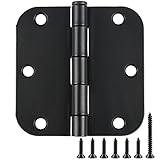
I remember installing my first interior door. Seemed simple enough, right? Two hinges, screw ’em in, hang the door. Boom. Except it wasn’t boom. It was more of a pathetic, sagging thud as the door immediately drooped like a forgotten salad. That’s when I started to question everything I thought I knew about basic carpentry, and it led me down a rabbit hole of figuring out exactly how much support you really need. So, let’s get down to brass tacks: are two hinges necessary, or is there more to it?
For years, I just assumed two was the magic number for any standard door. It’s what you see everywhere, so it must be right. But after a few more DIY mishaps and some late-night internet rabbit holes fueled by frustration and cheap coffee, I learned that the answer isn’t as straightforward as you might think. Sometimes two is just enough, and sometimes, well, you’re asking for trouble.
Why We Think Two Hinges Are All You Need
Look, the default for most interior doors is two hinges. Walk into any big box hardware store, and you’ll see packs of two, sometimes three, hinges for standard passage doors. It’s the common advice, it’s what the instruction manuals (if you can even find them) often imply, and it’s what most people have seen their whole lives. The logic seems sound: one hinge at the top, one at the bottom, distribute the weight, keep it straight. Easy.
And for a lot of doors, it works. A lightweight hollow-core bedroom door? Two standard hinges are usually perfectly fine. These doors don’t weigh much, and they’re not typically subjected to heavy use or slamming. The forces at play are relatively minimal. So, the perceived simplicity and cost-effectiveness of using just two hinges make them the go-to choice for builders and DIYers alike. It’s the path of least resistance, and for many applications, that path leads to a perfectly functional door. We’re conditioned to believe two is the standard, and for good reason – it often is.
But here’s where my skepticism kicks in, based on years of fiddling with everything from shed doors to ridiculously heavy solid wood interior doors. The ‘standard’ often assumes a ‘standard’ door. What happens when your door isn’t standard? What happens when it’s a beast of a solid oak slab, or a door you want to feel utterly bombproof? That’s when the two-hinge mantra starts to creak.
I once bought a gorgeous, heavy, solid pine door for my study. It was beautiful. The builder I hired (yes, I hired one this time, after the sagging door incident) insisted two hinges would be fine. He was a nice guy, but he was also clearly trying to save time and money.
Six months later, that door was visibly warped, the frame was starting to splinter near the top hinge, and it sounded like a dying whale every time you opened or closed it. That’s when I realized that the ‘standard’ advice often ignores the nuances of material weight and hardware quality. It’s not just about having hinges; it’s about having the right hinges, and sometimes, the right number of hinges.
The Case Against the Two-Hinge Status Quo
Here’s a contrarian take for you: Everyone says two hinges are enough for most interior doors. I disagree, and here is why: because ‘most interior doors’ are flimsy, hollow-core pieces of particle board.
For anything substantial, anything that feels like it has actual heft, two hinges are often a ticking time bomb for sag. I learned this the hard way after installing a beautiful, albeit heavy, solid wood door. The two hinges I used, despite being good quality, couldn’t handle the constant torque. Over time, the door started to droop, making it scrape the floor.
It looked cheap and felt poorly installed, which, frankly, it was. A third hinge would have distributed the weight far better and prevented that inevitable sag. It’s not about the number of hinges in isolation, but about matching the hardware to the load. Relying on just two for heavier doors is like trying to lift a barbell with only two fingers – it might work for a second, but it’s not sustainable and it’s asking for trouble.
The common advice often overlooks the physics involved. A door is basically a lever.
The hinges are the fulcrum. When you apply force to the door (opening or closing it), that force is amplified by the distance from the hinges.
With a heavier door, or a door that’s opened frequently, the stress on those two pivot points becomes immense. Think about it: the entire weight of that door, plus any sideways force you apply, is concentrated on just two points of contact with the frame. Over time, especially if the wood isn’t perfectly reinforced, these points will wear down, the frame can get stressed, and the door will inevitably sag.
This isn’t rocket science; it’s basic engineering that many standard installations seem to ignore. (See Also: A Box Without Hinges Key )
I’ve seen doors where the top hinge has literally pulled out of the frame because the wood couldn’t take the strain anymore. It’s a mess, and it’s usually preventable. The solution isn’t always to replace the door or the frame; often, it’s just a matter of adding that third hinge and making sure you’re using appropriate screws that bite deep into the studs. The common advice is often based on the cheapest, fastest, most common installation, not necessarily the most durable or solid one. This is why, for any door that feels ‘substantial’ – solid wood, metal, or even just a really thick MDF panel – I’m now a staunch advocate for three hinges.
When Does ‘two’ Become ‘not Enough’?
So, when exactly does the standard ‘two hinges’ rule start to break down? It’s primarily about weight and size, but also about usage and the type of door. A lightweight hollow-core door, typically found in bedrooms or closets, usually weighs between 30-50 pounds. For these, two well-installed hinges are generally sufficient. They do the job without excessive strain. The wood in the frame and the door itself can handle the load distribution.
However, once you step up to solid core doors, the weight can easily jump to 70-100 pounds or more. Think about solid wood interior doors – oak, maple, cherry. These aren’t lightweights. For doors in this weight class, especially those that are used frequently (like a main entry door inside the house or a frequently used office door), two hinges are often insufficient in the long run.
The extra weight puts immense pressure on the hinges and the surrounding wood. This is where you start seeing the tell-tale signs of sagging: the door scraping the floor, difficulty closing it, or a visible gap at the top when the door is shut. I learned this the hard way with a solid oak door for my home office. Despite using heavy-duty hinges, after about a year, it started to sag noticeably.
Adding a third hinge was a big deal, distributing the load and instantly straightening it out.
Beyond just weight, consider the door’s dimensions. A particularly tall or wide door, even if it’s not exceptionally heavy, can create more use and thus more stress on the hinges. The wider the door, the further the edge is from the hinge line, increasing the torque. If you have a door that’s significantly taller than standard (say, 8 feet or more), even if it’s not solid wood, you might benefit from three hinges. The extra height means more potential for twisting and bowing, and an additional hinge provides more stability and support along its length. It’s about creating a more solid support system that can withstand the natural forces acting on the door over time.
Finally, think about the environment. Doors in high-traffic areas, or doors that might get slammed or bumped, are subjected to more impact and stress. A door in a busy hallway or a child’s room might experience more rough handling than a door in a rarely used guest room. In these scenarios, an extra hinge adds resilience and can help prevent premature wear and tear. It’s a small investment for increased longevity and a better-performing door. When in doubt, especially with any door weighing over 60 pounds or any door that’s unusually tall or wide, err on the side of caution and opt for three hinges.
The Three-Hinge Advantage
The advantage of a third hinge, especially for heavier or larger doors, is primarily about superior weight distribution and reduced stress on the mounting points. With two hinges, the weight of the door is concentrated on those two points. This creates significant use and torque, particularly on the top hinge, which bears the brunt of the load. Over time, this can lead to the door sagging, the hinges becoming loose, or even the wood in the door frame starting to crack or split. I’ve seen this happen more times than I care to admit, usually on a Saturday afternoon when I’m trying to finish a project and realize the door I just hung is already drooping.
A third hinge, placed strategically in the middle of the door (roughly equidistant from the top and bottom hinges), effectively divides the load into three points. This dramatically reduces the torque on each individual hinge and the surrounding wood. It’s like going from trying to balance a long plank on two blocks to balancing it on three – it’s inherently more stable and less prone to bending or breaking. For solid wood doors, which can easily weigh 70-100 pounds or more, this third hinge is not just a luxury; it’s practically a necessity for long-term performance. It makes sure the door remains plumb and swings smoothly for years, without developing that annoying scrape on the floor or becoming difficult to latch.
Beyond just preventing sag, three hinges can also improve the overall feel and operation of the door. A heavier door supported by three hinges will feel more solid, more substantial, and less flimsy. It will swing more smoothly and quietly, as there’s less tendency for the door to flex or twist under its own weight. This leads to a better user experience and a more professional-looking installation. When I upgraded my study door to three hinges, the difference was night and day. It closed with a satisfying, solid thunk instead of a creaky sigh, and it felt like it was built to last. It’s a simple change that significantly enhances the perceived quality and durability of the door system.
Furthermore, using three hinges can sometimes compensate for minor imperfections in the door frame or the door itself. If the frame isn’t perfectly plumb or the door has a slight warp, the extra hinge can help to support and align it better.
It provides more points of adjustment and support, making the door hang truer than it might with only two. This is especially useful in older homes where frames might have settled or shifted over time. So, while two hinges are the standard for a reason (cost and simplicity for lightweight doors), don’t hesitate to step up to three for any door that feels heavy, looks substantial, or is in a high-traffic area. It’s a small upgrade that pays off in spades with improved performance and longevity.
What to Look for in Hinges (and When to Add More)
When you’re buying hinges, it’s easy to just grab the cheapest pack that looks right. Don’t do that. Seriously. I’ve learned the hard way that not all hinges are created equal, and the quality of the hinge directly impacts how well your door performs, especially over time. For interior doors, you’re generally looking at steel hinges. The thickness of the steel is a good indicator of durability. Thicker steel means a stronger hinge that’s less likely to bend or warp under load. Look for hinges with a good weight to them; they should feel substantial, not flimsy. (See Also: Are Integrated Washing Machine Door Hinges Standard )
The finish is also important, not just for aesthetics but also for corrosion resistance, especially if the door is in a bathroom or humid area. Common finishes include brushed nickel, polished chrome, oil-rubbed bronze, and black. Pick one that matches your hardware, but also consider the material underneath. Some cheaper hinges have a thin coating that can chip or wear off, revealing rust. Higher quality hinges often have a more durable plating or powder coating.
Pay attention to the pin. Some pins are fixed, while others are removable. Removable pins can be helpful for maintenance or if you need to take the door off easily. However, for security, fixed pins are generally better. Also, check the corners of the hinge leaves. They are usually either square or rounded. Make sure the hinge corners match the mortise (the cutout in the door and frame) you have or will create. If you’re not sure, square corner hinges are more versatile as you can often trim them to fit a rounded mortise, but the reverse is usually not true.
Now, about adding more hinges. If you’re installing a new door and it’s a solid, heavy beast, just buy three hinges from the start. It’s far easier than adding one later. Mark out the positions for all three hinges on the door and frame, making sure they are evenly spaced. A good rule of thumb for three hinges is to place the top hinge about 7 inches from the top of the door, the bottom hinge about 11 inches from the bottom, and the third hinge dead center between them. This provides the most balanced support.
If you’re dealing with an existing door that’s starting to sag, you can often add a third hinge without too much trouble. First, determine where the middle hinge should go. Measure the distance between the top and bottom hinges and find the halfway point. Then, hold the new hinge in place and trace its outline onto the door and frame.
You’ll need to carefully chisel out a mortise for the new hinge leaf. Make sure you’re using screws that are long enough to reach the studs behind the door frame – usually 2.5 to 3 inches. This is important for providing adequate support. If the existing screw holes are stripped, you might need to use slightly larger screws or wood filler to create a solid anchor point for the new hinge.
It’s a bit more work, but the results are usually well worth the effort.
The Great Hinge Debate: 2 vs. 3 Hinges
Here’s a simple comparison table to break down the core differences and when each option is typically best. It’s not a rigid rule, but a practical guide based on my own experiences and what I’ve seen work (and not work).
| Feature | 2 Hinges | 3 Hinges | Opinion/Verdict |
|---|---|---|---|
| Typical Use Case | Lightweight hollow-core doors, closet doors, low-traffic areas. | Solid core doors, heavy wood doors, tall doors, high-traffic areas. | For any door over 50-60 lbs, or over 7ft tall, 3 hinges are a no-brainer. |
| Weight Capacity | Lower; can lead to sag with heavier doors over time. | Higher; distributes weight better, significantly reducing sag and stress. | 3 hinges offer superior long-term structural integrity. |
| Installation Complexity | Simpler, fewer mortises to cut, faster installation. | Slightly more complex due to an extra mortise and alignment. | The extra 30 minutes for a third hinge is worth it for peace of mind. |
| Cost | Cheaper (buy a pack of two). | More expensive (buy a pack of three or two packs of two and use one). | A few extra dollars for a better-performing, longer-lasting door. |
| Door Feel/Operation | Can feel less substantial, prone to squeaks/rattles if not perfectly aligned. | Feels more solid, swings smoother, quieter operation. | The ‘premium’ feel of a well-hung door is often achieved with 3 hinges. |
Honestly, the decision often comes down to what kind of door you’re dealing with and how much you value its long-term performance. If you’re just replacing a cheap hollow-core door in a spare room that’s rarely used, two hinges will probably suffice. But if you’ve got a solid wood door, or a door that’s going to see a lot of action, or one that you want to look and feel like it’s built to last, then splurging on that third hinge is a wise investment. I’ve never regretted adding a third hinge, but I’ve definitely regretted not adding one.
Common Mistakes and How to Avoid Them
One of the most common mistakes I see people make, myself included in the early days, is using the wrong screws. You’ll get a hinge, and it’ll come with short, stubby screws. If your door is even moderately heavy, those short screws aren’t going to cut it.
They might hold for a while, but eventually, the wood will give way, and you’ll have a sagging door or a hinge that’s pulling out. Always, always, always use longer screws – 2.5 to 3 inches – that can reach the studs behind the door jamb. This is a must for a secure and durable installation. I learned this when a closet door I installed started pulling away from the frame; the short screws just ripped right out of the jamb.
Another mistake is not properly mortising the hinges. Some people try to get away with just surface-mounting hinges, or not chiseling out the wood deep enough. This not only looks sloppy but also compromises the hinge’s ability to support the door correctly.
The mortise makes sure the hinge leaf sits flush with the surface, allowing the door to hang plumb and swing freely without binding. If the mortise is too shallow, the hinge will protrude, preventing the door from closing properly. If it’s too deep, you’ll have too much play, and the door will sag. Take your time with the mortise; a sharp chisel and a steady hand are your best friends here.
Use the hinge leaf as a template and cut carefully. (See Also: Are Hinges Wheeels )
Aligning the hinges is also a common pitfall. When you’re marking out where the hinges go on both the door and the frame, it’s vital they are perfectly aligned. If the hinges on the door are even slightly higher or lower than the corresponding hinges on the frame, you’re setting yourself up for problems. This misalignment puts undue stress on the hinges and the door itself, leading to binding, sagging, or difficulty in operation. Use a good tape measure and a pencil, and double-check your measurements before you start cutting or drilling. Some people even use temporary shims to hold the door in place while marking to make sure perfect alignment.
Lastly, and this ties back to the ‘are two hinges necessary’ debate, people often underestimate the weight of their door. They see a solid wood door and think, “Eh, it’s just a door.” But solid wood doors, especially hardwoods like oak or walnut, are incredibly heavy.
Always err on the side of caution. If there’s any doubt about the door’s weight or its potential to sag, opt for three hinges from the outset. It’s far easier to install three hinges correctly from the beginning than to deal with the headaches of a sagging door later.
Consider the material, thickness, and height of the door to make an informed decision about hinge count. Don’t let poor installation practices or a misunderstanding of door weight lead to a door that performs poorly.
Faq: Your Burning Questions About Door Hinges Answered
How Many Hinges Does a Standard Interior Door Need?
For most lightweight hollow-core interior doors, two hinges are typically sufficient. This is the standard for many residential applications where the doors are not excessively heavy and are used in low-traffic areas. However, this ‘standard’ can be misleading if you have a heavier door.
Can I Use Only One Hinge for a Door?
No, using only one hinge for any door is highly discouraged and impractical. A single hinge cannot adequately support the weight and use of a door, leading to immediate sagging, structural damage to the door and frame, and a non-functional door. Doors require at least two points of support.
What Is the Best Type of Hinge for a Heavy Interior Door?
For heavy interior doors (solid wood, solid core), it’s best to use three heavy-duty hinges made of thick steel. Look for ball-bearing hinges if available, as they offer smoother operation and better weight distribution than standard plain-bearing hinges. Make sure you use long screws that anchor into the studs for maximum support.
Should All Hinges on a Door Be the Same Size?
Yes, generally all hinges on a single door should be the same size and type. This makes sure consistent support and prevents uneven stress distribution. Using different sized hinges can lead to misalignment, binding, and premature wear on the hinges and door.
How Do I Know If My Door Needs Three Hinges?
If your door feels significantly heavy, is taller than 7 feet, or is in a high-traffic area where it might experience more wear and tear, it likely benefits from three hinges. Signs a door might need three hinges include visible sagging, scraping the floor, or difficulty closing properly after some use.
Conclusion
So, to circle back to the big question: are two hinges necessary? Yes, they are necessary for a door to function. But are two hinges sufficient for every door? Absolutely not. For lightweight, hollow-core doors, two might be all you need. But for anything with a bit of heft – solid wood, solid core, or even just a taller door – adding a third hinge is one of the smartest, easiest upgrades you can make to make sure your door hangs true and operates smoothly for years to come. Don’t let the ‘standard’ fool you into a sagging door later.
My own blunders taught me that sometimes, the most basic advice isn’t the best advice for every situation. It’s worth the extra few bucks and the extra 30 minutes of work to install that third hinge. It’s the difference between a door that feels flimsy and one that feels properly built. Trust me, future you will thank you for it, and your ears will thank you for the quiet operation.
Before you hang another door, take a good, hard look at its weight and size. If you’re leaning towards needing that extra support, just do it. What’s the worst that happens? You have a super-well-supported door that will last forever. That’s not a bad problem to have.