I’ve seen enough folks wrestling with sticky doors and wondering why they’re fighting a losing battle to know this question pops up more often than you’d think: are wheels in door hinges?
It sounds like something out of a cartoon, right? Like tiny roller skates for your front door. But the reality is, while the phrase itself is a bit silly, the concept of reducing friction in a door’s pivot point is very real and often involves some form of rolling element, though not typically in the way a child might imagine.
Let’s cut through the confusion and get down to brass tacks about what’s actually going on with your door hardware.
Do Door Hinges Actually Have Wheels?
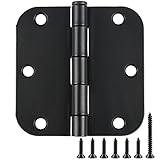
Alright, let’s get this straight right off the bat. No, your standard interior door hinges, the kind you see on most bedroom or closet doors, do not have literal wheels. They are usually just two metal plates with a pin running through them, allowing the door to swing open and shut. It’s friction, pure and simple, that allows them to work. The pin rotates within the barrel of the hinge leaves. Over time, dirt, rust, or wear can increase that friction, making your door squeak or stick. That’s when people start thinking about what could make it smoother, and sometimes, that leads to the idea of wheels.
However, the concept of rolling elements to reduce friction isn’t completely foreign to door hardware, just not in the way the question implies. Think about garage doors or the heavy sliding doors you might see in industrial settings. Those often use actual wheels or rollers. For a garage door, you have an overhead track, and the door panels have rollers that ride within that track, allowing it to move up and slide along the ceiling. Similarly, some very large, heavy, or specialized sliding doors might incorporate bearings or rollers for smooth operation. But for your everyday house door? Nope, just a pin and some metal-on-metal action.
My first house had this ancient, heavy oak front door. It was beautiful, but a monster to open. It would grind and groan like it was in pain. I spent hours trying to figure out what was wrong, convinced there had to be some hidden mechanism. I even remember looking up diagrams online, thinking maybe I was missing a secret compartment or some obscure type of hinge. I’d liberally apply WD-40, which helped for a day, but the underlying issue was the sheer weight and the friction of the old, slightly warped pin. It wasn’t wheels; it was just years of wear and tear on a basic pin hinge.
The confusion likely stems from a few places. Firstly, the idea of ‘rolling’ to reduce friction is intuitive. Secondly, some types of door hardware, like those for gates or specialized doors, do use rollers. For instance, a rolling gate latch mechanism has a wheel that rolls against a strike plate, allowing it to latch and unlatch smoothly. This is different from the door’s main pivot hinges, but the association with ‘doors’ and ‘wheels’ gets muddled.
The main takeaway here is that for standard residential doors, the pivot point is a pin. If it’s sticking or squeaking, it’s the pin and the hinge barrel that are the problem, not the absence of nonexistent wheels.
Why Your Door Sticks (and It’s Not About Wheels)
So, if it’s not wheels, what’s really going on when your door decides to throw a tantrum? The most common culprits are surprisingly simple, and frankly, a bit mundane. Humidity is a huge factor, especially in older homes or areas with significant weather changes. Wood expands when it’s damp and shrinks when it’s dry. If your door frame or the door itself swells up with moisture, it can rub against the frame, causing that frustrating scrape or bind. I’ve seen perfectly good doors become almost impossible to open in the summer and then develop a huge gap in the winter because of this expansion and contraction. (See Also: A Box Without Hinges Key )
Another big one is settling. Houses, over time, shift. The foundation settles, walls move slightly, and door frames can become slightly out of square. This misalignment means the door might not be hanging plumb anymore, and the edges can start to bind against the frame. You might notice it’s hard to close in one spot, or that the latch doesn’t quite line up with the strike plate anymore. It’s not the hinges’ fault; it’s the house itself doing its slow, quiet dance.
Then there’s the actual hinge issue, but it’s about wear, alignment, and lubrication, not a lack of wheels. Hinges can get bent, especially if a door is forced open or slammed repeatedly. A bent hinge pin or leaf will throw off the entire door’s alignment. Similarly, if the screws holding the hinges to the door or frame loosen over time, the door can sag. This sagging is a classic cause of bottom-of-the-door scraping. You might think you need new hinges, but often, just tightening up those screws is all it takes. I’ve saved myself a few trips to the hardware store by simply grabbing a screwdriver and giving the hinge screws a quarter-turn.
I remember a time I was helping a friend renovate an old Victorian. One of the massive pocket doors kept getting stuck. We spent a good two days trying to figure out if the track was warped or if the door was warped. Turns out, a few of the screws holding the hinge-like mechanism that allowed it to slide into the wall had just vibrated loose over decades. Tightening them up smoothed out the whole operation. It was anticlimactic, but effective. We never even considered wheels for that one, just solid, reliable (if a bit loose) metalwork.
So, before you go dreaming of tiny roller skates for your doors, check the obvious: moisture, house settling, and loose or damaged hinges. These are the real villains.
Common Mistakes People Make with Sticky Doors
People tend to jump to conclusions, and with sticky doors, that often means grabbing the wrong tools or products. One of the biggest mistakes I see is immediately reaching for a can of spray lubricant like WD-40 and just drenching the hinge. While it might offer temporary relief by washing out some dirt or rust, it’s often not a long-term fix. WD-40 is primarily a water displacer and solvent, not a true lubricant. It can actually attract dust and gunk over time, making the problem worse down the line. I learned this the hard way after applying it liberally to my shed door hinges, only to have them become even grittier a few months later.
Another common error is assuming the entire hinge needs replacing. People see a squeak or a slight bind and immediately think the hinge is shot. More often than not, the issue is with the pin itself or the way it’s seated. Sometimes, removing the pin, cleaning it and the hinge barrels, lubricating it with a proper grease (like lithium grease or even a bit of petroleum jelly for wood-on-wood friction), and reinserting it can solve the problem. It’s more work, but it’s often the right fix. I’ve done this on old cabinets and interior doors with great success, and it costs next to nothing.
People also tend to ignore the door itself and the frame. If a door is sticking at the top or bottom, it’s often because the wood has expanded due to humidity or the house has settled. Instead of addressing the cause, folks might try to force the door or plane down the wood, which can create new problems or be a temporary fix if the humidity changes again. Trying to plane a door that’s swollen will result in a door that’s too small when it dries out.
Finally, there’s the ‘if it ain’t broke, don’t fix it’ mentality that can backfire. Small squeaks or slight sticking might seem minor, but they’re often early warning signs of a bigger issue. Ignoring them can lead to more significant problems, like warped doors, damaged frames, or severely worn hinges, which are much harder and more expensive to fix later on. It’s like ignoring a small oil leak in your car; it’s better to address it before it turns into an engine-destroying catastrophe. (See Also: Are Integrated Washing Machine Door Hinges Standard )
Actual Door Hardware That Uses Rolling Elements
While your average interior door hinges don’t have wheels, there are definitely applications in the automotive and broader hardware world where rolling elements are key to smooth operation. In cars, for example, think about the door latches. Inside that mechanism, there are often small rollers or bearings that help the latch engage and disengage smoothly, preventing that clunky, gritty feel. The same goes for hood latches and even some trunk mechanisms. These are precision-engineered parts where reducing friction is most important for reliable operation and user experience. I’ve had to replace a few door latch mechanisms on older cars, and you can see the little nylon or metal rollers inside; they’re small but make a huge difference.
Beyond cars, look at commercial or industrial settings. Heavy sliding doors, like those on warehouses or loading docks, often use substantial roller systems. These can be heavy-duty wheels running on a solid track, or even more complex bearing systems for very large, specialized doors. The weight and sheer scale necessitate a rolling mechanism to make them manageable. Think about the barn doors you see in rustic decor trends – many of those use a track and roller system to allow them to slide open and shut, mimicking that industrial look and functionality.
Even something as simple as a rolling tool chest or a filing cabinet uses wheels or drawer slides with ball bearings. The principle is the same: reduce friction to allow smooth, effortless movement. While these aren’t ‘door hinges’ in the traditional sense, they illustrate the principle of using rolling elements where smooth movement is important.
Here’s a quick comparison of where you might find rolling elements in door-adjacent hardware:
| Application | Rolling Element Type | Purpose | Opinion/Verdict |
|---|---|---|---|
| Garage Doors | Wheels/Rollers on Track | Lifting and sliding heavy panels | Absolutely necessary for function. A well-maintained system is silent. |
| Sliding Barn Doors | Wheels/Rollers on Top Track | Decorative and functional sliding | Great for aesthetics and space-saving. Can be a bit noisy if not lubricated. |
| Car Door Latches | Small Rollers/Bearings | Smooth engagement/disengagement of latch | Tiny but vital. Failures lead to frustrating clunks and jams. |
| Heavy Industrial Sliding Doors | Heavy-Duty Wheels/Bearing Systems | Moving massive, weighty doors | Engineering marvels; smooth but often require significant force or automation. |
| Standard Interior Door Hinges | None (uses a pin) | Allowing swing motion | Simple, effective, and cheap. No wheels needed here. |
So, while the initial question about wheels in door hinges is a bit of a red herring for most homes, understanding where rolling elements are used can shed light on the principles of mechanical movement and friction reduction. It’s about applying the right solution to the right problem.
Lubrication: The Real Hero for Smoother Doors
If your interior doors are acting up and you’re still vaguely wondering if wheels are involved, stop. They aren’t. The real hero you’re looking for is lubrication. And let’s be clear, I’m not talking about drowning your hinges in WD-40. That’s a quick fix that often causes more headaches later. What you need is something more substantial that will actually lubricate the metal-on-metal contact points of the hinge pin and barrel.
My go-to for years has been a white lithium grease. It’s thicker, stays put better than a spray, and provides excellent lubrication. You can get it in a spray can with a straw applicator, which makes it easy to get right into the hinge barrel. The trick is to apply it sparingly, let it work its way in, and then cycle the door open and shut a dozen times to distribute it. Wipe off any excess. If you don’t have lithium grease, a good quality silicone lubricant spray can also work well, especially if you live in a dusty environment, as it tends to attract less dirt than petroleum-based lubricants.
Another option, especially for those who are really picky about chemicals or have very old, sensitive hinges, is graphite powder. You can get small shaker cans of graphite lubricant. You puff a little bit into the hinge barrel. Graphite is a dry lubricant, so it won’t attract dust, but it can be a bit messy if you’re not careful. I used graphite on an old antique cabinet, and it worked wonders, but I did get black dust on my shirt. Lesson learned: protect your surroundings. (See Also: Are Hinges Wheeels )
Here’s a simple, step-by-step process for lubricating your hinges:
- Identify the problem: Is it a squeak, a stiff swing, or a combination? Usually, it’s the hinge pin needing lubrication.
- Gather your supplies: Choose your lubricant (white lithium grease, silicone spray, or graphite powder), a rag or paper towels, and possibly a hammer and nail or flathead screwdriver.
- Prepare the hinge: For best results, you might want to remove the hinge pin. You can usually do this by gently tapping upwards on the bottom of the pin with a hammer and nail or screwdriver. Be careful not to damage the hinge. If the pin is stuck, a bit of penetrating oil (let it sit) might help, but avoid soaking it if you plan to lubricate properly afterwards.
- Clean the pin and barrel: Once the pin is out, wipe it clean with a rag. Use a cotton swab or a small brush to clean out any visible dirt or old gunk from the hinge barrels.
- Apply lubricant: Lightly coat the hinge pin with your chosen lubricant. If using spray, aim the straw directly into the hinge barrel while holding the door slightly ajar. Don’t overdo it; a little goes a long way.
- Reinsert the pin: Carefully slide the lubricated pin back into the hinge barrel. You might need to gently tap it down with a hammer.
- Work it in: Open and close the door several times. This helps the lubricant spread evenly throughout the hinge mechanism.
- Clean up: Wipe away any excess lubricant from the hinge and door frame with your rag.
This process, which I’ve done on countless doors in my life, is the real solution to squeaky, sticky doors. It takes less than 15 minutes per door and will make a world of difference. Forget the idea of wheels; embrace the power of proper lubrication.
Faq: Understanding Door Hardware
Do Interior Doors Have Wheels in Their Hinges?
No, standard interior door hinges do not have literal wheels. They function using a metal pin that rotates within the hinge barrel, allowing the door to swing. The concept of wheels is more applicable to specialized hardware like garage doors or heavy sliding doors.
Why Does My Door Stick If It Doesn’t Have Wheels?
Doors stick due to various reasons unrelated to wheels. Common causes include humidity causing wood to swell, house settling that misaligns the frame, loose hinge screws, or bent hinge pins. These factors increase friction between the door and the frame.
What’s the Best Way to Fix a Squeaky Door Hinge?
The most effective fix for a squeaky door hinge is proper lubrication. Remove the hinge pin, clean it and the barrels, apply a suitable lubricant like white lithium grease or silicone spray, and reinsert the pin. Cycling the door will help distribute the lubricant.
Can I Add Wheels to My Door Hinges?
You cannot practically add wheels to standard interior door hinges. The hinges are designed for a pin-and-barrel mechanism. Trying to modify them would likely damage them and not solve the underlying friction issues effectively.
Are There Any Types of Door Hardware That Use Rollers?
Yes, various types of door hardware use rollers. This includes garage doors that run on overhead tracks, sliding barn doors with wheels on a rail, and even some heavy-duty industrial or commercial doors. These systems are designed for specific movement types, not the simple swing of an interior door.
Conclusion
So, to be crystal clear, the question of whether are wheels in door hinges is a bit of a myth for your average house door. The mechanisms inside your standard door hinges are designed for simple pivot action via a pin, not rolling motion.
When a door sticks or squeaks, the solution almost always lies in addressing friction caused by humidity, house settling, or worn/misaligned hinges. Lubrication is your best friend here, not some imaginary wheel system.
Next time your door is acting up, skip the wild goose chase for non-existent wheels and grab a can of white lithium grease or silicone spray. A few minutes of honest maintenance will do more for your door than any fantastical contraption ever could.